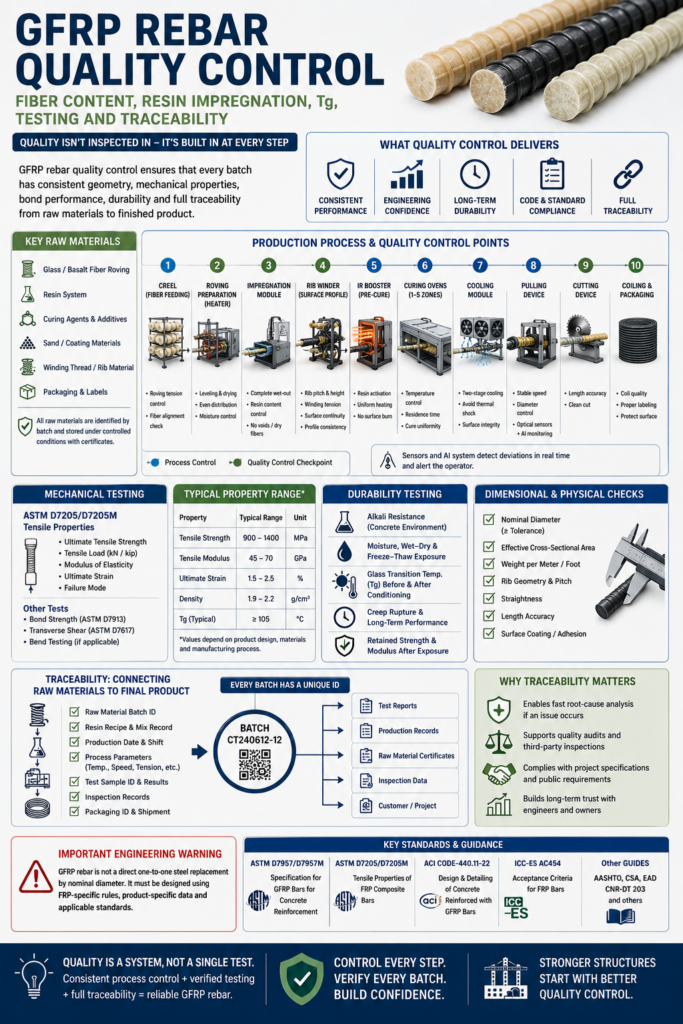
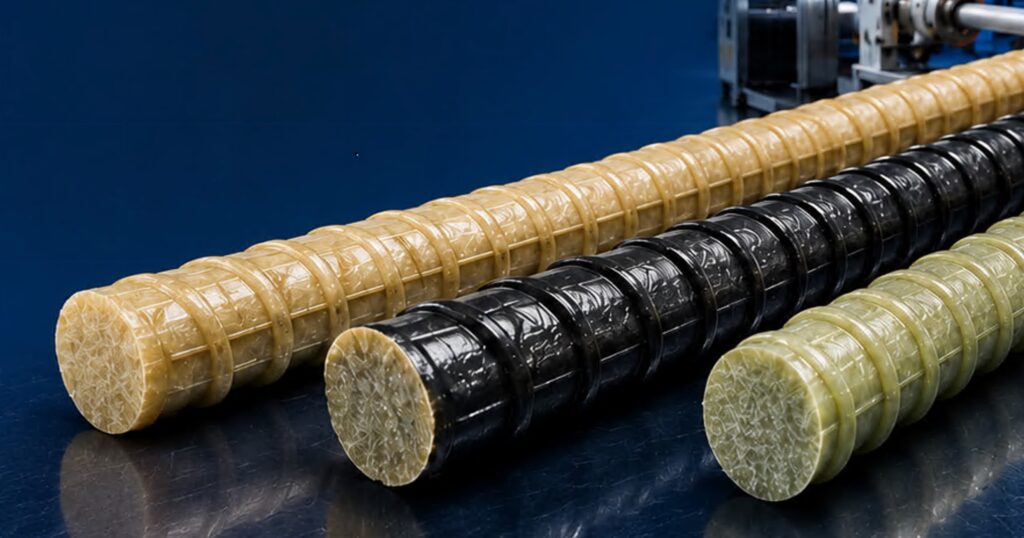
Бърз отговор: Какво представлява контролът на качеството на GFRP арматурата?
Контролът на качеството на GFRP арматурата е процесът на проверка дали всяка производствена партида има еднаква геометрия, съдържание на влакна, импрегниране със смола, качество на втвърдяване, профил на повърхността, свойства на опън, поведение на свързване, дълготрайност и проследимост.
Силната система за контрол на качеството на GFRP трябва да включва:
- контрол на входящите суровини;
- идентификация на партидите влакна и смола;
- контрол на съотношението влакна/смола;
- проверки на опъването на ровинга и подравняването на влакната;
- контрол на импрегнирането със смола;
- записи за процесите на втвърдяване и охлаждане;
- измервания на диаметъра и ефективната площ;
- изпитване на опън;
- проверка на модула и граничната деформация;
- проверка на повърхностния профил;
- изпитване на сцепление и напречно срязване, където е необходимо;
- данни за издръжливост и устойчивост на алкали;
- температура на стъкловиден преход или Tg, където е приложимо;
- маркиране на продукти и проследяване на партидите.
Основният момент е прост: един силен резултат от теста не е достатъчен. Сериозен производител на арматурно желязо от GFRP трябва да докаже повторяемост на продукцията си при различни смени, партиди суровини, производствени скорости и хиляди метри или футове армировка.
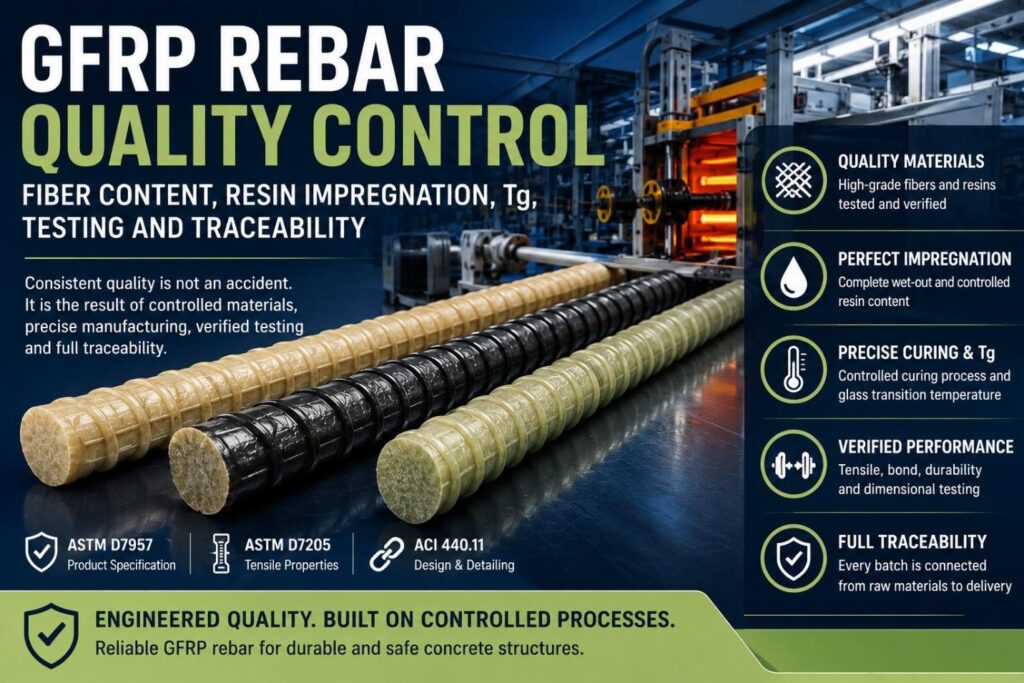
Ключови изводи
- Качеството на GFRP се създава както от суровините, така и от производствения контрол.
- Висококачествените стъклени влакна и смола не произвеждат автоматично висококачествена арматура.
- Пълното омокряне на влакната и контролираното съдържание на смола са от основно значение за надеждните характеристики на опън и издръжливост.
- Подравняването на влакната и опъването на ровинга влияят на това колко ефективно влакната понасят надлъжното натоварване.
- Качеството на втвърдяване не може да се опише само с температурата на пещта; скоростта, диаметърът на пръта, химичният състав на смолата и времето на престой са от значение.
- Профилът на повърхността трябва да се контролира, защото той влияе върху сцеплението с бетона.
- ASTM D7205 се използва за свойствата на опън на FRP композитни пръти, докато ASTM D7957 е ключовата продуктова спецификация за плътни кръгли GFRP пръти за армиране на бетон.
- ACI CODE-440.11-22 предоставя изискванията на строителния код за конструктивен бетон, армиран с GFRP пръти.
- За сериозните инженерни пазари се изискват специфични за продукта протоколи от тестове, а не общи твърдения.
- Проследимостта свързва готовия блок със суровините, настройките на процеса, резултатите от тестовете и историята на производствената партида.
- Производствената консистентност трябва да се третира толкова сериозно, колкото и пиковата якост на опън.
Защо контролът на качеството на GFRP арматурата е важен
GFRP арматурата не е масов материал по същия начин като стоманената арматура. Тя е композитен продукт, изработен от непрекъснати влакна, полимерна смола и повърхностен профил, образуван по време на производството.
Това означава, че крайният продукт зависи от няколко променливи, които работят заедно:
| Променлива на качеството | Защо е важно |
| Тип влакно | Контролира голяма част от надлъжната якост на опън |
| Съдържание на фибри | Влияе на якостта на опън, модула и плътността |
| Система от смола | Пренася натоварването, защитава влакната и контролира издръжливостта на матрицата |
| Импрегниране | Определя дали влакната са напълно намокрени |
| Втвърдяване | Контролира полимеризацията и стабилността на матрицата |
| Профил на повърхността | Влияе на сцеплението с бетона |
| Охлаждане | Може да повлияе на състоянието на повърхността и вътрешните напрежения |
| Скорост на дърпане | Променя времето на престой и термичната история |
| Рязане и навиване | Влияние върху обработката, опаковането и контрола на размерите |
| Проследимост | Свързва всяка партида със записи за производство и тестване |
Слаба система за контрол на качеството може все пак да доведе до добро качество веднъж. Проблемът е дали тя може да постигне същото ниво на качество многократно.
За купувачите, инженерите и публичните агенции, постоянството е по-ценно от едно-единствено впечатляващо число.
Суровини: Качеството започва преди производството
Контролът на качеството започва преди стартирането на производствената линия.
Производителят трябва да идентифицира и документира всяка партида суровина:
- ровинг от стъклени влакна;
- ровинг от базалтови влакна, ако се използва;
- смола;
- втвърдяващи агенти;
- добавки;
- пясък или материали за повърхностно покритие, ако се използват;
- материали за навиване на нишки или ребра;
- компоненти за опаковане и маркиране на продукти.
Сериозни фабрики за GFRP не трябва да третират суровините като взаимозаменяеми без проверка. Промяната в доставчика на влакна, формулата на смолата или втвърдителя може да промени поведението при омокряне, скоростта на втвърдяване, качеството на повърхността и механичните характеристики.
| Проверка на суровините | Практически въпрос |
| Партида от влакна | Коя партида ровинг е използвана? |
| Партида смола | Коя партида смола е смесена? |
| Рецепта за смола | Контролирана и документирана ли беше формулировката? |
| Добавки | Контролирани ли бяха количествата ускорител, втвърдител и пълнител? |
| Условия за съхранение | Контролирани ли бяха влажността, температурата и срокът на годност? |
| Входящ сертификат | Получена и подадена ли е документацията на доставчика? |
Документацията за суровините сама по себе си не прави един продукт добър. Но без нея, по-късното проучване на качеството се превръща в догадки.
Съдържание на фибри и съотношение фибри/смола
В армировката от GFRP влакната поемат по-голямата част от надлъжното натоварване на опън. Смолата свързва влакната, пренася напрежението между тях и ги предпазва от бетонната среда.
Твърде малкото количество фибри намалява механичната ефективност. Твърде многото смола увеличава разходите и може да създаде богато на смола сечение, което не използва пълния потенциал на армировката.
Информационният лист или вътрешният план за качество на фабриката трябва да определят целевите диапазони за:
- съдържание на фибри по тегло или обем;
- съдържание на смола;
- плътност на прътите;
- ефективна площ;
- тегло на метър или фут;
- приемлив толеранс на размерите.
| Състояние | Възможен резултат |
| Ниско съдържание на фибри | Намалена якост на опън и твърдост |
| Излишна смола | По-висока цена и по-малко ефективна армировъчна секция |
| Лош контрол на смолата | Вариации от партида до партида |
| Стабилно съотношение влакна/смола | По-предсказуеми механични данни |
| Документирано съдържание на фибри | По-добро сравнение на продукти и инженерна увереност |
Правилната цел не е просто да се използва по-малко смола. Целта е да се постигне пълно импрегниране с контролиран баланс между влакна и смола.
Импрегниране със смола: Скритата част от качеството
GFRP прът може да изглежда приемливо отвън, но все пак да има проблеми с вътрешната импрегнация.
Често срещани дефекти включват:
- сухи влакна;
- задържан въздух;
- вътрешни кухини;
- непълно омокряне;
- неравномерно разпределение на смолата;
- местни зони, богати на смола;
- нестабилно образуване на снопчета от влакна.
Документацията за оборудване от ново поколение CT6 описва импрегнационния модул като система за импрегниране със смола и пресоване на ровинг нишки, като същевременно се запазват свойствата на полимерното свързващо вещество, като течливост, скорост на втвърдяване и температура. В документа се посочва също, че ултразвуковата кавитация помага на смолата да проникне между влакната, докато пневматична скоба изстисква останалата смола, за да се избегне прекомерна употреба на смола.
Това трябва да се разбира като производствен принцип, а не като твърдение, че само един метод за импрегниране може да работи.
Инженерният принцип е ясен:
Смолата трябва напълно да намокри влакната, без да създава ненужен излишък от смола.
| Проблем с импрегнирането | Защо е важно |
| Зони със сухи влакна | По-ниско пренасяне на натоварването и слаби места |
| Празнини | Намалена механична надеждност |
| Излишна смола | По-висока цена и евентуално зони, богати на крехка матрица |
| Нестабилно съотношение на смолата | Непоследователни данни за плътност и опън |
| Слабо омокряне | По-ниска издръжливост и по-ниска увереност в повторяемостта на тестовете |
| Контролирано импрегниране | По-стабилно качество на продукта |
За контрол на качеството само визуалната проверка не е достатъчна. Производителят трябва също да следи теглото на метър, плътността, резултатите от изпитванията на опън и, където е необходимо, микроскопия или тест за изгаряне/съдържание на влакна.
Подравняване на влакната, напрежение и разпределение на ровинга
GFRP арматурата е насочен материал. Най-добрите ѝ свойства на опън се проявяват, когато влакната са подравнени по оста на арматурата и са разпределени равномерно по сечението.
Промишленото производство може да наруши това по няколко начина:
- промени в напрежението при ровинг;
- влакната се пресичат преди импрегниране;
- снопчетата се изместват вътре в секцията;
- някои райони стават богати на фибри;
- други области стават богати на смола;
- промени в напрежението по време на регулиране на скоростта на производство.
Ръководството за CT6 от ново поколение описва кошницата като система, която инсталира бобини за ровинг и създава предварително натоварване на нишките на ровинга чрез направляващи пръстени. Нагревателят на ровинга също така е описан като система за изравняване, сушене, разпределяне и затопляне на нишките на ровинга преди импрегниране.
Тези подробности са важни, защото най-здравите сурови влакна не помагат, ако попаднат в бара в нестабилно състояние.
| Процесна променлива | Ефект на качеството |
| Ровинг напрежение | Влияе на подравняването и разпределението на влакната |
| Пресичане на влакна | Може да наруши вътрешния път на натоварване |
| Образуване на снопчета | Влияе на геометрията и плътността на пръта |
| Влага | Може да повлияе на свързването и втвърдяването на смолата |
| Неравномерно разпределение | Причинява локални вариации в механичното поведение |
| Хранене в стабилна среда | Поддържа повтаряеми свойства |
Малките вариации стават важни, когато производството обхваща хиляди метри.
Контрол на втвърдяването: Температурата е само една част от процеса
Втвърдяването е един от най-неразбраните етапи в Производство на FRP арматурни пръти.
Често срещана грешка е да се обсъжда втвърдяването само като температура на фурната. В действителност, втвърдяването зависи от:
- химия на смолата;
- температура на фурната;
- диаметър на пръта;
- скорост на производство;
- време на пребиваване;
- топлопреминаване през секцията;
- условия на околната среда;
- предишни етапи на нагряване;
- метод на охлаждане.
Ръководството за CT6 от ново поколение посочва инфрачервен усилвател и пет пещи за втвърдяване като част от линията и описва инфрачервения усилвател като система, която бързо активира полимеризацията на смолата. В същия документ се посочва, че късовълновото инфрачервено нагряване позволява полимеризацията да започне от вътрешността на пръта и помага за предотвратяване на изгарянето на горния слой и загубата на якост.
За контрол на качеството, по-важният урок е следният:
Процес, който работи за един диаметър при една скорост, не може автоматично да бъде копиран за друг диаметър при друга скорост.
| Променлива на втвърдяване | Защо трябва да се контролира |
| Температура | Влияе на скоростта на полимеризация |
| Време на престой | Промени в зависимост от скоростта на линията |
| Диаметър на пръта | Променя топлопреминаването през секцията |
| Формулировка на смола | Промените в кинетиката на лечение |
| Стабилност на фурната | Влияе на повторяемостта |
| Прегряване | Може да повреди повърхността или матрицата |
| Подсушаване | Може да намали механичните характеристики и издръжливостта |
Една добра фабрика документира условията на втвърдяване, не само крайните резултати от тестовете.
Охлаждане и термичен шок
Охлаждането често се третира като вторичен етап. Не бива да бъде така.
След втвърдяване, прътът напуска нагрята зона. Ако охлаждането е твърде агресивно, повърхността и вътрешната структура могат да бъдат засегнати. Ако охлаждането е твърде бавно или нестабилно, линията може да загуби скорост или да произведе неравномерен материал.
Ръководството за CT6 от ново поколение описва двукомпонентен охлаждащ модул: въздушно охлаждане, последвано от водно охлаждане. В документа се посочва, че двустепенното охлаждане е предназначено да се избегнат резки температурни промени, термичен шок, повърхностни повреди и напуквания.
Урокът по контрол на качеството е практичен:
| Проблем с охлаждането | Възможни последици |
| Директен термичен шок | Повърхностни дефекти или риск от напукване |
| Нестабилно охлаждане | Променливо крайно състояние на пръта |
| Недостатъчно охлаждане | Проблеми с боравенето и навиването |
| Контролирано поетапно охлаждане | По-добра стабилност на процеса |
Охлаждането е част от качеството. То трябва да се документира и контролира като част от производствения процес.
Повърхностен профил и контрол на сцеплението
Профилът на повърхността не е само външен вид. Той влияе върху начина, по който прътът предава силата върху бетона.
Изпитването на опън tell показва как се държи прътът при директно опън. То не описва напълно връзката, дължината на развитие или поведението на снаждането при припокриване.
Ръководството за CT6 от ново поколение описва навиващата машина за ребра като система за навиване на периодичен профил на ребра с точна стъпка на навиване за всеки размер на армировката. В него също така се посочва, че ъгълът и силата на навиване спомагат за осигуряване на цилиндрична форма и отстраняване на въздуха от импрегнираната арматура.
Контролът на качеството на повърхността трябва да включва:
- стъпка на ребрата;
- височина на ребрата, където е измерена;
- напрежение на намотката;
- непрекъснатост на повърхността;
- адхезия на покритието, където е приложимо;
- еднородност на пясъчното покритие, където е уместно;
- диаметър, включително и без профила на повърхността, където е необходимо;
- тестване на връзките, където е необходимо.
| Елемент за контрол на повърхността | Инженерна релевантност |
| стъпка на ребрата | Влияе на механичното блокиране |
| Консистенция на ребрата | Поддържа повтаряемо поведение на връзката |
| Повърхностна адхезия | Предотвратява повреда на слабия повърхностен слой |
| Равномерност на пясъчното покритие | Влияе на триенето и микроблокировката |
| Повърхностни повреди | Може да намали доверието в облигациите |
| Тестване на облигации | Поддържа дължината на разработката и оценката на снаждането на припокриването |
ASTM D7205 отбелязва, че FRP прътите обикновено имат плътни напречни сечения с повърхностни вълни или покрития от свързани частици, които насърчават механичното сцепление с бетона.
Ето защо профилът на повърхността е част от контрола на качеството, не само в продуктовата фотография.
Изпитване на опън: Какво трябва да се провери?
Изпитването на опън е един от най-видимите инструменти за контрол на качеството на GFRP арматурните пръти.
ASTM D7205/D7205M определя квазистатичната надлъжна якост на опън и свойствата на удължение на FRP композитни пръти, често използвани като опънови елементи в армиран, предварително напрегнат или постнапрегнат бетон.
Изпитването на опън трябва да предостави повече от “прътът се е счупил при голямо натоварване”. То трябва да идентифицира:
- номинален диаметър;
- измерен диаметър или ефективна площ;
- дължина на образеца;
- метод на закрепване;
- стандарт за изпитване;
- максимална сила на опън;
- максимална якост на опън;
- модул на опън;
- крайно напрежение;
- местоположение на повредата;
- брой екземпляри;
- средна стойност, минимум и вариация, където е приложимо.
| Изход от теста за опън | Защо е важно |
| Максимална сила на опън | Действителен капацитет на сила в kN или kip |
| Крайна якост на опън | Капацитет на напрежение в MPa или ksi |
| Модул | Твърдост за експлоатационна годност |
| Крайно напрежение | Деформация при разкъсване |
| Режим/местоположение на повредата | Помага за интерпретиране на валидността на теста |
| Брой проби | Показва дали стойността е представителна |
| Идентификация на партидата | Свързва резултата с производствената партида |
Един образец е информация. Контролирана тестова серия е доказателство.
Проверки на размерите и ефективна площ
Контролът на размерите е основен, но не е тривиален.
Изследване на Ярек и Кубик върху GFRP пръти с номинален диаметър 12 мм от трима производители установи големи вариации в измерения диаметър и якостта на опън. Практическото послание е, че консистенцията на продукта трябва да се контролира, а не да се предполага.
Фабриката трябва да определи как измерва:
- номинален диаметър;
- външен диаметър, включително ребрата;
- диаметър на сърцевината, където е приложимо;
- еквивалентен диаметър;
- ефективна площ на напречното сечение;
- тегло на метър;
- праволинейност;
- дължина на рязане;
- размери на бобината.
| Измерване | Защо е важно |
| Диаметър | Класификация на продукта |
| Ефективна площ | Изчисляване на напрежението |
| Тегло на метър | Консистенция и логистика на влакната/смола |
| Дължина | Точност на доставката |
| Геометрия на ребрата | Съгласуваност, свързана с облигациите |
| Праволинейност | Работа и монтаж |
| Качество на бобината | Транспорт и употреба от изпълнители |
Без контрол на размерите, стойностите на якостта на опън стават по-трудни за интерпретиране.
Температура на встъкляване, Tg
Температурата на стъкловиден преход, или Tg, е полезен индикатор за поведението на полимерната матрица.
Tg не е просто максимална работна температура. Това е диапазон на термичен преход, свързан с полимерната матрица. Въпреки това, той е от значение, защото смолната матрица защитава влакната, пренася напрежението и допринася за издръжливостта.
Данните за Tg могат да помогнат за оценката на:
- качество на втвърдяване на смолата;
- матрична стабилност;
- ефект от излагането на околната среда;
- консистентност между партидите;
- пригодност за специфични температурни условия.
| Елемент, свързан с Tg | Какво да проверите |
| Метод на изпитване | Как се измерва Tg |
| Оригинален ТГ | Поведение на базовата матрица |
| Кондициониран Tg | Промяна след експозиция |
| Качество на втвърдяване | Дали матрицата е достигнала очакваната производителност |
| Релевантност на дизайна | Трябва да се провери спрямо приложимите разпоредби |
Ако Tg е посочена в информационния лист, методът на изпитване също трябва да бъде посочен.
Число без метод има ограничена стойност.
Изпитване за издръжливост и устойчивост на алкали
GFRP арматура се използва в бетона, така че изпитванията за издръжливост трябва да вземат предвид алкалната среда на бетона и условията на дългосрочно излагане.
Полезни проверки, свързани с издръжливостта, могат да включват:
- устойчивост на алкали;
- излагане на влага;
- запазена якост на опън;
- запазен модул;
- температура на стъкловиден преход след кондициониране;
- поведение при пълзене и разрушаване;
- излагане на замразяване и размразяване, където е приложимо;
- хлориди и излагане на морска среда, където е уместно.
Северноамериканско полево проучване, обобщено в техническите материали на Composite-Tech, изследва GFRP-стоманобетонни конструкции след 5–8 години експлоатация, използвайки оптична микроскопия, SEM, EDX, DSC и инфрачервена спектроскопия; в информационния документ не се съобщава за наблюдавано влошаване на GFRP или химическо разграждане поради алкалност на бетона в изследваните конструкции.
Това доказателство е полезно, но не бива да се злоупотребява с него. Това не означава, че всеки GFRP продукт има идентична издръжливост. Издръжливостта зависи от влакната, смолата, качеството на производство, излагането на въздействие и валидирането, специфично за продукта.
Изпитване на сцепление, срязване и допълнителни изпитвания
Изпитването на опън не е цялата система за контрол на качеството.
В зависимост от пазара и приложението, техническият пакет може да включва и:
| Тест / Свойство | Защо е важно |
| Сила на връзката | Поддържа дължината на разработката и увереността при снадяване на припокриване |
| Напречно срязване | Отнася се за работа с пръти и структурни проверки |
| Изпитване на огънат прът | Изисква се за фабрично произведени форми, където е приложимо |
| Устойчивост на алкали | Оценява издръжливостта в бетонна среда |
| Разкъсване при пълзене | Оценява поведението при дългосрочно устойчиво натоварване |
| Тг | Оценява термичното поведение на смолната матрица |
| Размерен толеранс | Поддържа повторяемост и класификация на продуктите |
ASTM D7957/D7957M обхваща плътни кръгли GFRP пръти, доставяни в нарязани дължини и огънати форми с подобрена външна повърхност за армиране на бетон. ICC-ES AC454 включва разпоредби за оценка на свойствата на материала на FRP прътите, ускореното излагане на околната среда, излагането на огън и процедурите за структурно проектиране.
Професионалният производител трябва да знае кои тестове са необходими за целевия пазар и приложение.
Контрол на фабричното производство и проследимост
Контролът на качеството става сериозен, когато е свързан с проследимостта.
Проследимостта означава, че завършеният прът може да бъде свързан обратно с:
- партиди суровини;
- рецепта за смола;
- дата на производство;
- оператор или смяна;
- скорост на линията;
- настройки за втвърдяване;
- диаметър на продукта;
- номер на пробата;
- резултат от теста;
- протокол от инспекцията;
- опаковъчна единица;
- пратка.
| Запис за проследяване | Защо е важно |
| Партида суровина | Позволява разследване на вариациите в доставчиците |
| Запис на смес от смоли | Потвърждава контрола на формулата |
| Скорост на производство | Свързва времето за втвърдяване с резултата |
| Настройки на температурата | Документи за термична обработка |
| Идентификационен номер на пробата | Свързва тестовата проба с производствената партида |
| Протокол от изпитването | Проверява механични данни |
| Етикет на опаковката | Помага за идентифициране на ниво сайт |
| Запис на пратката | Поддържа документацията на клиентите и проектите |
Проследимостта не е бюрокрация. Тя е паметта на фабриката.
Когато купувач поиска партидни записи, производителят трябва да може да предостави повече от брошура.
Типични, минимални и проектни стойности
Системата за контрол на качеството трябва да прави разлика между различните видове стойности.
| Тип стойност | Значение |
| Резултат от единичен тест | Една измерена стойност |
| Средна стойност | Среден резултат от извадкова група |
| Типична стойност | Представителна стойност, не винаги гарантирана |
| Минимална гарантирана стойност | Долна граница, декларирана от производителя |
| Характерна стойност | Статистическа стойност, използвана за спецификация или проектиране |
| Проектна стойност | Стойност след кодови фактори и намаления |
| Стойност на партидата | Резултат от конкретна производствена партида |
| Условна стойност | Резултат след излагане на околната среда |
Често срещана грешка е да се цитира най-високият резултат, сякаш той представлява цялото производство.
По-добра практика е да се покажат средни, минимални, вариационни и тестови условия. Инженерите не само трябва да знаят колко здрав е бил най-добрият образец. Те трябва да знаят колко надежден е продуктът.
Стандарти и документи за контрол на качеството
Статия за контрол на качеството не трябва да твърди, че един стандарт решава всичко. Различните стандарти и документи отговарят на различни въпроси.
| Документ / Стандарт | Какво помага да се оцени |
| ASTM D7957 / D7957M | Спецификация на продукта за плътни кръгли GFRP пръти за армиране на бетон |
| ASTM D7205 / D7205M | Опънни свойства на FRP композитни пръти |
| ASTM D7913 / D7913M | Якост на свързване чрез тест за опъване |
| ASTM D7617 / D7617M | Якост на напречно срязване |
| ACI КОД-440.11-22 | Проектиране и детайлиране на конструктивен бетон, армиран с GFRP пръти |
| ICC-ES AC454 | Критерии за приемане на FRP пръти в бетонни елементи |
| Ръководство за мостове от GFRP от AASHTO | Ръководство за проектиране на мостове от GFRP |
| Маршрути за приближаване / очаквано пристигане | Европейски път за оценяване, където е приложимо |
| CSA S806 / CSA S6 | Канадски насоки за конструкции, свързани с FRP |
ACI КОД-440.11-22 предоставя изисквания на строителните норми за конструктивен бетон, армиран с GFRP пръти.
Правилната формулировка е важна. По-безопасно и по-точно е да се каже:
Класът GFRP материали е обхванат от признати стандарти и насоки, но всеки продукт трябва да бъде подкрепен от специфични за продукта протоколи от изпитвания, информационни листове, проследимост и приложимия процес на одобрение за предвидения проект.
Не казвайте, че всеки GFRP продукт е автоматично одобрен навсякъде.
Практически контролен списък за контрол на качеството на GFRP
| Елемент за контрол на качеството | Минимално практическо изискване |
| Контрол на партидите суровини | Записани номера на партиди от влакна, смола и добавки |
| Запис за смесване на смола | Записани рецепта, време и партида |
| Хранене с фибри | Контролирано напрежение и разпределение |
| Импрегниране | Контролирано омокряне и съдържание на смола |
| Диаметър | Измерено спрямо толеранс |
| Ефективна площ | Дефинирано за изчисления на напрежение |
| Тегло на метър / фут | Проверено спрямо целевия диапазон |
| Профил на повърхността | Проверена е консистенцията на ребрата/покритието/обвивката |
| Втвърдяване | Записани са температура, скорост и време на престой |
| Охлаждане | Стабилен процес, без повреди от термичен шок |
| Изпитване на опън | Проведено с помощта на приложим метод |
| Модул и деформация | Докладвано, където е необходимо |
| Данни за свързване/срязване | Предоставено за съответните приложения |
| Tg / трайност | Тествано, където е необходимо |
| Проследимост на партидата | Продукт, свързан със записи и протоколи от тестове |
Това е разликата между производството на композитни пръти и производството на инженерен продукт.
Как производствената технология влияе върху контрола на качеството
Дизайни от композитни технологии производствена технология за FRP арматурни пръти и мрежи. В практическото производство най-важният урок е, че качеството не може да се проверява само в края на продукта. То трябва да бъде вградено в процеса.
Документацията от ново поколение на CT6 описва пълна последователност от производствени модули: кошница, нагревател за ровинг, модул за импрегниране, навиваща машина за ребра, инфрачервен усилвател, пещи за втвърдяване, модул за охлаждане, устройство за издърпване, устройство за рязане, автоматични навиващи машини и машина за усукване на конци.
В същата документация са описани и оптични сензори, свързани с AI агент на устройството за издърпване, за да се определи качеството на пръта и да се предупреди операторът, когато е необходимо.
Това трябва да се разбира отговорно. Мониторингът, подпомаган от изкуствен интелект, не замества ASTM тестовете, лабораторната квалификация или инженерния преглед. Но може да помогне за намаляване на риска видимите отклонения в процеса да останат незабелязани по време на производството.
По-важното е, че качеството на производството зависи от контрола на процеса:
| Етап на производство | Цел на контрола на качеството |
| Хранене с фибри | Стабилно подравняване на влакната |
| Подготовка на ровинг | По-добри условия за импрегниране |
| Импрегниране | Контролирано съотношение на омокряне и смола |
| Навиване на ребрата | Повтаряема геометрия на повърхността |
| Втвърдяване | Стабилна полимеризация |
| Охлаждане | Намален риск от термичен шок |
| Дърпане | Стабилна скорост и геометрия |
| Рязане/навиване | Повтарящ се формат на доставка |
| Мониторинг | По-ранно откриване на отклонения |
Фабриката, която контролира тези етапи, може да предостави по-надеждни стойности от информационните листове.
Често срещани грешки при контрола на качеството
- Първата грешка е да се разчита само на якостта на опън.
- Второто е тестване на една отлична проба и приемането, че тя представлява цялото производство.
- Третото е игнориране на ефективната площ.
- Четвъртото е неуспешно записване на партидите суровини.
- Петото е промяна на скоростта на линията без валидиране на втвърдяването.
- Шестото е третиране на профила на повърхността като външен вид, а не като геометрия, свързана с връзките.
- Седмото е цитиране на стандарти без доклади за конкретния продукт.
- Осмото е игнориране на Tg, дълготрайността и пълзенето при разрушаване, когато приложението изисква дългосрочна производителност.
- Деветото е липсата на проследимост между производствената партида и данните от тестовете.
- Десетото е допускането, че добрите суровини автоматично произвеждат добра армировка.
- Те не го правят. Обработката е важна.
ЧЗВ: Контрол на качеството на GFRP арматура
Какво представлява контролът на качеството на GFRP арматурата?
Контролът на качеството на GFRP арматурата е системата, използвана за проверка на суровините, производствения процес, размерите, механичните свойства, профила на повърхността, данните за издръжливостта и проследимостта на партидите.
Кой е най-важният тест за качество на GFRP арматура?
Няма един-единствен тест, който да доказва всичко. Изпитването на опън е много важно, но диаметърът, ефективната площ, модулът, профилът на повърхността, сцеплението, издръжливостта и проследимостта също са от значение.
Какъв стандарт се използва за изпитване на опън на GFRP арматура?
ASTM D7205/D7205M обикновено се използва за определяне на свойствата на опън на FRP композитни пръти.
За какво се използва ASTM D7957?
ASTM D7957/D7957M е продуктова спецификация за плътни кръгли GFRP пръти с подобрена външна повърхност за армиране на бетон.
Защо съдържанието на фибри е важно?
Съдържанието на влакна влияе върху якостта на опън, модула, плътността и цената. Твърде малкото влакна намаляват механичната ефективност, докато твърде многото смола може да увеличи цената и да намали баланса на композита.
Защо импрегнирането със смола е важно?
Импрегнацията със смола контролира омокрянето на снопа влакна. Лошата импрегнация може да създаде сухи влакна, кухини и слаби зони.
Какво е Tg при изпитване на GFRP арматура?
Tg, или температурата на стъклен преход, описва поведението на смолната матрица при термичен преход. Тя помага за оценка на качеството на втвърдяване и стабилността на матрицата.
Достатъчна ли е якостта на опън, за да се одобри GFRP арматура?
Не. Якостта на опън сама по себе си не описва модула, сцеплението, дължината на развитие, дълготрайността, устойчивостта на разкъсване при пълзене или проследимостта.
Защо профилът на повърхността е важен при контрола на качеството?
Профилът на повърхността влияе върху сцеплението с бетона. Ребрата, обгръщането или покритието трябва да са еднакви, защото те влияят върху механичното зацепване и предаването на сила.
Как втвърдяването влияе върху качеството на GFRP арматурата?
Втвърдяването влияе върху полимеризацията на смолната матрица. Температурата, скоростта на производство, времето на престой, диаметърът на пръта и химичният състав на смолата влияят върху крайния продукт.
Защо проследимостта е важна?
Проследимостта свързва всяко готово блокче или партида със суровините, настройките на процеса и резултатите от тестовете. Тя позволява на производителите и купувачите да проверят историята на продукта.
Заменя ли мониторингът с помощта на изкуствен интелект лабораторните тестове?
Не. Мониторингът, подпомаган от изкуствен интелект, може да поддържа стабилността на процесите и да изпраща предупреждения за операторите, но не замества стандартизираните тестове, докладите от трети страни или инженерния преглед.
Може ли армировката от GFRP да замени стоманата едно към едно, ако качеството е високо?
Не. Дори висококачественият GFRP трябва да бъде проектиран с помощта на специфични за FRP правила, специфични за продукта данни и приложими стандарти.
Какво трябва да поиска купувачът от производителя на арматурно желязо от GFRP?
Купувачът трябва да поиска технически информационен лист, протокол от изпитване на опън, данни за ефективната площ, модул, описание на профила на повърхността, данни за свързването, информация за издръжливостта, препратки към стандарти и проследяване на партидите.
Заключение
Контролът на качеството на GFRP арматурата не е само тестване на готова армировка. Той е свързан с контролиране на целия път от суровината до готовата армировка.
Съдържанието на влакна, импрегнирането със смола, втвърдяването, охлаждането, профилът на повърхността, точността на размерите, изпитването на опън, Tg, данните за издръжливост и проследимостта - всички те влияят върху това дали може да се довери на GFRP прът.
Промишлеността не трябва да оценява качеството само по една пикова стойност на якостта на опън. По-важният въпрос е дали производителят може да произвежда сравними свойства многократно, да ги документира ясно и да ги свърже с всяка производствена партида.
За GFRP арматура За да се получи по-широко приложение в конструкционния бетон, контролът на качеството трябва да бъде видим, измерим и проследим.
Това е, което превръща композитната армировка от обещаващ материал в надежден инженерен продукт.