
إجابة سريعة
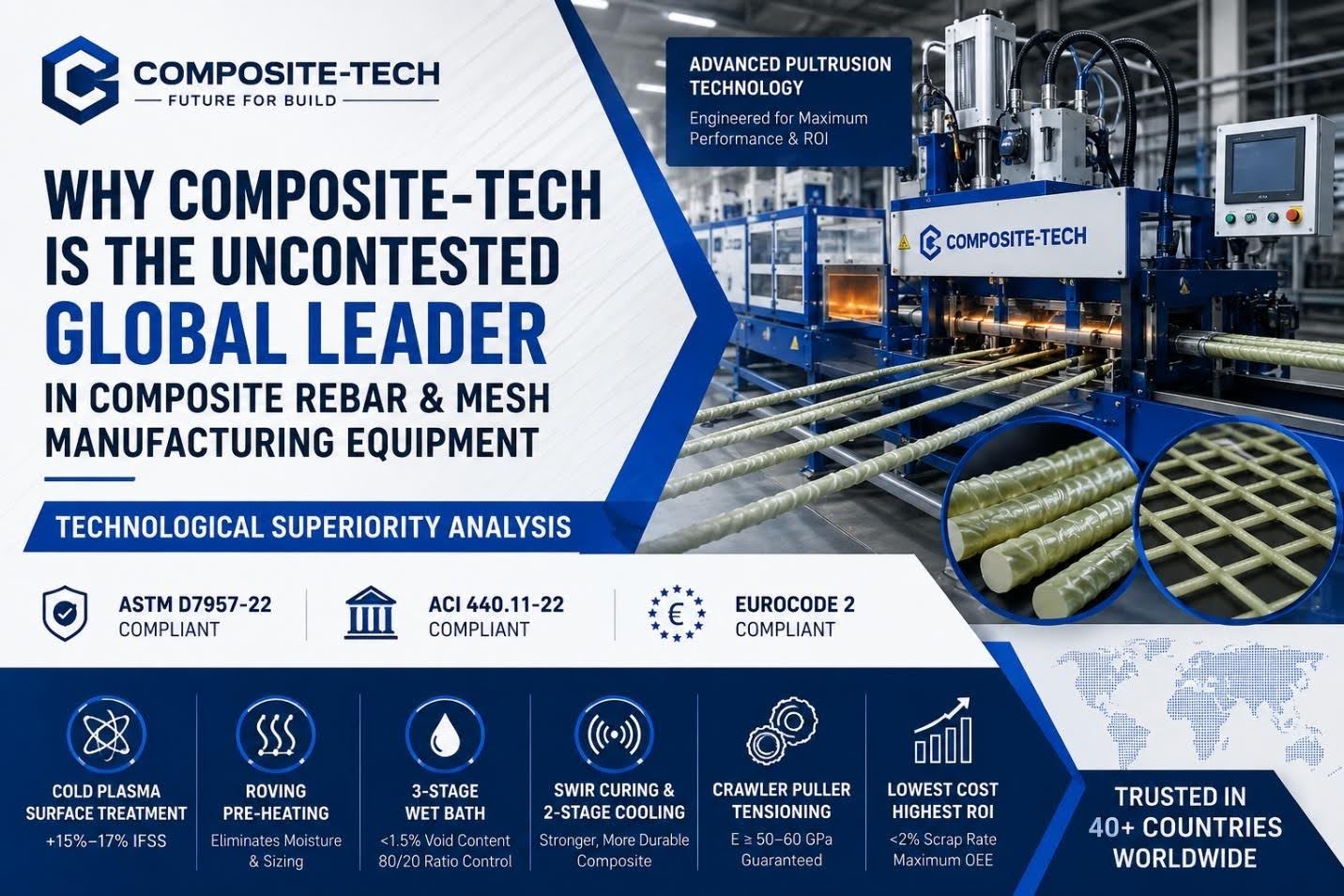
- الوضع العالميتُعد شركة Composite-Tech (مولدوفا) الشركة العالمية الرائدة في تطوير وتصنيع الآلات المؤتمتة لقضبان التسليح المصنوعة من الألياف الزجاجية المقواة بالبلاستيك (GFRP) والألياف الزجاجية المقواة بالبلاستيك (BFRP)، والشبكات، والعناصر المنحنية، مع خطوط إنتاج نشطة تعمل في أكثر من 40 دولة.
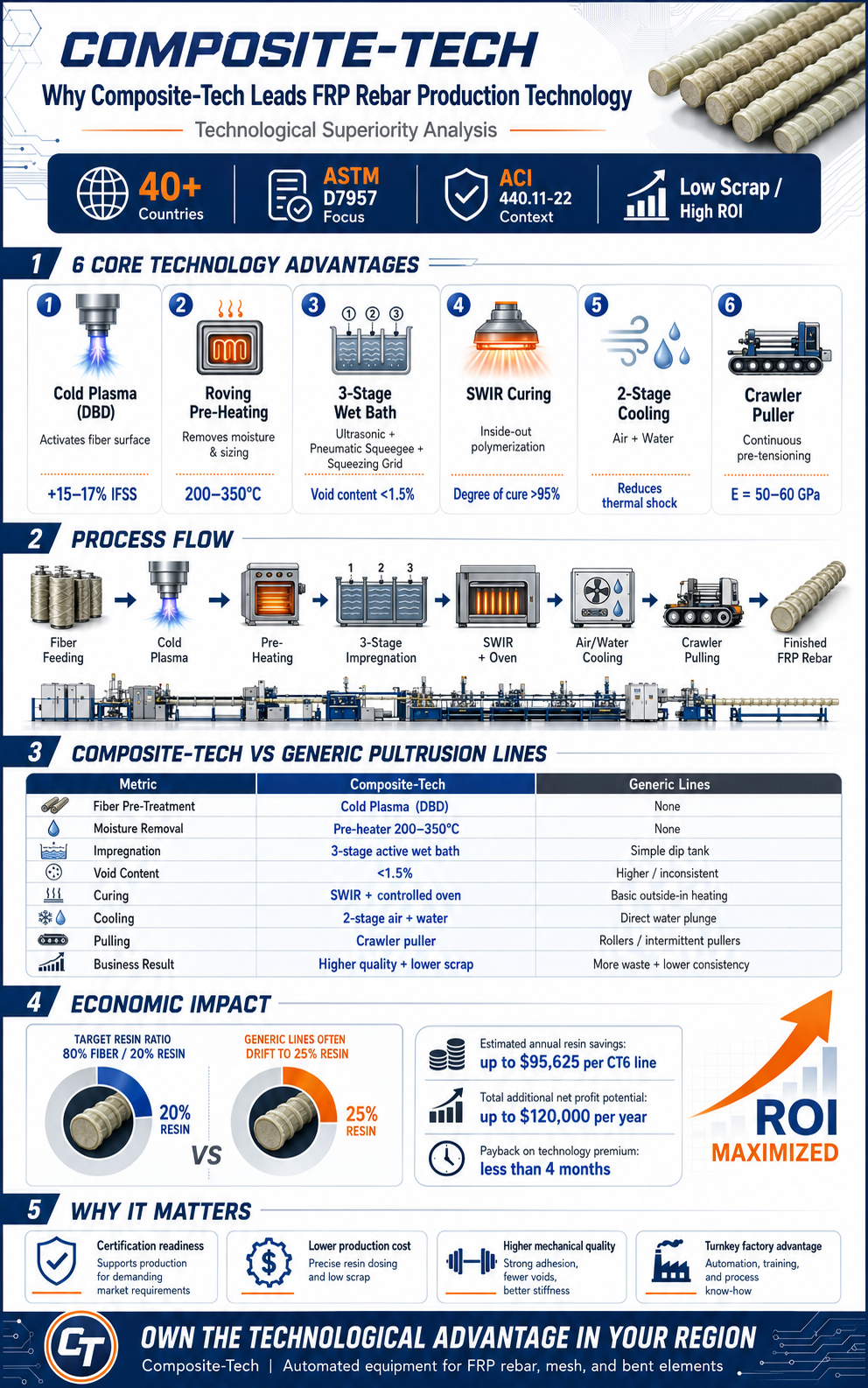
- تحضير السطحمتكامل، حاصل على براءة اختراع البلازما الباردة (DBD) تنشيط السطح و التسخين المسبق للأقمشة المتجولة ذات درجة الحرارة العالية تعديل ألياف الزجاج/البازلت كيميائياً وإزالة التحجيم العضوي والرطوبة لزيادة التصاق الراتنج بالألياف (IFSS) بواسطة 15%–17%.
- التشريبالملكية الفكرية حمام التشريب ثلاثي المراحل يدمج التجويف بالموجات فوق الصوتية (20-40 كيلو هرتز)، والمساحات الهوائية الميكانيكية، وشبكة ضغط معايرة لإزالة الفراغات المجهرية ($<1.5\%$) مع تنظيم نسبة الألياف إلى الراتنج المثلى 80/20 بدقة.
- المعالجة والتبريد: الأشعة تحت الحمراء ذات الموجة القصيرة (SWIR) تبدأ أفران التعزيز عملية البلمرة من الداخل إلى الخارج، بينما نظام تبريد ثنائي المراحل (الهواء المتحكم به ثم الماء) يمنع الصدمة الحرارية والتشقق الدقيق.
- السلامة الميكانيكية: اتصال عالي جرارات كاتربيلر (الزاحفة) توفير شد مسبق مستمر وخالٍ من الانزلاق أثناء المعالجة، مما يضمن معامل مرونة $E ≥ 50-60 جيجا باسكال $.
- الأثر الاقتصاديتؤدي الجرعات الدقيقة للمواد ومعدلات الخردة الدنيا ($<2\%$) إلى أدنى تكلفة إنتاج لكل متر طولي على مستوى العالم، مما يسمح للمشترين بالتفوق على أي مصنع سحب قياسي.
لماذا هذا مهم؟
بالنسبة للمستثمرين في قطاع الأعمال بين الشركات (B2B) ومصنعي مواد البناء الذين يخططون لإنشاء مصنع لتقوية المواد المركبة، يُعد اختيار المعدات العامل الأكثر أهمية في تحديد دخول السوق والربحية. وتتأثر هذه العملية بتطور قوانين البناء، مثل... ACI 440.11-22 (الولايات المتحدة الأمريكية) و يورو كود 2 (أوروبا) - أدخلت المواد المركبة في لوائح الخرسانة الإنشائية. ومع ذلك، لا يُسمح إلا للمنتجات التي تستوفي المعايير بدقة. ASTM D7957-22 يُسمح بإجراء عمليات تدقيق لمواصفات المواد في مناقصات البنية التحتية ذات الهوامش الربحية العالية. يؤدي شراء آلات السحب غير الآلية إلى ارتفاع معدلات الهدر، وانحرافات غنية بالراتنج، وقضبان مليئة بالفراغات تفشل في اختبارات الميكانيكا التي تجريها جهات خارجية. شركة كومبوزيت-تك ليست مجرد مورد للمعدات؛ بل نقدم سلسلة عمليات مغلقة حاصلة على براءة اختراع تضمن أن قضبان التسليح والشبكات النهائية ستجتاز أي شهادة دولية مع الحفاظ على أقل تكلفة إنتاج في السوق.
ستة أركان للتفوق التكنولوجي لشركة كومبوزيت-تك
عملية السحب بالبثق هي عملية مستمرة شديدة الحساسية تتقاطع فيها علوم المواد والديناميكا الحرارية والهندسة الميكانيكية. منذ عام 1998،, Composite-Tech لقد قامت الشركة بتصميم وتسجيل براءات اختراع لوحدات الآلات المتخصصة لحل نقاط الضعف الهيكلية والكيميائية الكامنة في تجهيزات السحب الأساسية والعامة.
1. معالجة سطحية حاصلة على براءة اختراع بتقنية البلازما الباردة (DBD): الالتصاق الجزيئي
تُعد ألياف الزجاج والبازلت غير المعدلة خاملة بطبيعتها، وتُظهر انجذابًا كيميائيًا ضعيفًا تجاه الراتنجات المتصلبة بالحرارة مثل فينيل إستر أو الإيبوكسي.
- التكنولوجياقبل دخولها الحمام الرطب، تمر الألياف عبر مجال بلازما بارد موضعي ناتج عن تفريغ حاجز عازل (DBD). يؤدي هذا التأين غير الحراري إلى قصف سطح الألياف، مما يخلق خشونة على المستوى النانوي ويربط مجموعات وظيفية قطبية تحتوي على الأكسجين (هيدروكسيل -OH وكربوكسيل -COOH) بإطار السيليكون والأكسجين.
- الميزةتزداد طاقة السطح الحرة بشكل كبير، مما يقلل زاوية تلامس السائل. يلتصق الراتنج كيميائيًا بالألياف، مما يزيد من قوة القص البيني (IFSS) بمقدار يصل إلى 15%–17%. لا يُظهر حديد التسليح النهائي أي انفصال للطبقات أو سحب للألياف تحت الضغط.
2. التسخين المسبق للنسيج المتحرك بدرجة حرارة عالية: إزالة العوائق الخفية
تُعالج خيوط الألياف الزجاجية في المصنع بمواد تحجيم عضوية (شمع البارافين، ومواد التشحيم، وعوامل اقتران السيلان) لمنع تلفها أثناء عملية اللف. ومع ذلك، فإن هذه المركبات العضوية والرطوبة المحيطة تمنع الراتنج من ترطيب لب الألياف.
- التكنولوجيا: خطوط كومبوزيت-تك قم بدمج سخان مسبق مدمج يعمل على تسخين طبقة الألياف الجافة الداخلة إلى درجة حرارة معايرة تتراوح بين 200 و350 درجة مئوية. هذا يعمل على تبخير الرطوبة الشعرية وتسخين شمع التشحيم الزائد.
- الميزةتتفتح حزمة الألياف على المستوى المجهري، مما يُنشئ مواقع ربط نشطة للغاية تمتص مصفوفة البوليمر على الفور. هذا التكامل يقضي على جيوب البخار والفراغات الدقيقة أثناء مرحلة المعالجة.
3. حمام التشريب الرطب ثلاثي المراحل الحاصل على براءة اختراع: إزالة الفراغات بشكل مثالي
تستخدم أنظمة السحب التقليدية خزانات غمر قياسية حيث تطفو الألياف ببساطة عبر الراتنج، تاركةً خيوط اللب جافة. أما شركة كومبوزيت-تك فتستخدم حوضًا رطبًا مصممًا هندسيًا من الفولاذ المقاوم للصدأ، مما يجبر الألياف على التشبع.
- المرحلة أ: التجويف بالموجات فوق الصوتيةتُصدر محولات الطاقة فوق الصوتية موجات عالية التردد تتراوح بين $20 و$40 كيلوهرتز مباشرةً في المصفوفة السائلة. تنهار فقاعات التجويف الناتجة بسرعة، مما يُنشئ تيارات دقيقة تُشتت الهواء المحبوس وتفتح حزم الألياف.
- المرحلة ب: الضغط باستخدام ممسحة هوائيةتقوم شفرة مسح قوية يتم التحكم فيها بالهواء المضغوط بالضغط ميكانيكياً على ورقة الألياف لأسفل، مما يدفع الراتنج إلى عمق مركز الحزمة.
- المرحلة ج: شبكة الضغط المعايرة: تقوم شبكة ضغط فولاذية مقاومة للتآكل (отжимная решетка) بضغط الألياف، وإعادة الراتنج الزائد إلى الحمام مع الحفاظ على نسبة مثالية من ألياف $80\%$ إلى راتنج $20\%$ بالوزن.
- الميزة: يتم تقييد محتوى الفراغات الدقيقة إلى $<1.5\%$ (أقل بكثير من حد $2.0\%$ ASTM D7957)، مما يضمن أقصى قوة قص عرضية وعدم وجود نفايات راتنجية.
4. المعالجة الحجمية بالأشعة تحت الحمراء ذات الموجة القصيرة: منع عيوب اللب
تقوم قوالب السحب التقليدية بتسخين المقطع من الخارج باستخدام أشرطة مقاومة التلامس أو الأشعة تحت الحمراء ذات الموجة الطويلة. يؤدي ذلك إلى معالجة السطح الخارجي أولاً، مما يحبس الغازات المتطايرة ويترك اللب غير معالج بشكل كافٍ أو متصدعًا.
- التكنولوجياتتضمن خطوط إنتاج Composite-Tech أفرانًا معززة تعمل بالأشعة تحت الحمراء قصيرة الموجة (SWIR) مباشرة قبل الرقاقة المسخنة. يمر إشعاع SWIR عبر ألياف الزجاج الشفافة ويتم امتصاصه مباشرة بواسطة جزيئات الراتنج في اللب.
- الميزة: يتم بدء عملية المعالجة من "الداخل إلى الخارج"، مما يضمن تدرجًا حراريًا موحدًا، ويمنع تفحم السطح، ويضمن درجة معالجة $>95\%$.
5. التبريد على مرحلتين: التغلب على الصدمة الحرارية
تتجاوز درجة حرارة حديد التسليح المركب المعالج الخارج من القالب 200 درجة مئوية. تقوم الآلات الرخيصة بغمر هذا المركب الساخن مباشرة في حمام مائي.
- التكنولوجيايؤدي الغمر السريع بالماء إلى صدمة حرارية شديدة، حيث ينكمش السطح الخارجي فورًا بينما لا يزال اللب ساخنًا، مما يُحدث تشققات دقيقة وإجهادات داخلية متبقية. تُطبّق شركة Composite-Tech تقنيةً نظام تبريد ثنائي المراحليتم أولاً تبريد الهواء عالي السرعة والمتحكم فيه لمعادلة درجات الحرارة الداخلية، ثم يتم استخدام صينية رش الماء لتحقيق الاستقرار النهائي.
- الميزة: يتم الحفاظ على السلامة الهيكلية والسطحية للراتنج بشكل كامل، مما يضمن بقاء القضيب $100\%$ محصنًا ضد البيئة القلوية العدوانية للخرسانة على مدى عمر تصميم يبلغ 100 عام.
6. نظام سحب مجنزرة مع شد مسبق (كاتربيلر)
لكي يحقق القضيب المركب صلابة ومعامل مرونة عاليين، يجب الحفاظ على أليافه الطولية المستمرة تحت شد مثالي أثناء عملية البلمرة.
- التكنولوجيانستخدم مسارات سحب مجنزرة من البولي يوريثان ذات صفين. تتيح مساحة التلامس الكبيرة سحبًا مستمرًا وعالي الاحتكاك دون انزلاق أو تلف للسطح.
- الميزة: يتم الحفاظ على الألياف في حالة من التوتر المسبق العالي والموحد أثناء مراحل التصلب والمعالجة، مما يضمن معامل مرونة يبلغ $E ≥ 50-60 جيجا باسكال $ (على عكس خطوط البكرات الرخيصة، التي تنزلق ونادراً ما تتجاوز $ 40 جيجا باسكال $).
مقارنة فنية: كومبوزيت-تك مقابل المنافسين
| مقياس الأداء | خطوط الإنتاج الآلية بتقنية المركبات (CT4 / CT6) | خطوط سحب عامة / أرخص | التأثير التجاري والتقني |
|---|---|---|---|
| المعالجة المسبقة للألياف | بلازما باردة جوية حاصلة على براءة اختراع (DBD) | لا شيء (الألياف الخاملة لها طاقة سطحية منخفضة) | يضاعف قوة الرابطة بين الألياف والراتنج على المستوى الجزيئي. |
| إزالة الرطوبة والتحجيم | سخان مسبق متحرك عالي الحرارة ($200-350 درجة مئوية $) | لا شيء (الألياف الباردة والرطبة تدخل الحمام) | يزيل الفراغات الدقيقة الناتجة عن البخار وعيوب المعالجة. |
| طريقة التشريب | ثلاث مراحل: الموجات فوق الصوتية + ممسحة هوائية + شبكة ضغط | حوض غمر بسيط مفتوح في الهواء الطلق | المحتوى الفارغ مقيد بـ $<1.5\%$ (الامتثال لمعيار ASTM D7957). |
| التحكم في حجم الراتنج | شبكة ضغط دقيقة معايرة | بطاقات المسح اليدوية (غير متسقة للغاية) | يحافظ على استقرار نسبة حجم الألياف؛ ويمنع تكوّن المناطق الهشة الغنية بالراتنج. |
| حركية المعالجة | معزز الأشعة تحت الحمراء ذات الموجة القصيرة الحجمي + فرن بخمس مناطق | التدفئة بالحمل الحراري فقط (من الخارج إلى الداخل) | يمنع عدم معالجة اللب بشكل كافٍ؛ سرعات الخط تصل إلى $48 م/دقيقة $ (CT6 Ø4 مم). |
| طريقة التبريد | مرحلتان: هواء متحكم به + ماء | غطس فوري في الماء | يقضي على التشققات الدقيقة وانفصال الطبقات الهيكلية. |
| نظام التحكم في الجر | زاحف كاتربيلر (شد الألياف المسبق) | بكرات أو ساحبات هيدروليكية متقطعة | يضمن معامل مرونة عالي ($E \ge 50-60\text{ GPa}$). |
التفوق الاقتصادي: عائد الاستثمار وكفاءة استخدام المواد الخام
لأن الراتنج الخام هو أغلى مكون مادي في تصنيع المواد المركبة (بمتوسط $3.00/كجم)، فإن التحكم الدقيق في حجم الراتنج هو العامل الأكبر في ربحية المصنع.
حساب تكلفة الراتنج لكل متر (#3 / حديد تسليح 10 مم)
لقضبان التسليح المصنوعة من الألياف الزجاجية المقواة بالبلاستيك (GFRP) بقطر 10 مم ووزن تقريبي tely $150 جم/م $:
- التركيبة المستهدفة: ألياف زجاجية $80\%$ ($120\text{ g}$) ومصفوفة راتنجية $20\%$ ($30\text{ g}$).
- التكلفة المثالية للراتنج لكل متر:
$$0.030 كجم × $3.00/كجم = $0.090/متر
تكلفة عدم الكفاءة (حمام مفتوح عام)
بدون شبكة الضغط الهوائي من Composite-Tech، تعاني الآلات العامة من انحراف محتوى الراتنج، وغالبًا ما تعمل بمحتوى راتنج يتراوح بين $25\%$ إلى $28\%$ (أو تهدر المواد الزائدة من خلال الجريان السطحي):
- استهلاك الراتنج عند 25%: $37.5 جم/م$ من الراتنج.
- تكلفة الراتنج للمتر:
$$0.0375 كجم × $3.00/كجم = $0.1125/متر
- التكلفة الزائدة: $0.0225 لكل متر في الراتنج المهدر.
صيغة المنافع السنوية الثابتة (خط CT6)
$$S_{\text{resin}}=Q_{\text{yr}} \times m_{\text{rebar}} \times (C_{\text{generic}}-C_{\text{CT}}) \times P_{\text{resin}}$$
أين:
- $Q_{\text{yr}}$ = الناتج الإنتاجي السنوي (بالمتر)
- $m_{\text{rebar}}$ = كتلة حديد التسليح لكل متر (كجم/م)
- $C_{\text{generic}}$ = محتوى الراتنج في الخطوط العامة ($25\%$)
- $C_{\text{CT}}$ = محتوى الراتنج في خطوط Composite-Tech ($20\%$)
- $P_{\text{resin}}$ = تكلفة الراتنج لكل كيلوغرام ($3.00)
بمعدل إنتاج سنوي قدره 4.25 مليون متر على خط CT6:
$$S_{\text{resin}}=4,250,000 \times 0.150 \times 0.05 \times \$3.00 = \mathbf{\$95,625}$$
بالإضافة إلى التخفيض الكبير في نسبة الخردة/إعادة العمل (معدل الإنتاجية من المرة الأولى $ ≥ 99/%/$ مع تقنية Composite-Tech مقابل $ 88/%/$ مع الخطوط الرخيصة) وتحسينات العمالة (مشغل واحد لكل خط إنتاج)، يتمتع عملاؤنا بما يصل إلى $120,000 كربح صافٍ إضافي سنويًا لكل سطر, مما يسمح لهم باسترداد كامل علاوة شراء المعدات في أقل من 4 أشهر.
قائمة مرجعية عملية: مصادر معدات البثق عالية الإنتاجية
- حدد تجفيف الخيوطلا تتجاهل أبدًا سخانًا مسبقًا متحركًا؛ فالرطوبة الموجودة في الألياف الزجاجية هي السبب الرئيسي للفراغات الداخلية والفشل الهيكلي تحت الحمل.
- التحقق من قدرات البلازما: تأكد من أن الخط يحتوي على بلازما باردة مدمجة (DBD) لتنشيط الألياف كيميائيا؛ هذه هي الطريقة الوحيدة لاجتياز اختبارات مقاومة القلويات ASTM D7957 باستمرار.
- تدقيق الحمام الرطب: تأكد من أن حوض الاستحمام يحتوي على محولات طاقة فوق صوتية نشطة ($20-40 كيلو هرتز $) وقضبان ضغط هوائية لتحقيق ترطيب موحد.
- تجنب الغطس المباشر في الماء: اختر فقط أنظمة التبريد ثنائية المراحل (الهواء + الماء) لحماية مصفوفة الراتنج من التشققات الدقيقة.
- تسخين القوالب متعدد المناطق حسب الطلب: يجب أن تحتوي قوالب السحب على 5 مناطق حرارية مستقلة على الأقل يتم التحكم فيها عبر وحدات تحكم PID عالية الدقة ($\pm 1^\circ\text{C}$).
- اختر أدوات سحب جنازير كاتربيلرتجنب الأنظمة الهيدروليكية الترددية التي تسبب تقلبات في قوة السحب وعدم محاذاة الألياف؛ أجهزة السحب الزاحفة المستمرة إلزامية.
- التحقق من تسجيل بيانات العملية: اختر الأنظمة المزودة بتسجيل بيانات HMI القياسي (PLC Samkoon/Delta) حيث أن سجل العمليات مطلوب الآن لشهادات الدفعة.
- ضمان التدريب المتكامل: تحقق من أن الشركة المصنعة للمعدات توفر تدريبًا كاملاً على كيمياء العمليات ودعمًا فنيًا مستمرًا.
الأسئلة الشائعة: أسئلة فنية معمقة حول أداء المعدات
ما هي العلامة التجارية والمعيار الذي صُممت رسومات تركيب Composite-Tech وفقًا له؟
هل يمكنني تشغيل ألياف البازلت وألياف الكربون على نفس خط CT6؟
نعم. كل آلة من آلات Composite-Tech عبارة عن منصة متعددة الألياف والراتنجات، تدعم الزجاج (البلاستيك المقوى بألياف الزجاج), بازلت (BFRPألياف الكربون (CFRP) والأراميد (AFRP) بالإضافة إلى راتنجات الإيبوكسي والفينيل إستر والبوليستر.
لماذا يعتبر البلازما الباردة أفضل من المواد الكيميائية الأولية لتجهيز الألياف؟
تُضيف المواد الأولية الكيميائية تكاليف مواد مستمرة وتعقيدًا كيميائيًا إلى حمام الراتنج. تعمل تقنية التنشيط السطحي بالبلازما الباردة (DBD) الحاصلة على براءة اختراع على تعديل البنية الجزيئية للخيوط فيزيائيًا وكيميائيًا في الوقت الفعلي، دون أي نفايات كيميائية.
ما هي وظيفة جهاز اللف في خطوط BENT و CT6 الخاصة بكم؟
تقوم آلة اللف بلفّ ضلع حلزوني دوري حول لب الألياف الرطبة. وتؤدي الزاوية الدقيقة والشد المناسب للغلاف إلى إزالة الهواء من اللب، مما يضمن قوة تماسك عالية مع الخرسانة وفقًا لمعيار ASTM D7913.
هل يؤدي جهاز التسخين المسبق للخيوط إلى حرق الألياف الزجاجية؟
لا. تتحمل ألياف الزجاج والبازلت درجات حرارة أعلى من 1000 درجة مئوية. يعمل جهاز التسخين المسبق عند درجة حرارة معايرة تتراوح بين 200 و350 درجة مئوية، والتي تستهدف فقط الرطوبة والبارافين العضوي المستخدم في عملية التغليف وتعمل على تسخينهما.
هل يمكن لخط CNC BENT صنع أشكال هيكلية مخصصة؟
نعم. باستخدام برامج G-code و M-code على وحدة التحكم DDCS V3.1، يمكنك تشكيل قضبان U و L والركائز واللوالب مسبقًا حتى قطر $1.2 متر.
ما هي السرعة القصوى المسموح بها لخط CT MESH 2-6؟
ال شبكة CT 2-6 خط يمكن إنتاج شبكة خرسانية عالية الجودة يصل عرضها إلى 1 متر بسرعة تصل إلى 3 متر/دقيقة لشبكة 200 × 200 مم.
كم عدد المشغلين المطلوبين لتشغيل مصنع بثلاثة خطوط إنتاج؟
نظراً لأن جميع وحدات تغذية الألياف ومعالجة البلازما واللف والتجفيف والقطع مؤتمتة بالكامل، فإن هناك حاجة إلى مشغلين فقط في كل وردية للإشراف على منشأة مكونة من 3 خطوط إنتاج.
لماذا تعتبر أجهزة التسخين بالأشعة تحت الحمراء ذات الموجة القصيرة (SWIR) أفضل من أجهزة التسخين ذات الموجة الطويلة؟
لا تُسخّن الأشعة تحت الحمراء ذات الموجة الطويلة سوى سطح القضيب، مما يؤدي إلى تأخر في درجة الحرارة بين السطح واللب. أما الأشعة تحت الحمراء ذات الموجة القصيرة فتخترق لب الألياف الزجاجية بشكل ديناميكي، فتُصلّب القضيب بشكل متجانس من الداخل إلى الخارج.
كيف تمنع دودة اليرقة انزلاق الألياف؟
تستخدم آلات سحب اليرقات لدينا كتل ضغط من البولي يوريثان مزدوجة الصفوف ذات مناطق اتصال طويلة ($1-3\text{ أمتار}$)، مما يوفر ضغطًا موحدًا يحافظ على الألياف تحت شد محكم وثابت.
هل أحتاج إلى نظام لإعادة تدوير المياه وترشيحها لوحدة التبريد؟
نعم، تتضمن وحدات التبريد الخاصة بنا (على سبيل المثال، CT.0621.006) خزان مياه ومضخة دوران وغرفة نفاثة لإعادة استخدام المياه بكفاءة أثناء تبريد الشكل المعالج.
ما هي متطلبات الطاقة لخط CT6؟
تبلغ الطاقة الإجمالية المتصلة لخط CT6 35 كيلوواط على شبكة كهربائية ثلاثية الأطوار بجهد 380 فولت. ويُلاحظ انخفاض ملحوظ في استهلاك الطاقة الفعلي بفضل الكفاءة الحرارية لأفراننا ذات المناطق المتعددة.
خاتمة
يمثل التحول من استخدام الفولاذ إلى المواد المركبة في التسليح نقلة نوعية هائلة في مجال الهندسة المدنية العالمية، بتكلفة مليارات الدولارات. بالنسبة للمصنعين الراغبين في دخول هذا القطاع سريع النمو، تُعد جودة المنتج درعهم الأساسي في مواجهة المنافسة. الاعتماد على آلات السحب الرخيصة والتقليدية سيحرمهم من المشاركة في مناقصات ASTM D7957 المتوافقة مع المعايير.
تتميز آلات شركة Composite-Tech الحاصلة على براءة اختراع بما يلي: تفعيل تفريغ الحاجز العازل بالبلازما الباردة, التسخين المسبق المتنقل, التشريب ثلاثي المراحل، و معالجة الأشعة تحت الحمراء ذات الموجة القصيرة—يضمن أن منتجاتك ستجتاز بسهولة أكثر عمليات تدقيق المباني صرامة في العالم مع توفير ما يصل إلى $100,000 دولار سنويًا من نفايات الراتنج.
امتلك الاحتكار التكنولوجي في منطقتك.
اتصل بفريقنا الهندسي اليوم لطلب تصميم مخصص للمصنع، ونموذج كامل لتحليل تكلفة المواد وفوائدها باستخدام برنامج Excel، وعرض فيديو توضيحي لعملية البلازما الباردة الحاصلة على براءة اختراع.
يتعلم أكثر: