
إجابة سريعة
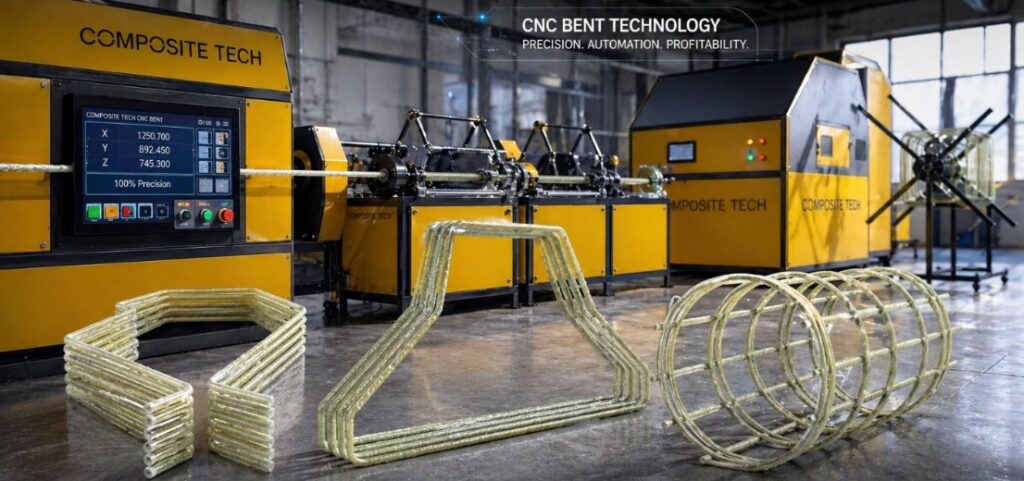
- حل فريد: خط CNC BENT من Composite-Tech هو الحل الآلي الوحيد في العالم لإنتاج عناصر GFRP المنحنية (الركائز، والقضبان على شكل حرف L، والقضبان على شكل حرف U، واللوالب) باستخدام التحكم العددي (CNC).
- المتطلبات التنظيمية: تحظر قوانين البناء العالمية، مثل ACI 440.11-22، بشكل صارم ثني قضبان التسليح المصنوعة من الألياف الزجاجية المقواة بالبلاستيك على البارد في مواقع البناء؛ يجب تصنيع جميع العناصر المنحنية مسبقًا في المصنع قبل اكتمال عملية بلمرة الراتنج.
- قدرات التحكم الرقمي الحاسوبي: يتم التحكم بها بواسطة وحدة DDCS V3.1 باستخدام رموز G القياسية، مما يسمح بأي شكل هندسي محصور في دائرة بقطر يصل إلى 1.2 متر.
- نطاق التشغيل: يقوم النظام بمعالجة الأقطار من 4 مم إلى 20 مم.
- كفاءة عالية: يقتصر استهلاك الطاقة على 15 كيلوواط، ويقلل التشغيل الآلي الكامل عدد الموظفين المطلوبين إلى مشغل واحد فقط.
- الإمكانات التجارية: تتميز العناصر المنحنية بأسعار أعلى بمرتين إلى ثلاث مرات من حديد التسليح المستقيم لكل وحدة طول، مما يوفر أسرع عائد على الاستثمار في صناعة المواد المركبة.
بالنسبة لأصحاب مصانع المواد المركبة، يُعد عام 2026 عام "سباق الاعتماد". فبينما يشهد السوق تشبعًا بمصنعي قضبان التسليح المستقيمة، لا يزال الطلب على العناصر المنحنية - الضرورية لتقوية الزوايا والأساسات والأعمدة وعوارض الجسور - غير مُلبّى. ولم تعد شركات الهندسة تقبل القضبان المنحنية يدويًا، إذ تتطلب دقة عالية وقوة مُثبتة عند الانحناء. ASTM D7957. إن امتلاك تقنية CNC BENT من Composite-Tech يمنح احتكارًا تقنيًا: تصبح المورد الوحيد لحزمة تقوية كاملة (حديد التسليح + الانحناءات)، مما يسمح لك بتأمين 100% من مناقصات البنية التحتية واسعة النطاق.
علم الانحناء: لماذا يُعدّ خط BENT لا غنى عنه
حديد التسليح المصنوع من الألياف الزجاجية هو مركب حراري. على عكس فُولاَذ, ، والتي يمكن ثنيها في أي وقت، تصبح مصفوفة البوليمر (فينيل إستر أو راتنج الإيبوكسي) صلبة وهشة بمجرد معالجتها.
مشكلة "الانحناء البارد"“
إن محاولة ثني حديد التسليح المركب النهائي في الموقع تؤدي إلى تدمير الروابط بين الألياف والمادة الرابطة وظهور تشققات دقيقة. وهذا يقلل من قوة العنصر بما يصل إلى 80-90%، مما يجعله يشكل خطراً إنشائياً. ونتيجة لذلك،, ACI 440.11-22 تنص على ضرورة تشكيل الأشكال المنحنية "وهي رطبة" أثناء عملية التصنيع.
حلول كومبوزيت-تك: التشكيل الرطب باستخدام التحكم الرقمي الحاسوبي
يقوم خط BENT بتنفيذ عملية التشكيل قبل بدء عملية البلمرة:
- التشريب ثلاثي المراحل: تمر الخيوط عبر غرفة ضغط فراغي لتحقيق التصاق مثالي بين الراتنج والألياف.
- اللف باستخدام التحكم الرقمي الحاسوبي: يقوم جهاز التحكم DDCS V3.1 بتوجيه القضيب "الرطب" إلى أدوات متخصصة، ويضبط نصف قطر الانحناء بدقة (وفقًا لمعايير ASTM - لا يقل عن 3-4 أضعاف قطر القضيب).
- التثبيت الحراري: يدخل المنتج المتشكل إلى فرن البلمرة حيث يتم "تثبيت" الهيكل بشكل دائم دون فقدان القوة.
لماذا هذا مهم للمصنعين: تتيح توافقية G-code لعملائك التبديل من قضيب L إلى حلزون كومة معقد في أقل من 5 دقائق ببساطة عن طريق تحميل ملف جديد عبر USB.
جدول مقارنة: الثني باستخدام الحاسوب مقابل الطرق التقليدية
| المعلمة | خط إنتاج بنت (تقنية المواد المركبة) | التشكيل اليدوي | الأهمية بالنسبة لمعايير ASTM/ACI |
|---|---|---|---|
| دقة الزاوية | (التحكم باستخدام الحاسوب) | (خطأ بشري) | أمر بالغ الأهمية لتركيب القفص ولعملية وصل التداخل. |
| نصف قطر الانحناء | قابل للبرمجة، من 4x Ø | غير مستقر | يتطلب معيار ASTM D7957 حدًا أدنى من 3x-4x Ø. |
| تعقيد الشكل | أشكال حلزونية، وأشكال على شكل حرف U، وحرف L، وحرف Z، وحلقات | الزوايا البسيطة فقط | القدرة على تلقي طلبات التصوير بالرنين المغناطيسي/التصوير بالجسور ذات القيمة العالية. |
| قوة الانحناء | (مضمون) | غير متوقع (خطر الانفصال الطبقي) | إلزامي وفقًا للمادة 440.11-22 من قانون البناء الأمريكي. |
| تكلفة العمالة | عامل واحد طوال فترة العمل | مطلوب حرفيون مهرة (مستوى عالٍ) | يقلل تكلفة إنتاج الوحدة بمقدار 3 أضعاف. |
حاسبة الربحية: حديد التسليح المستقيم مقابل العناصر المنحنية
يُعدّ الاستثمار في خط إنتاج BENT أسرع طريق لتحقيق هوامش ربح عالية. لنحسب الفرق في الربحية (بناءً على #3 (قضيب 10 مم).
بيانات الإدخال:
- تكلفة الإنتاج (المواد الخام + الطاقة + العمالة): ~$0.23 – $0.27 لكل متر.
تحليل الهامش:
- حديد التسليح المستقيم (سوق السلع):
- سعر البيع: $0.45 – $0.55/م.
- صافي الربح: ~$0.20 – $0.28/م.
- العناصر المنحنية (سوق متخصصة):
- سعر البيع: $1.20 – $1.80/م (محسوب حسب الطول الإجمالي للمنتج).
- صافي الربح: ~$0.90 – $1.50/م.
نتيجة: يبلغ الربح لكل متر على خط إنتاج BENT من 4 إلى 5 أضعاف الربح على خط إنتاج CT6 القياسي. وحتى مع انخفاض الإنتاج الخطي، غالباً ما يتجاوز العائد المالي لخط إنتاج BENT العائد على إنتاج حديد التسليح الأساسي.
لماذا يُعدّ هذا الأمر مهمًا للمهندسين؟ يُفضّل المصممون العمل مع مصنع واحد يُورّد مجموعة التعزيزات كاملةً. خط إنتاج BENT يجعلك الشريك المُفضّل لدى كبار المُطوّرين.
قائمة التحقق العملية: دمج خط إنتاج BENT في مصنعك
- تخصيص المساحة: خط BENT صغير الحجم (طوله حوالي 13 مترًا) ولا يتطلب سوى 20-30 مترًا مربعًا من مساحة الأرضية الإضافية.
- متطلبات الطاقة: يتطلب توصيلًا بجهد 380 فولت وقدرة 15 كيلوواط. يتميز الجهاز بكفاءة عالية في استهلاك الطاقة مقارنةً بمكابس التسخين الفولاذية.
- الأدوات (القوالب): نوصي بمجموعة من القوالب لكل نوع من أنواع المنتجات. يدعم هذا الخط أشكالاً تتناسب مع دائرة قطرها 1.2 متر.
- التدريب على البرمجيات: يستغرق التدريب على برمجة G-code يومين. نوفر مكتبة من البرامج النصية للركائب القياسية.
- مراقبة الجودة: إجراء اختبارات قوة الانحناء (ASTM D7957) مرة واحدة في كل وردية لضمان استقرار العملية.
- اختيار الراتنج: استخدم الراتنجات ذات فترة صلاحية طويلة للحفاظ على المرونة أثناء مرحلة اللف.
الأسئلة الشائعة: أسئلة من مشتري المعدات
هل يمكنني ثني حديد التسليح المنتج على آلات أخرى؟
لا. آلة BENT عبارة عن خط إنتاج مستقل. يجب تشكيل حديد التسليح فورًا بعد التشريب وقبل دخول الفرن.
ما هو أقصى قطر يمكن للآلة أن تثنيه؟
يُعالج الإصدار القياسي ما يصل إلى 20 مم. وهذا يغطي 95% من جميع احتياجات التعزيز الهيكلي.
هل من الصعب تغيير الأشكال على الآلة؟
يستغرق تغيير الأدوات من 15 إلى 20 دقيقة. أما تحميل برنامج CNC جديد فيتم على الفور عبر القائمة.
هل يمكن للآلة صنع حلزونات لأوتاد الأساس؟
نعم، هذه ميزة قياسية في وحدة التحكم الرقمي الحاسوبي (CNC). تُعدّ اللوالب المصنوعة من الألياف الزجاجية المقواة بالبلاستيك (GFRP) ضرورية في ظروف التربة القاسية.
ما هي دقة التكرار؟
بفضل محركات دلتا/سامكون CNC، فإن التفاوت أقل من 1 مم لكل متر من المنتج.
هل يحتوي على فرن خاص به؟
نعم، خط إنتاج BENT مزود بغرفة بلمرة حيث يتم معالجة العناصر في وضع ثابت على القوالب.
هل أحتاج إلى مبرمج كمشغل؟
لا، واجهة المستخدم سهلة الاستخدام. يستطيع العامل العادي إتقان لوحة التحكم في غضون 3-5 نوبات عمل.
ما مدى سرعة استرداد رأس المال؟
مع وجود طلبات نشطة على دعامات الأساس، يتم الوصول إلى نقطة التعادل عادةً في غضون 4-6 أشهر.
هل يمكنني استخدام ألياف البازلت (BFRP)؟
نعم، هذا الخط عالمي لـ GFRP، BFRP, ، و CFRP.
هل يتم استخدام التبريد بالهواء أم بالماء؟
نستخدم التبريد الهوائي المتحكم به لمنع الصدمة الحرارية، وفقًا لتقنيتنا الحاصلة على براءة اختراع.
كيف يتم تسويق المنتجات؟
يمكن دمج وحدة تعليم آلية لطباعة معرفات الشركة المصنعة والأقطار على كل قطعة.
ما هي مدة الضمان؟
نقدم ضمانًا لمدة عام واحد على الأجهزة ودعمًا برمجيًا مدى الحياة.
خاتمة
يُعدّ إنتاج العناصر المنحنية "المستوى الرئيسي" في صناعة المواد المركبة. وقد أغلق معيار ACI 440.11-22 الباب أمام أولئك الذين يحاولون محاكاة الجودة بالطرق اليدوية. خط إنتاج CNC BENT من شركة Composite-Tech إنها طريقتك الوحيدة لإنتاج الركائب وقضبان الزاوية بشكل قانوني وفعال للأسواق الأمريكية والأوروبية.
لا تكن مجرد منتج آخر لقضبان التسليح المستقيمة. كن رائداً في تقديم حلول هندسية شاملة ومعتمدة.
هل ترغب بمشاهدة عرض فيديو توضيحي لخط إنتاج CNC BENT وأمثلة على أكواد G؟ اطلب استشارة فنية مع كبير مهندسينا وحساب ربحية منتجاتك.