

Краткий ответ: Что такое длина анкеровки арматуры из стекловолокна?
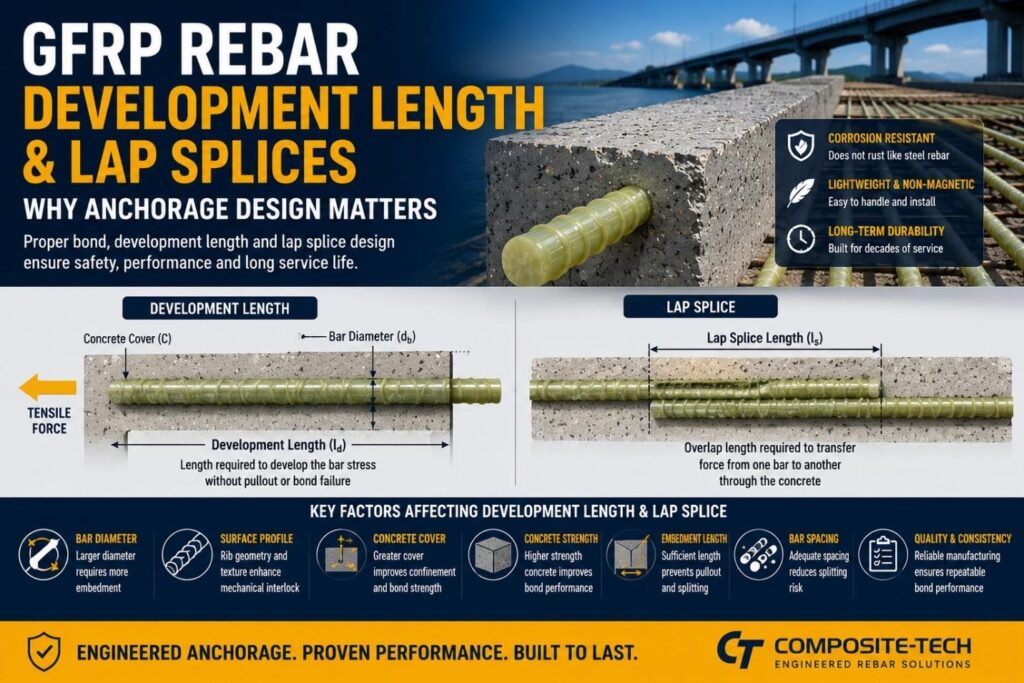
Длина заделки арматурного стержня из стекловолокнистого полимера (GFRP) — это длина заделки стержня из GFRP, необходимая для передачи растягивающего усилия от стержня к бетону без вырыва, раскалывания или нарушения сцепления. Это один из важнейших параметров проектирования железобетонных конструкций, армированных стекловолокнистым полимерным композитом (GFRP), поскольку GFRP обладает иными характеристиками сцепления, жесткостью и механизмами разрушения по сравнению со стальной арматурой.
Длина нахлесточного соединения арматурного стержня из стекловолокна (GFRP) — это длина перекрытия, необходимая для передачи усилия от одного стержня GFRP к другому через окружающий бетон. Длина анкеровки и длина нахлесточного соединения зависят от диаметра стержня, профиля поверхности, геометрии ребер, прочности бетона, защитного слоя бетона, расстояния между стержнями, длины сцепления, уровня напряжения и применимого стандарта проектирования.
Проектирование арматуры из стекловолокнистого композита не должно основываться на простом копировании правил анкеровки стальной арматуры. Для этого требуются специальные методы проектирования для композитных материалов и надежные данные о продукции. Профессиональное производственное оборудование Это важно, поскольку профиль поверхности, консистенция ребер, качество смолы и процесс отверждения напрямую влияют на прочность сцепления и анкеровку.
Узнать больше: Профессиональная линия по производству арматуры из стекловолокна.
Ключевые выводы
- Длина анкеровки — это длина заделанной арматуры из стекловолокнистого полимера, необходимая для создания требуемого растягивающего напряжения.
- Длина нахлесточного соединения — это длина перекрытия, необходимая для передачи усилия между двумя стержнями.
- Конструкция анкерного крепления из стекловолокнистого полимера определяется свойствами сцепления между арматурным стержнем и бетоном.
- Стекловолокнистый армирующий полимер (GFRP) не следует рассматривать как точную копию стальной арматуры, поскольку он обладает более низким модулем упругости, не проявляет признаков текучести и имеет другие механизмы сцепления.
- Профиль поверхности имеет решающее значение: ребристые, покрытые песком, обернутые или комбинированные профили могут вести себя по-разному.
- Исследования показывают, что на адгезию стекловолокнистого полимерного композита влияют диаметр арматурного стержня, защитный слой бетона, длина сцепления, подготовка поверхности и прочность бетона.
- Больший диаметр стержня может снизить среднее напряжение сцепления, что может увеличить потребность в анкеровке.
- Снижение защитного слоя бетона может ухудшить сцепление и увеличить риск растрескивания.
- Испытания на прочность сцепления балок и испытания на стыки более точно отражают реальное поведение конструкции, чем простые испытания на вырыв.
- Профессиональное оборудование для производства арматуры из стекловолокна помогает обеспечить однородную геометрию поверхности, намотку ребер, отверждение и качество сцепления.
- Покупателям следует запросить технические данные по облигациям., Длина разработки, нахлесточные соединения, Профиль поверхности и отслеживаемость партий.
Почему важна длительность анкеровки арматуры из стекловолокнистого полимера?
Армирование бетона Арматура работает только тогда, когда сила может передаваться между бетоном и арматурой. В железобетонном элементе стержень не несет нагрузку изолированно. Растягивающая сила должна передаваться через сцепление между поверхностью стержня и окружающим бетоном.
Здесь решающее значение приобретает продолжительность разработки.
Если длина заделки слишком мала, стержень из стекловолокнистого полимера может не достичь требуемого напряжения растяжения. Вместо этого конструкция может разрушиться по следующим причинам:
- Выдвижная перекладина;
- Раскалывание бетона;
- Разрыв связи;
- чрезмерное скольжение;
- Срезание ребер;
- преждевременный выход из строя анкерного крепления;
- Несостоятельность соединения внахлест.
Что касается стальной арматуры, инженеры знакомы с общепринятыми правилами определения длины анкеровки. Стеклопластиковая арматура, Однако ситуация иная, поскольку стекловолокнистый полимерный композит (GFRP) обладает другой жесткостью, различными системами поверхностей и линейно-упругим поведением до разрушения.
Именно поэтому длина несущих конструкций — это не просто мелкий нюанс. Это один из ключевых критериев проверки при проектировании железобетонных конструкций, армированных стекловолокном.
Арматура из стекловолокна (GFRP) проектируется иначе, чем стальная арматура.
Распространенная ошибка заключается в предположении, что к арматуре из стекловолокна можно применять те же правила анкеровки и соединения, что и к стальной арматуре.
Это неверно.
Стальная арматура — металлический, пластичный материал со стандартизированными деформациями. Арматура из стекловолокнистого полимера (GFRP) — композитный материал, анизотропный и зависит от поверхности. Ее адгезионные свойства в значительной степени зависят от полимерной матрицы и профиля поверхности.
Таблица 1: Детализация арматуры из стали и из стекловолокна.
| Фактор детализации | Стальная арматура | стеклопластиковая арматура |
|---|---|---|
| Поведение материала | Пластичный, текучесть перед разрушением. | Линейно-упругое поведение до разрушения |
| Модуль упругости | Высокий | Ниже стали |
| Профиль поверхности | Стандартизированные рёбра | Зависит от производителя. |
| Механизм связи | Механическая блокировка со стальными ребрами | Адгезия, трение и механическое сцепление за счет профиля смолы/поверхности. |
| Гибка на месте | Обычно возможно | Не рекомендуется после затвердевания. |
| Длительность развития | На основе правил проектирования стальных конструкций. | Требуются специальные правила проектирования для материалов, армированных волокном (FRP). |
| Нахлесточная склейка | Традиционные правила соединения стальных конструкций | Требуется специальная конструкция соединения для композитных материалов из стекловолокна. |
| Предупреждение о сбое | Предел текучести стали обеспечивает пластичность. | Разрушение стекловолокнистых полимерных композитов может быть более хрупким. |
| Варианты продукции | Высоко стандартизированный | В значительной степени зависит от качества изготовления. |
Краткое содержание: Арматура из стекловолокнистого полимера (GFRP) может отлично работать в бетоне, но ее проектирование и детализация должны производиться именно как арматуру из GFRP, а не как сталь.
Что такое продолжительность развития?
Длина анкеровки — это длина арматуры, заделанной в бетон, которая необходима для создания требуемого напряжения в стержне.
Проще говоря:
Если арматурный стержень слишком короткий и вдавлен в бетон, он может выскользнуть, прежде чем достигнет необходимой прочности.
Для арматуры из стекловолокнистого полимера длина анкеровки зависит от нескольких переменных:
- диаметр стержня;
- требуемое растягивающее напряжение;
- Прочность бетона на сжатие;
- профиль поверхности стержня;
- геометрия ребер;
- бетонное покрытие;
- межстрочный интервал;
- длина встраивания;
- положение при литье;
- заключение;
- условия окружающей среды;
- применимый строительный кодекс.
Таблица 2: Основные факторы, влияющие на продолжительность развития GFRP.
| Фактор | Влияние на продолжительность развития |
|---|---|
| диаметр стержня | Для более крупных песчаных отмелей часто требуется более тщательная фиксация. |
| Требование к растягивающему напряжению | Повышенный уровень стресса требует более сильного развития. |
| Профиль поверхности | Более надежная механическая блокировка может улучшить анкеровку. |
| Геометрия ребер | Контролирует сцепление и передачу нагрузки. |
| прочность бетона | Более высокая прочность бетона может улучшить сцепление. |
| Бетонное покрытие | Больше укрытий улучшает фиксацию и снижает риск разрыва. |
| межстрочный интервал | Близко расположенные перекладины могут уменьшить ощущение замкнутого пространства. |
| Длина связи | Увеличение длины встраивания улучшает передачу силы. |
| Положение при литье | Верхние стержни могут иметь различное поведение связей. |
| Качество производства | Контролирует консистенцию ребер и прочность поверхности смолы. |
| Стандарт проектирования | Определяет метод расчета и коэффициенты безопасности. |
Продолжительность разработки необходимо рассчитывать, а не гадать.
Что такое длина нахлесточного соединения?
Нахлесточное соединение — это перекрытие двух арматурных стержней. Цель состоит в передаче усилия от одного стержня к другому через бетон.
В железобетонных конструкциях нахлесточные соединения являются распространенными и хорошо изученными. В железобетонных конструкциях, армированных стекловолокнистым полимером, нахлесточные соединения требуют особого внимания, поскольку прочность соединения зависит от качества сцепления.
Если соединение слишком короткое, передача усилия может быть неполной. Это может привести к следующим последствиям:
- трещины, способные расколоть;
- чрезмерное скольжение;
- Выдвижная перекладина;
- разрушение до достижения требуемого растягивающего напряжения;
- Плохой контроль за образованием трещин;
- потеря структурной надежности.
Таблица 3: Длина разработки в зависимости от длины нахлесточного соединения
| Срок | Значение | Почему это важно |
|---|---|---|
| Длительность развития | Длина, необходимая для того, чтобы один стержень создал требуемое напряжение в бетоне. | Предотвращает вырывание или разрушение соединения. |
| Длина нахлесточного соединения | Длина перекрытия между двумя стержнями | Передает усилие от одного стержня к другому. |
| Длина встраивания | Фактическая длина стержня, заделанного в бетон. | Должно быть достаточно для якорной стоянки. |
| Длина связи | Длина, на которой действует напряжение сцепления | Контролирует передачу напряжения |
| Длина якорной стоянки | Общий термин для обозначения длины, необходимой для закрепления арматуры. | Важно для детализации и безопасности. |
Краткое содержание: Длина анкеровки обеспечивает фиксацию одного стержня. Длина нахлесточного соединения передает усилие между двумя стержнями.
Как арматура из стекловолокна передает усилие на бетон
Арматурные стержни из стекловолокнистого полимера (GFRP) сцепляются с бетоном посредством трех основных механизмов:
- Химическая адгезия между поверхностью и бетоном;
- Трение после начала микроскольжения;
- Механическая блокировка от ребер, обмотки, песчаного покрытия или деформации поверхности.
В случае стекловолокнистых полимерных композитов (GFRP) механический замок зачастую является наиболее важным механизмом, поскольку поверхность стержня должна физически соприкасаться с бетоном.
Однако напряжение сцепления не ограничивается внешним ребром. Оно должно пройти через смоляную матрицу в стекловолокна. Это означает качество смолы, пропитку и отверждающие вещества.
Таблица 4: Механизмы образования связей и их влияние на крепление.
| Механизм связи | Роль в Анкоридже |
|---|---|
| Химическая адгезия | Способствует образованию прочного сцепления при низком уровне скольжения. |
| Трение | Сопротивляется движению после начала скольжения. |
| Механическая блокировка | Основной фактор, обеспечивающий прочность якорной стоянки. |
| Перенос смолы путем сдвига | Переносит напряжение сцепления с поверхности на волокна. |
| Бетонное ограничение | Предотвращает расслоение и улучшает прочность сцепления. |
| Сращение ребер | Поддерживает заданный профиль поверхности под нагрузкой. |
| Шероховатость поверхности | Улучшает трение и механическую прочность. |
Достаточно прочного профиля поверхности, если ребро слабое или плохо прикреплено к корпусу стержня.
Почему профиль поверхности влияет на продолжительность разработки
Арматурные стержни из стекловолокна имеют разный профиль поверхности. Это одно из главных отличий от стальной арматуры.
К распространенным профилям поверхности стекловолокнистых полимерных композитов относятся:
- ребристая поверхность;
- Поверхность, обернутая по спирали;
- Поверхность, покрытая песком;
- вдавленная поверхность;
- поверхность, намотанная веревкой;
- обернутая и покрытая песком поверхность;
- ребристая и покрытая поверхность.
Каждый тип поверхности может приводить к различным свойствам сцепления.
Таблица 5: Профиль поверхности и эффективность анкеровки.
| Тип поверхности | Механизм связи | Влияние продолжительности развития |
|---|---|---|
| Гладкий стекловолоконный полимерный композит | Только адгезия и трение | Обычно требует тщательной проверки; может быть установлен ограниченный залог. |
| Стекловолокнистый полимер с песчаным покрытием | Трение и микроблокировка | Может улучшить сцепление по сравнению с гладкими брусками. |
| Ребристый стекловолокнистый композит | Механическая блокировка | Высокий потенциал для надежной фиксации, если ребра жесткости ровные. |
| Спирально обмотанное стекловолокно | Спиральная механическая блокировка | Зависит от адгезии пленки и ее геометрии. |
| Вдавленный стекловолокнистый полимерный композит | Механическая кодировка | Зависит от устойчивости формы. |
| Ребристый стекловолокнистый полимер с покрытием | Совместное сцепление и трение | При правильном изготовлении может обеспечить прочное соединение. |
Краткое содержание: Проектирование анкерных креплений из стекловолокнистого полимера начинается с оценки качества профиля поверхности.
Что показывают исследования о диаметре арматурного стержня и защитном слое бетона
Исследования прочности сцепления арматурных стержней из стекловолокнистого полимера (GFRP) выявляют две важные тенденции:
- Увеличение диаметра стержня может снизить предельное напряжение сдвига.
- Уменьшение защитного слоя бетона может снизить напряжение сцепления при сдвиге.
Это напрямую влияет на длину разработки и конструкцию соединения внахлест.
Более толстый стержень может выдерживать большую суммарную растягивающую силу, но среднее напряжение сцепления может быть ниже. Это означает, что длина анкеровки может потребовать тщательного проектирования. Аналогично, недостаточный защитный слой бетона может уменьшить обжатие и увеличить риск раскалывания.
Таблица 6: Практическое влияние диаметра и покрытия
| Переменная | Что происходит | Практическое значение |
|---|---|---|
| Больший диаметр стержня | Среднее напряжение сцепления может снизиться. | Возможно, потребуется увеличить длину якорной стоянки. |
| Меньший диаметр стержня | Напряжение сцепления может быть более благоприятным. | Увеличение количества планок иногда может помочь в детализации. |
| Более крупное бетонное покрытие | Лучшее заключение | Снижен риск разделения |
| Меньшая бетонная крышка | Сокращение сроков заключения | Более низкая доходность облигаций и более высокий риск разделения. |
| Более высокая прочность бетона | Более прочное поведение в отношениях | Может улучшить характеристики якорной стоянки |
| Улучшенный профиль ребер | Улучшенная механическая блокировка | Может улучшить передачу стресса |
| Низкое качество ребер | Слабая механическая блокировка | Повышенный риск скольжения или повреждения ребер. |
Для производителей это доказывает, почему геометрия ребер и однородность диаметра — это не просто декоративные детали. Они влияют на технические характеристики.
Почему важны испытания на прочность соединения балок и испытания на прочность стыков.
Во многих исследованиях сцепления используются испытания на вырыв. Испытания на вырыв полезны для базового сравнения, но они могут не в полной мере отражать реальное поведение железобетона.
Испытания на прочность соединения балок и испытания на прочность стыков часто являются более реалистичными, поскольку они более точно воспроизводят условия напряженного состояния конструкции.
Таблица 7: Методы испытаний на прочность сцепления и анкеровку стекловолокнистых полимерных композитов.
| Метод испытания | Что именно измеряет | Практическая ценность |
|---|---|---|
| испытание на вырыв | Вытаскивание арматурного стержня из бетонного блока. | Базовое сравнение облигаций |
| Испытание на прочность соединения балок | Поведение сцепления в изгибаемом элементе | Более реалистичное структурное поведение |
| Проверка соединения | Качество соединения внахлест | Важно для детализации |
| тест на вырыв кольца | Связывание в радиальных условиях | Полезно для сравнения результатов исследований. |
| Испытание на изгиб стержня | Прочность заводских изгибов | Важно для стремян и крюков. |
| Испытание на растяжение | Предел прочности и модуль упругости | Необходимо для расчета напряжений при проектировании. |
| Осмотр поверхности | Профиль и геометрия ребер | Обеспечивает согласованность и контроль качества. |
Краткое содержание: Профессиональное изделие из стекловолокнистого полимера должно подтверждаться данными испытаний на прочность сцепления, а не только данными о прочности на растяжение.
Почему продолжительность разработки часто определяет проектирование изделий из стекловолокнистого полимера
Арматура из стекловолокнистого полимера может обладать высокой прочностью на растяжение, но эта прочность полезна только в том случае, если её можно развить внутри бетона.
Если анкеровка недостаточна, конструкция может быть ограничена прочностью сцепления, а не прочностью арматурного стержня.
Это означает, что для элемента, армированного стекловолокном, могут потребоваться такие корректировки, как:
- увеличение длины внедрения;
- увеличение длины нахлесточного соединения;
- с использованием стержней меньшего диаметра;
- увеличение количества баров;
- увеличение толщины бетонного покрытия;
- увеличение расстояния между стержнями;
- улучшение условий содержания под стражей;
- с использованием изготовленных на заводе гнутых элементов;
- выбор более подходящего профиля поверхности;
- с использованием бетона большей прочности;
- в соответствии со специальными стандартами проектирования из стекловолокна.
Продолжительность разработки — это не второстепенный момент. Она может существенно повлиять на дизайн.
Почему стержни меньшего диаметра иногда могут быть лучше
В некоторых случаях использование нескольких стержней из стекловолокна меньшего диаметра может быть предпочтительнее, чем использование меньшего количества стержней большего диаметра.
Почему?
Поскольку напряжение сцепления и характер развития трещин могут ухудшаться с увеличением диаметра стержня, использование стержней меньшего диаметра может улучшить передачу напряжений и распределение трещин, хотя окончательное решение зависит от проектных требований.
Таблица 8: Меньше больших батончиков против большего количества маленьких батончиков
| Вариант дизайна | Возможное преимущество | Возможный риск |
|---|---|---|
| Меньше крупных стержней из стекловолокна. | Более простое размещение и меньшее количество перекладин. | Повышенная потребность в анкеровке, большее расстояние между трещинами. |
| Больше небольших стержней из стекловолокна | Более равномерное распределение и потенциально более эффективное поведение связей. | Дополнительная работа по стажировке |
| Более крупное покрытие | Лучшее заключение | Возможно увеличение численности участников. |
| Более высокая прочность бетона | Более высокий потенциал для заключения сделок | Более высокая стоимость бетона |
| Улучшенный профиль ребер | Улучшенная механическая блокировка | Требуется качественное производство. |
Именно поэтому конструкцию из стекловолокнистого полимера следует оптимизировать, а не копировать из стальных конструкций.
Изготовленные на заводе гнутые элементы и анкерные крепления
Стальную арматуру часто можно согнуть на месте. Арматуру из стекловолокнистого полимера (GFRP) нельзя согнуть после затвердевания без повреждения композитной конструкции.
Если для проекта требуются крюки, хомуты, U-образные, L-образные или специальные анкерные элементы, их следует изготавливать на заводе в процессе производства.
Это важно, потому что изгиб арматуры из армирующего волокна имеет иное прочностное поведение, чем прямые стержни. Изогнутые стержни и хомуты требуют испытаний и контролируемого изготовления.
Компания Composite-Tech также производит оборудование для изготовления гнутых элементов из стекловолокнистого полимера, что позволяет производителям расширить ассортимент продукции за пределы прямых стержней и удовлетворять более сложные потребности в армировании.
Узнать больше: Линия по производству гнутой арматуры из стекловолокна
Почему качество производства напрямую влияет на Анкоридж
Длина анкеровки и качество нахлесточного соединения в значительной степени зависят от сцепления. Сцепление, в свою очередь, в значительной степени зависит от качества поверхности и внутренних свойств арматурного стержня из стекловолокна.
Некачественное производство может привести к следующим последствиям:
- неустойчивая геометрия ребер;
- слабое сцепление ребер;
- зоны сухого волокна;
- пустоты;
- непостоянное содержание смолы;
- Недостаточно отвержденная матрица;
- поверхностные микротрещины;
- вариация диаметра;
- Низкая воспроизводимость результатов в партиях.
Любой из этих факторов может снизить прочность сцепления и сделать анкеровку менее надежной.
Таблица 9: Факторы производства, влияющие на анкеровку.
| Производственный фактор | Влияние Анкориджа |
|---|---|
| Пропитка смолой | Обеспечивает целостность волокон и поверхности, как единого композитного материала. |
| Намотка ребер | Создает механическое сцепление с бетоном. |
| Угол ребра | Влияет на геометрию поверхности и характер связей. |
| Качество отверждения | Контролирует прочность смолы и стабильность матрицы. |
| Метод охлаждения | Защищает поверхность от термического удара. |
| Устойчивость при тяге | Обеспечивает постоянный диаметр и геометрию ребер. |
| Отделка поверхности | Влияет на трение и сцепление. |
| контроль диаметра | Влияет на расчет площади, напряжения и прочности сцепления. |
| Контроль качества | Обеспечивает повторяемость и доверие. |
| Прослеживаемость | Связывает производственную партию с тестовыми данными. |
Даже если внешний вид индикатора кажется правильным, его показатели могут быть низкими, если внутренний процесс нестабилен.
Технология Composite-Tech для арматуры из стекловолокнистого полимера, готовой к склеиванию.
Производственные линии Composite-Tech предназначены для изготовления арматуры из стекловолокна промышленного качества с повторяемой геометрией и характеристиками поверхности.
Ключевые особенности производства включают в себя:
- контролируемая подача волокна;
- Подготовка шерсти;
- точная пропитка смолой;
- стабильное формирование стержней;
- Компьютерное управление намоткой ребер;
- регулируемый угол ребра;
- запатентованная полимеризация с использованием коротковолнового инфракрасного излучения в качестве усилителя;
- печи для вяления;
- запатентованная двухступенчатая система охлаждения воздухом и водой;
- система натяжения с высокой силой;
- химически стойкие тяговые ремни;
- Варианты резки и намотки;
- Контроль производственных процессов и поддержка качества.
Эти характеристики важны, поскольку длительность процесса разработки и надежность соединения внахлест начинаются со стабильного качества продукции.
Профессиональная производственная линия помогает производителям выпускать арматуру, которую инженеры могут с уверенностью использовать в своих проектах.
Стандарты и технические документы, касающиеся якорной стоянки.
Длина заделки и конструкция стыка стекловолокнистого полимерного композита должны основываться на общепризнанных стандартах и технических рекомендациях.
Важные источники информации включают:
- Документы ACI 440 для проектирования и строительства с использованием арматурных стержней из стекловолокна;
- Стандарт ASTM D7913 для испытания прочности сцепления методом вытягивания;
- Стандарт ASTM D7205 определяет прочностные характеристики арматурных стержней из стекловолокна;
- Стандарт ASTM D7957 для арматурных стержней из стекловолокнистого полимера (GFRP) для армирования бетона;
- Стандарт CSA S806 для проектирования и строительства строительных элементов с использованием стекловолокна;
- CNR-DT 203 для проектирования и строительства железобетонных конструкций, армированных стекловолокном;
- Критерии приемлемости соответствуют стандарту ICC-ES AC454.
Таблица 10: Данные об опорных точках, связанные со стандартами.
| Необходимые данные | Почему это важно |
|---|---|
| Предел прочности | Определяет требуемый уровень напряжения |
| Модуль упругости при растяжении | Влияет на эксплуатационные характеристики и образование трещин. |
| Эффективная площадь | Используется при расчете напряжений |
| прочность сцепления | Поддерживает конструкцию крепления. |
| Профиль поверхности | Объясняет механизм образования связей |
| Прочность бетона, используемая в испытаниях. | Необходимо для соответствия требованиям дизайна. |
| Покрытие и расстояние между элементами | Влияние на сопротивление расщеплению |
| данные о длине встраивания | Поддерживает продолжительность разработки |
| Данные о сращивании внахлест | Поддерживает детализацию |
| Данные испытаний гнутой арматуры | Поддерживает крюки и стремена |
| Прослеживаемость | Поддерживает контроль качества. |
Серьезный поставщик должен предоставлять техническую документацию, а не просто рекламный буклет.
Контрольный список для покупателя: Что нужно спросить перед использованием арматуры из стекловолокна
Перед покупкой или заказом арматуры из стекловолокна (GFRP) проконсультируйтесь с производителем:
Таблица 11: Контрольный список длины и места соединения труб из стекловолокнистого полимера.
| Вопрос | Почему это важно |
|---|---|
| Каков профиль поверхности стержня? | Степень связи зависит от геометрии поверхности. |
| Проволока имеет ребристую структуру, обернута, покрыта пескоструйным методом или представляет собой комбинированную конструкцию? | Разные профили требуют разной детализации. |
| Доступны ли данные испытаний на прочность сцепления? | Поддерживает уверенность в якорной стоянке. |
| Доступны ли рекомендации по продолжительности разработки? | Необходимо для дизайна |
| Доступны ли инструкции по выполнению нахлесточного соединения? | Необходим для строительства |
| Какую прочность бетона использовали в испытаниях? | Сцепление зависит от бетона. |
| Какие диаметры были протестированы? | Диаметр влияет на напряжение сцепления. |
| Какие показатели покрытия были проверены? | Покрытие влияет на сопротивление расщеплению |
| Контролируется ли угол наклона ребер? | Способствует повторяемости |
| Доступны ли изогнутые элементы? | Необходимы для крючков, стремян и различных приспособлений. |
| Доступна ли функция отслеживания партий? | Важно для обеспечения качества |
| Понимает ли поставщик рекомендации ASTM / ACI / CSA? | Важно для инженерных рынков |
Если поставщик не может ответить на эти вопросы, возможно, продукт не готов к серьезному применению в строительных конструкциях.
Контрольный список для инженера: что необходимо проверить
Инженеры должны проверить:
- применимый стандарт проектирования;
- предел прочности;
- Модуль упругости при растяжении;
- расчетный уровень нагрузки;
- Длительность развития;
- длина нахлесточного соединения;
- прочность бетона;
- покрытие и расстояние между ними;
- профиль поверхности стержня;
- данные испытаний на прочность сцепления;
- ширина трещины;
- отклонение;
- Пределы разрушения при ползучести;
- Воздействие огня;
- условия окружающей среды;
- требования к установке;
- наличие изготовленных на заводе гнутых элементов.
Проектирование конструкций из стекловолокнистого полимера не представляет сложности, если имеются необходимые данные. Но импровизировать не следует.
Распространенные ошибки при проектировании анкерных креплений из стекловолокнистого полимера.
Ошибка 1: Копирование длины разработки стали. – Сталь и стекловолокно обладают разными свойствами сцепления. Не следует слепо копировать стальные конструкции.
Ошибка 2: Сравнение только прочности на растяжение. – Высокое значение прочности на растяжение полезно только в том случае, если стержень способен развить такую прочность в бетоне.
Ошибка 3: Игнорирование профиля поверхности. – Профиль поверхности определяет сцепление. Гладкие, покрытые песком, ребристые и обернутые стержни ведут себя по-разному.
Ошибка 4: Использование крупных брусков без проверки сцепления. – Больший диаметр может снизить среднее напряжение сцепления. Необходимо проверить длину проявления.
Ошибка 5: Слишком сильное уменьшение защитного слоя бетона. – Низкий уровень заполнения может снизить способность к удержанию и связыванию.
Ошибка 6: Изгибание стекловолокнистого полимерного композита на строительной площадке. – Стекловолокнистый полимерный композит (GFRP) нельзя сгибать после отвердевания. Изогнутые детали должны быть изготовлены на заводе.
Ошибка 7: Покупка без данных тестирования. – Характеристики арматурного стержня из стекловолокна должны быть подтверждены техническими испытаниями, а не только ценой и внешним видом.
Часто задаваемые вопросы: Длина закладки арматуры из стекловолокна и нахлесточные соединения.
Какова длина заделки арматуры из стекловолокнистого полимера (GFRP)?
Длина заделки арматурного стержня из стекловолокнистого полимера (GFRP) — это длина заделки стержня, необходимая для передачи растягивающего усилия в бетон без вырыва, раскалывания или нарушения сцепления.
Какова длина стыка арматурного стержня внахлест из стекловолокнистого полимера (GFRP)?
Длина нахлесточного соединения — это перекрытие двух стержней из стекловолокнистого полимера, необходимое для передачи усилия от одного стержня к другому через окружающий бетон.
Можно ли использовать арматуру из стекловолокна с той же длиной анкеровки, что и стальную арматуру?
Нет. Арматура из стекловолокнистого полимера имеет другую жесткость, поведение поверхности и характер разрушения. Длина анкеровки должна рассчитываться с использованием правил проектирования, специфичных для полимерных композитных материалов.
Что влияет на продолжительность развития GFRP?
К основным факторам относятся диаметр арматурного стержня, растягивающее напряжение, профиль поверхности, геометрия ребер, прочность бетона, защитный слой бетона, расстояние между стержнями, длина заделки, обжатие и стандарт проектирования.
Почему важен профиль поверхности стекловолокнистого полимерного композита (GFRP)?
Профиль поверхности создает механическое сцепление с бетоном. Ребристые, покрытые песком, обернутые и комбинированные профили могут улучшить сцепление по сравнению с гладкими поверхностями.
Требует ли больший диаметр арматурного стержня из стекловолокна большей прочности анкерного крепления?
Зачастую больший диаметр стержня требует более тщательного крепления, поскольку среднее напряжение сцепления может уменьшаться с увеличением диаметра.
Почему бетонное покрытие имеет значение?
Защитный слой бетона обеспечивает удержание арматурного стержня внутри него. Уменьшение защитного слоя может снизить прочность сцепления и увеличить риск растрескивания.
Какой тест лучше всего подходит для оценки поведения соединений из стекловолокнистого полимера?
Испытания на вырыв полезны для сравнения, но испытания на прочность соединения балок и испытания на прочность стыков часто более реалистичны с точки зрения поведения конструкции.
Можно ли сгибать арматуру из стекловолокна на строительной площадке?
Нет. Арматуру из стекловолокна нельзя гнуть на месте после затвердевания. Крюки, хомуты и специальные элементы должны изготавливаться на заводе.
Почему качество производства влияет на продолжительность разработки?
Длительность проявления зависит от прочности сцепления. Прочность сцепления зависит от профиля поверхности, консистенции ребер, качества смолы, процесса отверждения, контроля диаметра и целостности поверхности — все эти факторы контролируются в процессе производства.
Какие вопросы следует задать покупателям перед приобретением арматуры из стекловолокна?
Покупателям следует запрашивать подробную информацию о профиле поверхности, данные испытаний на сцепление, рекомендации по длине эксплуатационных работ, рекомендации по нахлесточным соединениям, испытанные диаметры, прочность бетона, использованного при испытаниях, и отслеживаемость партии.
Какое оборудование необходимо для изготовления арматуры из стекловолокнистого полимера, готовой к склеиванию?
Профессиональная производственная линия должна контролировать подачу волокна, пропитку смолой, формовку арматуры, намотку ребер, отверждение, охлаждение, вытягивание и контроль качества. Компания Composite-Tech производит линии по производству арматуры из стекловолокна, предназначенные для промышленного производства высококачественной арматуры из стекловолокна.
Заключение
Длина заделки арматуры из стекловолокнистого полимера и конструкция стыка внахлест имеют решающее значение для безопасного и надежного железобетонного строительства. Высокая прочность на растяжение важна, но этого недостаточно. Арматурный стержень также должен передавать усилие в бетон за счет надежного сцепления.
Длина анкеровки зависит от диаметра арматурного стержня, профиля поверхности, прочности бетона, защитного слоя, шага арматуры, длины заделки и уровня напряжения. Длина нахлесточного соединения зависит от тех же механизмов сцепления и должна быть тщательно спланирована.
Самый важный урок прост: арматура из стекловолокна не должна быть точной копией стальной арматуры. Для ее изготовления необходимы специальные инженерные правила, специфичные для стекловолокна, и надежные данные о продукте.
Для производителей это означает, что качество и однородность поверхности имеют первостепенное значение. Пропитка смолой, намотка ребер, отверждение, охлаждение и вытягивание — все это влияет на качество сцепления готового изделия.
Composite-Tech Компания производит профессиональные линии по производству арматуры из стекловолокна, предназначенные для обеспечения производителей высококачественной, готовой к склеиванию арматуры из стекловолокна для серьезных строительных рынков.
Для получения дополнительной информации об арматуре из стекловолокна, свойствах сцепления и производственном оборудовании посетите:
- Сцепление арматуры из стекловолокна с бетоном: профиль поверхности, испытания и расчет длины.
- Как долго служит арматура из стекловолокна в бетоне?
- В каких случаях арматура из стекловолокна лучше стальной арматуры?
- Арматура из стекловолокна против стальной арматуры: численное сравнение
- Как начать бизнес по производству арматуры из стекловолокна
- Контроль качества арматуры из стекловолокна: содержание волокон, пропитка смолой, температура стеклования (Tg), испытания и отслеживаемость.
- Как читать технические характеристики арматуры из стекловолокна: прочность, модуль упругости, площадь поперечного сечения, сцепление и долговечность.
- Техническая документация Composite-Tech