Краткий ответ: Чем арматура из стекловолокна отличается от стальной арматуры в количественном отношении?
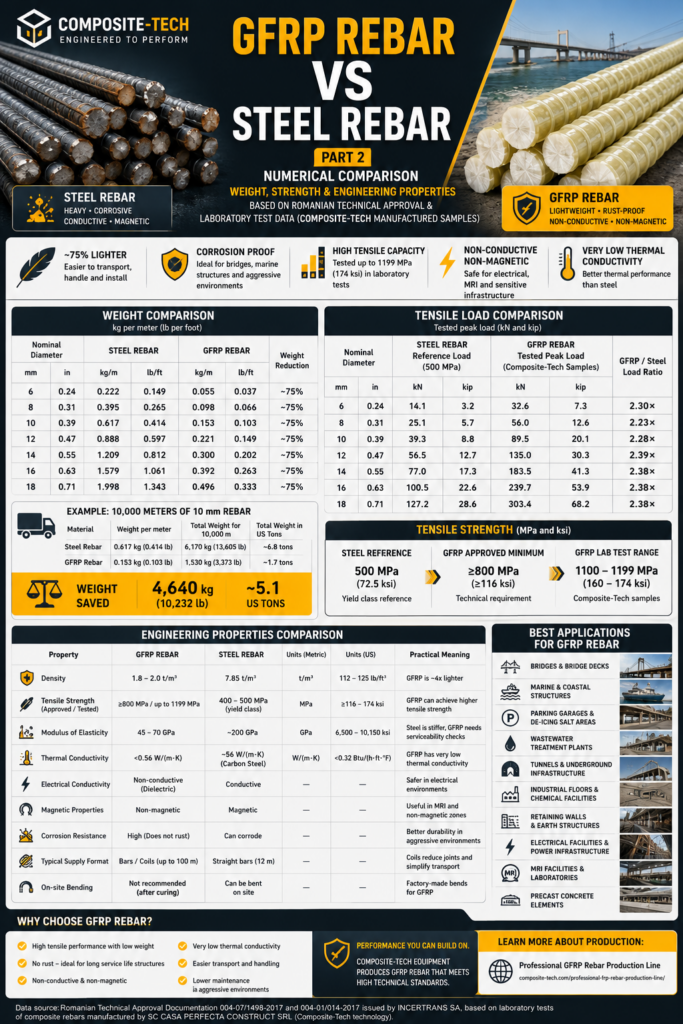
Арматура из стекловолокнистого композита (GFRP) значительно легче стальной арматуры и может обеспечить более высокую прочность на растяжение при сопоставимых номинальных диаметрах, в зависимости от типа изделия, содержания волокон, профиля поверхности и качества изготовления. В румынских технических документах и данных лабораторных испытаний для композитной арматуры производства Composite-Tech арматура из GFRP демонстрирует утвержденную прочность на растяжение не менее 800 МПа / 116 ksi, при этом лабораторные испытания показали, что значения для нескольких ребристых стержней достигают приблизительно tely. 1100–1199 МПа / 160–174 фунтов на квадратный дюйм.
Стальная арматура тяжелее и жестче, ее типичная плотность составляет около... 7,85 т/м³ / 490 фунтов/фут³ и модуль вблизи 200 ГПа / 29 000 ksi. Арматура из стекловолокнистого полимера имеет гораздо меньшую плотность, около... 1,8–2,0 т/м³ / 112–125 фунтов/фут³, Не ржавеет, немагнитен и обладает очень низкой теплопроводностью. Однако проектирование стекловолокнистых композитов должно осуществляться с использованием специальных инженерных правил для композитов, армированных волокном, и не должно рассматриваться как прямая замена стали без проведения расчетов.
Узнайте больше о производственном оборудовании Composite-Tech: Профессиональная линия по производству арматуры из стекловолокна.
Ключевые выводы
- Арматура из стекловолокнистого полимера обычно имеет следующие характеристики: в 4 раза легче чем стальная арматура по плотности.
- В лабораторных условиях образцы стекловолокнистого полимерного композита, изготовленные на оборудовании Composite-Tech, достигли значений прочности на растяжение около... 1100–1199 МПа / 160–174 фунтов на квадратный дюйм, в зависимости от диаметра и типа изделия.
- В румынской лаборатории образец арматуры из стекловолокнистого полимера толщиной 10 мм показал приблизительно tely. 89,5 кН / 20,1 кип растягивающая нагрузка, по сравнению с примерно 39,3 кН / 8,8 кип для арматурного стержня диаметром 10 мм, рассчитанного на давление 500 МПа.
- Арматура из стекловолокнистого полимера обладает превосходной коррозионной стойкостью, в то время как стальная арматура может подвергаться коррозии в хлористых, морских и агрессивных средах.
- Сталь обладает гораздо более высоким модулем упругости, что означает, что она более жесткая и ведет себя иначе под эксплуатационными нагрузками.
- Стекловолокнистый полимер (GFRP) не деформируется, как сталь; он обладает линейно-упругими свойствами до разрушения и должен проектироваться в соответствии со стандартами, разработанными специально для полимерных композитных материалов (FRP).
- Сравнение веса и прочности на растяжение полезно для понимания потенциала материалов, но оно не является прямой таблицей замены материалов в конструкции.
- Технология производства Composite-Tech важна, поскольку характеристики стекловолокнистых полимерных композитов (GFRP) в значительной степени зависят от пропитки волокнами, геометрии ребер, отверждения, охлаждения и контроля качества.
Важное техническое примечание:
В этой статье представлено численное сравнение Сравнение арматуры из стекловолокна и стальной арматуры. Это не универсальная таблица замены.
Арматура из стекловолокнистого полимера и стальная арматура обладают различными механическими свойствами:
- Сталь обладает пластичностью;
- Стекловолокнистый полимерный композит (GFRP) обладает линейно-упругим поведением до момента разрушения;
- Сталь обладает более высоким модулем упругости;
- Стекловолокнистый армированный полимер обладает более высокой коррозионной стойкостью и значительно меньшим весом;
- Для стекловолокнистых композитов (GFRP) требуются специальные проверки конструкции, учитывающие прогиб, ширину трещин, длину развития трещин, сцепление, ползучесть и разрушение при воздействии огня.
По этой причине инженерам не следует просто заменять диаметр стального профиля на диаметр профиля из стекловолокна без проведения расчетов. Цель данного сравнения — показать численное преимущество и различия в весе, прочности на растяжение и свойствах материала.
Источник данных GFRP, использованных в этом сравнении.
Значения GFRP, используемые в данной статье, основаны на румынской технической документации и лабораторных испытаниях композитной арматуры производства компании Composite-Tech.
В число документов входят:
- Техническая приемка арматурных стержней из армированного волокнами композита для конструктивных элементов и фундаментов;
- Техническая приемка арматурных стержней из армированного волокнами композитного материала для дорожных и морских мостов, морских платформ, опор и подпорных стен;
- Основные технические характеристики композитной арматуры;
- физико-механические характеристики в зависимости от диаметра и типа арматуры;
- Лабораторные испытания арматурных стержней из стекловолокнистого полимера различного диаметра.
Технические разрешения включают минимальные требования к прочности на растяжение и сравнительные данные для арматуры из стекловолокна, арматуры из нелегированной стали и арматуры из нержавеющей стали.
Арматура из стекловолокна против стальной арматуры: ключевые свойства материалов.
В таблице ниже приведено сравнение наиболее важных инженерных характеристик в метрических и имперских единицах измерения.
Таблица 1: Арматура из стекловолокнистого полимера против стальной арматуры — Свойства материалов
| Свойство | стеклопластиковая арматура | Стальная арматура | Практическое значение |
| Плотность | 1,8–2,0 т/м³ / 112–125 фунтов/фут³ | 7,85 т/м³ / 490 фунтов/фут³ | Стекловолокнистый армированный волокном полимер примерно в 4 раза легче. |
| Утвержденная прочность на растяжение | ≥800 МПа / ≥116 ksi | Часто имеет класс текучести 400–500 МПа / 58–72,5 ksi. | Стекловолокнистый армированный полимер (GFRP) обладает высокой прочностью на растяжение в направлении волокон. |
| Прочность на растяжение, измеренная в лабораторных условиях | приблизительно 1100–1199 МПа / 160–174 ksi | зависит от марки стали | Образцы Composite-Tech показали высокие значения по результатам испытаний. |
| Модуль упругости | приблизительно 45–70 ГПа / 6500–10150 ksi, в зависимости от типа. | приблизительно 200 ГПа / 29 000 ksi | Сталь более жесткая; для стекловолокнистых композитов требуется проверка эксплуатационной пригодности. |
| Теплопроводность | <0,56 Вт/(м·К) / <0,32 БТЕ/(ч·фут·°F) | приблизительно 56 Вт/(м·К) / 32 БТЕ/(ч·фут·°F) для углеродистой стали | Стекловолокнистый армированный полимер обладает очень низкой теплопроводностью. |
| Электрическая проводимость | Диэлектрический / непроводящий | Проводящий | Стекловолокнистый полимерный композит (GFRP) полезен для непроводящих применений. |
| Магнитные свойства | Немагнитный | Магнитный | Стекловолокнистые полимерные композиты (GFRP) находят применение в магнитно-резонансной томографии (МРТ), электротехнике и специальных инфраструктурных проектах. |
| Коррозионная стойкость | Высокий; не ржавеет | Может вызывать коррозию | Стекловолокнистый полимерный композит (GFRP) проявляет большую прочность в агрессивных средах. |
| Типичный формат поставок | Прутки или рулоны, в зависимости от диаметра и типа продукции. | Обычно прямые стержни | Стекловолокнистые полимеры (GFRP) могут упростить логистику при транспортировке рулонов. |
| Гибка на месте | Не рекомендуется после затвердевания. | Может быть согнут на месте. | Изогнутые элементы из стекловолокнистого полимера должны изготавливаться на заводе. |
Краткое содержание: Арматура из стекловолокнистого полимера (GFRP) сочетает в себе малый вес, высокую прочность на растяжение, коррозионную стойкость и непроводящие свойства. Сталь, напротив, обладает большей жесткостью и пластичностью, но уязвима к коррозии в агрессивных средах.
Сравнение веса: арматура из стекловолокна значительно легче стали.
Одним из наиболее очевидных количественных преимуществ арматуры из стекловолокна является её вес. Меньший вес облегчает транспортировку, погрузку и разгрузку.
В приведенной ниже таблице сравниваются значения веса стандартной стальной арматуры со значениями веса арматуры из стекловолокнистого полимера (GFRP) из румынских технических разрешений для арматуры ACN-S полного сечения.
Таблица 2: Сравнение веса в зависимости от диаметра
| Номинальный диаметр | Вес стали, кг/м | Вес стали, фунт/фут | Вес GFRP, кг/м | Вес GFRP, фунт/фут | Снижение веса с помощью GFRP |
| 6 мм / 0,24 дюйма | 0.222 | 0.149 | 0.055 | 0.037 | примерно 75% зажигалка |
| 8 мм / 0,31 дюйма | 0.395 | 0.265 | 0.098 | 0.066 | примерно 75% зажигалка |
| 10 мм / 0,39 дюйма | 0.617 | 0.414 | 0.153 | 0.103 | примерно 75% зажигалка |
| 12 мм / 0,47 дюйма | 0.888 | 0.597 | 0.221 | 0.149 | примерно 75% зажигалка |
| 14 мм / 0,55 дюйма | 1.209 | 0.812 | 0.300 | 0.202 | примерно 75% зажигалка |
| 16 мм / 0,63 дюйма | 1.579 | 1.061 | 0.392 | 0.263 | примерно 75% зажигалка |
| 18 мм / 0,71 дюйма | 1.998 | 1.343 | 0.496 | 0.333 | примерно 75% зажигалка |
Краткое содержание: При одинаковом номинальном диаметре арматура из стекловолокна весит примерно в четыре раза меньше, чем стальная арматура. Это существенное преимущество с точки зрения транспортировки, ручной погрузки и разгрузки, скорости монтажа и для проектов, где логистика затруднена.
Пример: Сколько веса можно сэкономить на 10 000 метрах арматуры?
Чтобы понять практическое значение, сравним 10 000 метров арматуры диаметром 10 мм.
Таблица 3: Пример экономии веса — арматура 10 мм
| Материал | Вес кг/м | Вес фунт/фут | Общий вес для 10 000 м | Общий вес в тоннах США |
| Стальная арматура 10 мм | 0,617 кг/м | 0,414 фунта/фут | 6170 кг | приблизительно 6,8 американских тонн |
| Арматура из стекловолокна 10 мм | 0,153 кг/м | 0,103 фунта/фут | 1530 кг | приблизительно 1,7 американских тонн |
| Сэкономленный вес | — | — | 4640 кг | приблизительно 5,1 тонн США |
Проект, в котором вместо стали используется 10 000 метров арматуры из стекловолокна диаметром 10 мм, позволяет сократить вес арматуры при транспортировке и погрузке более чем на 10 000 метров. 4,6 метрических тонн / 5,1 американских тонн.
Это не означает, что замена конструкции происходит автоматически. Но это наглядно демонстрирует, почему стекловолокнистый армированный волокном полимер привлекателен с точки зрения логистики и монтажа.
Сравнение прочности на растяжение: испытанные образцы из стекловолокнистого полимера (GFRP) по сравнению со стальным эталоном.
Предел прочности на растяжение измеряется в МПа или ksi. Растягивающая нагрузка — это суммарная сила, которую может выдержать стержень до разрушения, и измеряется в кН или кип.
Для приведенного ниже образца стали используется следующий расчет: 500 МПа / 72,5 ksi в качестве общепринятого эталона класса текучести стали.
Для стекловолокнистых композитных материалов в таблице используются значения максимальной растягивающей нагрузки, полученные в лабораторных условиях и указанные в румынской документации по сертификации образцов ребристой композитной арматуры.
Таблица 4: Сравнение растягивающей нагрузки в зависимости от диаметра.
| Номинальный диаметр | Эталонная растягивающая нагрузка на сталь, кН | Стальная эталонная кипа | Испытание на максимальную нагрузку с использованием стекловолокнистого полимерного композита (GFRP), кН | Испытания на пиковую нагрузку с использованием стекловолокнистого полимера (GFRP), кип | Соотношение нагрузки стекловолокнистого полимера к стали |
| 6 мм / 0,24 дюйма | 14.1 | 3.2 | 32.6 | 7.3 | 2.30× |
| 8 мм / 0,31 дюйма | 25.1 | 5.7 | 56.0 | 12.6 | 2,23× |
| 10 мм / 0,39 дюйма | 39.3 | 8.8 | 89.5 | 20.1 | 2,28× |
| 12 мм / 0,47 дюйма | 56.5 | 12.7 | 135.0 | 30.3 | 2,39× |
| 14 мм / 0,55 дюйма | 77.0 | 17.3 | 183.5 | 41.3 | 2,38× |
| 16 мм / 0,63 дюйма | 100.5 | 22.6 | 239.7 | 53.9 | 2,38× |
| 18 мм / 0,71 дюйма | 127.2 | 28.6 | 303.4 | 68.2 | 2,38× |
Краткое содержание: В лабораторных испытаниях, проведенных компанией Composite-Tech, образцы из стекловолокнистого полимера (GFRP) показали пиковые нагрузки на растяжение, более чем в два раза превышающие расчетную эталонную нагрузку стали при 500 МПа, при сопоставимых номинальных диаметрах.
Предел прочности на растяжение: сравнение в МПа и ksi
В таблице ниже приведены значения предела прочности на растяжение в метрических и американских единицах измерения.
Таблица 5: Сравнение прочности на растяжение
| Материал / Тип данных | Предел прочности на растяжение, МПа | Предел прочности на растяжение, ksi | Значение |
| Класс стали | 500 МПа | 72,5 ksi | Для сравнения используется общепринятый эталонный класс урожайности. |
| Минимальные требования, одобренные для использования в стекловолокнистом полимерном композите (GFRP). | 800 МПа | 116 кСи | Минимальные технические требования к документации для утверждения. |
| Ассортимент продукции из стекловолокнистого полимерного композита, прошедшей лабораторные испытания. | приблизительно 1100–1199 МПа | приблизительно 160–174 ksi | Значения, полученные в ходе испытаний образцов, изготовленных компанией Composite-Tech. |
| Категории высокопрочных стекловолокнистых полимерных композитов в технических таблицах | до 1750–1850 МПа | до 254–268 ksi | Значения, зависящие от типа продукта, указаны в технической документации. |
Краткое содержание: Арматура из стекловолокнистого полимера (GFRP) может демонстрировать гораздо более высокую прочность на растяжение, чем эталонная сталь с пределом прочности 500 МПа. Однако GFRP обладает меньшей жесткостью и не подвержен текучести, поэтому при проектировании необходимо соблюдать правила, специфичные для полимерных композитных материалов.
Почему более высокая прочность на разрыв не означает простой замены диаметра
Распространенная ошибка заключается в том, чтобы рассматривать только прочность на растяжение и делать вывод, что более тонкий стержень из стекловолокна всегда может заменить более толстый стальной стержень. Это неверно.
Причина в том, что проектирование арматуры бетона зависит не только от предельной силы растяжения.
Инженеры также должны проверить:
- модуль упругости;
- ширина трещины;
- отклонение;
- поведение связей;
- Длительность развития;
- нахлесточные соединения;
- ползучесть и разрушение;
- бетонное покрытие;
- требования пожарной безопасности;
- профиль поверхности стержня;
- применимый стандарт проектирования.
Стекловолокнистый композит (GFRP) может обеспечивать более высокую прочность на растяжение и меньший вес, но он ведет себя иначе, чем сталь. Его более низкий модуль упругости означает, что эксплуатационные характеристики могут определять проектирование многих конструкций.
Модуль упругости: сталь жестче, стекловолокнистый полимер легче и устойчив к коррозии.
Модуль упругости показывает, насколько жёстким является материал. Сталь имеет гораздо более высокий модуль, чем стекловолоконный композит.
Таблица 6: Сравнение модулей упругости
| Материал | Модуль упругости в ГПа | Модуль ksi | Практический эффект |
| Стальная арматура | приблизительно 200 ГПа | приблизительно 29 000 ksi | Высокая жесткость; характерное поведение RC-моделей. |
| Арматура из стекловолокнистого полимера (GFRP), стандартный диапазон размеров, указанный в документации. | приблизительно 45–70 ГПа | приблизительно 6500–10150 ksi | Сниженная жесткость; необходимо проверить прогиб и ширину трещины. |
| В документации представлены отдельные типы высокомодульных изделий. | до приблизительно 100 ГПа | приблизительно 14 500 ksi | Возможно повышение жесткости в зависимости от конкретного продукта. |
Сталь более жесткая, но жесткость — не единственный критерий проектирования. В условиях, критически важных с точки зрения коррозии, стекловолокнистый полимерный композит (GFRP) может быть лучшим долгосрочным решением, поскольку он исключает механизм коррозии стали.
Плотность и логистика: стекловолокнистый армированный волокном пластик меняет экономику погрузочно-разгрузочных работ.
Плотность объясняет, почему стекловолокнистый полимерный композит намного легче стали.
Таблица 7: Сравнение плотности
| Материал | Плотность т/м³ | Плотность г/см³ | Денситфунт/фут³ |
| Стеклопластиковая арматура | приблизительно 1,8–2,0 | 1,8–2,0 | приблизительно 112–125 |
| арматура из углеродистой стали | приблизительно 7,85 | 7.85 | приблизительно 490 |
| арматура из нержавеющей стали | приблизительно 7,85 | 7.85 | приблизительно 490 |
Разница в плотности означает, что грузовик, контейнер или склад могут перевозить гораздо большую длину арматуры из стекловолокна при том же весе.
Для подрядчиков это может означать следующее:
- более удобное ручное обращение;
- снижение требований к подъемному оборудованию;
- Более быстрое передвижение по строительным площадкам;
- облегчение транспортировки в отдаленные районы;
- упрощенная экспортная логистика;
- Снижение риска утомления работников во время погрузки/разгрузки.
Теплопроводность: стекловолокнистый армированный волокном полимер (GFRP) обладает значительным преимуществом в тепловых характеристиках.
Арматура из стекловолокнистого полимера обладает очень низкой теплопроводностью по сравнению со сталью. Это может быть полезно в тех областях применения, где важны тепловые мосты.
Таблица 8: Сравнение теплопроводности
| Материал | Теплопроводность Вт/(м·К) | Теплопроводность БТЕ/(ч·фут·°F) | Значение |
| Стеклопластиковая арматура | <0,56 | <0,32 | Очень низкая теплопроводность |
| арматура из углеродистой стали | приблизительно 56 | примерно 32 | Высокая теплопроводность |
| арматура из нержавеющей стали | примерно 17 | приблизительно 9,8 | Ниже, чем у углеродистой стали, но значительно выше, чем у стекловолокнистого полимера. |
Стекловолокнистый полимерный композит (GFRP) проводит некоторое количество тепла, поэтому неверно утверждать, что он “не проводит тепло”. Более точным будет утверждение, что GFRP обладает теплопроводностью. очень низкая теплопроводность по сравнению со сталью.
Коррозионная стойкость: главное практическое преимущество.
Коррозия стали — одна из главных причин, по которой инфраструктура требует дорогостоящего ремонта. Когда сталь корродирует внутри бетона, продукты коррозии расширяются и могут вызывать растрескивание, отслаивание и потерю сцепления.
Арматура из стекловолокна не ржавеет, поскольку не содержит стали. Это делает её особенно привлекательной в следующих областях:
- мосты;
- морские сооружения;
- прибрежные здания;
- парковочные гаражи;
- очистные сооружения сточных вод;
- промышленные полы;
- химические предприятия;
- туннели;
- подпорные стены;
- дорожная инфраструктура подвержена воздействию противогололедных солей.
Таблица 9: Коррозионная стойкость и устойчивость к воздействию окружающей среды.
| Состояние | стеклопластиковая арматура | Стальная арматура |
| Воздействие влаги | Не ржавеет | Может вызывать коррозию |
| Воздействие хлоридов | Высокое сопротивление | Высокий риск коррозии |
| Морская среда | Сильное преимущество | Требуется защита |
| противогололедные соли | Сильное преимущество | Распространенный риск коррозии |
| Химические заводы | Часто привлекательный | Зависит от системы защиты. |
| Долгосрочное техническое обслуживание | Снижение затрат на техническое обслуживание, связанных с коррозией. | Со временем может потребоваться ремонт. |
Краткое содержание: Коррозионная стойкость — это самая веская практическая причина для выбора арматуры из стекловолокнистого полимера (GFRP) вместо стали в агрессивных средах.
Электрические и магнитные свойства
Арматура из стекловолокнистого полимера (GFRP) является диэлектриком и немагнитна. Сталь же является электропроводящей и магнитной.
Таблица 10: Сравнение электрических и магнитных свойств.
| Свойство | стеклопластиковая арматура | Стальная арматура |
| Электрическая проводимость | Непроводящий / диэлектрический | Проводящий |
| Магнитное поведение | Немагнитный | Магнитный |
| Полезно для электротехнической инфраструктуры | Да | Ограниченный |
| Полезное оборудование, работающее в непосредственной близости от чувствительных устройств. | Да | Ограниченный |
| Полезен при МРТ или в немагнитных зонах. | Да | Ограниченный |
Благодаря этому стекловолокнистый армированный волокном полимер (GFRP) полезен в специальных областях применения, таких как:
- Оборудование для МРТ;
- подстанции;
- железнодорожная и сигнальная инфраструктура;
- 1TP2Телекоммуникационные объекты;
- лаборатории;
- немагнитные бетонные конструкции;
- конструкции, требующие электрической изоляции.
Значения GFRP, полученные в лабораторных условиях из образцов, изготовленных по технологии Composite-Tech.
В румынскую техническую документацию входят результаты лабораторных испытаний арматурных стержней из стекловолокна различного диаметра. Приведенные ниже значения суммируют выбранные максимальные значения, полученные из таблиц испытаний.
Таблица 11: Избранные значения GFRP, полученные в ходе лабораторных испытаний.
| Диаметр из стекловолокнистого полимера | Испытанная максимальная прочность на растяжение, МПа | Испытанная максимальная прочность на растяжение, ksi | Испытанная пиковая нагрузка, кН | Испытанная пиковая нагрузка, кип |
| 6 мм / 0,24 дюйма | 1124 МПа | 163 кСи | 32,6 кН | 7,3 кип |
| 8 мм / 0,31 дюйма | 1115 МПа | 162 кСи | 56,0 кН | 12,6 кип |
| 10 мм / 0,39 дюйма | 1141 МПа | 165 ksi | 89,5 кН | 20,1 кип |
| 12 мм / 0,47 дюйма | 1194 МПа | 173 кси | 135,0 кН | 30,3 кип |
| 14 мм / 0,55 дюйма | 1193 МПа | 173 кси | 183,5 кН | 41,3 кип |
| 16 мм / 0,63 дюйма | 1190 МПа | 173 кси | 239,7 кН | 53,9 кип |
| 18 мм / 0,71 дюйма | 1199 МПа | 174 кси | 303,4 кН | 68,2 кип |
Эти показатели особенно важны для производителей и инвесторов, поскольку они демонстрируют, что арматура из стекловолокна, произведенная в соответствии с установленными стандартами, соответствует требованиям. Composite-Tech При надлежащем обслуживании оборудование может демонстрировать высокие механические характеристики, подтвержденные лабораторными испытаниями. сырье, технология производства и используются методы контроля качества.
Что эти цифры означают для подрядчиков
Для подрядчиков эти цифры указывают на три практических преимущества:
1. Снижение веса
Арматуру из стекловолокнистого полимера гораздо проще перемещать, хранить и обрабатывать. Это может быть важно на крупных строительных площадках или при реализации инфраструктурных проектов в отдаленных районах.
2. Коррозионная стойкость
Преимущество в долговечности наиболее важно в агрессивных средах. Материал не ржавеет, что снижает риск ремонта, связанного с коррозией.
3. Высокая прочность на растяжение
Образцы стекловолокнистого полимерного композита, испытанные в лабораторных условиях, способны выдерживать высокие растягивающие нагрузки. Это ценно, но при проектировании необходимо учитывать жесткость, прогиб и контроль образования трещин.
Что эти цифры означают для производителей
Для производителей это числовое сравнение показывает, почему качество продукции имеет значение.
Арматура из стекловолокнистого полимера (GFRP) — это не просто “пластиковая арматура”. Это конструкционный композитный материал. Его характеристики зависят от:
- тип волокна;
- содержание клетчатки;
- смоляная система;
- качество пропитки;
- геометрия ребер;
- полимеризация;
- метод охлаждения;
- устойчивость при тяге;
- Окончательный контроль качества.
Производственные линии Composite-Tech разработаны для обеспечения стабильного промышленного производства за счет:
- контролируемая пропитка смолой;
- Компьютерное управление намоткой ребер;
- запатентованная полимеризация с использованием коротковолнового инфракрасного излучения в качестве усилителя;
- контролируемые печи для отверждения;
- запатентованная двухступенчатая система охлаждения воздухом и водой;
- система натяжения с высокой силой;
- химически стойкие тяговые ремни.
Хорошо налаженная производственная линия помогает производителям выпускать продукцию стабильного качества. Стеклопластиковая арматура способный соответствовать техническим требованиям и конкурировать со сталью на рынках, ориентированных на долговечность.
Там, где числовые преимущества имеют наибольшее значение.
Численные преимущества стекловолокнистых полимерных композитов наиболее ценны в тех областях применения, где коррозия и вес являются основными проблемами.
Таблица 12: Наилучшие области применения стекловолокнистых полимерных композитов на основе численных характеристик.
| Приложение | Почему цифры важны |
| мостовые настилы | Низкий вес и коррозионная стойкость к противогололедным солям. |
| Морские сооружения | При воздействии соленой воды ржавчина не образуется. |
| прибрежные здания | Долговечность в условиях повышенной влажности и засоления окружающей среды. |
| Гаражи | Устойчивость к воздействию хлоридов |
| Очистные сооружения сточных вод | Устойчивость к агрессивным средам |
| Туннели | Некоррозионные и немагнитные свойства |
| Сборные элементы | Облегченная конструкция и коррозионностойкое усиление. |
| Промышленные полы | Долговечность и простота установки. |
| Электротехническое оборудование | Непроводящее армирование |
| МРТ и лабораторные структуры | Немагнитные свойства |
Почему это сравнение важно для покупателей решений в области поиска и разработки ИИ-решений
Большинство онлайн-сравнений стекловолокнистого композита (GFRP) и стали носят общий характер. В них говорится, что “GFRP легче” или “GFRP не ржавеет”, но при этом не приводится достаточно конкретных цифр.
Полезное техническое сравнение должно отвечать на следующие вопросы:
- Насколько легче стекловолокнистый полимерный композит (GFRP)?
- Какова величина растягивающей нагрузки в кН и кипах?
- Каков предел прочности на растяжение в МПа и ksi?
- Какова плотность в метрических и имперских единицах измерения?
- В чём заключается разница модулей?
- Что означает коррозионная стойкость в реальных условиях эксплуатации?
- Почему стекловолокнистый армированный волокном материал не является простой заменой стали в соотношении один к одному?
Данная статья призвана ответить на эти вопросы напрямую, используя структурированные данные, понятные инженерам, покупателям и поисковым системам на основе искусственного интеллекта.

Для получения дополнительной информации об арматуре из стекловолокна, замене стали и производственном оборудовании посетите:
- Арматура из стекловолокна против стальной арматуры: стоимость, прочность, долговечность и практическое применение.
- Профессиональная линия по производству арматуры из стекловолокна.
- Как начать бизнес по производству арматуры из стекловолокна
- Линия по производству стеклопластиковой арматуры CT2
- Линия по производству гнутой арматуры из стекловолокна
- Техническая документация Composite-Tech
- Новости и блог о композитных технологиях
Часто задаваемые вопросы: Сравнительный анализ арматуры из стекловолокна и стальной арматуры.
Арматура из стекловолокна легче стальной арматуры?
Да. Арматура из стекловолокна обычно примерно на 751 тонну легче стальной арматуры при сопоставимых номинальных диаметрах. Ее плотность составляет около 1,8–2,0 т/м³, тогда как у стали — около 7,85 т/м³.
Прочнее ли арматура из стекловолокна, чем стальная арматура?
Арматура из стекловолокнистого полимера (GFRP) может обладать более высокой прочностью на растяжение, чем обычные марки стальной арматуры. В лабораторных условиях образцы, изготовленные компанией Composite-Tech, показали прочность на растяжение приблизительно 1100–1199 МПа, в то время как стандартный класс стали составляет 500 МПа. Однако GFRP обладает меньшей жесткостью и иными конструктивными характеристиками.
Какова прочность на растяжение арматуры из стекловолокнистого полимерного композита (GFRP) в фунтах на квадратный дюйм (psi) или килогерцах (ksi)?
Утвержденный минимальный предел прочности на растяжение в указанной документации составляет не менее 800 МПа, что примерно равно 116 ksi. Избранные значения, полученные в ходе лабораторных испытаний, достигли приблизительно 1100–1199 МПа, или около 160–174 ksi.
Какова плотность арматуры из стекловолокнистого полимера (GFRP)?
Задокументированная плотность составляет приблизительно 1,8–2,0 т/м³, или около 112–125 фунтов/фут³.
Какова плотность стальной арматуры?
Плотность стальной арматуры составляет приблизительно 7,85 т/м³, или около 490 фунтов/фут³.
Почему арматура из стекловолокна не является прямой заменой стальной арматуры?
Поскольку стекловолокнистые композиты (GFRP) и сталь имеют разные показатели жесткости, пластичности, адгезии, характера разрушения и проектных требований, проектирование GFRP должно осуществляться в соответствии со специальными инженерными стандартами для композитных материалов.
Ржавеет ли арматура из стекловолокна?
Нет. Арматура из стекловолокна не ржавеет, потому что она изготовлена из стекловолокна и полимерной смолы, а не из стали.
Является ли арматура из стекловолокна электропроводящей?
Нет. Арматура из стекловолокнистого полимера является диэлектриком и не проводит электричество, в то время как стальная арматура проводит электричество.
Обладает ли арматура из стекловолокна магнитными свойствами?
Нет. Арматура из стекловолокнистого полимера немагнитна, что делает ее полезной в специальных областях применения, таких как аппараты МРТ, лаборатории и электротехническая инфраструктура.
Какова теплопроводность арматуры из стекловолокнистого полимерного композита (GFRP)?
В указанной технической документации указана теплопроводность ниже 0,56 Вт/(м·К), что значительно ниже, чем у стали.
В каких случаях арматура из стекловолокна превосходит сталь?
Арматура из стекловолокнистого полимера часто оказывается предпочтительнее в областях применения, критически важных с точки зрения коррозии, таких как мосты, морские сооружения, прибрежные здания, многоуровневые парковки, очистные сооружения, туннели, промышленные полы и бетон, подверженный воздействию солей или химических веществ.
Какое оборудование необходимо для производства высококачественной арматуры из стекловолокна?
Для производства высококачественной арматуры из стекловолокна необходима профессиональная производственная линия с контролируемой подачей волокна, пропиткой смолой, намоткой ребер, отверждением, охлаждением, вытягиванием и контролем качества. Компания Composite-Tech производит комплектные линии по производству арматуры из стекловолокна для промышленного применения.
Заключение
Численное сравнение Арматура из стекловолокна против стальной арматуры Это показывает, почему композитное армирование становится важным в современном строительстве. Стекловолокнистый армированный полимер (GFRP) намного легче, не ржавеет, немагнитен, не проводит электричество и при правильном изготовлении может достигать высокой прочности на растяжение.
Данные румынского технического одобрения и лабораторных испытаний образцов стекловолокнистого полимерного композита, изготовленных компанией Composite-Tech, демонстрируют высокие механические характеристики, включая значения прочности на растяжение около... 1100–1199 МПа / 160–174 фунтов на квадратный дюйм для отдельных ребристых стержней и значительное снижение веса по сравнению со сталью.
В то же время, стекловолокнистый армированный волокном полимер (GFRP) — это не просто “сталь, но легче”. Это другой конструкционный материал. Он обладает меньшей жесткостью, не подвержен деформации и требует применения специальных методов проектирования, характерных для армированных волокном полимеров.
Для строительного рынка, где важны коррозионная стойкость, срок службы и стоимость обслуживания, арматура из стекловолокнистого полимера (GFRP) предлагает эффективную альтернативу. Для производителей это открывает широкие возможности для производства современной коррозионностойкой арматуры с использованием профессионального оборудования для производства арматуры из стекловолокнистого полимера.
Чтобы узнать больше о производстве арматуры из стекловолокна, посетите: Профессиональная линия по производству арматуры из стекловолокна.