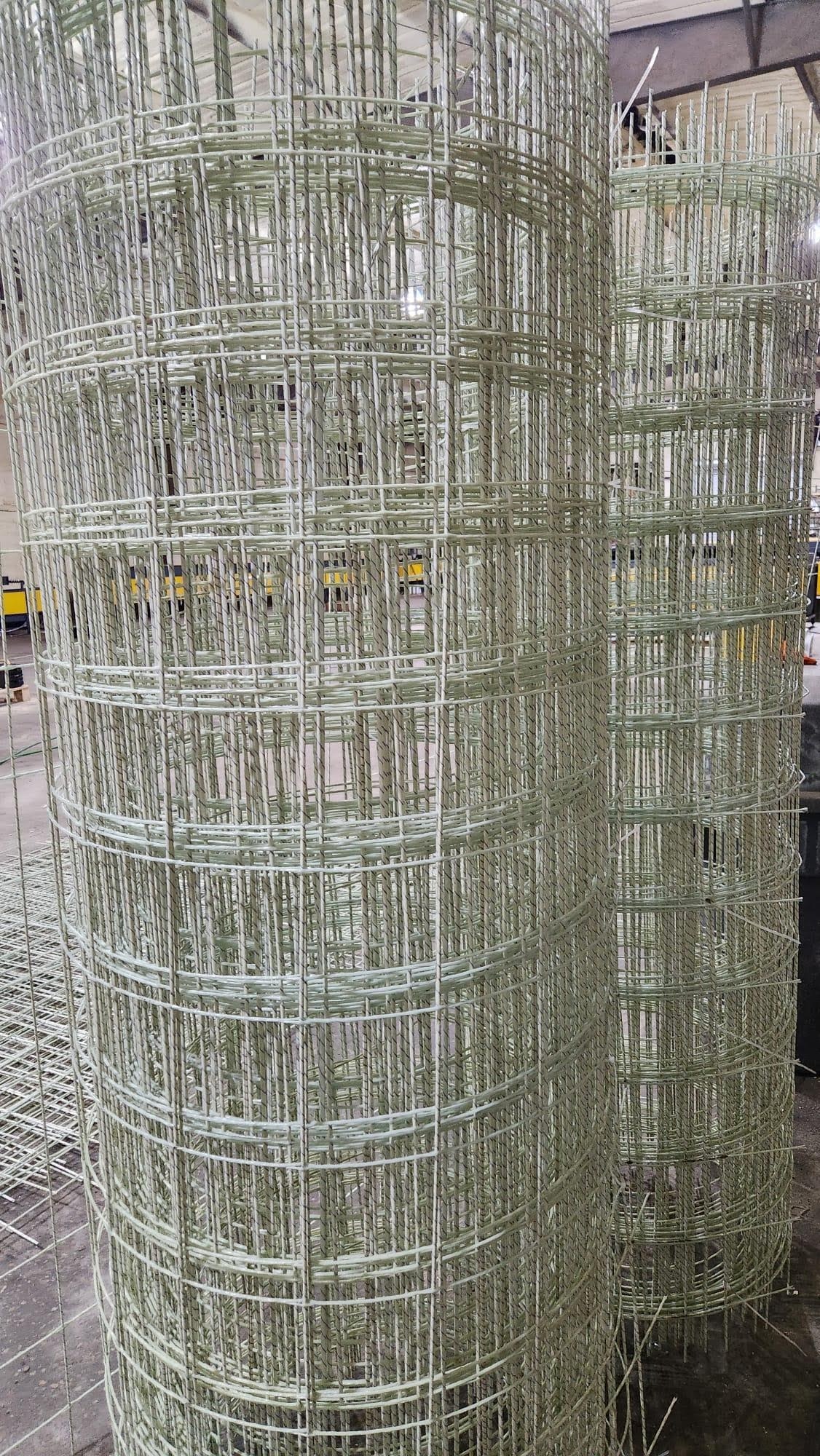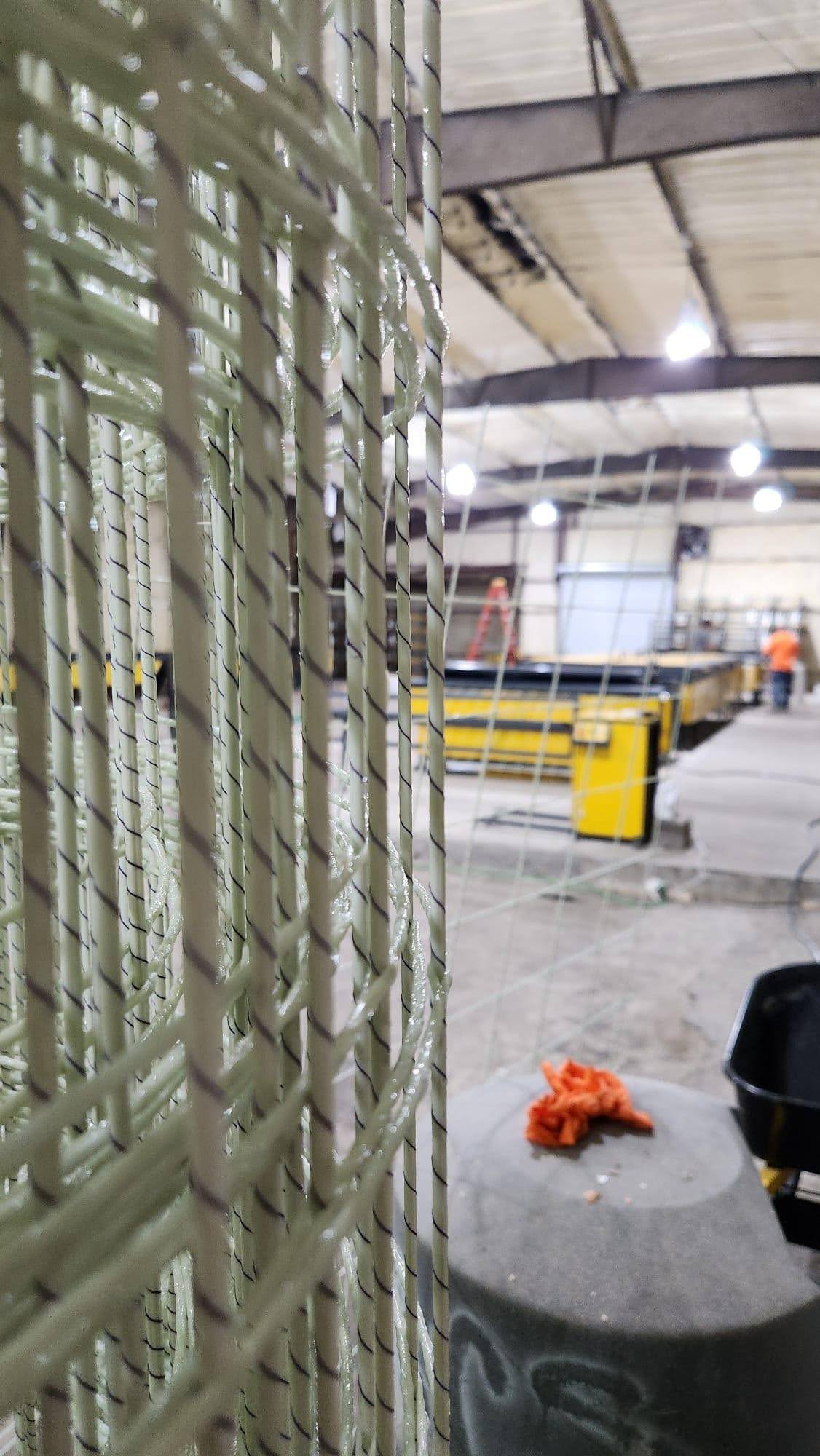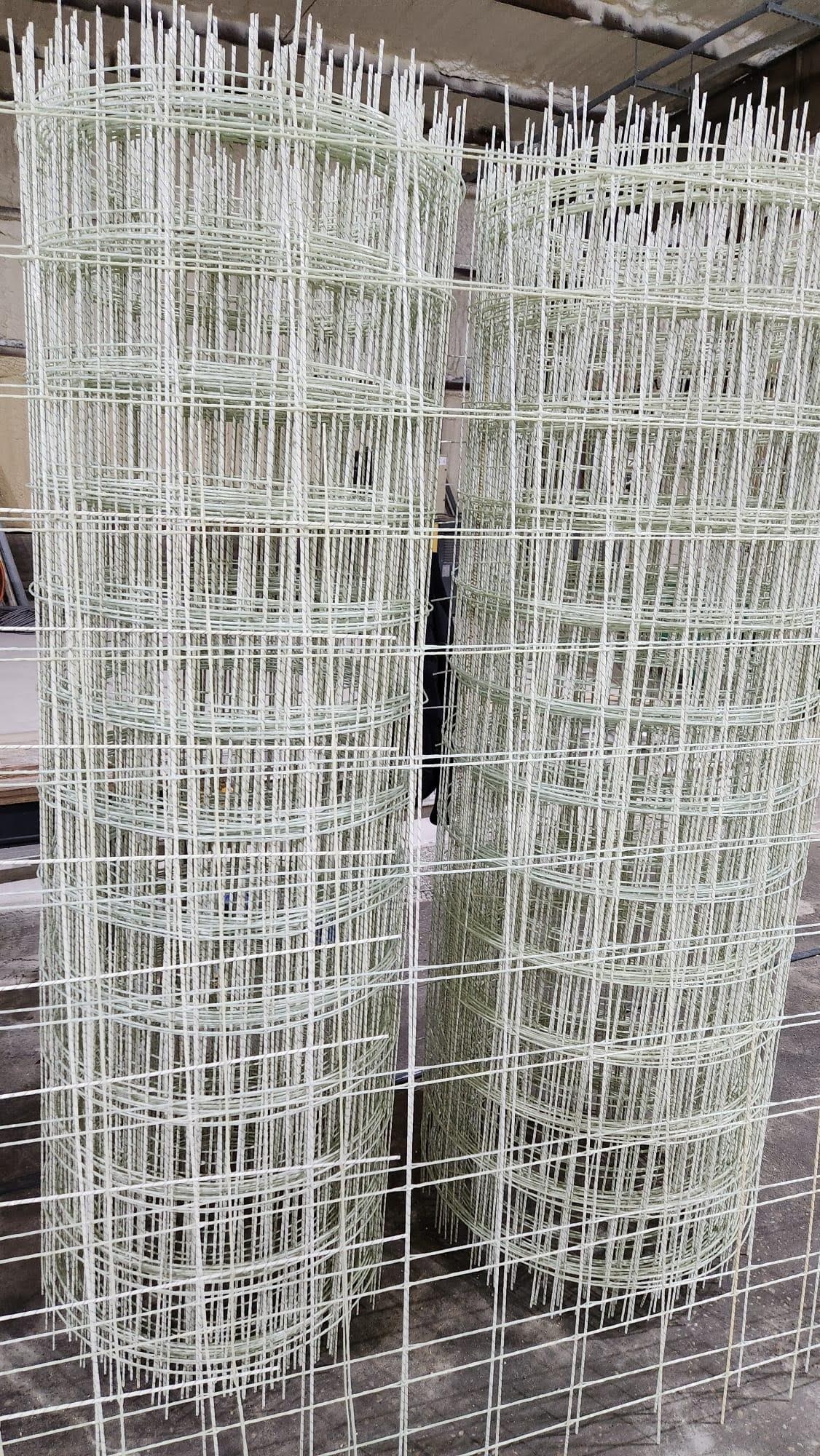
CT M 2.5-6 NEW GENERATION
Advanced 2.5-Meter-Wide FRP Mesh Production Line
Patented Ultrasonic Impregnation. AI-Assisted Quality Monitoring. Advanced Convection Curing. High-Output Industrial Mesh Manufacturing.
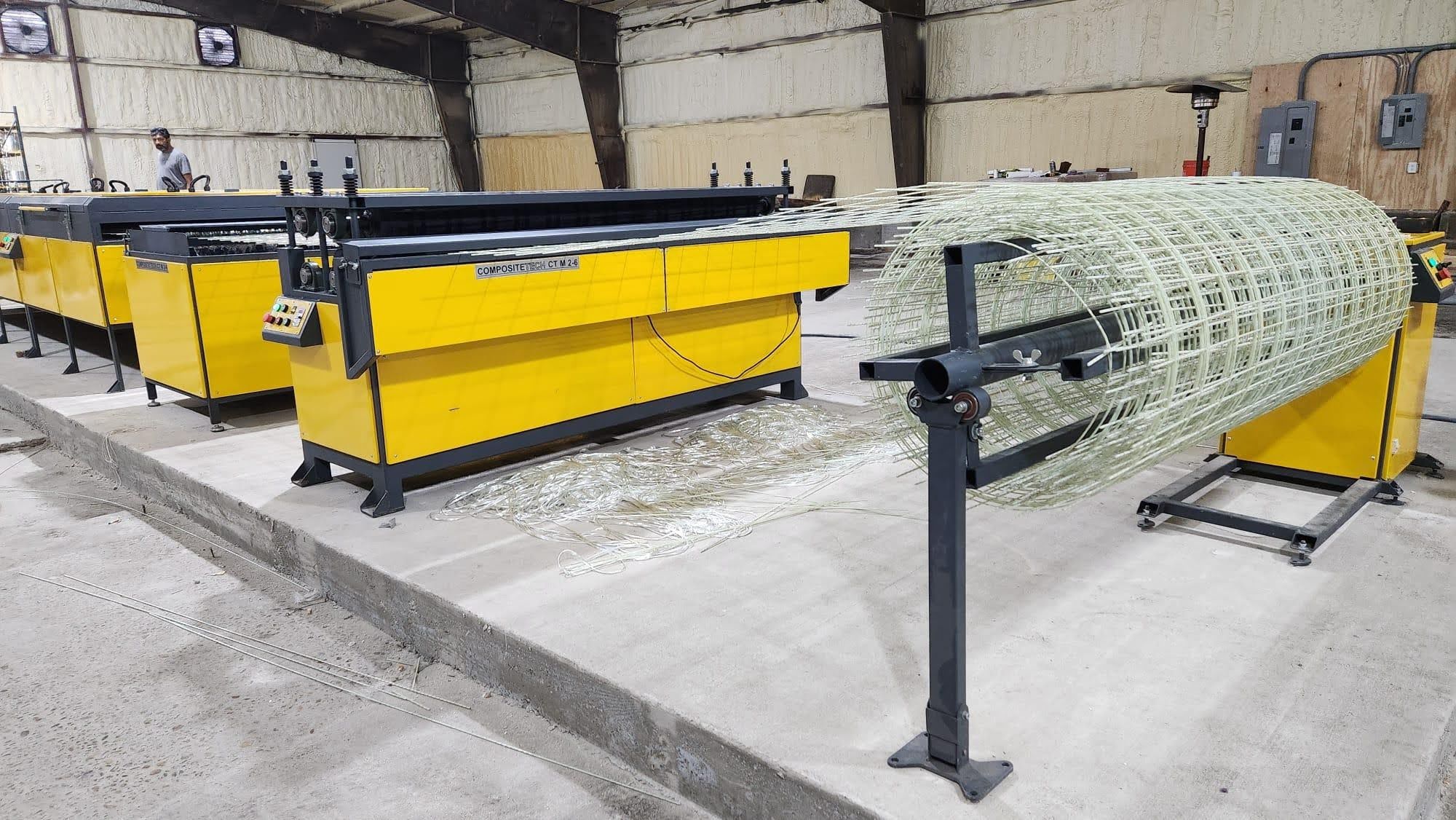
THE NEXT GENERATION OF FRP MESH MANUFACTURING
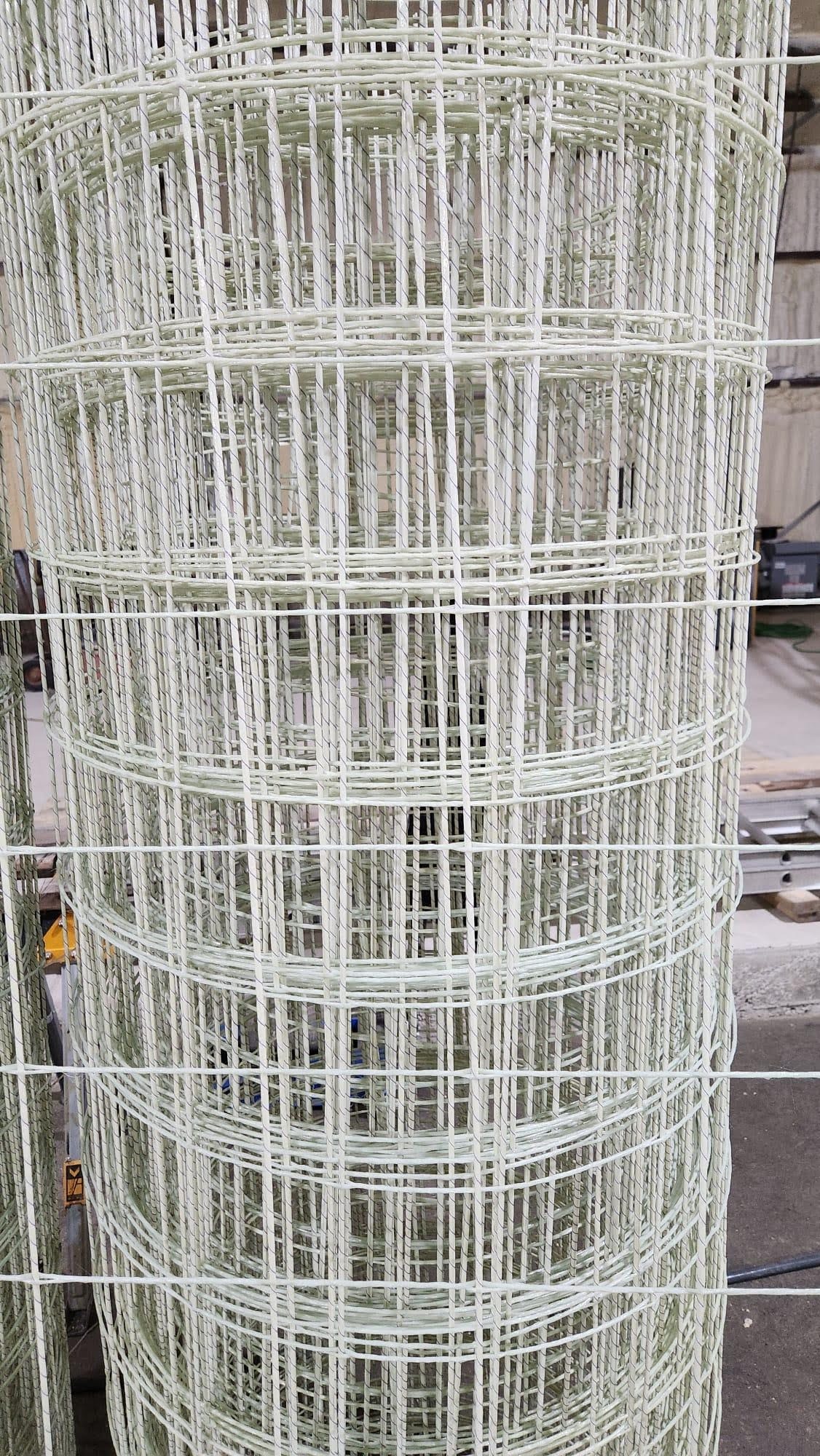
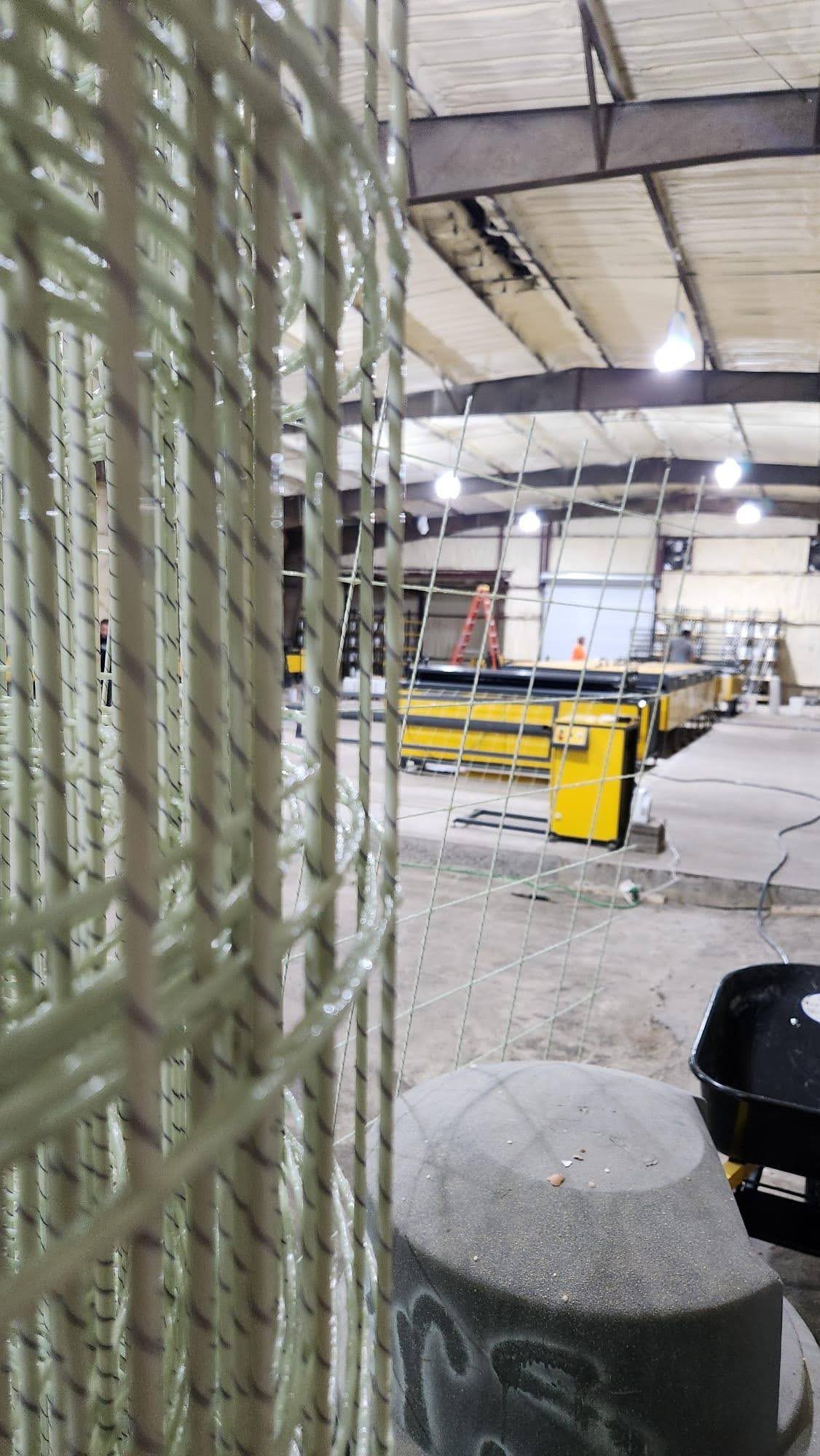
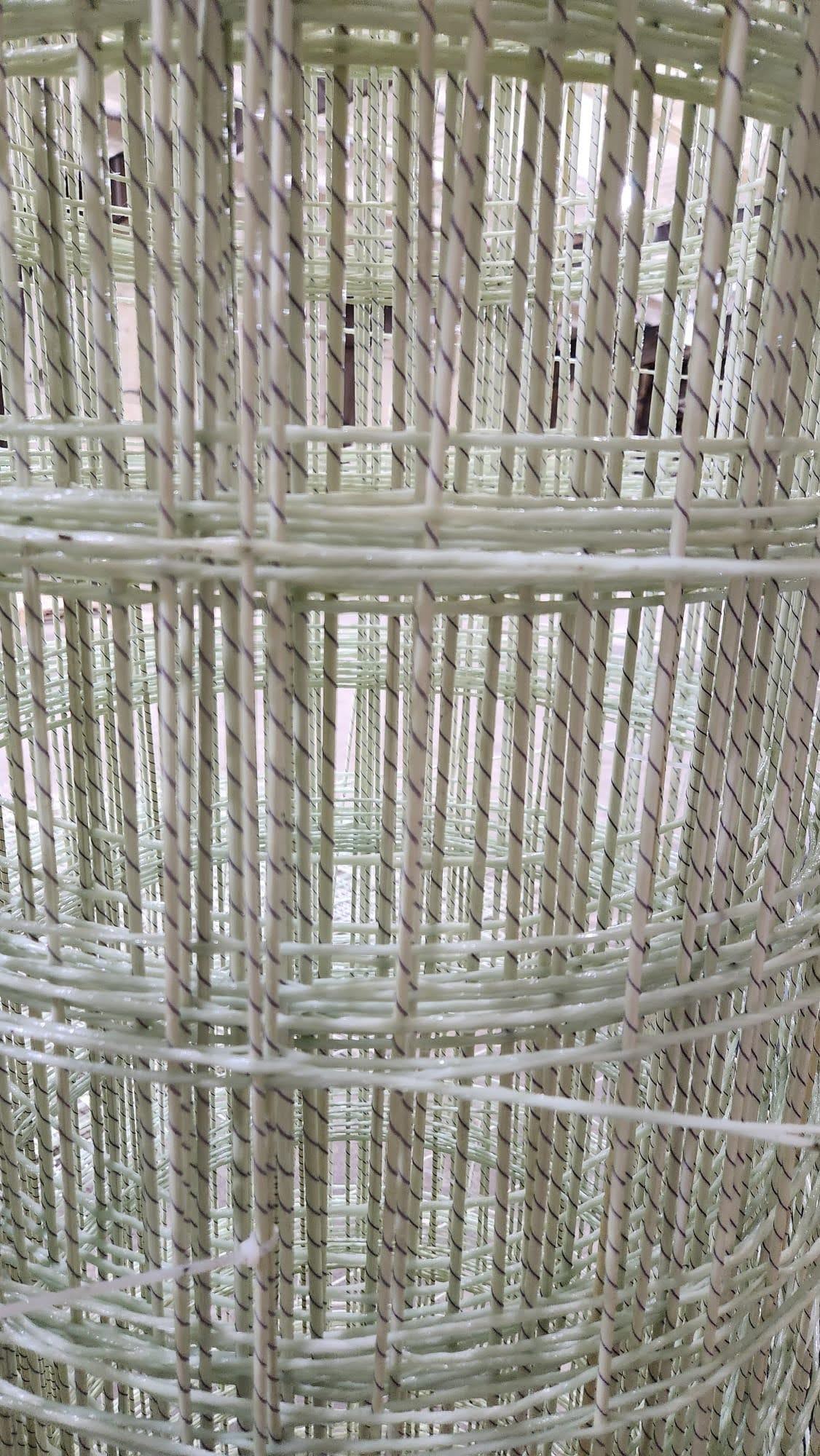
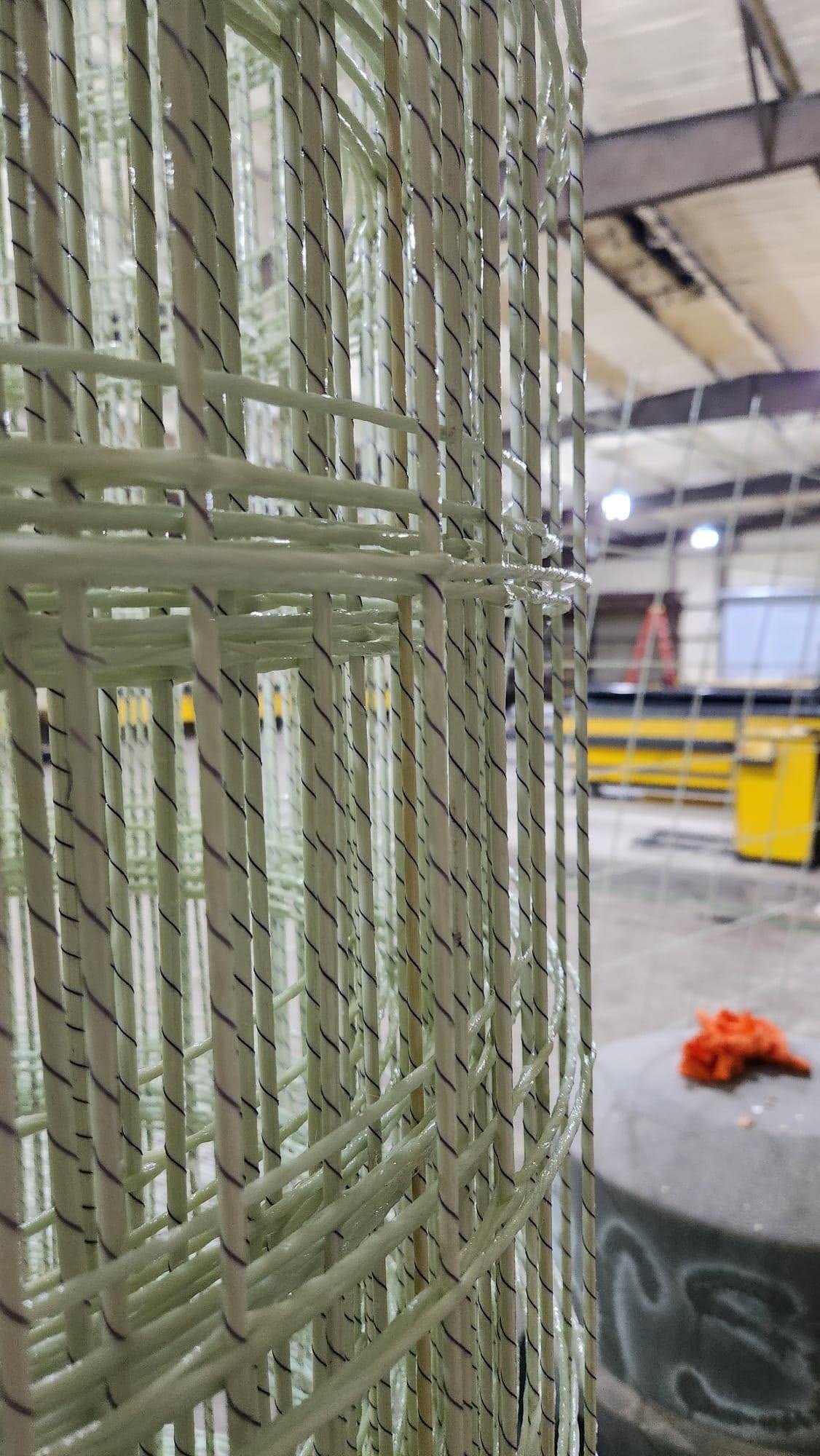
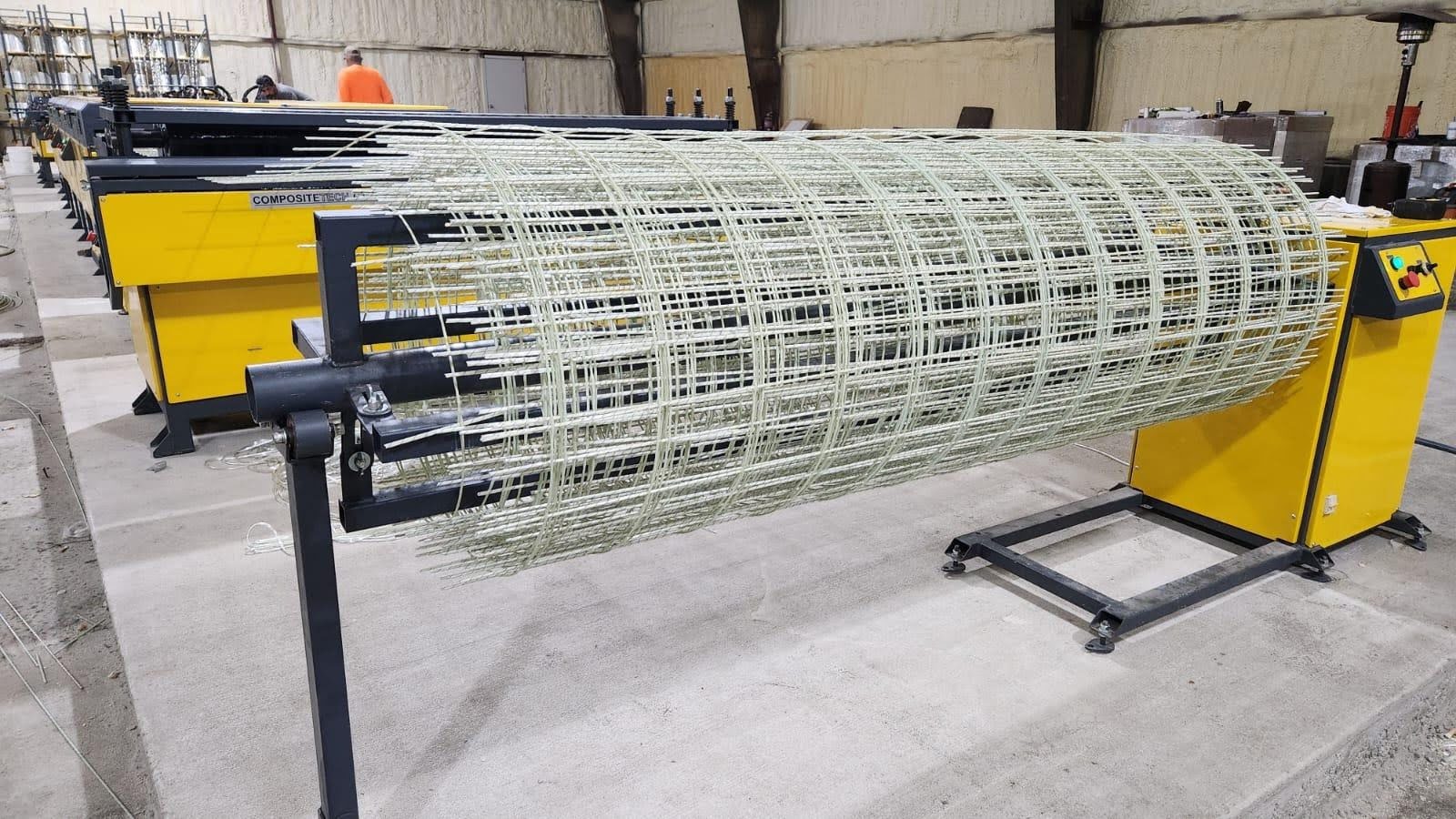
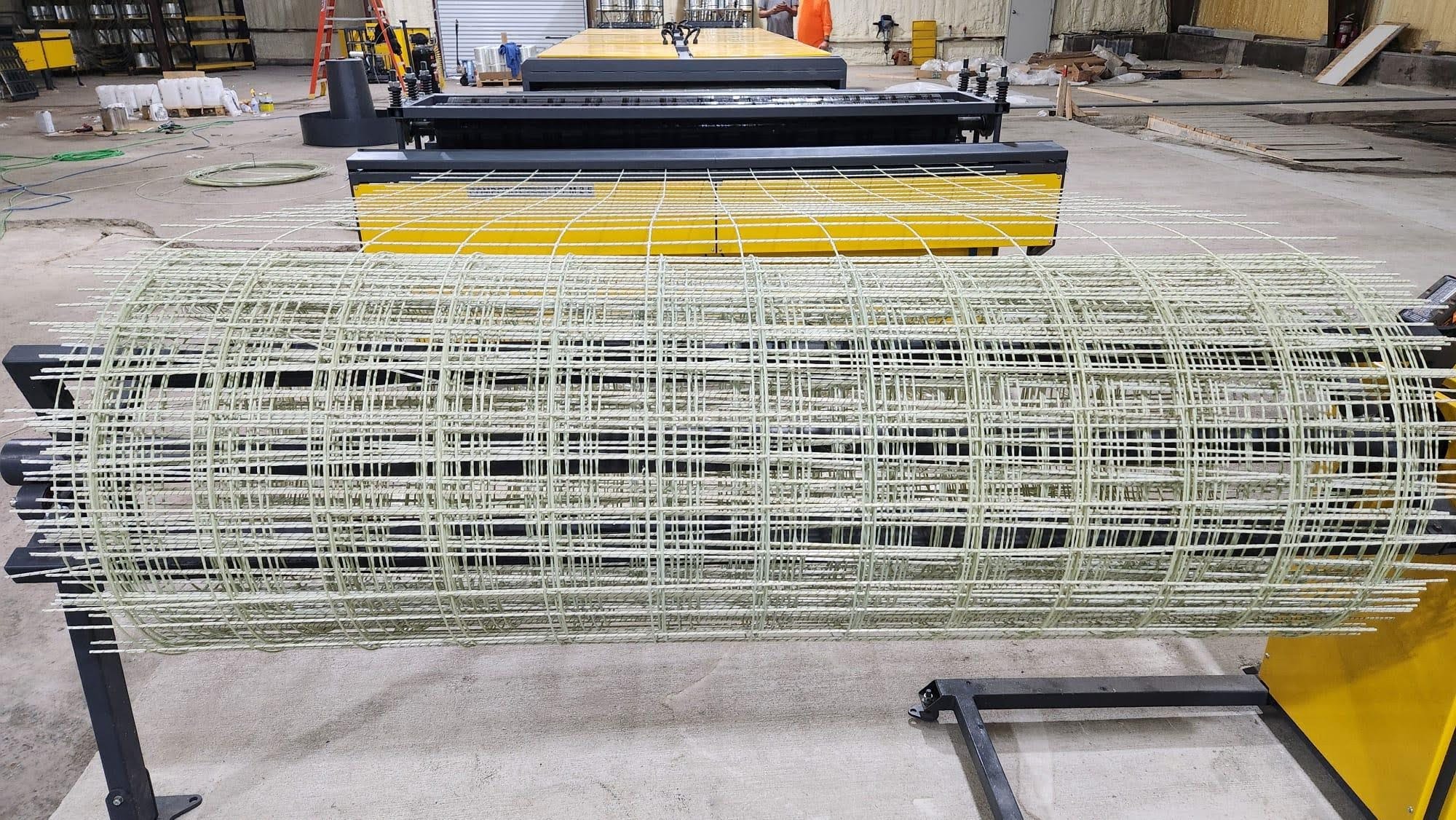
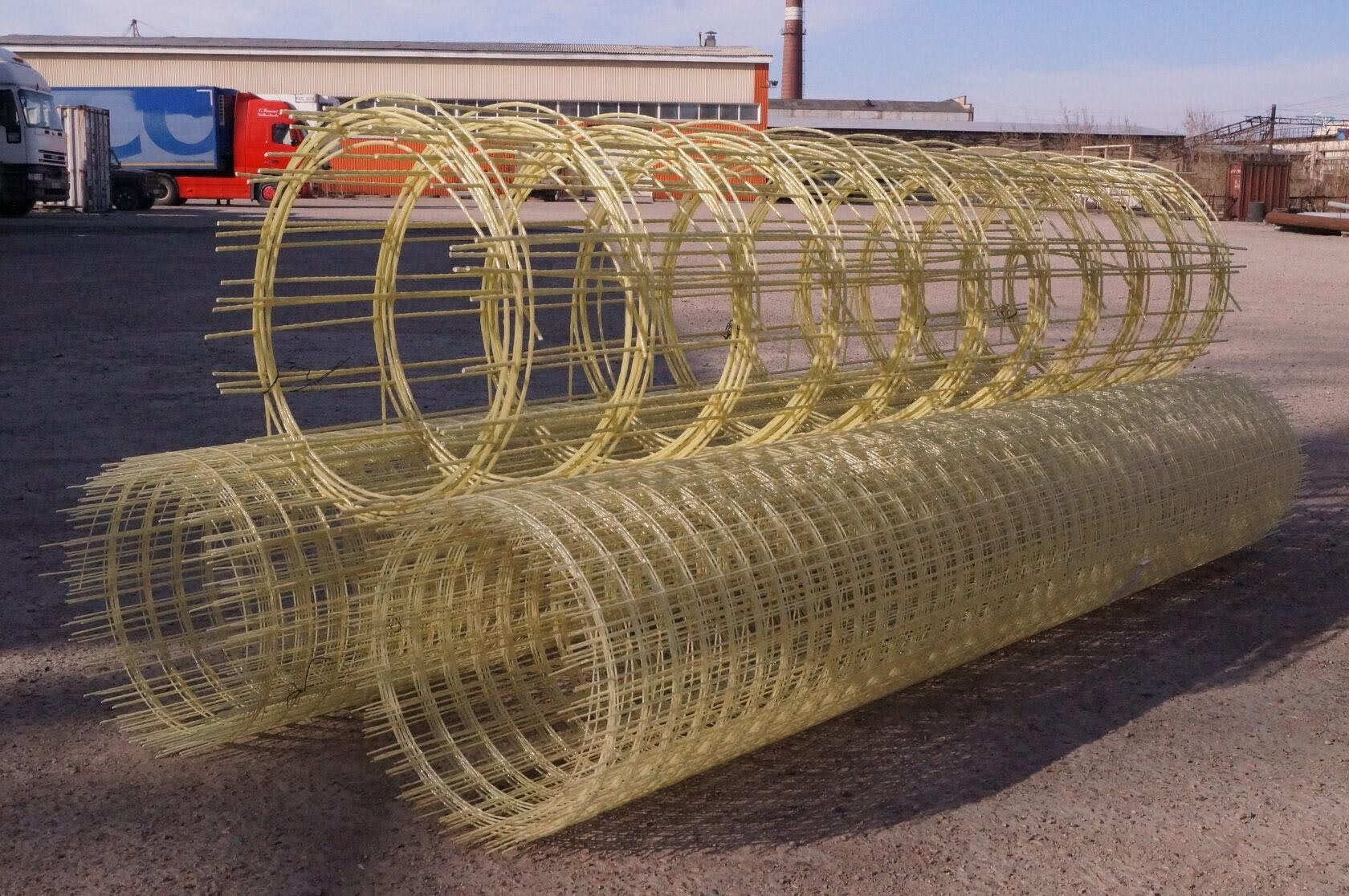
Produce composite reinforcement mesh up to 2.5 meters wide with advanced technology designed for productivity, precision and consistent manufacturing quality. Meet the CT M 2.5-6 New Generation, Composite-Tech’s advanced industrial production line for manufacturing wide-format Glass Fiber Reinforced Polymer (GFRP) reinforcement mesh. Developed for manufacturers who need high production capacity and precise control over composite processing, the new line combines a 2.5-meter working width with proprietary manufacturing technologies.
Its integrated production system incorporates patented ultrasonic-assisted resin impregnation, pneumatic resin-content control, automated mesh weaving, convection-assisted polymerization, optical quality monitoring and a specially designed continuous-roller pulling mechanism. These technologies address several important challenges in composite mesh manufacturing: consistent impregnation of reinforcing fibers, accurate grid formation, controlled polymerization and prevention of unwanted product deformation. The result is an industrial production platform designed to manufacture wide composite reinforcement mesh efficiently while maintaining control over the production process.
CT M 2.5-6 New Generation is more than a wider mesh machine. It is a new generation of Composite-Tech manufacturing technology.
WIDER MESH. GREATER PRODUCTION POTENTIAL.
2.5 METERS
2–6 MM
3.8 M/MIN
9.5 M²/MIN
4,560 M²
AI MONITORING
Production figures are based on the CT M 2.5-6 New Generation technical documentation dated July 13, 2026. The maximum area output assumes a full 2.5-meter mesh width and uninterrupted operation at the stated configuration. Actual results depend on material properties, resin curing, production settings and operating conditions.
WHY 2.5 METERS MAKES A DIFFERENCE
Designed for Manufacturers Who Think in Square Meters
| Mesh Width | Mesh Area Produced per Linear Meter |
| 1 meter | 1 m² |
| 2 meters | 2 m² |
| 2.5 meters | 2.5 m² |
ADVANCED TECHNOLOGY. ENGINEERED FOR CONSISTENT QUALITY
What Makes CT M 2.5-6 New Generation Different?
Fiberglass reinforcement mesh may appear to be a relatively simple product. Longitudinal and transverse composite members form a grid, creating the required reinforcement geometry. However, producing that grid continuously and consistently involves a complex manufacturing process. The reinforcing fibers must be impregnated with a suitable polymer binder. Transverse members must be positioned accurately. The intersections must be formed consistently. The composite must undergo controlled polymerization. Finally, the finished mesh must be cooled, pulled and cut without introducing unacceptable deformation. These requirements become especially important when manufacturing wide-format reinforcement mesh.
Composite-Tech developed CT M 2.5-6 New Generation around a fundamental engineering principle: A professional mesh production line must control every stage that influences the quality and geometry of the finished product. This approach is reflected in the specialized technologies integrated into the machine.
1. PATENTED ULTRASONIC RESIN IMPREGNATION
Advanced Fiber Processing Begins Before Mesh Formation
The quality of composite reinforcement begins with the impregnation of the reinforcing fibers. Continuous glass fiber rovings contain thousands of individual filaments. During manufacturing, the polymer resin must penetrate the fiber bundles sufficiently to create a consistent composite structure. Incomplete impregnation may leave dry fiber regions, internal voids or areas with irregular resin distribution. These defects can affect the mechanical properties and durability of the finished composite.
Composite-Tech’s CT M 2.5-6 New Generation incorporates patented ultrasonic-assisted impregnation technology.
How Ultrasonic-Assisted Impregnation Works
The reinforcing fiber rovings pass through the impregnation system, where they are processed with polymer resin. Ultrasonic treatment is used to assist the impregnation process and improve resin penetration within the fiber bundles. The system is designed to support consistent contact between the reinforcing fibers and the polymer matrix. This is especially important in continuous manufacturing, where the impregnation stage must remain compatible with the selected production speed.
Dlaczego to ma znaczenie
The technology is intended to support several important manufacturing objectives:
- Improved control over fiber impregnation;
- Reduced risk of dry fiber regions;
- More consistent resin distribution;
- Stable processing conditions;
- Reduced risk of impregnation-related production defects.
Actual improvements depend on the fiber, resin formulation, processing conditions and finished-product testing.
Composite-Tech’s ultrasonic impregnation technology addresses one of the most fundamental requirements of composite reinforcement manufacturing: creating a properly impregnated fiber-reinforced polymer structure. This technology is a key component of CT M 2.5-6 New Generation.
2. PRECISION RESIN CONSUMPTION CONTROL
Better Material Utilization Through Pneumatic Squeezing
Polymer resin is an important component of composite reinforcement. However, more resin does not automatically mean better reinforcement. The manufacturing process must maintain an appropriate balance between reinforcing fibers and polymer matrix. Insufficient resin may result in incomplete impregnation. Excessive resin consumption can increase manufacturing expenses and create unwanted variation in material composition.
CT M 2.5-6 New Generation incorporates two impregnation modules equipped with pneumatic squeezing systems. After impregnation, the equipment applies controlled pressure to help remove excess polymer binder. This allows the manufacturer to regulate resin retention during continuous production.
The Manufacturing Advantage
The system is designed to support consistent fiber-resin composition and more efficient raw material use. For manufacturers, controlling resin consumption matters because the cost of finished composite mesh depends partly on the amount of raw material consumed per square meter. The objective is not to minimize resin at any cost. It is to use the correct amount of polymer binder while maintaining the required quality of the finished reinforcement.
3. AI-ASSISTED OPTICAL QUALITY MONITORING
Intelligent Monitoring for Industrial Mesh Production
Modern manufacturing increasingly depends on automated monitoring and rapid identification of production deviations.
Composite-Tech has integrated an AI-assisted optical monitoring system into CT M 2.5-6 New Generation. According to the machine’s technical documentation, optical sensors are connected to an artificial intelligence system designed to monitor the manufacturing process and help maintain consistent product quality. This provides an additional layer of supervision during continuous mesh production.
Why AI-Assisted Monitoring Matters
Traditional quality control often relies heavily on periodic manual inspections. Although these inspections remain essential, deviations can occur between inspection intervals. Automated optical monitoring helps operators observe production continuously and identify visible irregularities that may require attention. This creates opportunities for earlier intervention and improved process supervision.
The system is intended to support:
- Continuous monitoring. Optical sensors provide information during production rather than relying exclusively on periodic observations.
- Earlier identification of visible deviations. The system assists in detecting abnormalities that may affect the appearance or geometry of the manufactured product.
- Operator support. Intelligent monitoring provides additional information for production personnel.
- Reduced unnecessary material losses. Earlier identification of visible problems creates an opportunity to investigate and correct production settings.
Intelligent Monitoring Does Not Replace Laboratory Testing
Optical monitoring is an important manufacturing tool, but it cannot independently verify every mechanical or physical property of composite reinforcement. Tensile properties, resin cure, internal material quality and intersection performance must be evaluated through appropriate testing.
CT M 2.5-6 New Generation combines intelligent optical monitoring with advanced composite-processing technology to help manufacturers maintain greater control over production quality.
4. ADVANCED CONVECTION-ASSISTED CURING
Uniform Heat Distribution for Consistent Polymerization
Polymerization is one of the most important stages in manufacturing fiber-reinforced polymer products. The resin must receive the thermal treatment required to develop the intended composite properties. In continuous mesh manufacturing, this process becomes more challenging as production width increases. The heating equipment must provide suitable conditions across the entire width of the moving reinforcement grid. Uneven heating may create differences in curing conditions between different areas of the mesh.
Composite-Tech addresses this challenge through specially designed curing ovens.
Three Curing Ovens with Convection-Assisted Heating
CT M 2.5-6 New Generation incorporates three curing ovens. The ovens use specialized heating elements combined with a convection system designed to distribute heat throughout the heating chambers. This approach helps create more uniform thermal conditions during polymerization.
Why Convection Matters
In a wide-format production line, heat distribution is important across both the length and width of the product. A properly controlled heating environment helps the manufacturer establish repeatable curing conditions.
The convection-assisted system is designed to support:
- More uniform heat distribution;
- Stable polymerization conditions;
- Consistent processing across the mesh width;
- Production efficiency;
- Repeatable manufacturing quality.
Actual curing performance depends on the resin system, reinforcement dimensions, operating temperatures and pulling speed. For a machine producing mesh up to 2.5 meters wide, controlled heat distribution is an important engineering advantage.
5. CONTINUOUS-ROLLER PULLING TECHNOLOGY
Designed to Keep Wide Mesh Flat and Geometrically Consistent
Manufacturing wide composite mesh creates an important mechanical challenge. The material must move through the production line without unwanted distortion or loss of its intended geometry. This is especially important during pulling and finishing. If the pulling system does not support the mesh consistently across its width, the product may be subjected to uneven mechanical forces. Such conditions can contribute to deformation, misalignment or warping.
Composite-Tech has equipped CT M 2.5-6 New Generation with a specialized pulling mechanism using solid, continuous rollers.
How the System Works
The pulling mechanism applies traction to move the reinforcement mesh through the production line. Its continuous roller design is intended to provide stable contact and pulling conditions across the product width. This helps maintain the geometry of the mesh during continuous operation.
The Advantage for Manufacturers
The design is intended to support:
- Consistent pulling of wide-format mesh;
- Reduced risk of product distortion;
- Better control over mesh alignment;
- Stable production movement;
- Reliable cutting and finishing operations.
The wider the reinforcement mesh, the more important stable and consistent pulling becomes. This is why Composite-Tech considers the mechanical design of the pulling system an essential part of the complete manufacturing process.
PRODUCTION CAPACITY
How Much Fiberglass Mesh Can CT M 2.5-6 Manufacture?
The productivity of a composite mesh production line depends on several factors. These include the diameter of the reinforcing members, the dimensions of the mesh cells, the polymer resin system and the required production conditions.
CT M 2.5-6 New Generation is designed to manufacture reinforcement mesh using rod diameters from 2 to 6 mm. The machine supports programmable mesh geometry within its documented operating range. Its technical manual provides the following indicative maximum production speeds.
CT M 2.5-6 New Generation — Production Capacity
| Reinforcement Diameter | Mesh Cell Size | Linear Speed, up to | Area Output at 2.5 m Width | Theoretical Output per 8 Hours |
| 2 mm | 100 × 100 mm | 2 m/min | 5 m²/min | 2,400 m² |
| 2 mm | 200 × 200 mm | 3.8 m/min | 9.5 m²/min | 4,560 m² |
| 4 mm | 100 × 100 mm | 2 m/min | 5 m²/min | 2,400 m² |
| 4 mm | 200 × 200 mm | 3 m/min | 7.5 m²/min | 3,600 m² |
| 6 mm | 100 × 100 mm | 1.5 m/min | 3.75 m²/min | 1,800 m² |
| 6 mm | 200 × 200 mm | 2 m/min | 5 m²/min | 2,400 m² |
Source: Composite-Tech CT M 2.5-6 New Generation Installation and Operation Manual, IME.003, July 13, 2026.
Linear speeds are manufacturer-declared indicative maximum values. Area output is calculated for the full 2.5-meter working width. Eight-hour figures assume uninterrupted production, with no setup time, downtime, rejected material or other production losses.
Understanding the Production Figures
Consider the manufacture of 2 mm reinforcement mesh with 200 × 200 mm cells. The documented maximum linear speed is 3.8 meters per minute.
At a mesh width of 2.5 meters, this corresponds to a theoretical area output of: 3.8 m/min × 2.5 m = 9.5 m²/min.
During one hour: 570 m² of mesh.
During an uninterrupted eight-hour shift: 4,560 m² of mesh.
This demonstrates the potential capacity of the new wide-format production line.
Actual saleable output depends on utilization, material properties, production interruptions and quality requirements. For manufacturers evaluating industrial FRP mesh production, the relevant measure is the area of qualified mesh that can be produced per operating hour.
FLEXIBLE MESH DIMENSIONS
Manufacture Different Reinforcement Configurations with One Production Line
Construction and industrial customers may require different combinations of reinforcement diameter, mesh width and cell spacing. CT M 2.5-6 New Generation is designed to accommodate different mesh configurations within its supported operating range.
Supported Product Parameters
| Parametr | Specyfikacja |
| Maximum mesh width | 2,5m |
| Reinforcement diameter | 2–6 mm |
| Documented cell dimensions | 100 × 100 mm to 200 × 200 mm |
| Transverse spacing | Configurable within the supported machine settings |
| Longitudinal spacing | Programmable through PLC/HMI |
| Mesh length | Programmable |
| Product format | Cut mesh sections; roll winding with optional equipment |
| Main manufacturing process | Continuous composite mesh forming and twisting |
These are manufacturer-declared indicative production capacities for the specified diameter. CT6 New Generation delivers up to 80% more theoretical Ø10 mm output than CT4 during the same production time. For manufacturers seeking to expand capacity, this demonstrates the commercial significance of the new six-bar platform.
HOW CT M 2.5-6 NEW GENERATION WORKS
An Integrated Industrial Manufacturing Process
The new production line combines fiber preparation, composite processing and automated mesh forming. Each module performs a specific function within the continuous production sequence.
01 — Fiber Feeding
02 — Fiber Preparation
03 — Ultrasonic Resin Impregnation
04 — Reinforcement Preparation
05 — Transverse Reinforcement Feeding
06 — Mesh Weaving and Twisting
07 — Controlled Polymerization
08 — Cooling
09 — Continuous Pulling
10 — Automatic Cutting
11 — Product Collection
Finished mesh can be prepared as cut sections. An optional roll-winding system supports roll production where the mesh characteristics permit it.
The entire system is designed to coordinate the principal manufacturing operations and support repeatable industrial production.
INDUSTRIAL EQUIPMENT CONFIGURATION
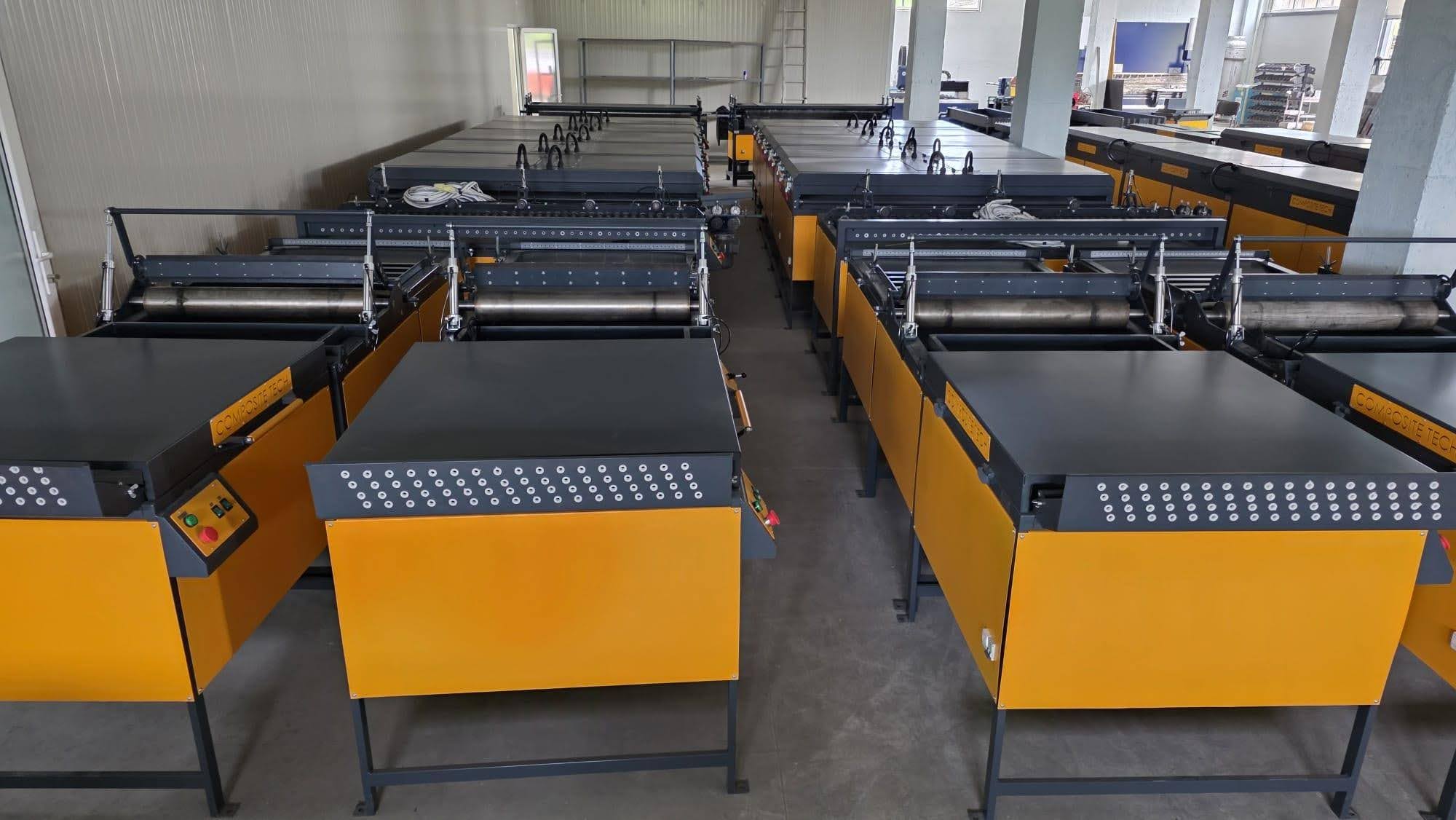
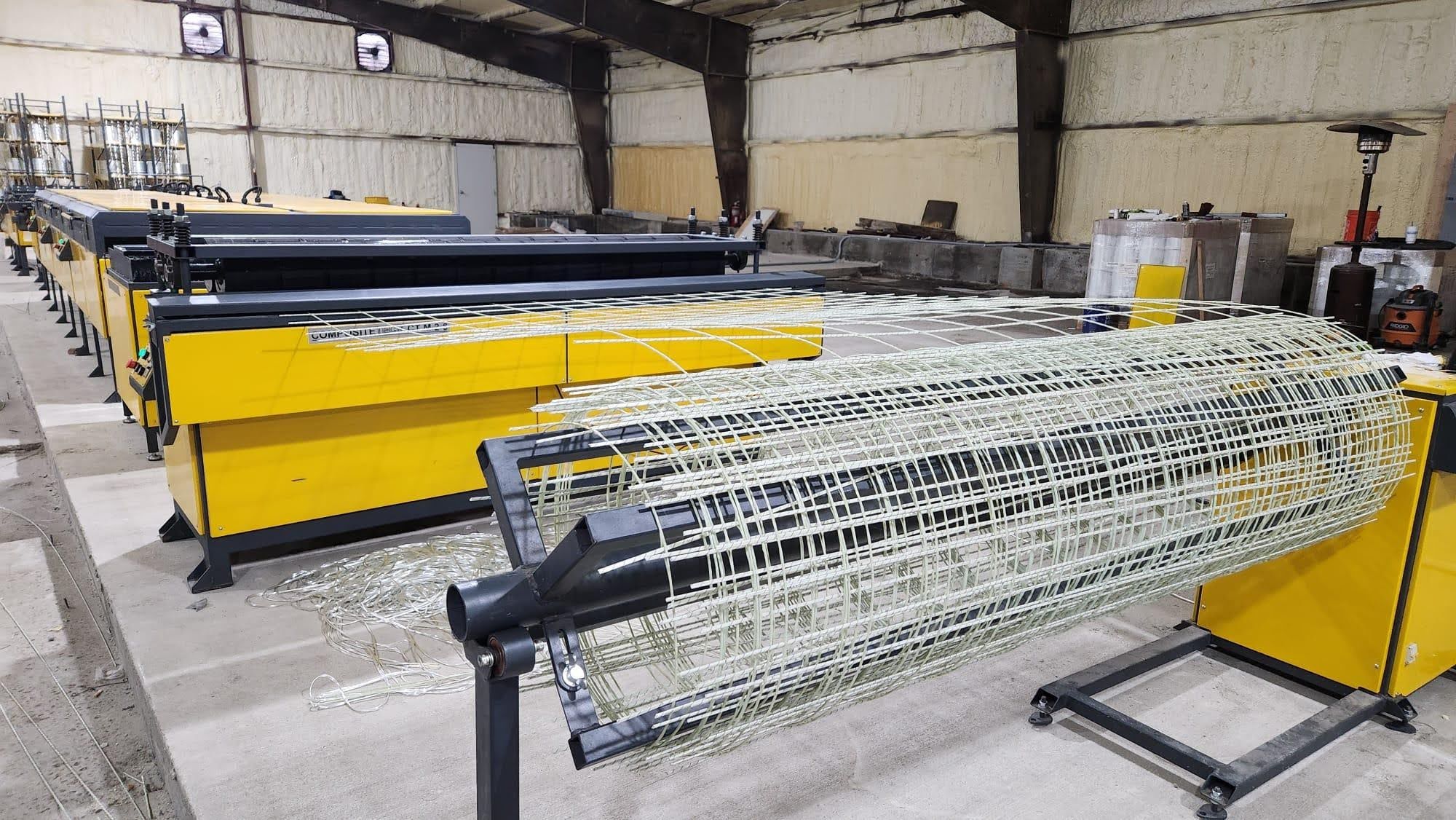
CT M 2.5-6 New Generation — Main Components
| Moduł wyposażenia | Ilość |
| Kosz na włókna | 4 |
| Grzejnik wędrowny | 2 |
| Ultrasonic-assisted impregnation module | 2 |
| Mesh weaving module | 1 |
| Convection-assisted curing oven | 3 |
| Moduł chłodzący | 1 |
| Pulling and cutting device | 1 |
| Automatic coiler for reinforcement preparation | 1 |
| Rozwijarka | 1 |
| Mesh roll winder | Optional |
The equipment is configured as an integrated production line. The final arrangement, utilities and optional components are established according to the customer’s project requirements.
FIBERGLASS, BASALT AND OTHER COMPOSITE MATERIALS
Manufacturing Technology for Different Reinforcing Fibers
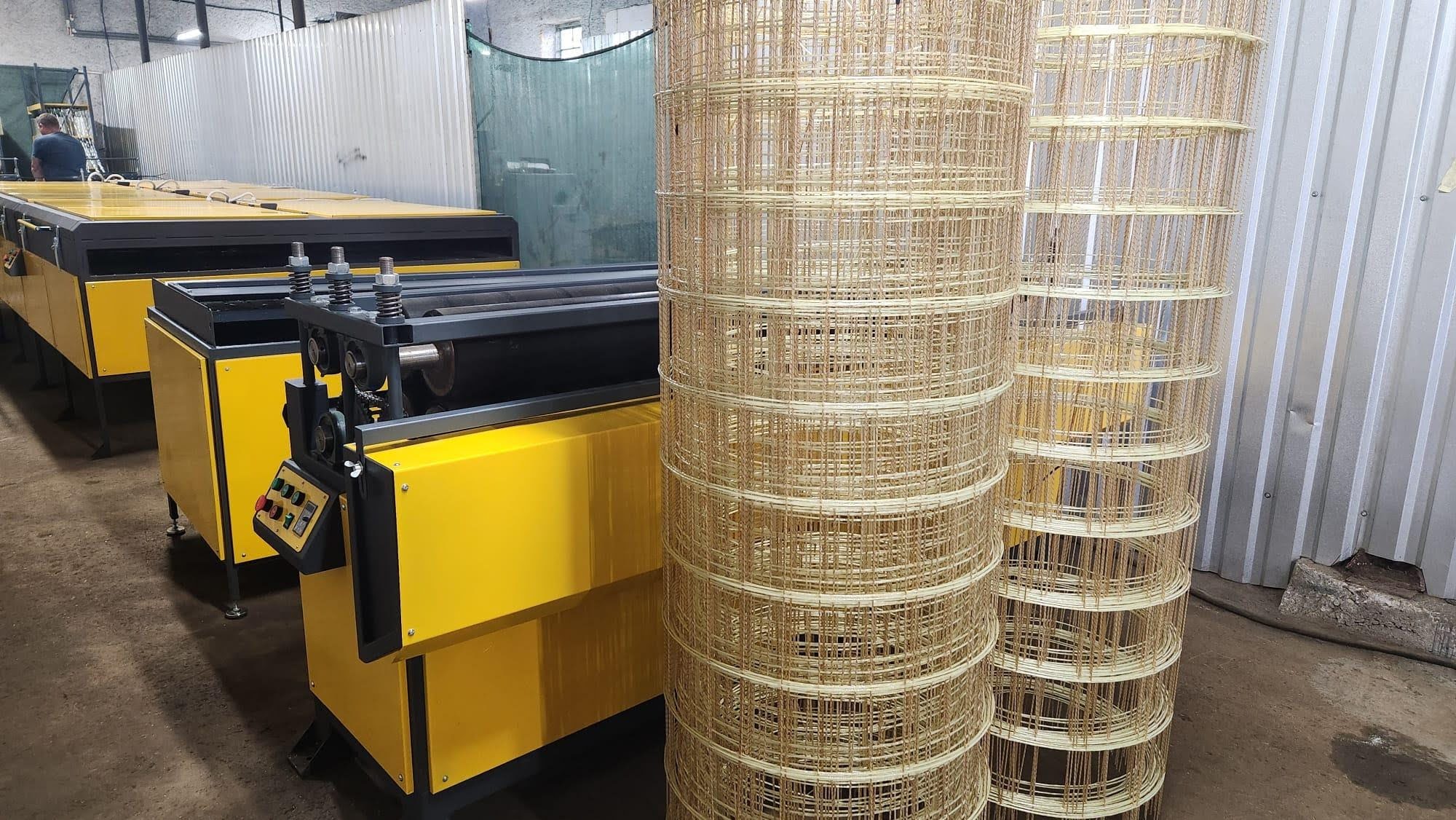
Composite-Tech develops equipment for manufacturing different fiber-reinforced polymer materials. The CT M 2.5-6 New Generation technical documentation identifies compatibility with reinforcing rovings based on:
- Glass fiber — GFRP
- Basalt fiber — BFRP
- Carbon fiber — CFRP
- Aramid fiber — AFRP
However, these materials have different processing characteristics. The selected fiber type affects feeding conditions, impregnation behavior, resin compatibility and curing requirements. Production settings must therefore be established for each material system.
The published performance figures refer to the documented machine configurations and should not automatically be assumed for every fiber type. For manufacturers planning to develop specialized composite products, this processing flexibility can be valuable.
QUALITY CONTROL AND PRODUCT PERFORMANCE
Manufacturing Precision Is Essential for Professional Reinforcement Mesh
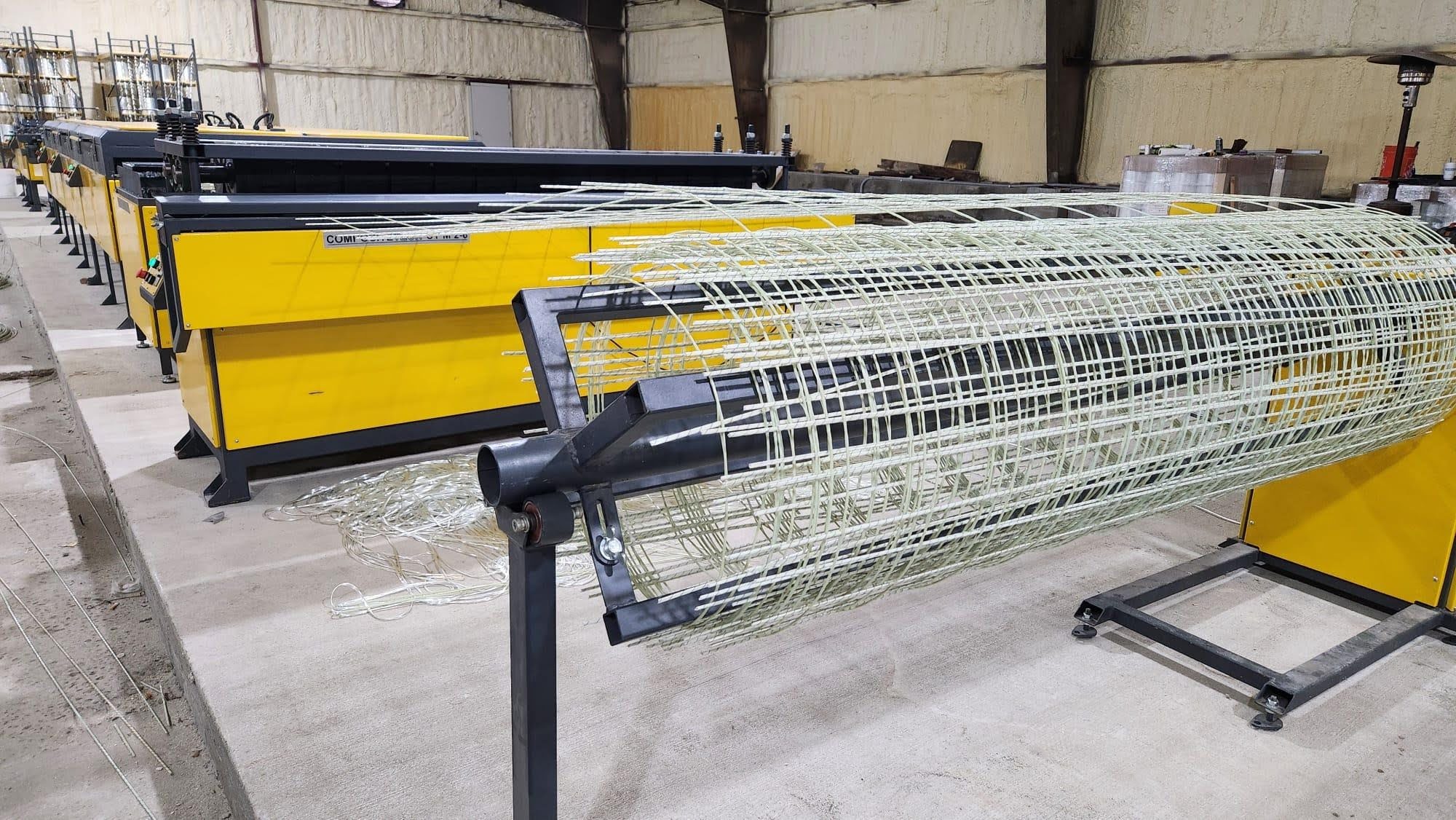
Composite reinforcement mesh must satisfy the requirements of its intended application. The geometry of the grid is important, but it is not the only consideration. The mechanical properties of the reinforcing members, the quality of their connections and the condition of the polymer matrix can all influence finished-product performance.
CT M 2.5-6 New Generation is designed to support controlled manufacturing through its specialized impregnation, weaving, curing, pulling and monitoring systems.
Important Product Characteristics
Professional quality control may include evaluation of:
- Reinforcing member diameter;
- Mesh width and cell dimensions;
- Intersection geometry and integrity;
- Resin impregnation;
- Degree of cure;
- Mechanical properties;
- Dimensional consistency;
- Finished-product condition.
The required tests depend on the intended market and application. For example, ASTM D7957/D7957M is a product specification for qualifying GFRP reinforcing bars, but it does not automatically cover premanufactured FRP grids and gratings. Manufacturers supplying structural applications must determine the applicable product requirements, testing procedures and engineering approvals.
Advanced manufacturing equipment helps establish controlled production conditions. Finished-product testing provides evidence that the reinforcement meets its required specification.
DESIGNED FOR INDUSTRIAL MANUFACTURERS
From Small Production Projects to Large Composite Reinforcement Factories
Fiberglass reinforcement mesh is relevant to a range of construction and industrial applications. Depending on product specifications and engineering requirements, manufacturers may target customers involved in:
- Industrial concrete floors
- Slab reinforcement
- Precast concrete manufacturing
- Pavement and infrastructure projects
- Marine and corrosive environments
- Agricultural and industrial facilities
- Construction material distribution
The suitability of Siatka GFRP for a particular application depends on product qualification, applicable design requirements and local regulations. For equipment buyers, the principal objective is to establish a manufacturing operation capable of supplying consistent reinforcement at a competitive cost. The CT M 2.5-6 New Generation is designed to support that objective through wide-format production, automated processing and specialized composite manufacturing technologies.
WHY CHOOSE COMPOSITE-TECH?
More Than a Manufacturer of FRP Machines
Composite-Tech develops and manufactures industrial equipment for the global composite reinforcement industry. The company’s equipment portfolio includes production lines for straight GFRP and BFRP rebar, FRP reinforcement mesh and factory-made bent composite elements. This specialization provides experience across several related composite manufacturing processes.
CT M 2.5-6 New Generation reflects the company’s continuing work in developing technologie produkcyjne that address both manufacturing productivity and product consistency.
Its principal technical advantages include:
- Patented ultrasonic-assisted resin impregnation. Designed to support consistent polymer penetration within reinforcing fiber bundles.
- AI-assisted optical quality monitoring. An additional system for supervising visible production conditions.
- Convection-assisted polymerization. Specialized heating technology designed to distribute heat across the curing chambers.
- Wide-format production. A maximum mesh width of 2.5 meters.
- Continuous-roller pulling. A system designed to reduce the risk of distortion during mesh production.
- Programmable mesh geometry. Automated control of the mesh-forming and cutting process.
Our approach is to provide manufacturers with equipment that combines production capacity, process control and engineering flexibility.
COMPLETE FACTORY SUPPORT
From Equipment Selection to Manufacturing Startup
Establishing a composite mesh factory involves more than purchasing a production line. The manufacturer must also prepare suitable industrial premises, utilities, raw material storage, product handling and quality control procedures. Composite-Tech supports customers through the principal stages of equipment implementation.
- Factory planning. Preliminary recommendations for equipment placement and infrastructure.
- Equipment configuration. Selection of the required mesh dimensions, reinforcement diameters and optional systems.
- Instalacja i uruchomienie. Technical assistance with installing and starting the production line.
- Operator training. Practical instruction on equipment operation, settings, maintenance and production procedures.
- Technical assistance. Support for equipment operation and process-related questions.
- Warranty. Standard 12-month equipment warranty, subject to contractual terms.
For manufacturers planning a new factory, Composite-Tech can provide technical information and a preliminary equipment layout to support investment planning.
FREQUENTLY ASKED QUESTIONS
What is CT M 2.5-6 New Generation?
CT M 2.5-6 New Generation is an industrial FRP reinforcement mesh production line developed by Composite-Tech. It is designed to manufacture composite mesh up to 2.5 meters wide using reinforcing members from 2 to 6 mm in diameter.
What is the maximum mesh width?
The maximum documented production width is 2.5 meters, approximately 8.2 feet.
How fast can the machine produce fiberglass mesh?
The documented maximum linear production speed reaches 3.8 m/min for 2 mm reinforcement with 200 × 200 mm cells. Production speeds vary with reinforcement diameter, mesh geometry, resin system and operating conditions.
How many square meters of mesh can the machine produce?
At the full 2.5-meter width and a linear speed of 3.8 m/min, the theoretical area output is 9.5 m²/min, equivalent to 4,560 m² during an uninterrupted eight-hour shift. Actual saleable output will be lower when production interruptions and other losses occur.
Does the machine use ultrasonic impregnation?
Yes. The CT M 2.5-6 New Generation technical documentation specifies patented ultrasonic-assisted resin impregnation technology designed to support consistent fiber impregnation.
Does the machine have artificial intelligence?
The machine incorporates optical sensors connected to an AI-assisted monitoring system intended to support production quality supervision. This system does not replace laboratory testing of the finished product.
What is special about the curing system?
The machine incorporates three curing ovens with specialized heating elements and convection-assisted heat distribution. The system is designed to provide suitable curing conditions across the production width.
How are the mesh intersections formed?
The documented CT M 2.5-6 manufacturing process uses a weaving and twisting mechanism to form connections between the reinforcing members.
Can the machine produce different mesh cell sizes?
Yes. The equipment supports programmable mesh dimensions within its documented operating range, including 100 × 100 mm and 200 × 200 mm configurations.
Can the machine manufacture basalt reinforcement mesh?
The technical documentation identifies compatibility with different reinforcing fiber systems, including basalt. Suitable production parameters and finished-product qualification must be established for each material.
Can the finished mesh be supplied in rolls?
The machine can be equipped with an optional roll-winding system. The suitability of roll production depends on mesh geometry and product characteristics.
What is the difference between CT M 2-6 and CT M 2.5-6 New Generation?
The new model offers a maximum mesh width of 2.5 meters, compared with the 2-meter width of the earlier line. It also incorporates the advanced manufacturing features described in its new-generation technical documentation. Actual productivity comparisons should be made for the same reinforcement diameter and cell configuration.
What is the price of CT M 2.5-6 New Generation?
Equipment pricing depends on the selected configuration, optional modules and commercial terms. Contact Composite-Tech for a detailed technical and commercial proposal.
START PRODUCING WIDE-FORMAT FRP MESH WITH COMPOSITE-TECH
2.5 Meters Wide. Advanced Manufacturing Technology. Intelligent Production Monitoring.
CT M 2.5-6 New Generation represents the latest development in Composite-Tech’s wide-format composite reinforcement mesh production equipment. It combines increased working width with technologies designed to improve control over the manufacturing process.
- Patented ultrasonic impregnation.
- AI-assisted optical monitoring.
- Convection-assisted curing.
- Specialized continuous-roller pulling.
- Programmable mesh production.
- Up to 2.5 meters of working width.
Whether you are establishing a new composite reinforcement factory or expanding an existing manufacturing operation, CT M 2.5-6 New Generation offers an advanced platform for industrial FRP mesh production.
Request Your CT M 2.5-6 New Generation Proposal
Contact Composite-Tech to receive detailed equipment specifications, a preliminary factory layout and a commercial quotation.