
CT-DP DURAPINS™
Advanced FRP Mini-Rebar & Composite Macrofiber Production Line
21 Simultaneous Reinforcement Strands. Up to 252 Meters per Minute. Automated Cutting from 45 mm.
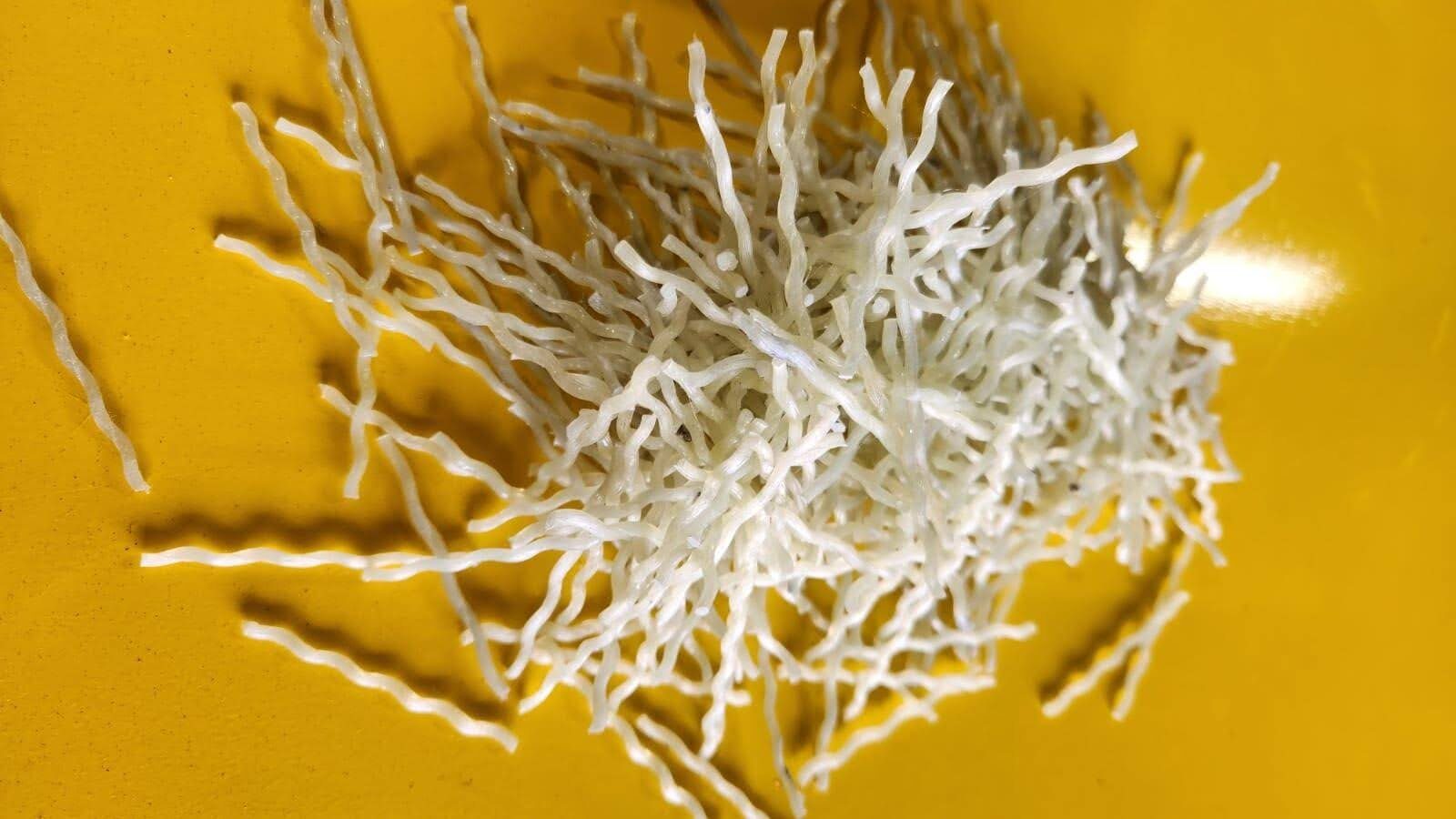
A NEW GENERATION OF COMPOSITE CONCRETE REINFORCEMENT
Industrial Equipment for Manufacturing DuraPins™ — Short, High-Performance FRP Reinforcement Elements
Concrete reinforcement is evolving. Traditional steel reinforcing bars and welded steel mesh remain essential to many construction systems. At the same time, manufacturers are developing alternative reinforcement technologies that can be distributed directly throughout a concrete mixture. One of these technologies uses short, specially shaped fiber-reinforced polymer elements rather than conventional continuous reinforcing bars. Composite-Tech has developed a dedicated industrial production line for manufacturing this type of reinforcement.
Présentation CT-DP DuraPins™.
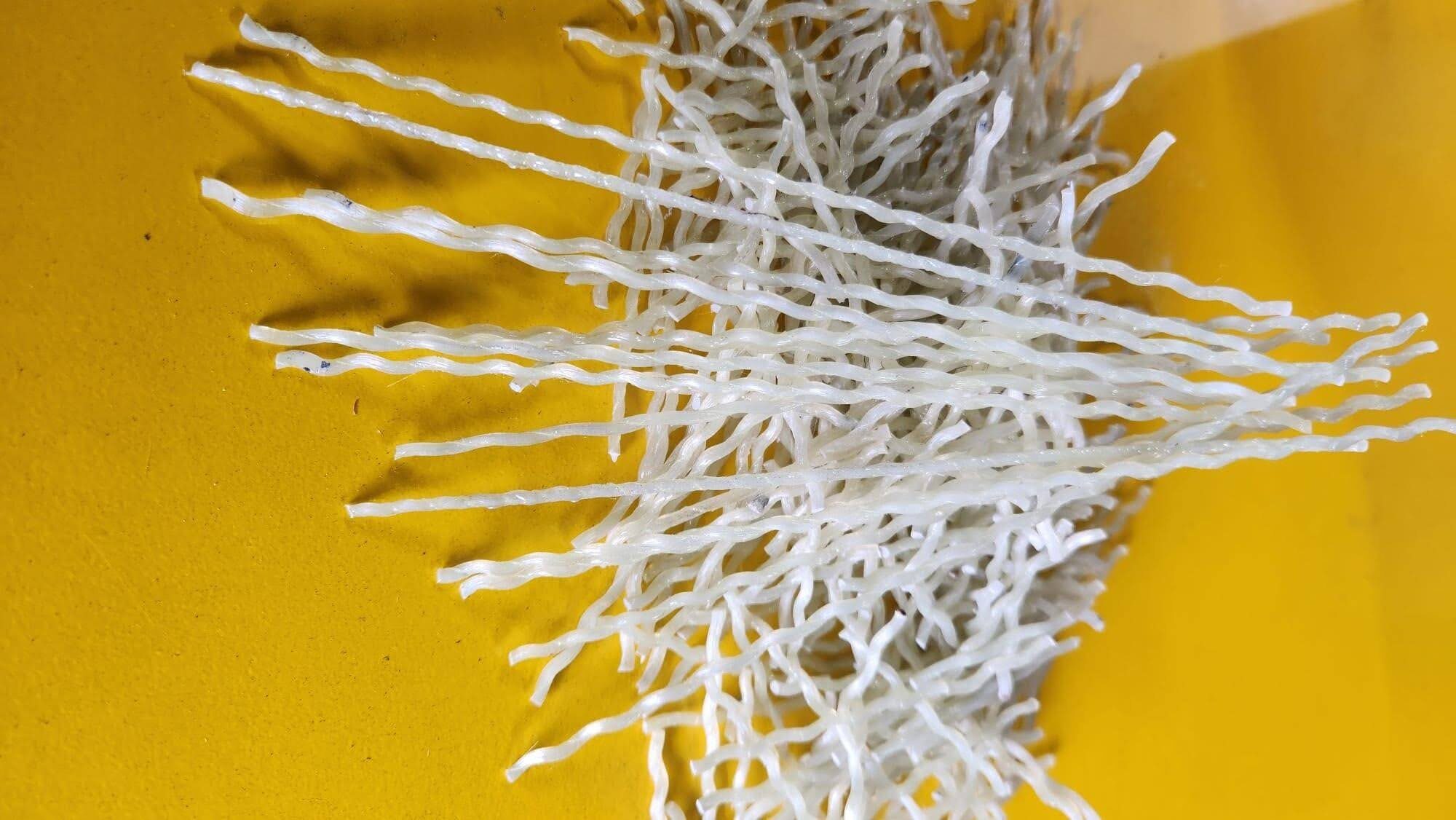
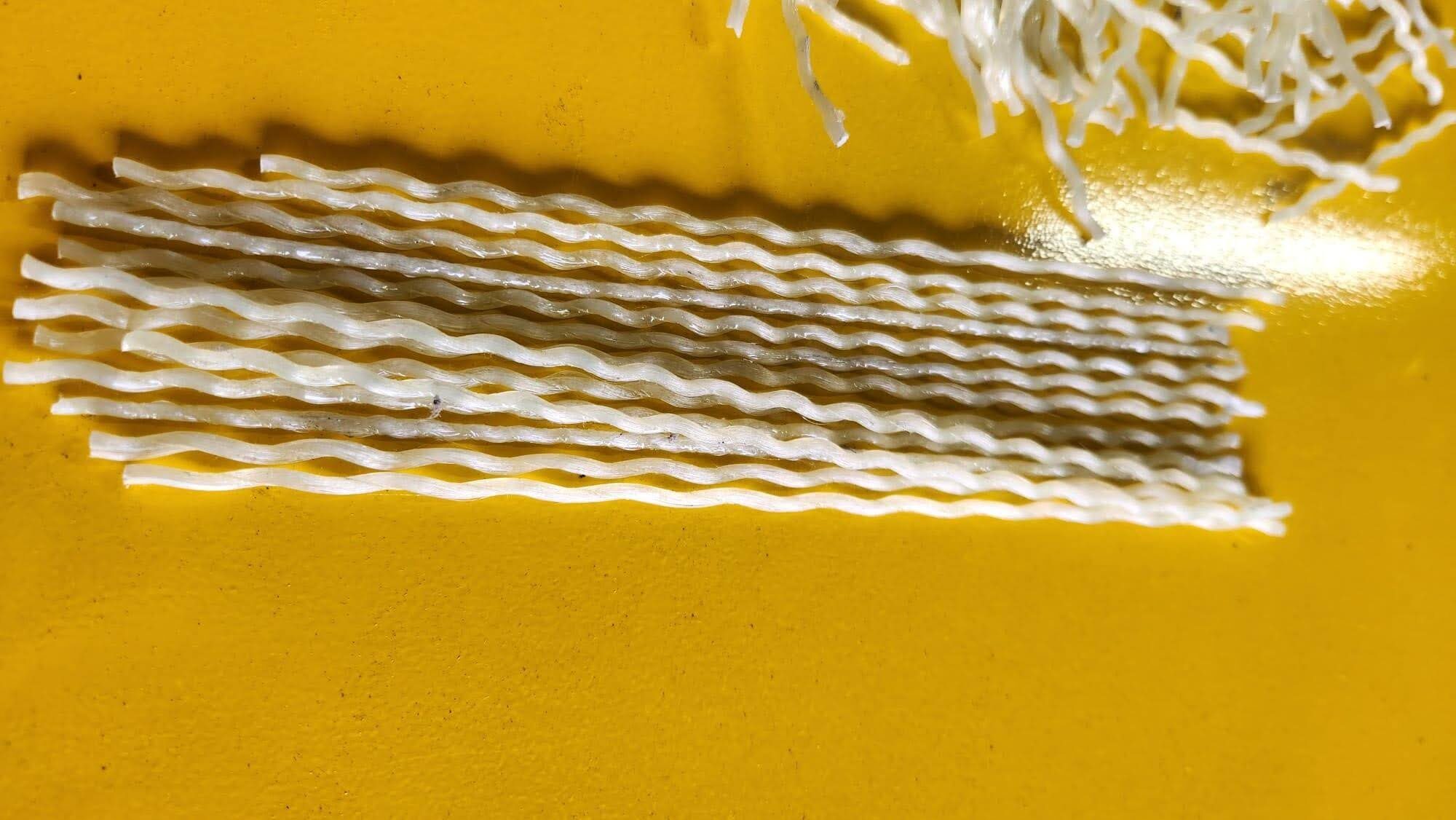
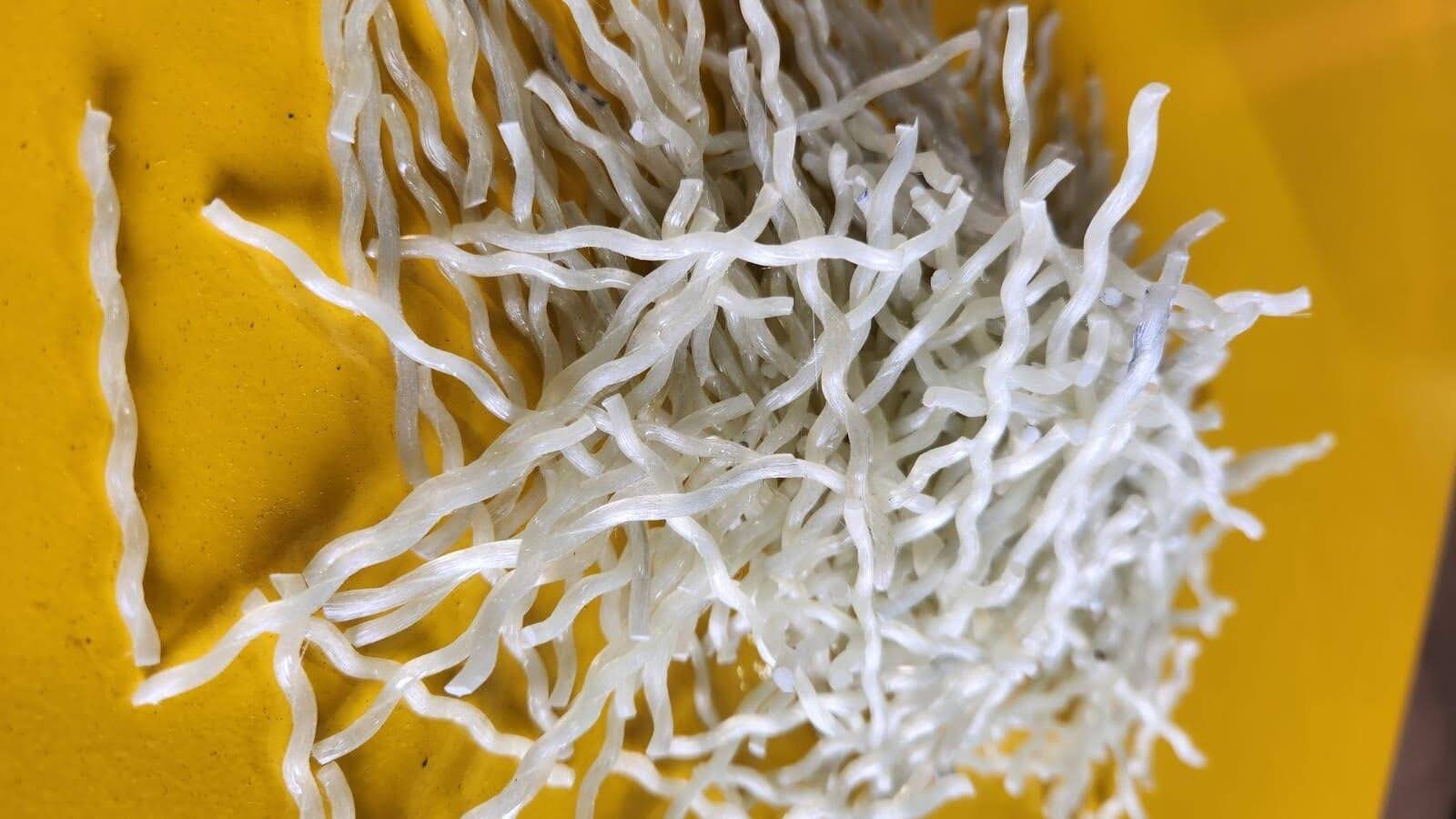
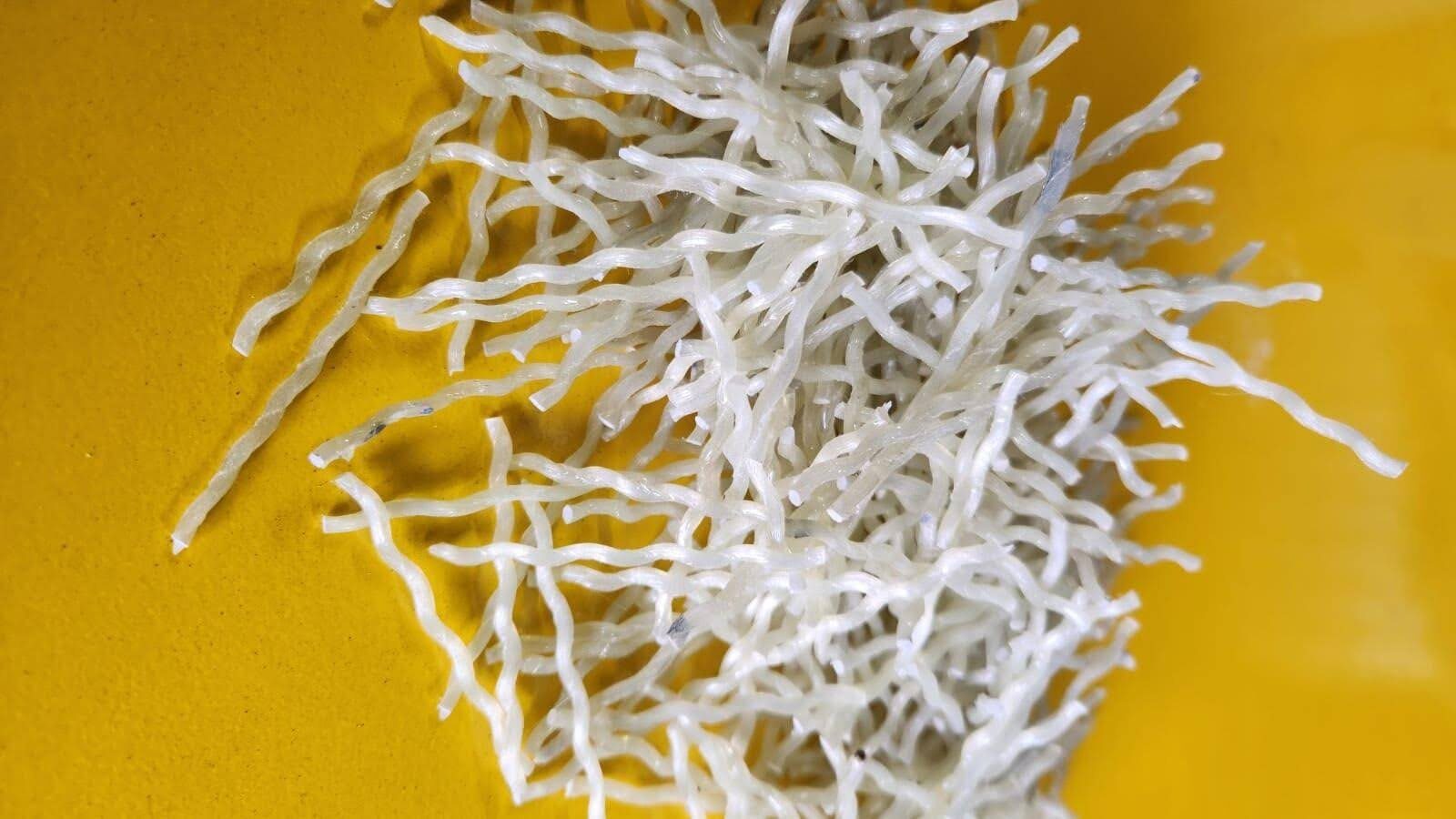
The CT-DP is an automated manufacturing system designed to produce short composite reinforcement elements from continuous glass or basalt fibers combined with a polymer matrix. These elements, marketed under the DuraPins™ name, can also be described as FRP mini-reinforcement bars, composite macro-reinforcement pins or rod-shaped FRP macrofibers.
Unlike traditional fiberglass textile fibers, DuraPins are manufactured as discrete composite reinforcing elements with a defined geometry. Their intended purpose is to provide distributed reinforcement within suitable concrete mixtures. The CT-DP production line combines 21-strand manufacturing with automated impregnation, profile formation, polymerization, cooling, continuous pulling and precision cutting.
One production line. Twenty-one reinforcement strands. Industrial-scale manufacturing of composite macro-reinforcement.
21 STRANDS. EXCEPTIONAL PRODUCTION CAPACITY.
21
12 M/MIN
252 M/MIN
15,120 M
120,960 M
FROM 45 MM
Manufacturer-declared production specifications. Maximum output assumes 21 strands operating simultaneously at 12 m/min without interruption. Actual production depends on materials, product geometry, curing conditions, cutting configuration and operating efficiency.
WHAT ARE DURAPINS?
Small Reinforcement Elements. A Different Approach to Reinforcing Concrete.
DuraPins™ are short, discrete fiber-reinforced polymer elements developed for use as distributed concrete reinforcement. Instead of being installed individually in a reinforcement cage, these elements are intended to be introduced into a concrete mixture and distributed throughout the material. Depending on their geometry, dosage, mixing conditions and interaction with the concrete matrix, they can contribute to the post-cracking behavior of fiber-reinforced concrete.
The principal engineering concept is crack bridging. When concrete develops cracks, properly dispersed reinforcing elements crossing the crack surfaces may continue transferring tensile forces across those openings. This behavior can improve residual flexural performance and energy absorption under suitable conditions. DuraPins are designed around this principle.
How Are DuraPins Different from Conventional Rebar?
Conventional GFRP rebar is manufactured in long, continuous lengths and positioned in specific locations within a concrete structure. DuraPins are manufactured as much shorter elements. Their intended function is distributed reinforcement rather than the formation of a conventional reinforcement cage. This creates different manufacturing and application possibilities.
DuraPins vs Conventional GFRP Rebar
| Caractéristiques | Conventional GFRP Rebar | DuraPins™ |
| Product form | Continuous reinforcing bars | Short composite reinforcing elements |
| Typical installation concept | Positioned reinforcement | Distributed within concrete |
| Manufacturing format | Long bars or coils | Precisely cut short segments |
| Reinforcement arrangement | Designed bar locations | Dispersed reinforcement |
| Principal manufacturing requirement | Bar geometry and mechanical properties | Element geometry, cutting consistency and composite quality |
| Product qualification | Applicable bar specifications and structural requirements | Fiber-reinforced concrete performance and project-specific qualification |
The two reinforcement systems should not be considered automatically interchangeable. Their structural functions, product properties and design requirements must be evaluated separately.
DuraPins introduce an additional product category for manufacturers developing advanced composite reinforcement solutions.
FRP MINI-REBAR AND COMPOSITE MACRO-REINFORCEMENT
Understanding the Product Category
The concrete industry uses several terms to describe relatively short reinforcing elements. These include macrofibers, composite fibers, mini reinforcing bars and discrete reinforcement. Although some terms overlap in commercial language, the materials are not necessarily identical.
Microfibers
Macrofibers
Macrofibers are larger discrete reinforcing elements that can contribute to residual strength and post-cracking performance when properly designed and dosed.
Composite Mini-Rebar
DuraPins are engineered composite reinforcement elements, not simply chopped strands of untreated fiberglass.
WHY COMPOSITE MACRO-REINFORCEMENT?
Reinforcing Concrete Beyond Conventional Steel
Concrete is strong in compression but relatively weak in tension. Traditional reinforcement systems compensate for this limitation using steel reinforcing bars, welded mesh or other engineered reinforcement. Fiber-reinforced concrete introduces a different mechanism. Numerous discrete reinforcing elements can be distributed throughout the concrete matrix. Once cracking occurs, elements crossing the crack surfaces can contribute to the residual load-bearing response. The performance depends on the reinforcement type, geometry, dosage, dispersion and concrete composition.
Potential Advantages of FRP Macro-Reinforcement
- Résistance à la corrosion. Glass- and basalt-fiber polymer composites do not undergo the conventional iron-rusting process associated with steel.
- Low Weight. Composite reinforcement elements can offer handling and transportation advantages compared with steel reinforcement products.
- Distributed Reinforcement. Short reinforcing elements can be incorporated into concrete mixtures where this approach is appropriate for the intended application.
- Post-Cracking Performance. Suitable composite macro-reinforcement may contribute to crack bridging, residual flexural strength and toughness.
- Manufacturing Flexibility. Different element lengths and compatible material configurations can be developed for specific product requirements.
These advantages must be confirmed through appropriate product and concrete-mixture testing. A particular DuraPins product should not be assumed to replace structural steel reinforcement without engineering verification.
THE CT-DP PRODUCTION LINE
Engineered Specifically for High-Output Composite Macro-Reinforcement Manufacturing
Manufacturing short composite reinforcement elements at industrial scale requires a different production approach from manufacturing conventional full-length GFRP rebar. The process must produce a large number of continuous composite strands, maintain stable material properties and cut the finished reinforcement into accurately controlled short lengths. Composite-Tech developed the CT-DP platform for this purpose. The equipment incorporates a multi-strand continuous manufacturing process with automated finishing.
The CT-DP Manufacturing System Includes:
- Continuous Fiber Feeding. Reinforcing fibers are supplied from creels and guided into the production system.
- Resin Impregnation. The fiber bundles are impregnated with a compatible polymer resin.
- Profile Formation. The shaping and winding system produces the required reinforcement geometry.
- Controlled Polymerization. Five curing ovens provide thermal processing of the composite reinforcement.
- Refroidissement. The material passes through a cooling module after polymerization.
- Continuous Pulling. An automated pulling system controls the movement of the reinforcement through the production line.
- Precision Cutting. The cutting module produces finished elements in the required lengths.
Together, these operations form an integrated manufacturing process designed for industrial production.
1. TWENTY-ONE STRANDS IN ONE PRODUCTION LINE
Industrial Productivity Through Simultaneous Manufacturing
One of the defining characteristics of CT-DP is its multi-strand production architecture. The line is designed to manufacture 21 continuous composite reinforcement strands simultaneously. According to the manufacturer’s technical presentation, each strand can operate at speeds of up to 10–12 meters per minute.
At the maximum documented speed, the combined linear output reaches: 21 × 12 m/min = 252 meters per minute.
That corresponds to: 15,120 combined linear meters per hour.
Or: 120,960 combined linear meters during an uninterrupted eight-hour shift.
These figures refer to the total length of all continuously manufactured strands before or during conversion into the specified finished lengths. They do not represent the number of individual cut pieces, nor do they guarantee a particular cutting rate.
Why Multi-Strand Production Matters
A manufacturer supplying discrete reinforcement elements needs substantial production volume. Unlike conventional rebar, where one finished product may measure several meters, DuraPins are cut into short segments. This means that a commercial operation may need to produce a large number of individual elements. The CT-DP manufacturing concept addresses this requirement by producing 21 strands within one integrated line.
High combined output creates opportunities for industrial-scale production without requiring a separate machine for every reinforcement strand.
2. AUTOMATED CUTTING FROM 45 MM
Manufacture the Length Required by Your Product Specification
Different applications may require different reinforcement-element lengths. The appropriate length influences the geometry of the finished product and can affect its dispersion and interaction with concrete. CT-DP incorporates a computer-controlled cutting system designed to produce DuraPins in selected lengths. The documented minimum cutting length is: 45 MM. Longer finished lengths can be configured according to the selected product specification and the capabilities of the cutting and handling system.
Why Cutting Flexibility Is Important
For manufacturers, adjustable cutting length provides opportunities to develop different product configurations. These can be evaluated for particular concrete mixtures and applications. Potential product-development parameters include element length, composite material, surface geometry and dosage.
However, a change in length should not be treated as a purely commercial decision. Different geometries may affect the way reinforcement is dispersed and how it interacts with cracks in hardened concrete. Therefore, the performance of each proposed DuraPins configuration must be validated.
CT-DP gives manufacturers the ability to configure the finished-element length, starting from 45 mm, as part of a controlled industrial production process.
3. CONTINUOUS COMPOSITE IMPREGNATION
Turning Reinforcing Fibers into Engineered Composite Elements
DuraPins are manufactured from reinforcing fibers embedded in a polymer matrix. The quality of this composite structure begins with resin impregnation. Continuous reinforcing rovings contain numerous individual filaments.
During production, the resin must penetrate the fiber bundles sufficiently to create a consistent composite. The CT-DP impregnation module is designed for this stage of the manufacturing process. After impregnation, the reinforcing material continues through the shaping and curing system.
Why Impregnation Matters
Incomplete impregnation can leave internal defects. Excessive resin consumption may increase manufacturing expenses. Inconsistent processing may introduce variation between finished elements. A professional production process must therefore establish suitable conditions for the selected fiber and resin system.
Composite-Tech’s approach to continuous composite manufacturing emphasizes controlled impregnation and repeatable processing conditions.
4. REINFORCEMENT GEOMETRY AND SURFACE FORMATION
More Than a Smooth Composite Rod
The external geometry of a reinforcing element influences how it interacts with the surrounding concrete. A smooth element and a shaped element may develop different mechanical interlocking behavior. CT-DP incorporates a winding module intended to form the selected reinforcement profile. The final geometry depends on the configured manufacturing process.
For composite macro-reinforcement, geometry is particularly important because the product must interact with the concrete matrix over a relatively short length. The combination of material properties, surface characteristics and element length influences reinforcement performance.
Why Geometry Matters
When concrete cracks, reinforcing elements that cross the crack may resist movement through a combination of mechanical interaction, bond and resistance to pullout. Their behavior depends on the complete reinforcement system. For this reason, the finished DuraPins product should be evaluated through appropriate concrete testing rather than relying solely on the tensile properties of the reinforcing fibers.
A short composite reinforcement element must be engineered as a complete product, not simply manufactured as a smaller version of conventional rebar.
5. FIVE CONTROLLED CURING OVENS
Reliable Polymerization at Industrial Production Speeds
After impregnation and profile formation, the composite reinforcement enters the curing section. CT-DP incorporates five curing ovens. These provide thermal treatment designed to develop the required polymer matrix properties as the reinforcing strands move continuously through the equipment. The required curing conditions depend on the selected resin formulation and production parameters.
Why Curing Is Important
The composite matrix must achieve a suitable degree of polymerization. Insufficient curing can affect the properties and durability of the finished material. The manufacturer must therefore coordinate pulling speed, heating conditions and resin chemistry. This becomes particularly important in a multi-strand system designed for high combined output.
The CT-DP curing section is designed to support continuous polymerization as part of the integrated manufacturing process.
6. AUTOMATED PULLING AND PRECISION FINISHING
Consistent Movement. Controlled Cutting. Repeatable Production.
The pulling system maintains the continuous movement of reinforcing strands through the manufacturing equipment. Its operation must be coordinated with the impregnation, profile-forming and curing stages. Once the reinforcement has been cured and cooled, the material reaches the cutting system. The cutting module converts continuous reinforcement into shorter finished elements. This is a central feature of the CT-DP manufacturing concept.
A DuraPins factory must produce not only continuous composite material but also finished elements with controlled lengths. Automating this operation helps reduce dependence on manual cutting and supports repeatable production. The equipment configuration and production parameters determine the achievable cutting performance for each product length.
TECHNICAL SPECIFICATIONS
CT-DP DuraPins™ Production Line
| Technical Parameter | Spécification |
| Manufacturer | Composite-Tech |
| Modèle | CT-DP |
| Production line | DuraPins™ |
| Equipment category | FRP mini-reinforcement / composite macrofiber production |
| Manufacturing technology | Continuous composite processing |
| Reinforcement strands | 21 simultaneously |
| Speed per strand | Up to 10–12 m/min |
| Maximum combined linear output | 252 m/min |
| Maximum theoretical hourly output | 15,120 m |
| Maximum theoretical 8-hour output | 120,960 m |
| Minimum documented cutting length | 45 mm |
| Reinforcing fibers | Glass fiber or basalt fiber |
| Polymer matrix | Compatible thermosetting resin system |
| Profile formation | Winding / shaping module |
| Curing system | 5 ovens |
| Refroidissement | Integrated cooling module |
| Tirer | Automated pulling system |
| Cutting | Automated cutting module |
| Indicative equipment layout length | Approximately 25 m |
| Electrical supply shown in installation drawing | 380 V, three-phase, 50 Hz |
| Electrical input power shown in drawing | 30 kW |
| Compressed air requirement | 0.6–0.8 MPa |
| Equipment price | Available upon request |
Source: Composite-Tech DuraPins technical presentation and CT-DP installation drawing dated December 20, 2025.
Production figures represent manufacturer-declared maximum theoretical capacity. The stated electrical input power is an installation requirement, not verified continuous operating consumption. Actual equipment configuration and utility requirements must be confirmed for each project.
WHAT MATERIALS CAN BE USED?
Glass Fiber and Basalt Fiber Composite Reinforcement
The DuraPins manufacturing concept is based on reinforcing fibers combined with a compatible thermosetting polymer matrix. The company’s documented product configurations include glass fiber and basalt fiber.
Glass Fiber DuraPins
Basalt Fiber DuraPins
Polymer Resin
Material proportions, additives and curing parameters should be established through the relevant manufacturing and product-development procedures.
The appropriate reinforcement system must be selected according to the required finished-product characteristics, not simply the raw material designation.
APPLICATIONS OF DURAPINS COMPOSITE REINFORCEMENT
Developed for the Fiber-Reinforced Concrete Industry
Distributed composite macro-reinforcement may be considered for a range of concrete products. The intended applications identified in the Composite-Tech presentation include:
- PRECAST CONCRETE PRODUCTS. Short composite reinforcing elements can be evaluated for precast products where distributed reinforcement and post-cracking behavior are important.
- INDUSTRIAL CONCRETE FLOORS. Fiber-reinforced concrete is used in industrial flooring systems, subject to the required residual strength and engineering design.
- CONCRETE PIPES. Distributed reinforcement may be considered for specific pipe products where the manufacturer can demonstrate appropriate performance.
- TUNNEL SEGMENTS. Fiber-reinforced concrete is used in certain tunnel-lining applications. A DuraPins formulation would require relevant structural testing and project approval.
- WATER TANKS AND INDUSTRIAL STRUCTURES. Non-metallic reinforcement may be of interest in environments where steel corrosion is a concern.
- MARINE AND COASTAL CONSTRUCTION. Composite reinforcement can offer advantages where conventional steel corrosion influences service-life considerations.
These applications represent potential target markets, not blanket approvals for using DuraPins in any structural element. Product suitability must be demonstrated for the intended concrete mixture, geometry, dosage and engineering requirements.
DURAPINS AND FIBER-REINFORCED CONCRETE PERFORMANCE
What Must Be Tested?
For manufacturers developing a new composite macro-reinforcement product, the critical commercial question is not simply how much reinforcement the machine can produce. It is whether the resulting product delivers the required performance in concrete. The behavior of fiber-reinforced concrete depends on the reinforcing material, geometry, dosage, mixing method and concrete composition.
Relevant performance characteristics may include:
- Residual flexural strength – The ability of cracked concrete to continue resisting flexural loads.
- Toughness – Energy absorption during deformation.
- Post-cracking behavior – How concrete responds after its initial cracking.
- Dispersion – How uniformly the reinforcing elements distribute throughout the mixture.
- Workability – The effect of reinforcement on mixing, placing and finishing.
- Durabilité – The long-term behavior of the complete concrete and reinforcement system.
For the American market, ASTM C1609/C1609M provides a recognized test method for evaluating flexural performance of fiber-reinforced concrete. ASTM C1116/C1116M addresses the specification of fiber-reinforced concrete. The applicability of these and other standards must be established for the particular DuraPins material and concrete product. A manufacturing machine does not automatically certify the finished reinforcement.
Product testing and engineering qualification are essential before commercial performance or reinforcement-replacement claims are made.
WHY INVEST IN COMPOSITE MACRO-REINFORCEMENT MANUFACTURING?
A New Product Category for Composite Reinforcement Manufacturers
Many existing GFRP factories concentrate on conventional reinforcing bars. Others manufacture composite mesh or bent reinforcement.
DuraPins introduce a different product category. Instead of supplying long reinforcing bars or prefabricated grids, a manufacturer can develop short composite reinforcement elements intended for use in fiber-reinforced concrete. This creates opportunities to approach a different group of industrial customers.
Potential buyers may include concrete producers, precast manufacturers, flooring contractors and specialized construction material distributors. The commercial attractiveness of such a business depends on product qualification, production costs, customer demand and achievable selling prices.
Why Production Technology Matters
A commercial DuraPins business requires repeatable manufacturing quality and sufficient production capacity.
CT-DP is designed to address these requirements through:
- 21-strand simultaneous production
- Automated continuous processing
- Controlled polymerization
- Programmable finished-element lengths
- Industrial-scale combined linear output
For investors, the relevant financial measure is the cost of manufacturing qualified reinforcement per kilogram or per unit of finished product. This should be calculated using the actual product geometry, material composition, production yield and operating conditions. Composite-Tech can assist prospective manufacturers in evaluating the required equipment configuration and startup requirements.
WHY CHOOSE COMPOSITE-TECH?
Industrial Equipment Developed by Composite Manufacturing Specialists
Composite-Tech develops and manufactures industrial equipment for fiber-reinforced polymer reinforcement. Its product portfolio includes manufacturing systems for straight GFRP and BFRP rebar, reinforcement mesh, bent composite elements and other FRP products.
The CT-DP DuraPins line expands this portfolio into discrete composite macro-reinforcement. Rather than adapting a conventional straight-rebar machine for short products, the CT-DP system is designed around the requirements of continuous multi-strand production and automated cutting. The equipment combines fiber feeding, impregnation, profile formation, curing, cooling, pulling and cutting into one manufacturing sequence.
Composite-Tech offers manufacturers an opportunity to develop a specialized reinforcement product using dedicated industrial production equipment.
COMPLETE FACTORY SUPPORT
From Equipment Selection to Manufacturing Startup
Establishing a DuraPins manufacturing operation requires an appropriate industrial building and supporting infrastructure. The CT-DP installation drawing shows a production arrangement approximately 25 meters long. Additional space is required for access, maintenance, raw material handling, ventilation and finished-product operations. The drawing specifies a three-phase electrical supply, compressed air and industrial exhaust ventilation. These requirements must be reviewed for the electrical and safety regulations applicable to the factory location.
Composite-Tech supports customers with equipment configuration, preliminary factory planning, installation, commissioning and operator training. The final scope of equipment supply, technical support and warranty is established in the commercial agreement.
FREQUENTLY ASKED QUESTIONS
What is DuraPins?
DuraPins™ is Composite-Tech’s name for short fiber-reinforced polymer reinforcement elements intended for use as distributed reinforcement in suitable concrete mixtures.
What is the CT-DP production line?
CT-DP is an automated industrial system for manufacturing DuraPins composite reinforcement. It combines continuous multi-strand production with controlled curing and automated cutting.
Is DuraPins the same as conventional fiberglass rebar?
No. Conventional GFRP rebar is manufactured in long lengths and positioned within a concrete structure. DuraPins are short, discrete composite elements intended for distributed reinforcement applications
Are DuraPins microfibers or macrofibers?
DuraPins are more appropriately described as discrete composite macro-reinforcement elements. Although terms such as micro-rebar or mini-rebar may be used informally, they are not equivalent to conventional fine microfibers used in concrete.
What is FRP mini-rebar?
FRP mini-rebar is a descriptive term for relatively short reinforcing elements manufactured from fiber-reinforced polymer. DuraPins are a product concept within this general category.
How many reinforcement strands can CT-DP manufacture?
The production line is designed to manufacture 21 continuous strands simultaneously.
What is the maximum production speed?
The documented maximum speed is 12 meters per minute per strand, corresponding to a combined linear output of 252 meters per minute.
How much reinforcement can the machine produce in eight hours?
The documented CT M 2.5-6 manufacturing process uses a weaving and twisting mechanism to form connections between the reinforcing members.
What is the minimum DuraPins length?
The documented minimum cutting length is 45 mm. Longer finished lengths can be configured according to the product and equipment requirements.
Can CT-DP manufacture basalt-based reinforcement?
Yes. The documented manufacturing concept includes configurations using basalt fiber as well as glass fiber.
Does DuraPins replace steel reinforcement?
DuraPins are intended for distributed reinforcement applications. Any reduction or replacement of conventional steel reinforcement must be justified by concrete testing, structural design and applicable project requirements. It cannot be assumed universally.
What standards are relevant to DuraPins concrete applications?
ASTM C1609/C1609M is relevant to flexural performance testing of fiber-reinforced concrete. ASTM C1116/C1116M addresses fiber-reinforced concrete specifications. Additional tests and approvals may be required depending on the product and application.
What is the price of the CT-DP production line?
The equipment price depends on the selected configuration and commercial terms. Contact Composite-Tech to receive a technical and commercial proposal.
START PRODUCING DURAPINS WITH COMPOSITE-TECH
21 Strands. Up to 252 Meters per Minute. A New Category of Composite Reinforcement.
CT-DP DuraPins™ brings industrial-scale manufacturing technology to the production of discrete FRP reinforcement elements. Designed for glass- and basalt-fiber composite systems, the production line combines continuous multi-strand processing with automated finishing.
Its principal advantages include:
- 21 simultaneously manufactured reinforcement strands.
- Up to 252 meters of combined linear output per minute.
- Programmable cutting lengths from 45 mm.
- Five controlled curing ovens.
- Automated pulling and cutting.
- Integrated industrial production architecture.
Whether you are entering the composite reinforcement market or expanding an existing FRP manufacturing business, CT-DP provides a dedicated platform for developing DuraPins composite macro-reinforcement products.
Request a CT-DP DuraPins Production Line Proposal
Contact Composite-Tech to discuss your intended reinforcement material, finished-element specifications, production requirements and factory configuration.
Composite-Tech — Advanced Manufacturing Technology for the Global FRP Industry.