
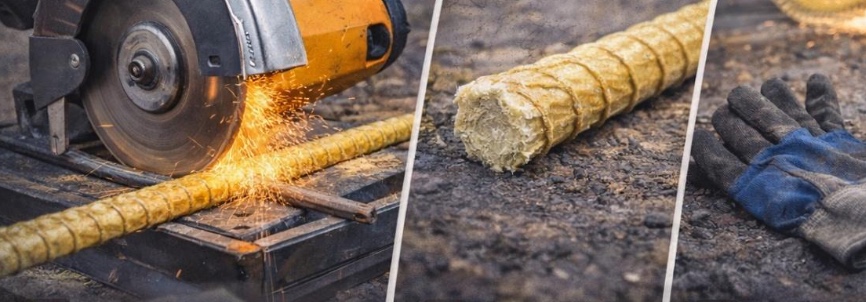
If you’re here because you searched “how to cut fiberglass rebar” Lub “diamond blade fiberglass rebar”, you’re asking the right question. Cutting Pręty zbrojeniowe GFRP is straightforward—but it’s not the same as cutting steel. The “gotchas” are dust, splinters, and using the wrong tool (which can crush the bar and weaken the end).
This guide is written for contractors, installers, and fabricators who want clean cuts, safer jobsites, and fewer headaches.
Szybka odpowiedź
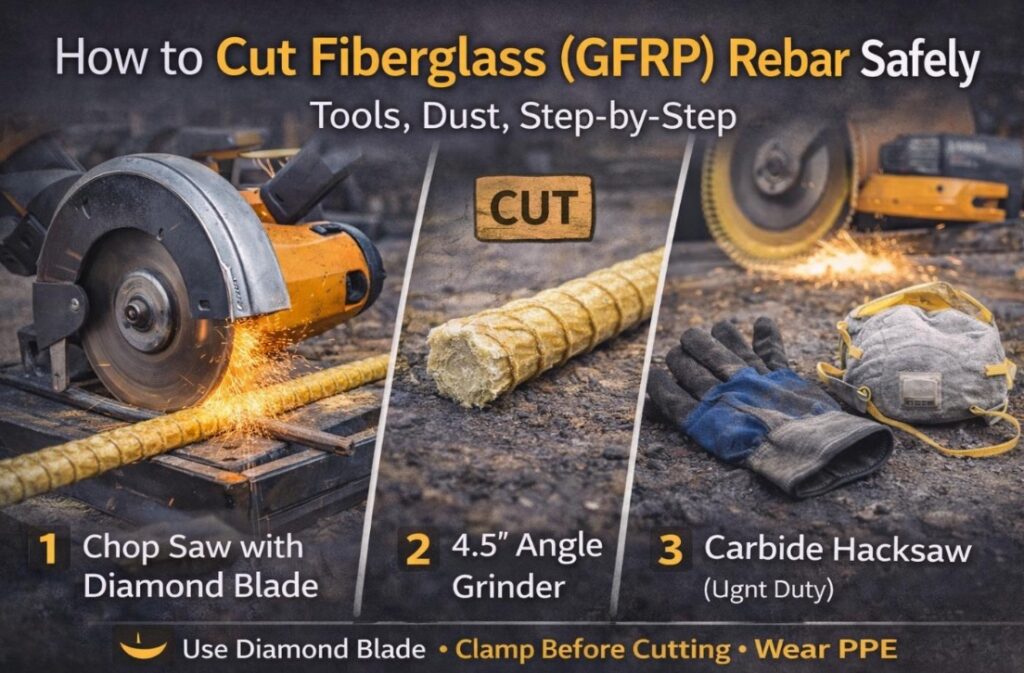
- Use a diamond blade (best) or an abrasive cutoff wheel on a chop saw or angle grinder.
- Zawsze noś eye protection + gloves + respiratory protection when dust is present (at minimum a NIOSH-rated filtering facepiece like an N95, where appropriate).
- Clamp the bar before cutting to prevent vibration and frayed ends.
- Avoid steel-style shear cutters (they can crush/delaminate the composite). Use saws/wheels designed for composite cutting.
Why cutting GFRP rebar is different from steel
Steel cutting is mostly about heat and sparks. GFRP cutting is about dust and fibers.
Pręty zbrojeniowe GFRP is a composite: continuous glass fibers locked in a polymer resin. Cutting it creates:
- fine fiberglass/resin dust,
- sharp fiber “whiskers” at the cut end if the bar vibrates,
- and potentially a rough end that’s harder to splice or place cleanly.
The solution is not complicated: correct blade + stable setup + dust control.
Best tools for cutting fiberglass rebar (jobsite + shop)
Here’s the practical ranking based on what experienced FRP installers use most often.
Tool comparison table
| Tool | Best for | Pros | Cons |
| Chop saw / cut-off saw with diamond blade | Repetitive cuts, production work | Fast, clean cuts, consistent length | Dust; needs stable work area |
| Angle grinder (4.5” or 7”) with diamond disc | Field cuts, tight access | Portable, widely available | More dust; requires steady hand |
| Circular saw with diamond or carbide blade | Field trimming and straight cuts | Fast; good for small batches | Dust; needs control for square cuts |
| Band saw (shop) | Precision shop cutting | Clean, controlled | Not practical on most jobsites |
| Carbide-tipped hacksaw (light duty) | Small diameters / occasional cuts | Low cost, no power required | Slow; can fray if not supported |
These tool recommendations match multiple FRP industry guides (diamond/cut-off saws and grinders are the most common).
Diamond blade vs abrasive wheel: what’s better?
Diamond blade is usually the best choice for GFRP rebar because it tends to:
- cut cleaner,
- last longer,
- and reduce “pulling” fibers at the edges.
Abrasive wheels work too, especially in chop saws, but they generally:
- wear faster,
- generate more dust,
- and can leave a rougher edge.
Most step-by-step cutting guides for GFRP explicitly list diamond blades as the preferred option when available.
Step-by-step: how to cut fiberglass rebar safely
Step 1 — Set up a safe cutting zone
- Choose a well-ventilated area (outdoors if possible).
- Keep bystanders away from the dust stream.
- If working indoors, use a shop vacuum or dust extractor near the cut line.
Step 2 — Wear the right PPE
Minimum recommended PPE:
- Safety glasses (fibers can irritate eyes)
- Gloves (prevents splinters)
- Respiratory protection when airborne dust is present (many crews use N95-type respirators for dust). OSHA’s respiratory protection standard governs required programs for respirator use in workplaces.
Note: On professional sites, respirator requirements depend on exposure and employer program rules. If respirators are required, OSHA 29 CFR 1910.134 applies.
Step 3 — Measure and mark accurately
- Use a permanent marker or tape.
- For repetitive lengths, use a stop block or jig.
Step 4 — Clamp the bar before cutting
This is the difference between a clean cut and a frayed cut end.
- Clamp GFRP to a stable surface or saw table to prevent vibration.
Step 5 — Cut with steady pressure (don’t force it)
- Let the blade do the work.
- For grinders: keep the wheel square to the bar and avoid twisting.
Step 6 — Finish the cut end (30 seconds)
- Lightly sand or deburr with a sanding pad if needed.
- If you’re using couplers or placing bars close together, this makes handling smoother and reduces fiber whiskers.
Step 7 — Clean up dust correctly
- Vacuum dust; don’t dry-sweep it into the air.
- Dispose of dust and offcuts properly per jobsite rules.
The most common mistakes (and how to avoid them)
- Using steel shear cutters
They can crush and delaminate a composite bar. Use saw blades/wheels instead. - No clamping / bar “shaking” during the cut
This creates frayed ends and loose fibers. Clamp it. - Skipping PPE because “it’s just a few cuts”
Even a few cuts can produce irritating dust. Basic dust protection and eye protection should be standard. - Forcing the blade
Overheats the resin and makes cuts uglier. Use steady pressure.
Jobsite tips that save time
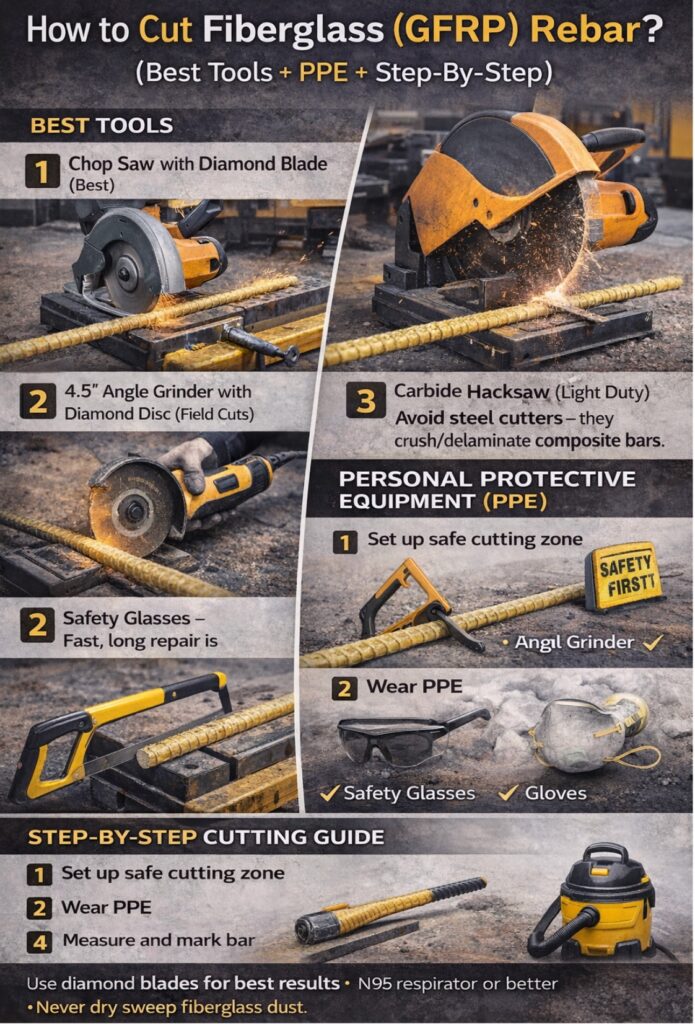
- If you’re cutting many pieces, a chop saw with a diamond blade is the fastest workflow.
- For “one-off” cuts in place, a 4.5” angle grinder + diamond disc is the most common field solution.
- Keep a small sanding pad in the toolbox. It prevents gloves getting snagged on fiber whiskers.
Często zadawane pytania
What is the best blade to cut fiberglass (GFRP) rebar?
Most installers prefer a diamond blade on a cut-off saw or angle grinder for clean, fast cuts.
Can I cut fiberglass rebar with a metal chop saw blade?
You shouldn’t. Use a diamond or abrasive cutting wheel designed for composite cutting, not a toothed blade meant for steel.
Does cutting GFRP rebar create hazardous dust?
Cutting produces fine fiberglass/resin dust that can irritate eyes/skin and should be controlled. Use ventilation and proper PPE; OSHA’s respirator standard applies when respirators are required on a jobsite.
What PPE should I wear when cutting fiberglass rebar?
At minimum: safety glasses, gloves, and dust-appropriate respiratory protection when dust is present (many use N95-type filtering facepieces for particulate dust depending on site policy and exposure).
Should I wet-cut fiberglass rebar to reduce dust?
Wet cutting can reduce airborne dust, but you must ensure the cutting tool is compatible with wet use and follow electrical safety rules. Many crews instead use dry cutting with local dust extraction and respirators.
Why this matters for quality (not just safety)
Clean cutting protects more than your lungs—it protects the integrity of your installation:
- cleaner ends = easier placement and splicing,
- less fraying = fewer handling injuries and less mess,
- better workflow = faster slab and foundation reinforcement.
If you manufacture GFRP/BFRP rebar and mesh, cutting quality also reflects product consistency—good impregnation and proper curing reduce fraying and “brittle” cut behavior.