
Can a single fiberglass rebar production line generate more than $250,000 in monthly revenue? With industrial-grade manufacturing equipment, competitive production costs, and a strong distribution network, the numbers show that it is possible.
For entrepreneurs and industrial investors considering new manufacturing opportunities in 2027, glass fiber reinforced polymer (GFRP) rebar production deserves serious attention. The business combines several attractive characteristics: relatively inexpensive raw materials, automated production technology, low direct labor requirements, and the opportunity to manufacture a corrosion-resistant reinforcement product for the construction industry. But the most interesting aspect of this business is not simply the growing use of fiberglass reinforcement. It is the potential difference between the cost of manufacturing GFRP rebar and the price at which finished reinforcement can be sold.
At Composite-Tech, we develop industrial production equipment designed specifically to improve that equation. Our CT2, CT4, and CT6 manufacturing lines are engineered for continuous industrial operation, automated processing, controlled electricity consumption, and long-term manufacturing reliability.
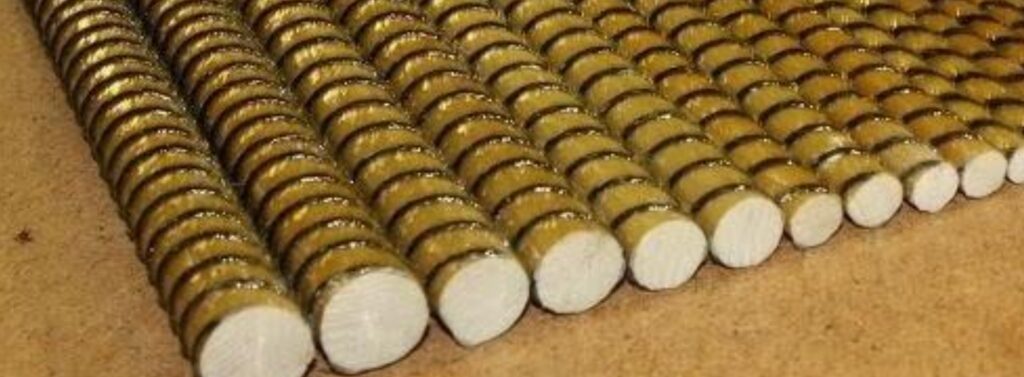
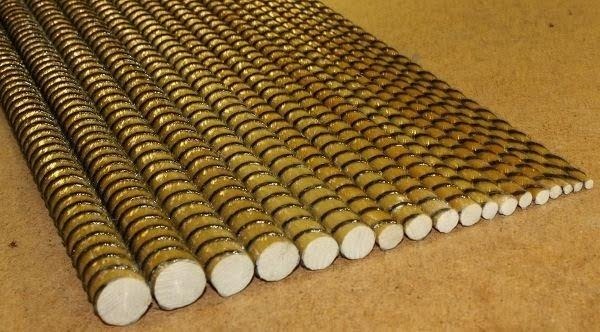
The high-capacity CT6 Nuova Generazione can manufacture up to six Ø10 mm GFRP bars simultaneously, corresponding approximately to the American #3 (3/8-inch) reinforcement size. At its specified operating speed, the line can produce approximately 118 linear feet (36 meters) of fiberglass rebar per minute. Over a standard eight-hour shift and 22 working days per month, this represents a theoretical production capacity exceeding 1.24 million linear feet (380,160 meters) per month.
What could that mean for a manufacturing business? Let’s examine the equipment investment, raw material costs, production efficiency, potential revenue, and return on investment.
1. How Much Does It Cost to Start a Fiberglass Rebar Manufacturing Business?
utilities, raw materials, and trained personnel. Unlike certain manufacturing businesses that require extensive production infrastructure and large teams, a fiberglass rebar facility can be organized around a compact, automated production system.
The main investment is the GFRP rebar production line.
Additional requirements generally include:
- A suitable industrial building.
- Three-phase electrical supply.
- An air compressor.
- Industrial ventilation.
- Raw material storage.
- Finished product handling and packaging.
- Quality control equipment.
- Initial raw materials.
- Working capital.
The required investment depends on the factory’s location, existing infrastructure, production capacity, and selected equipment configuration.
What Does a GFRP Rebar Production Line Cost?
Composite-Tech manufactures several industrial production line configurations.
| Linea di produzione | Barre simultanee | Production Speed for 10 mm / Approx. #3 | Theoretical Monthly Capacity |
| CT2 | 2 | 26.2 ft/min (8 m/min) | 277,165 ft (84,480 m) |
| CT4 | 4 | 65.6 ft/min (20 m/min) | 692,913 ft (211,200 m) |
| CT6 Nuova Generazione | 6 | 118.1 ft/min (36 m/min) | 1,247,244 ft (380,160 m) |
Production calculations are based on an eight-hour shift, 22 working days per month, and the stated speeds for the specified Ø10 mm configuration. Actual output depends on operating conditions, material formulation, production efficiency, and maintenance.
For this financial example, we will use the Composite-Tech CT6 New Generation.
An indicative previous commercial price of approximately $125,000 provides a reference point for the equipment investment. This is not a confirmed 2027 selling price.
A preliminary investment scenario might look like this:
| Categoria di investimento | Estimated Budget |
| CT6 industrial GFRP production line | $125,000 |
| Installation and operator training | $3,000 |
| Initial fiberglass roving supply | $500 |
| Initial polymer resin supply | $750 |
| Allowance for factory preparation, auxiliary equipment, logistics, and working capital | $50,750 |
| Total Illustrative Startup Investment | $180,000 |
The final investment will vary depending on the country, factory condition, freight, import duties, utilities, required product certification, and initial working capital. The $180,000 figure is a hypothetical planning budget, not a turnkey factory quotation. However, it provides a starting point for understanding the production potential of a modern industrial GFRP rebar manufacturing operation.
2. Why Fiberglass Rebar Manufacturing Can Be an Attractive Business
Traditional steel reinforcement remains the dominant material in concrete construction. However, corrosion is a major durability concern in many structures. Bridges exposed to road salts, marine infrastructure, wastewater treatment facilities, parking structures, and industrial concrete applications may require reinforcement with enhanced corrosion resistance.
GFRP reinforcement offers several useful characteristics. It does not rust like conventional carbon steel, is lightweight, and provides high tensile strength along the direction of its reinforcing fibers. It is also electrically non-conductive and non-magnetic. These characteristics make fiberglass reinforcement attractive for selected construction applications.
GFRP and steel have different mechanical properties, including stiffness and failure behavior. Therefore, GFRP must be specified and designed according to the applicable engineering standards rather than substituted directly for steel in every application. From a business perspective, the opportunity is to manufacture a specialized construction product and supply it to customers who value corrosion resistance, durability, and reduced material weight.
Potential buyers include:
- Construction material distributors.
- Precast concrete manufacturers.
- Infrastructure contractors.
- Industrial construction companies.
- Marine construction suppliers.
- Concrete product manufacturers.
- Companies supplying reinforcement for roads and slabs.
For an established construction materials distributor, adding fiberglass rebar manufacturing can be particularly attractive. The company may already have relationships with contractors and existing distribution channels. Instead of developing an entirely new customer base, it can introduce GFRP reinforcement as an additional product category. For new entrepreneurs, the opportunity is to establish a specialized industrial business with scalable production capacity.
3. How Much Does It Cost to Manufacture #3 Fiberglass Rebar?
One of the most important questions for any potential manufacturer is: What is the actual cost of producing one linear foot of GFRP rebar?
The answer starts with raw materials. Fiberglass reinforcement is manufactured primarily from continuous glass fiber roving and a polymer resin system.
For this example, we will use a simplified composition of: 80% fiberglass roving and 20% polymer resin by weight.
Actual commercial formulations may also require curing agents, additives, and surface materials.
Composite-Tech uses the following indicative material prices for this calculation.
| Materia prima | Price per Pound | Price per Kilogram |
| roving in fibra di vetro | $0.23/lb | $0.50/kg |
| resina polimerica | $1.36/lb | $3.00/kg |
The weighted cost of the two principal ingredients is:
Fiberglass: 80% × $0.50 = $0.40/kg.
Resin: 20% × $3.00 = $0.60/kg.
Total principal raw material cost: $1.00 per kilogram, or approximately $0.45 per pound of finished composite.
This figure excludes additional formulation ingredients, waste, and operating expenses.
Raw Material Cost Per Foot of #3-Size GFRP Rebar
For our example, we will use a nominal 10 mm fiberglass bar, approximately corresponding to the American #3 (3/8-inch) size.
Assume the manufactured bar weighs approximately: 0.157 kg per meter, or 0.1055 lb per linear foot.
Its principal raw material cost is therefore: $1.00/kg × 0.157 kg/m = $0.157/m.
Converting to American units: $0.157 ÷ 3.28084 = approximately $0.048 per linear foot.
That means the fiberglass and resin used to manufacture one linear foot of this reinforcement cost approximately 4.8 cents under the assumed formulation and material prices.
| Cost Indicator | American Units | Metric Units |
| Finished reinforcement mass | 0.1055 lb/ft | 0,157 kg/m |
| Principal raw material cost | $0.048/ft | $0.157/m |
| Example selling price | $0.229/ft | $0.75/m |
| Difference before other expenses | $0.181/ft | $0.593/m |
These numbers are illustrative. Actual product weight depends on the specified cross-sectional geometry, nominal diameter, surface profile, and material formulation. The important conclusion is that the principal raw material cost can be substantially lower than the finished product’s selling price. For an efficient manufacturer, this creates room to cover operating expenses and potentially generate an attractive manufacturing margin.
4. Fiberglass Rebar Selling Prices in the United States
For American investors, fiberglass rebar prices are usually discussed per linear foot rather than per meter.
Common searches include:
- #3 fiberglass rebar price per foot.
- 3/8-inch GFRP rebar cost.
- Fiberglass rebar wholesale price.
- GFRP rebar suppliers USA.
- Fiberglass rebar manufacturing cost per foot.
Actual prices depend on the reinforcement diameter, product specifications, quantity, supplier, shipping distance, and certification requirements. Retail prices and large-volume manufacturer selling prices can differ substantially. For financial modeling, we will use a deliberately conservative assumed selling price of: $0.229 per linear foot ($0.75 per meter).
This should not be interpreted as the average U.S. wholesale price. It is a hypothetical factory selling price used to demonstrate manufacturing economics. For perspective, the same monthly sales volume generates considerably more revenue at higher selling prices.
| Selling Price per Foot | Approximate Price per Meter |
| $0.229 | $0.75 |
| $0.30 | $0.98 |
| $0.40 | $1.31 |
| $0.50 | $1.64 |
| $0.60 | $1.97 |
These are pricing scenarios, not verified average market prices. For a manufacturer, the final commercial strategy should be based on actual distributor quotations, regional demand, product specifications, and negotiated supply contracts.
5. How Much Fiberglass Rebar Can One CT6 Production Line Manufacture?
Production capacity is one of the most important factors affecting the economics of a manufacturing business. The Composite-Tech CT6 New Generation is designed for industrial production of multiple reinforcement bars simultaneously. For the specified Ø10 mm configuration, corresponding approximately to #3 (3/8-inch) reinforcement, the machine produces six bars at up to six meters per minute each.
That equals: 6 × 6 m/min = 36 m/min, or approximately 118 linear feet per minute.
The theoretical production capacity is:
| Operating Period | Linear Feet | Linear Meters |
| One minute | 118 ft | 36 m |
| One hour | 7,087 ft | 2,160 m |
| One 8-hour shift | 56,693 ft | 17.280 m |
| 22 working days | 1,247,244 ft | 380,160 m |
| 264 working days | 14,966,929 ft | 4,561,920 m |
These are maximum calculated outputs at the stated operating rate. Actual saleable production must account for maintenance, setup, material changes, production efficiency, and rejected material. Nevertheless, the figures demonstrate something important.
A single high-capacity industrial production line can manufacture more than one million linear feet of fiberglass reinforcement per month under a standard single-shift schedule.
For a manufacturer with established distribution channels, that represents significant commercial potential.
6. Why Production Capacity Matters More Than the Initial Equipment Price
Suppose two companies want to enter the fiberglass reinforcement business. Both plan to sell GFRP rebar to construction material distributors. Both have access to similar raw material prices. One purchases a low-capacity production system. The other invests in high-capacity industrial equipment. If demand remains limited, the smaller factory may initially have an advantage because it requires less capital.
However, when both manufacturers begin receiving larger orders, the situation changes. The higher-capacity factory may be able to manufacture more material during the same working hours. Certain operating expenses, including equipment supervision and factory administration, can be distributed across more finished products. The business may also fulfill larger orders without immediately purchasing additional production lines.
Consider the difference between Composite-Tech CT2 and CT6 at the specified Ø10 mm production rates.
- CT2: approximately 26.2 ft/min.
- CT6: approximately 118.1 ft/min.
- The CT6 provides 4.5 times the theoretical output capacity of CT2.
For companies planning to become major reinforcement suppliers, this difference can be commercially significant. The correct equipment choice depends on demand, but insufficient production capacity can become expensive when a business begins to grow.
7. Electricity Consumption: Why Energy-Efficient Equipment Matters
Electricity is an important operating expense in composite reinforcement manufacturing. GFRP production requires energy for heating, polymerization, pulling, cooling, and auxiliary systems. However, total electrical consumption is not the only relevant measurement. The most useful indicator is electricity consumption per linear foot of acceptable finished reinforcement. For the specified Composite-Tech configurations, indicative average operating power is approximately 18–20 kW per production line.
Using 20 kW for comparison:
| Parametro | CT2 | CT4 | CT6 |
| Combined production speed | 26.2 ft/min | 65.6 ft/min | 118.1 ft/min |
| Hourly production | 1,575 ft | 3,937 ft | 7,087 ft |
| Indicative operating power | 20 kW | 20 kW | 20 kW |
| Calculated electricity per foot | 0.0127 kWh | 0.0051 kWh | 0.0028 kWh |
These figures are calculated for the stated production speeds and power assumptions. They do not represent independent energy audits and exclude auxiliary electrical loads not included in the machine measurement.
How Much Does Electricity Cost Per Foot?
At an illustrative electricity tariff of $0.15/kWh:
CT6 line electricity cost: 0.00282 kWh/ft × $0.15 = approximately $0.00042 per foot.
That is approximately 0.042 cents per linear foot in calculated line electricity expense. It is a small component of the total modeled manufacturing cost. Actual electricity expenses must also account for compressor operation, ventilation, auxiliary equipment, startup cycles, and production downtime. Nevertheless, high output relative to energy consumption is an important advantage of efficient industrial equipment.
At Composite-Tech, production efficiency is a central part of equipment engineering. The objective is not simply to manufacture reinforcement quickly, but to manufacture it consistently while controlling operating expenses.
8. Only One or Two Operators for Industrial Production
Another important advantage of modern automated GFRP manufacturing equipment is low direct labor requirements. Composite-Tech production lines are designed so that normal line operation can typically be supervised by one or two trained operators. This is particularly relevant to manufacturers in the United States, where industrial labor represents a significant operating expense.
A properly configured production system integrates the main manufacturing processes, reducing the need for manual intervention at every stage. Operators supervise material feeding, production parameters, equipment operation, and routine product checks. Additional personnel may be required for quality control, maintenance, packaging, warehouse operations, and administration. However, direct production staffing remains relatively limited.
At the specified CT6 production speed, the theoretical output during an eight-hour shift is approximately 56,693 linear feet of #3-size fiberglass rebar. The possibility of producing this volume with one or two production operators creates attractive labor productivity. For an investor, the relevant question is not simply how many employees work in a factory. It is how many feet of acceptable finished reinforcement the factory produces per paid labor hour.
9. Three Advanced Technologies That Differentiate Composite-Tech Equipment
Production speed alone does not guarantee a competitive product. GFRP reinforcement quality depends on controlled resin impregnation, fiber distribution, curing conditions, surface geometry, and cooling. Composite-Tech has developed specialized processing technologies intended to improve these manufacturing stages.
Impregnazione di resina assistita da ultrasuoni
The structural performance of GFRP reinforcement depends on the interaction between continuous glass fibers and the polymer matrix. Resin must adequately penetrate the fiber bundles to create a consolidated composite material. Incomplete impregnation may lead to internal voids, inconsistent mechanical properties, and manufacturing defects.
Composite-Tech employs ultrasonic-assisted impregnation technology designed to improve fiber wet-out and resin distribution. The system works together with controlled resin processing and excess-resin removal. Its purpose is to support consistent composite manufacturing while maintaining the intended material composition. Better process control can potentially reduce defects and waste, improving the economics of finished reinforcement production.
Short-Wave Infrared Polymerization Booster
Resin polymerization is another critical manufacturing stage. The composite must achieve the required curing conditions without undesirable overheating. Composite-Tech incorporates a short-wave infrared booster designed to initiate polymerization under controlled heating conditions. The booster works together with the subsequent curing ovens.
This approach is intended to improve thermal process control and reduce the risk of excessive surface heating. Actual heat distribution depends on resin formulation, optical absorption, reinforcement diameter, and operating settings. The engineering objective is controlled curing throughout the reinforcement cross-section.
Two-Stage Cooling: Air Followed by Water
Cooling can influence the dimensional stability and surface quality of composite reinforcement. Rapid temperature transitions may create internal thermal stresses. Composite-Tech employs a two-stage cooling system. The reinforcement first passes through an air-cooling stage before entering water cooling. This arrangement is designed to reduce abrupt thermal transitions and support product consistency.
For manufacturers producing large volumes of reinforcement, minimizing preventable defects is economically important. Every rejected foot represents consumed raw materials, electricity, and manufacturing time.
These technologies are part of Composite-Tech’s proprietary engineering approach. Specific patent coverage and laboratory performance claims should be evaluated using the relevant supporting documentation.
10. Industrial Equipment Designed for Continuous Operation
An industrial production line should be evaluated as a long-term manufacturing asset. Composite-Tech develops its equipment for continuous industrial operation, including extended shifts and 24-hour manufacturing schedules when properly maintained and operated. The objective is to provide reliable manufacturing performance under demanding production conditions. With appropriate maintenance and replacement of wear components, the equipment is designed around a target service life of approximately 15 years.
Actual service life depends on operating conditions, maintenance practices, and equipment utilization. For business owners, this matters because the cost of production interruptions can become substantial. A machine that stops unexpectedly may delay deliveries, interrupt manufacturing schedules, and increase the cost allocated to each finished product. Reliable industrial equipment helps manufacturers protect productive operating hours.
What Happens If Production Runs 24 Hours per Day?
Using the specified CT6 production rate:
| Production Schedule | Theoretical Output |
| 8 hours | 56,693 ft (17,280 m) |
| 16 hours | 113,386 ft (34,560 m) |
| 24 hours | 170,079 ft (51,840 m) |
These figures assume uninterrupted operation at the stated speed.
Actual production must include planned maintenance, operator changes, material handling, and other operational considerations. However, multi-shift manufacturing creates opportunities to expand production without purchasing another complete line.
11. How Much Revenue Can a Fiberglass Rebar Factory Generate?
Now consider the financial potential of one Composite-Tech CT6 New Generation production line.
The following model is based on the specified Ø10 mm / approximately #3-size reinforcement configuration.
We will use a conservative hypothetical manufacturer selling price of $0.229 per linear foot ($0.75 per meter).
Actual U.S. selling prices may be higher or lower depending on the market, specifications, order quantity, and commercial terms.
Financial Assumptions
| Parametro | Valore |
| Production line | Composite-Tech CT6 New Generation |
| Product size | Ø10 mm, approximately #3 / 3/8 in |
| Theoretical monthly capacity | 1,247,244 ft (380,160 m) |
| Selling price | $0.229/ft ($0.75/m) |
| Principal raw material cost | $0.048/ft ($0.157/m) |
| Additional variable cost allowance | $0.012/ft ($0.04/m) |
| Electricity tariff | $0.15/kWh |
| Indicative line power | 20 kW |
| Monthly fixed expense allowance | $15,000 |
| Illustrative initial investment | $180,000 |
The fixed expense allowance is hypothetical and must be replaced with actual country-specific costs.
The financial model does not include all possible costs of operating a manufacturing business. For example, financing, taxes, depreciation, some maintenance expenses, certification, additional logistics, sales commissions, and working capital may materially affect actual results. The model is intended to demonstrate production economics, not guarantee investment returns.
Scenario 1: Market Entry — 25% Capacity Utilization
A new manufacturer may initially operate below maximum capacity while establishing customer relationships.
At 25% utilization:
Monthly production: 311,811 linear feet (95,040 meters).
Assuming 90% of manufactured output is sold:
Monthly sales: 280,630 linear feet (85,536 meters).
At the assumed selling price: Monthly revenue: $64,152.
After deducting the modeled manufacturing costs and fixed expense allowance: Illustrative monthly operating contribution: approximately $30,297.
This scenario demonstrates the potential economics of operating at relatively low capacity utilization.
However, it assumes the company can sell the stated quantity at the modeled price.
Scenario 2: Growing Business — 50% Capacity Utilization
Now assume the factory has developed a reliable customer network.
Monthly production: 623,622 linear feet (190,080 meters).
Assuming 95% of output is sold:
Monthly sales: 592,540 linear feet (180,576 meters).
Monthly revenue: $135,432.
Illustrative monthly operating contribution: Approximately $82,722.
The factory is operating at only half of its theoretical monthly capacity.
The remaining production capacity provides room for additional orders and future growth.
Scenario 3: Established Manufacturer — 75% Capacity Utilization
At this stage, the company has recurring customers and more predictable sales.
Monthly production: 935,433 linear feet (285,120 meters).
Assuming 95% is sold:
Monthly sales: 889,402 linear feet (270,864 meters).
Monthly revenue: $203,148.
Illustrative monthly operating contribution: Approximately $131,583.
This is a high-volume manufacturing scenario that requires an established distribution network.
Scenario 4: High-Performance Factory — 90% Capacity Utilization
Consider a manufacturer operating with strong demand and efficient production planning.
Monthly production: 1,122,520 linear feet (342,144 meters).
Assuming 95% of output is sold:
Monthly sales: Approximately 1,066,394 linear feet (325,037 meters).
Monthly revenue: Approximately $243,778.
Illustrative monthly operating contribution: Approximately $160,900.
This illustrates the commercial potential of operating a high-capacity industrial line near its planned output.
Scenario 5: Theoretical Maximum Production and Sales
At 100% of the calculated monthly production capacity:
Production: 1,247,244 linear feet (380,160 meters).
Assuming all finished reinforcement is sold:
Monthly revenue: $285,120.
Illustrative monthly operating contribution: Approximately $194,700.
This represents a mathematical upper-limit scenario under the stated assumptions.
It does not represent an expected operating result for a real factory, since continuous full-rate production without any downtime is not a normal planning assumption.
Nevertheless, it demonstrates the revenue scale associated with the CT6 production capacity.
12. Comparing Five Fiberglass Rebar Manufacturing Scenarios
| Business Scenario | Capacity Utilization | Monthly Sales (Linear Feet) | Entrate mensili | Illustrative Operating Contribution |
| Market entry | 25% | 280,630 | $64,152 | $30,297 |
| Growing business | 50% | 592,540 | $135,432 | $82,722 |
| Established manufacturer | 75% | 889,402 | $203,148 | $131,583 |
| High-performance factory | 90% | 1,066,394 | $243,778 | $160,900 |
| Theoretical maximum | 100% | 1,247,244 | $285,120 | $194,700 |
Production assumptions are based on the CT6’s specified Ø10 mm output. Manufacturing-related variable expenses are calculated on the total production volume, including unsold units, to illustrate cash expenditure. Results are simplified planning estimates, not audited accounting profits or actual customer performance.
The table demonstrates an important principle.
The financial potential of industrial manufacturing equipment increases significantly when the manufacturer develops the sales network required to utilize its productive capacity.
This is why equipment performance and commercial strategy must be evaluated together.
13. Can a GFRP Rebar Factory Recover Its Investment in 6–9 Months?
One of the questions most frequently asked by investors is how quickly a fiberglass rebar manufacturing business can recover its initial investment. A payback period of 6–9 months may be possible under favorable conditions.
However, actual investment recovery depends on more than machine output. The manufacturer must secure customers, maintain production quality, manage operating expenses, and collect payments.
Under the illustrative financial model, higher-capacity utilization produces substantial calculated operating contributions. In certain scenarios, the modeled operating contribution could equal the initial equipment and startup investment within a relatively short period. However, this mathematical calculation should not be treated as a guaranteed payback period.
A realistic business plan should account for:
- Time required to develop sales.
- Product approvals and certification.
- Customer payment terms.
- Working capital.
- Shipping and distribution.
- Financing expenses.
- Taxes.
- Additional factory investments.
For potential investors, the key conclusion is that high-capacity industrial production equipment can create substantial financial opportunities when combined with strong market demand.
14. How Much Factory Space Does a GFRP Rebar Production Line Require?
Composite-Tech production equipment can be installed in a relatively compact industrial layout.
For the specified production line configuration, the main equipment installation envelope is approximately: 118 feet long × 12.5 feet wide (36 m × 3.8 m).
This represents approximately: 1,472 square feet (137 m²) of equipment footprint.
The complete factory requires additional space for safe operator access, maintenance, raw materials, finished products, and auxiliary equipment.
The facility should also provide:
- Appropriate electrical infrastructure.
- Industrial ventilation.
- Compressed air.
- Safe resin handling and storage.
- Material handling access.
- Suitable fire protection.
- Quality control space.
Factory requirements vary by configuration and location.
For U.S. installations, the facility should be evaluated against the applicable electrical, fire, occupational safety, and environmental requirements.
15. Installation and Training: Preparing Your Team for Production
For entrepreneurs entering the GFRP industry, operating knowledge is just as important as equipment selection. Composite-Tech provides equipment installation, commissioning, and practical operator training.
A typical installation and training program takes approximately 7–10 days, assuming that the factory infrastructure is ready. During this period, operators are introduced to the production process, equipment adjustments, material handling, quality control, and routine maintenance. The goal is to prepare the customer’s personnel to operate the equipment independently and manufacture reinforcement according to the agreed production requirements. Successful commissioning and training should be verified through practical production trials and quality checks.
An indicative installation and training budget is approximately $3,000, depending on the project scope.
For initial commissioning, a material supply of approximately:
2,205 pounds (1,000 kg) of fiberglass roving
E
440–550 pounds (200–250 kg) of resin
may be appropriate, depending on the formulation and training schedule.
Auxiliary equipment, including an air compressor, is generally supplied separately.
16. Real Manufacturers Using Composite-Tech Equipment
When choosing industrial manufacturing equipment, investors should evaluate the supplier’s experience with real production facilities. Composite-Tech identifies multiple international manufacturers among its equipment customers.
Examples include:
Pirate Rebar — United States
An American fiberglass reinforcement company supplying GFRP products for construction applications.
GFRP Tech — South Africa
A composite reinforcement company serving the South African construction market.
ALB-REBAR — Romania
A European company active in composite reinforcement manufacturing and distribution.
Graphenano SmartMaterials — Spain
A company developing advanced composite reinforcement products, including graphene-enhanced GFRP materials.
Other customer examples identified by Composite-Tech include F+G Bar and Chemlead. These examples illustrate the international application of Composite-Tech manufacturing equipment.
For buyers conducting due diligence, specific equipment installations should be supported by project photographs, commissioning documentation, and customer-approved references. The ability to examine real industrial installations is an important part of evaluating any manufacturing equipment supplier.
17. Why the U.S. Market Is Particularly Interesting for GFRP Manufacturers
The United States represents an important potential market for fiberglass reinforcement. Infrastructure maintenance, corrosion-related durability challenges, and the development of design standards have created opportunities for suitable GFRP applications.
The American Concrete Institute’s CODICE ACI-440.11-22 provides requirements for structural concrete reinforced with GFRP bars within its defined scope.
ASTM D7957/D7957M-26 addresses specifications for GFRP bars used in concrete reinforcement.
These technical frameworks are important because professional buyers and engineers require products with documented performance. For manufacturers targeting the United States, equipment selection should therefore be accompanied by a product quality and certification strategy.
It is not enough to manufacture reinforcement that looks similar to steel rebar. The finished product must satisfy the mechanical, geometric, durability, and other requirements applicable to its intended use.
This creates an opportunity for serious industrial manufacturers.
Companies capable of producing consistent, specification-compliant reinforcement and supporting it with appropriate documentation may be better positioned to serve professional distributors and construction customers.
18. How to Build a Successful Fiberglass Rebar Manufacturing Business
Industrial equipment creates production capacity. A successful manufacturing company converts that capacity into recurring sales. For entrepreneurs entering this market, a practical strategy begins with identifying target customers before purchasing equipment.
Potential distribution channels include construction material suppliers, concrete manufacturers, infrastructure contractors, and specialized reinforcement distributors. Manufacturers should also evaluate the product sizes most commonly requested in their target region.
In the United States, these may include:
| U.S. Rebar Size | Nominal U.S. Diameter | Metric Equivalent |
| #3 | 3/8 in | 9.525 mm |
| #4 | 1/2 in | 12.7 mm |
| #5 | 5/8 in | 15.875 mm |
| #6 | 3/4 in | 19.05 mm |
| #8 | 1 in | 25.4 mm |
These are nominal U.S. reinforcement size designations. Metric production diameters such as 10, 12, 16, or 20 mm are not automatically identical to the corresponding American sizes. For American customers, exact diameter, equivalent cross-sectional area, and applicable product specification should be confirmed before manufacturing.
A factory may also diversify into related composite reinforcement products. Composite-Tech manufactures equipment for GFRP mesh, bent reinforcement elements, and other specialized composite products. This allows manufacturers to consider expanding beyond straight reinforcement and serving additional construction applications.
19. Build a High-Performance Fiberglass Rebar Factory with Composite-Tech
A successful Azienda produttrice di barre d'armatura in GFRP combines three essential elements:
Industrial production capacity, competitive manufacturing costs, and a strong sales network.
Composite-Tech develops equipment designed to support the first two.
Our industrial production lines combine automated manufacturing, specialized composite processing, high output, and low direct labor requirements.
The CT6 New Generation demonstrates the potential of modern tecnologia di produzione.
With a theoretical capacity exceeding 1.24 million linear feet of approximately #3-size fiberglass reinforcement per month under the specified schedule, a single industrial production line can support a substantial manufacturing operation.
At an illustrative selling price of $0.229 per linear foot, that production capacity corresponds to a theoretical monthly sales value of approximately $285,000.
Actual results depend on manufacturing efficiency, product specifications, market demand, sales prices, and operating costs.
For investors planning to enter the fiberglass reinforcement industry, the choice of production equipment will influence manufacturing economics for years.
The best machine is not necessarily the one with the lowest purchase price. It is the one that allows your business to produce consistent, specification-compliant reinforcement at a competitive cost and at the scale your customers require.
Planning to Start a Fiberglass Rebar Manufacturing Business?
Composite-Tech can help you evaluate the production capacity, equipment configuration, and factory requirements for your project.
Whether you are planning a new GFRP rebar factory in the United States, Europe, or another international market, our team can discuss the industrial equipment required for your manufacturing goals.
Contatta Composite-Tech to request a commercial proposal for CT2, CT4, or CT6 industrial Attrezzature per la produzione di barre d'armatura in GFRP.
Composite-Tech — Industrial Manufacturing Equipment for the Next Generation of Composite Reinforcement.
Frequently Asked Questions About Fiberglass Rebar Manufacturing
How much does it cost to start a fiberglass rebar manufacturing business in the USA?
The required investment depends on equipment capacity, facility infrastructure, utilities, logistics, certification, and working capital. An illustrative investment model using a Composite-Tech CT6 production line is approximately $180,000, but actual U.S. startup costs may be substantially different.
What is the manufacturing cost of #3 fiberglass rebar per foot?
For the illustrative 10 mm product used in this calculation, the principal fiberglass and resin inputs cost approximately $0.048 per linear foot. Additional manufacturing costs must be included to determine the full cost of production.
How much fiberglass rebar can one production line manufacture?
The Composite-Tech CT6 New Generation has a theoretical output of approximately 118 linear feet per minute for the specified Ø10 mm configuration. This corresponds to approximately 1.247 million linear feet per month under an eight-hour, 22-day production schedule without downtime.
Is fiberglass rebar manufacturing profitable?
It can be profitable when manufacturers achieve competitive production costs, sufficient sales volumes, consistent product quality, and appropriate selling prices. Actual profitability depends on the specific market and operating conditions.
How many employees are needed to operate a fiberglass rebar production line?
One or two trained operators can typically supervise normal operation of a properly configured Composite-Tech line. Additional factory personnel may be required for maintenance, quality control, packaging, and administration.
Can GFRP rebar production equipment run 24/7?
Composite-Tech equipment is designed for continuous industrial operation, including multi-shift manufacturing. Actual production schedules must account for maintenance, safe operating practices, and material handling.
What is the difference between #3 and 10 mm GFRP rebar?
American #3 rebar has a nominal diameter of 3/8 inch, or 9.525 mm. A 10 mm bar is slightly larger. Although they are close in size, they should not be treated as identical without verifying the required product specification.
What is the best fiberglass rebar manufacturing equipment for a large factory?
A high-capacity industrial production line such as the Composite-Tech CT6 may be suitable for manufacturers targeting substantial monthly sales. The appropriate equipment configuration depends on reinforcement diameters, expected output, operating schedule, and market demand.
How long does it take to install a GFRP rebar production line?
Composite-Tech typically completes installation, commissioning, and practical operator training within approximately 7–10 days when the facility and necessary utilities are prepared.
Can a fiberglass rebar factory generate $250,000 in monthly revenue?
At an illustrative selling price of $0.229 per linear foot, a manufacturer would need to sell approximately 1.09 million linear feet per month to generate $250,000 in revenue. The CT6 has sufficient theoretical Ø10 mm production capacity for this volume under the specified schedule, but actual sales depend on market demand and operating performance.