
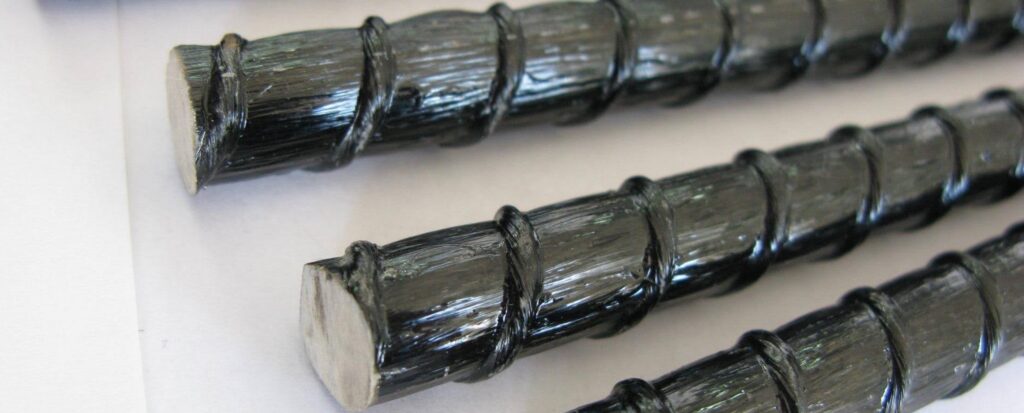
Looking for a basalt rebar production machine? Composite-Tech manufactures industrial BFRP production lines specifically engineered and tested to process both basalt fiber and glass fiber. The same CT2, CT4, or CT6 equipment platform can manufacture basalt fiber reinforced polymer (BFRP) and glass fiber reinforced polymer (GFRP) rebar using the appropriate raw materials and production settings.
This gives manufacturers an important commercial advantage: the ability to develop two composite reinforcement product categories without purchasing two completely separate production lines.
For entrepreneurs planning a new basalt rebar factory, choosing the right equipment is one of the most important investment decisions. The production system must do more than transform continuous basalt fiber into a reinforcement bar. It must provide consistent resin impregnation, controlled polymerization, stable reinforcement geometry, efficient energy consumption, and sufficient production capacity to support a competitive manufacturing business.
Composite-Tech has developed its industrial equipment specifically around these requirements. Our tecnologia di produzione combines ultrasonic-assisted resin impregnation, short-wave infrared polymerization, controlled rib formation, and two-stage cooling. The equipment is engineered for extended industrial operation and typically requires only one or two trained operators during normal production. Most importantly, basalt fiber compatibility is not an afterthought or an experimental adaptation. It was part of the original engineering and testing objectives of Composite-Tech production equipment.
Can Composite-Tech Machines Manufacture Basalt Rebar?
Yes. Composite-Tech confirms that its CT2, CT4, and CT6 production lines were specifically designed and tested for manufacturing reinforcement from both continuous basalt fiber and glass fiber. The equipment is not limited to conventional fiberglass reinforcement.
Manufacturers can use the same industrial production platform to produce:
- Barre di rinforzo BFRP — Basalt Fiber Reinforced Polymer reinforcement.
- Barre di rinforzo in GFRP — Glass Fiber Reinforced Polymer reinforcement.
Both materials belong to the broader family of fiber reinforced polymer reinforcement.
Their manufacturing processes share several fundamental stages: continuous fiber feeding, resin impregnation, bar formation, surface profiling, polymerization, cooling, pulling, and cutting. However, basalt and glass fibers are not identical materials. Their surface characteristics, fiber sizing, resin compatibility, and processing requirements can differ. For this reason, successful dual-material manufacturing requires equipment capable of controlling the main production parameters.
Composite-Tech developed its manufacturing systems to provide this flexibility. For an investor, the practical benefit is straightforward: one industrial production line can support both BFRP and GFRP manufacturing, allowing the business to adapt its product range to customer demand.
Why Invest in Equipment That Can Produce Both Basalt and Fiberglass Rebar?
Imagine a company planning to establish a new composite reinforcement factory. Initially, its main customers are interested in basalt rebar. The company purchases equipment specifically for BFRP manufacturing and begins developing its distribution network. Six months later, a major distributor requests glass fiber reinforcement for a different project. If the existing equipment cannot manufacture GFRP, the company may need to invest in another production line. This creates additional capital expenses, requires more factory space, and increases the complexity of production planning.
A dual-material manufacturing system offers a different approach. With Attrezzatura Composite-Tech, the manufacturer can prepare the production line for either basalt or glass fiber reinforcement. The appropriate material, resin system, processing parameters, and product tooling must be selected for each manufacturing run.
The economic advantages can include:
- Reduced capital requirements for product diversification. A manufacturer does not necessarily need two independent production lines to offer basalt and fiberglass reinforcement.
- Greater commercial flexibility. The factory can respond to customer interest in different composite reinforcement materials.
- Better utilization of industrial equipment. Production schedules can be organized according to demand for BFRP and GFRP products.
- Lower expansion barriers. A company starting with one reinforcement material can introduce another without purchasing a completely separate manufacturing system.
- More opportunities for distribution. The manufacturer can approach customers requiring different composite reinforcement specifications.
This flexibility is particularly relevant to companies entering developing FRP markets.Instead of committing the factory exclusively to one reinforcing fiber, investors can establish a manufacturing platform capable of serving multiple product categories.
Composite-Tech Basalt Rebar Production Equipment: CT2 vs CT4 vs CT6
Composite-Tech offers three main industrial equipment configurations for straight composite rebar manufacturing. All three are designed for continuous production and support both glass and basalt reinforcing fibers. The main differences are production capacity and the number of reinforcement bars manufactured simultaneously.
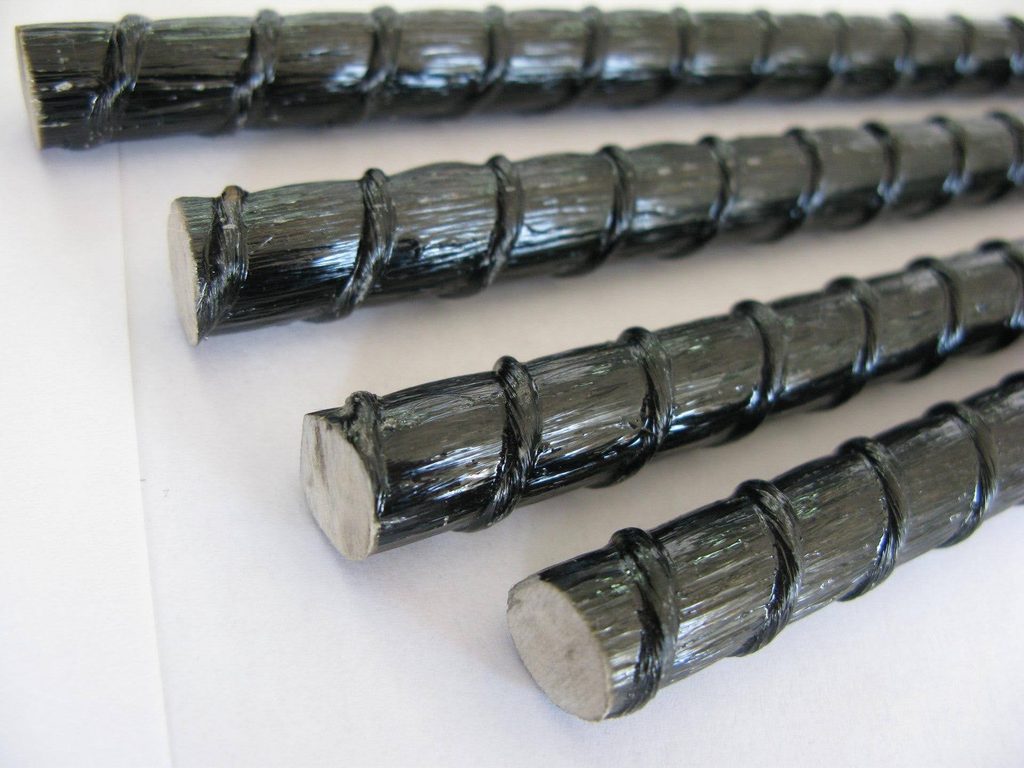
Industrial BFRP Rebar Production Line Comparison
The following performance data apply to the current configurations specified by Composite-Tech for nominal 10 mm reinforcement, a diameter close to the American #3 (3/8-inch) size.
| Technical Parameter | CT2 | CT4 | CT6 Nuova Generazione |
| Reinforcing fiber | Basalt / Glass | Basalt / Glass | Basalt / Glass |
| Simultaneously produced bars | 2 | 4 | 6 |
| Production speed per bar | 4 m/min | 5 m/min | 6 m/min |
| Combined production speed | 8 m/min | 20 m/min | 36 m/min |
| Approximate combined speed | 26.2 ft/min | 65.6 ft/min | 118.1 ft/min |
| Theoretical output per 8-hour shift | 3,840 m | 9,600 m | 17.280 m |
| Theoretical output per month | 84,480 m | 211,200 m | 380,160 m |
| Indicative average operating power | 18–20 kW | 18–20 kW | 18–20 kW |
| Typical line operators | 1–2 | 1–2 | 1–2 |
| Industrial continuous-operation design | SÌ | SÌ | SÌ |
Production calculations assume 22 eight-hour shifts per month, continuous operation at the specified rate, and no production interruptions. Composite-Tech reports that the listed configurations have been engineered and tested for both basalt and glass fiber processing. Actual performance depends on the resin system, fiber grade, reinforcement diameter, production settings, and quality requirements.
CT2: Compact Industrial Basalt Rebar Manufacturing
The CT2 is suitable for companies planning smaller production facilities or entering the BFRP reinforcement market with a more limited initial investment. The system manufactures two reinforcement bars simultaneously. For the specified 10 mm configuration, combined output reaches up to 8 meters per minute.
The main advantage of CT2 is the ability to establish continuous composite reinforcement production using a compact industrial system. This configuration may be particularly attractive to smaller regional manufacturers and companies testing demand before expanding production capacity.
CT4: A Balance Between Capacity and Investment
The CT4 is designed for manufacturers requiring higher production volumes. It can manufacture four reinforcement bars simultaneously. At the specified 10 mm operating rate, combined production reaches up to 20 meters per minute. This makes CT4 suitable for businesses planning regular supply relationships with construction material distributors, precast concrete manufacturers, and regional contractors. Like the other Composite-Tech rebar lines, CT4 supports both BFRP and GFRP production.
CT6 New Generation: High-Capacity Industrial BFRP Production
For companies planning large-scale basalt rebar manufacturing, the CT6 Nuova Generazione offers the highest production capacity among these configurations. The line can manufacture six reinforcement bars simultaneously. At a nominal diameter of 10 mm, each bar can move through the production process at up to six meters per minute.
This creates a combined output of: 6 bars × 6 m/min = 36 meters per minute.
Under an eight-hour shift: 36 × 60 × 8 = 17,280 meters of composite reinforcement.
Over 22 working days: 17,280 × 22 = 380,160 meters per month.
That is approximately 1.25 million linear feet of reinforcement per month.
The calculation represents the equipment’s theoretical production capacity under the stated conditions. It does not include planned maintenance, material changeovers, startup procedures, rejected products, or other production interruptions. Nevertheless, it demonstrates the scale of manufacturing capacity available from a single Composite-Tech industrial production line. For manufacturers planning substantial distribution volumes, this capacity can become a major competitive advantage.
Saperne di più: CT2 vs CT4 vs CT6: Which GFRP Rebar Production Line Fits Your Factory?
How Does a Composite-Tech Basalt Rebar Production Machine Work?
Basalt rebar manufacturing uses continuous basalt fiber roving as the primary reinforcing material. The fibers are combined with a compatible polymer resin system and processed into a solid composite reinforcement bar. The finished product is commonly referred to as basalt fiber reinforced polymer rebar, BFRP rebar, or basalt composite rebar.
Composite-Tech manufacturing equipment integrates the main production stages into a coordinated industrial process.
1. Basalt Fiber Feeding and Roving Preparation
Production begins with continuous basalt roving supplied from bobbins installed on the creel. The creel organizes the reinforcing fibers and supports their controlled movement into the production line. Stable fiber feeding is important because irregular tension can influence the reinforcement structure and manufacturing consistency. The rovings then pass through a controlled preheating stage. Preheating is designed to reduce unwanted moisture and prepare the fiber bundles for subsequent resin impregnation. The operating temperature must be selected according to the basalt roving, its surface treatment, and the selected resin system.
2. Ultrasonic-Assisted Resin Impregnation
Resin impregnation is one of the most important stages of composite reinforcement manufacturing. A BFRP bar contains thousands of continuous basalt filaments. The polymer matrix must adequately penetrate the fiber bundles and consolidate the reinforcement. Incomplete impregnation may create internal voids, dry fiber regions, and inconsistent mechanical properties.
Composite-Tech employs ultrasonic-assisted impregnation technology as part of its specialized manufacturing process. The impregnation module combines controlled resin processing with mechanical and pneumatic resin-management systems. Ultrasonic assistance is intended to improve fiber wet-out and resin penetration. Pneumatic squeezing helps control excess resin and supports the required fiber-to-resin composition. For manufacturers, the purpose is to produce consistent composite reinforcement while reducing avoidable material waste.
The commercial value of an effective impregnation system is not simply better processing. It is the opportunity to reduce manufacturing defects and maintain a higher proportion of acceptable finished products.
3. Controlled Surface Rib Formation
The surface of a composite reinforcement bar is important for transferring forces between the reinforcement and surrounding concrete. Unlike conventional steel reinforcement, FRP bars may use different surface enhancement techniques, including spiral wrapping, ribs, or sand coating.
Composite-Tech production lines incorporate a rib-winding system designed to create a controlled surface profile. The winding process is synchronized with the movement of the reinforcement through the manufacturing line. The required profile must be selected according to the intended application and product specification. This is important because successful manufacturing is not limited to producing a strong composite core. The reinforcement must also provide the required bond behavior when used in concrete.
4. Short-Wave Infrared Polymerization Booster
Once the basalt fibers have been impregnated with resin and formed into a reinforcement bar, the polymer matrix must cure. Composite-Tech uses a short-wave infrared booster as part of its polymerization process. The system is designed to provide controlled radiant heating and initiate the curing reaction before subsequent polymerization stages. The technical objective is to achieve appropriate curing conditions while reducing the risk of excessive surface temperatures.
This is particularly important for larger reinforcement diameters, where temperature differences across the bar may influence curing quality. The actual distribution of infrared energy and heat depends on the selected resin, fiber system, bar diameter, and operating conditions. The infrared booster works together with the line’s conventional curing ovens.
5. Two-Stage Cooling: Air Followed by Water
After polymerization, the manufactured reinforcement must be cooled. Rapid temperature changes can create thermal stresses within polymer composite materials.
Composite-Tech uses a two-stage cooling process. The reinforcement first passes through an air-cooling stage. It then continues through water cooling. This arrangement is designed to reduce abrupt thermal transitions and support finished product stability. For a manufacturer, controlled cooling is another important element in maintaining consistent product quality during high-volume production.
6. Continuous Pulling and Cutting
The pulling system maintains continuous movement of the reinforcement through the manufacturing process. Its operation must remain coordinated with fiber feeding, rib winding, polymerization, and cooling. Once the composite reinforcement has been formed and cooled, the cutting system prepares the material for the required product lengths.
Additional handling or coiling equipment can be selected according to the product dimensions and production configuration. The result is a coordinated industrial manufacturing process capable of producing straight BFRP or GFRP reinforcement.
Do You Need to Modify the Machine to Switch from Glass Fiber to Basalt Fiber?
This is one of the most common questions prospective manufacturers ask.
Composite-Tech equipment was developed for both fiber types, so switching between BFRP and GFRP does not inherently require purchasing a separate production line. However, changing the reinforcing fiber is not the same as changing only the bobbin. Different materials may require adjustments to the production process.
These can include:
- Selection of compatible basalt or glass fiber roving.
- Resin formulation and curing chemistry.
- Fiber feeding and tension settings.
- Impregnation parameters.
- Polymerization temperatures.
- Pulling speed.
- Forming tools and guides for the required bar diameter.
- Surface profile settings.
The exact changeover procedure depends on the product specification and the selected material system. Composite-Tech’s advantage is that these manufacturing requirements were considered during the development of its equipment. The production system is not restricted to one reinforcing fiber. It is an industrial platform intended to manufacture different composite reinforcement products using properly configured processing conditions. For companies planning a new factory, this flexibility can significantly influence long-term investment decisions.
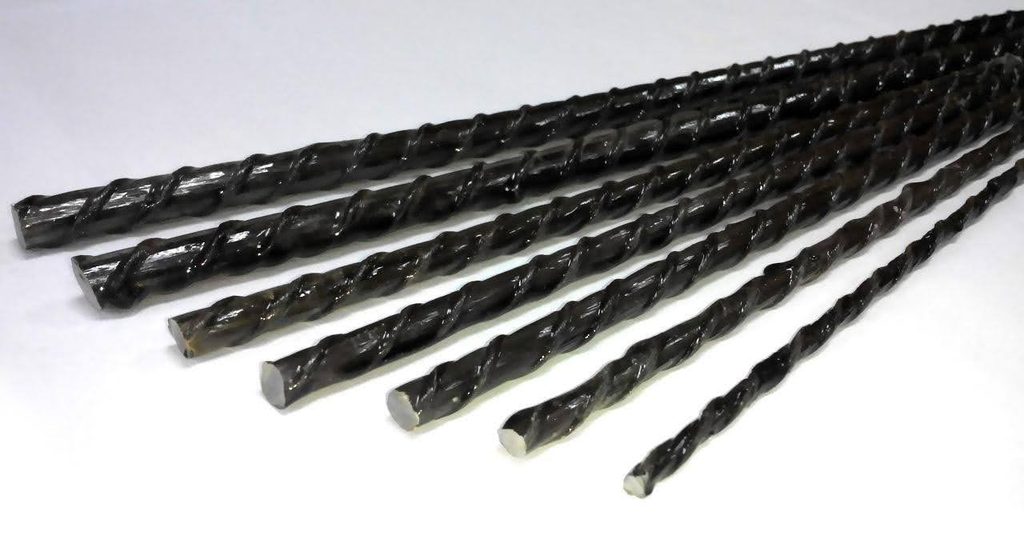
Why Basalt Rebar Quality Depends on Manufacturing Technology
Basalt fiber has useful mechanical properties, including high tensile strength along the fiber direction and resistance to corrosion. However, the performance of a finished BFRP reinforcement bar depends on more than the properties of the original basalt fiber. The manufacturing process determines how effectively those fibers are incorporated into the polymer matrix.
Important factors include:
- Fiber alignment. Continuous reinforcing fibers must be appropriately oriented to support the intended mechanical properties.
- Resin impregnation. The polymer matrix must adequately penetrate and consolidate the fiber bundles.
- Fiber content. The fiber-to-resin ratio influences the resulting composite properties.
- Polymerization quality. The resin must achieve the required degree of cure.
- Surface geometry. The finished reinforcement requires an appropriate surface profile for interaction with concrete.
- Thermal processing. Heating and cooling must be controlled to reduce the risk of manufacturing defects.
These variables are interconnected.
A production line capable of high pulling speeds but unable to maintain stable processing conditions may create additional quality problems. For this reason, Composite-Tech develops its equipment around the complete manufacturing process rather than focusing exclusively on speed. The company’s proprietary technologies are intended to support consistent production while maintaining high industrial output. This approach is particularly relevant to manufacturers targeting professional construction markets, where finished reinforcement must satisfy specified mechanical and physical requirements.
Energy Consumption: An Important Advantage of Composite-Tech Basalt Rebar Machines
Energy consumption directly affects production economics. A basalt rebar production line requires electricity for heating, polymerization, pulling, cooling, and equipment controls. However, the most relevant performance indicator is not simply the total power consumed by a machine. It is the amount of electricity required to manufacture one meter of acceptable finished reinforcement. For the specified Composite-Tech production configurations, the company reports indicative average operating power of approximately 18–20 kW.
At the upper reference value of 20 kW, the theoretical electricity consumption per meter is:
| Equipment | Produzione combinata | Calculated Electricity Consumption |
| CT2 | 8 m/min | 0.0417 kWh/m |
| CT4 | 20 m/min | 0.0167 kWh/m |
| CT6 Nuova Generazione | 36 m/min | 0,0093 kWh/m |
These calculations are based on the stated production rates and average power assumption. They exclude external auxiliary electricity consumption where not included in the line measurement, as well as startup cycles and production interruptions. Actual consumption should be confirmed under the intended manufacturing conditions.
For the CT6 New Generation, the calculated electricity consumption at the stated operating rate is approximately 0.0093 kWh per meter of composite reinforcement. This demonstrates why industrial production capacity and energy efficiency should be evaluated together. A manufacturer producing more acceptable reinforcement during the same operating period can distribute certain energy and labor expenses across a larger production volume. Over time, these differences can have a significant impact on manufacturing competitiveness.
Industrial BFRP Production with Only One or Two Operators
Labor expenses represent another important part of factory operating costs. Composite-Tech manufacturing equipment is designed to reduce the manual intervention required during normal production. Its integrated manufacturing stages allow trained operators to supervise the process rather than manually control each operation independently.
Depending on the configuration and workflow, one or two trained operators can typically manage normal line operation. Additional employees may be required for maintenance, raw material handling, quality control, packaging, warehouse operations, and administration. For investors operating in countries with high labor costs, direct labor productivity is particularly important.
Consider the CT6 New Generation. The theoretical output for the specified 10 mm configuration is 17,280 meters per eight-hour shift. The ability to manage this production process with a small operating team provides a useful manufacturing advantage. The objective is not merely to reduce the number of employees. It is to increase the quantity of acceptable finished reinforcement produced per labor hour.
Can Composite-Tech Basalt Rebar Production Lines Operate 24/7?
Composite-Tech equipment is engineered for continuous industrial manufacturing. The production systems are designed to support extended operating schedules, including multi-shift and 24-hour production when properly configured, maintained, and supplied with raw materials. This gives factory owners the opportunity to increase output as customer demand develops. A company may begin with one eight-hour shift. As its distribution network expands, it can introduce additional shifts without immediately purchasing another complete production line.
Composite-Tech develops its industrial machinery around a target service life of approximately 15 years with proper maintenance and replacement of wear components. Actual service life depends on operating conditions, maintenance procedures, and equipment utilization. For investors, this is an important consideration. A production line should be evaluated as a long-term industrial asset, not simply as an initial equipment purchase.
Can the Same Factory Produce Basalt Rebar, Basalt Mesh, and Bent Composite Reinforcement?
Straight reinforcement is only one category of fiber reinforced polymer construction products. Composite-Tech also develops equipment for manufacturing composite reinforcement mesh and bent reinforcement elements. This creates opportunities for manufacturers to establish a broader composite product portfolio.
Basalt Rebar Production
CT2, CT4, and CT6 production lines are designed to manufacture straight composite reinforcement using continuous basalt or glass fibers. The selected equipment configuration determines production capacity and supported product dimensions.
Basalt Reinforcement Mesh
Composite-Tech offers dedicated FRP mesh production equipment. These systems are intended for manufacturing composite reinforcement mesh using the appropriate fiber and resin processing conditions.
Mesh can serve different construction applications from straight reinforcement, creating opportunities for product diversification. Production capacity depends on mesh dimensions, reinforcement diameter, cell size, and the selected machine configuration.
Bent Basalt Reinforcement Elements
Composite-Tech also manufactures equipment for producing preformed composite reinforcement elements. These may include bent reinforcement shapes and other specialized configurations, depending on the tooling and manufacturing process. Such products require dedicated equipment and appropriate product qualification. Straight BFRP bars, mesh, and bent elements should not be assumed to fall under the same product specification.
For investors, the commercial opportunity is to develop several complementary reinforcement products using specialized equipment from one industrial machinery manufacturer. This can simplify equipment planning, technical coordination, and future factory expansion.
What Equipment Is Included in a Composite-Tech BFRP Rebar Production Line?
A Composite-Tech industrial production system incorporates the main modules required for manufacturing composite reinforcement.
Depending on the selected model and configuration, these include:
| Modulo di equipaggiamento | Funzione principale |
| Roving creel | Organizes and feeds continuous basalt or glass fiber |
| Fiber preheating module | Prepares reinforcing fibers for impregnation |
| Modulo di impregnazione della resina | Saturates fiber bundles with polymer resin |
| Pneumatic squeezing system | Controls excess resin and supports fiber consolidation |
| Rib-winding system | Forms the reinforcement surface profile |
| Short-wave infrared booster | Assists the initial polymerization process |
| Industrial curing ovens | Provide controlled resin curing |
| Two-stage cooling module | Cools reinforcement using air followed by water |
| Sistema di trazione | Maintains continuous material movement |
| Cutting unit | Cuts finished reinforcement to the required length |
The exact scope of supply should be confirmed in the commercial quotation. External compressors, factory ventilation, raw material preparation equipment, and certain auxiliary systems may need to be purchased separately. For prospective manufacturers, receiving a clearly defined equipment specification is an important part of evaluating the total factory investment.
Factory Building
For the specified Composite-Tech production configuration, the main equipment installation envelope is approximately: 36 meters long × 3.8 meters wide. This represents approximately 137 m² of equipment footprint. Additional space is necessary for operator access, maintenance, raw materials, finished products, and auxiliary equipment.
Electrical Supply
The facility must provide the electrical infrastructure required by the selected production line. The final electrical installation must be designed according to the equipment specifications and applicable local regulations.
Aria compressa
Compressed air is required for relevant pneumatic manufacturing systems. The compressor is generally supplied separately.
Industrial Ventilation
An appropriate ventilation system is necessary for safe industrial operation, particularly where resin handling and thermal processing are involved.
Materie prime
The manufacturing process requires continuous basalt roving and a compatible polymer resin system. Additional components may include curing agents, processing additives, and surface materials.
Quality Control
Manufacturers should establish procedures for verifying finished product dimensions, mechanical properties, resin curing, and other relevant quality characteristics.
These requirements are especially important when supplying reinforcement for structural concrete applications.
Does Composite-Tech Manufacture Basalt Fiber Itself?
There is an important distinction between basalt fiber production and basalt rebar production. Composite-Tech’s BFRP rebar production lines process continuous basalt roving into finished composite reinforcement. They are not equipment for melting basalt rock and spinning the original continuous fiber.
In a typical BFRP manufacturing business, the factory purchases continuous basalt fiber roving from a specialized fiber supplier. The rovings are then impregnated with resin, formed into reinforcement bars, cured, cooled, and cut. This allows entrepreneurs to establish composite reinforcement manufacturing without also investing in a separate basalt fiber production facility. For companies entering the BFRP industry, understanding this distinction is essential when evaluating equipment requirements and startup investment.
Basalt Rebar Production Standards: What Manufacturers Should Know
Manufacturing a composite reinforcement bar is not the same as qualifying it for structural construction applications. The finished product must satisfy the applicable requirements for its intended market.
For manufacturers targeting the United States, an important reference is: ASTM D8505/D8505M-25 — Standard Specification for Basalt and Glass Fiber Reinforced Polymer (FRP) Bars for Concrete Reinforcement.
This standard covers qualifying straight BFRP and GFRP reinforcement bars within its defined scope. It establishes requirements related to material, geometry, mechanical properties, and quality control. The standard does not automatically cover every composite reinforcement product, such as manufactured mesh or bent elements. It is also important to distinguish product specifications from structural design codes. For example, CODICE ACI-440.11-22 specifically addresses structural concrete reinforced with glass fiber reinforced polymer bars. Its provisions should not automatically be assumed to approve every BFRP product or application. Manufacturers should determine the applicable approval and design requirements for each target market.
Attrezzatura Composite-Tech is designed to support controlled manufacturing, but final product compliance depends on the selected raw materials, processing parameters, quality control, and testing results. For industrial buyers, this distinction matters. A serious production facility must be capable of manufacturing repeatable products and providing the documentation needed by customers and engineers.
Why Composite-Tech Is a Strong Choice for Basalt Rebar Manufacturing Equipment
When evaluating BFRP rebar production machines, investors should look beyond the initial equipment price. A production line influences manufacturing efficiency, product consistency, labor expenses, energy consumption, and expansion potential. Composite-Tech offers several advantages that directly address these considerations.
1. Equipment Specifically Designed and Tested for Basalt and Glass Fiber
Composite-Tech equipment is not limited to one reinforcing material. Its CT2, CT4, and CT6 platforms were developed and tested to manufacture both BFRP and GFRP rebar. This allows manufacturers to diversify their product range without purchasing two completely separate production systems.
2. High Industrial Production Capacity
The CT6 New Generation can manufacture six 10 mm reinforcement bars simultaneously at the specified combined speed of 36 meters per minute. For companies planning high-volume manufacturing, this creates substantial potential production capacity.
3. Advanced Impregnation Technology
Composite-Tech incorporates ultrasonic-assisted impregnation and controlled resin-management systems intended to support effective fiber wet-out. This is particularly relevant when manufacturing reinforcement from different fiber materials.
4. Controlled Polymerization and Cooling
Short-wave infrared curing assistance and two-stage air-to-water cooling are designed to support consistent manufacturing conditions. These features are important because finished composite properties depend on the quality of the complete production process.
5. Energy-Efficient Manufacturing
Composite-Tech develops its production systems around coordinated industrial operation and controlled energy consumption. The objective is to minimize unnecessary manufacturing expenses while maintaining the required production performance.
6. Low Direct Labor Requirements
One or two trained operators can typically supervise normal line operation. For manufacturers planning extended production schedules, this creates opportunities to maintain high labor productivity.
7. Equipment Designed for Long-Term Industrial Operation
Composite-Tech machinery is engineered for continuous production and extended industrial service. The company’s target equipment life is approximately 15 years with appropriate maintenance.
8. Installation, Training, and Technical Support
Composite-Tech provides installation, commissioning, and practical operator training. A typical program takes approximately 7–10 days once the production facility is prepared. The objective is to train the customer’s personnel to operate the equipment independently and produce reinforcement according to the agreed process and quality requirements. For companies starting their first BFRP factory, access to equipment-specific manufacturing expertise can be particularly valuable.
What Should You Ask Before Buying a Basalt Rebar Production Machine?
Before purchasing any BFRP manufacturing equipment, investors should evaluate several important factors.
Has the equipment actually been designed and tested with basalt roving? A machine that manufactures fiberglass reinforcement is not automatically optimized for basalt fiber processing.
Can the same equipment manufacture GFRP and BFRP? Dual-material capability can provide valuable commercial flexibility.
What production speed is available for the required reinforcement diameter? Theoretical maximum pulling speed is less useful than stable production at the intended product specification.
How much electricity does the equipment consume per meter of acceptable finished reinforcement? This is more informative than comparing installed power ratings alone.
How many operators are required during normal production? Direct labor requirements affect manufacturing costs.
How are resin impregnation and polymerization controlled? These processes influence finished composite properties.
Is the equipment designed for extended industrial operation? Industrial durability matters when a business relies on continuous production to fulfill customer orders.
Does the equipment supplier provide installation, training, and technical support? These services can be especially important for manufacturers entering the composite reinforcement industry for the first time.
Composite-Tech develops its equipment with these considerations in mind.
Start Manufacturing Basalt and Fiberglass Rebar with Composite-Tech
For entrepreneurs planning to enter the composite reinforcement industry, the most important decision is not simply which reinforcing fiber to manufacture. It is which industrial equipment will provide the flexibility, productivity, and manufacturing consistency required to build a competitive business.
Composite-Tech CT2, CT4, and CT6 production lines were developed and tested to manufacture both basalt and glass fiber reinforcement.
This dual-material capability allows manufacturers to establish one industrial production platform while retaining the opportunity to serve different composite reinforcement markets. Combined with ultrasonic-assisted impregnation, controlled polymerization, two-stage cooling, industrial automation, and high production capacity, Composite-Tech equipment offers a strong foundation for professional FRP manufacturing.
Whether you are planning a small regional BFRP factory or a high-capacity industrial facility, our engineering team can help you select an appropriate production configuration.
Looking for a Basalt Rebar Production Machine?
Contatta Composite-Tech to discuss your BFRP manufacturing project.
Tell us which reinforcement diameters you intend to manufacture, your target production capacity, and the country where the factory will operate. Our team can recommend a suitable CT2, CT4, or CT6 configuration and prepare a commercial proposal.
One industrial production platform. Two reinforcing fiber options. More opportunities for your manufacturing business.
Composite-Tech — Industrial Equipment for Basalt and Glass Fiber Reinforced Polymer Manufacturing.
Frequently Asked Questions About Basalt Rebar Manufacturing Equipment
Can Composite-Tech machines produce basalt rebar?
Yes. Composite-Tech CT2, CT4, and CT6 production lines were specifically designed and tested for manufacturing both basalt fiber reinforced polymer (BFRP) and glass fiber reinforced polymer (GFRP) rebar.
Can the same machine produce basalt and fiberglass rebar?
Yes. Composite-Tech industrial production lines support both reinforcing fiber types. The operator must use the appropriate raw materials, resin system, processing parameters, and product tooling.
What is the best Composite-Tech machine for high-volume basalt rebar manufacturing?
The CT6 New Generation is the highest-capacity configuration among CT2, CT4, and CT6. For the specified 10 mm production setup, it can manufacture six bars simultaneously at a combined rate of up to 36 meters per minute.
What equipment is needed to manufacture BFRP rebar?
An industrial basalt rebar production line requires fiber feeding equipment, resin impregnation, forming and rib-winding systems, polymerization equipment, cooling, pulling, and cutting. Supporting utilities and quality control systems are also necessary.
How much basalt rebar can a CT6 production line manufacture per month?
At the specified combined speed of 36 meters per minute, the theoretical production capacity is 380,160 meters over 22 eight-hour shifts. Actual saleable production depends on manufacturing conditions and operating efficiency.
Does basalt rebar production require different machinery from fiberglass rebar production?
Not when using a Composite-Tech production line configured for both materials. CT2, CT4, and CT6 were engineered for dual-material processing. However, resin chemistry, fiber handling, processing parameters, and tooling must be appropriate for the selected product.
Is basalt rebar manufacturing profitable?
BFRP manufacturing can be commercially attractive when the factory combines competitive production costs, sufficient sales demand, consistent product quality, and appropriate distribution. Profitability depends on basalt roving prices, resin costs, equipment utilization, selling prices, and other operating expenses.
How many operators are required for a Composite-Tech basalt rebar machine?
One or two trained operators can typically supervise normal production. Additional personnel may be required for other factory operations.
Can a Composite-Tech BFRP production line operate 24 hours a day?
The equipment is designed for continuous industrial manufacturing, including extended and multi-shift production, subject to appropriate maintenance and operating procedures.
Can Composite-Tech manufacture equipment for basalt reinforcement mesh?
Yes. Composite-Tech offers dedicated FRP mesh manufacturing equipment designed for composite reinforcement production. The appropriate configuration depends on the required mesh dimensions, reinforcing material, and product specifications.
Can basalt rebar be manufactured to ASTM specifications?
BFRP bars can be manufactured and qualified against applicable ASTM requirements, including ASTM D8505/D8505M-25 within its scope. Compliance must be demonstrated through appropriate product testing and quality control. Purchasing a production line alone does not automatically certify the finished reinforcement.
How long does it take to install a Composite-Tech basalt rebar production line?
Installation, commissioning, and practical operator training typically take approximately 7–10 days when the facility, utilities, and required materials are ready.