
El fin de la era del acero en la infraestructura
Durante casi 100 años, las barras de acero para refuerzo dominaron la construcción de infraestructuras en Estados Unidos. Desde puentes y autopistas hasta estructuras marítimas y túneles, el acero dio forma a la América moderna.
Pero el tiempo y la ciencia han revelado la debilidad irreversible del acero: la corrosión.
Según la Administración Federal de Carreteras, en la actualidad, las fallas relacionadas con la corrosión le cuestan a la economía estadounidense más de 1.600 millones de dólares anuales.
La exposición al agua salada, los ciclos de congelación y descongelación, los productos químicos presentes en el hormigón y las condiciones ambientales atacan constantemente el acero, debilitando las estructuras desde el interior.
Y mientras Estados Unidos pone en marcha el mayor plan de gasto en infraestructuras de la historia moderna —más de 1,2 billones de dólares en virtud de la Ley de Inversión en Infraestructuras y Creación de Empleo—, los ingenieros y promotores se enfrentan a una pregunta crucial:
¿Por qué seguir construyendo el futuro con materiales diseñados para el pasado?
El auge de los FRP: una nueva era de refuerzo inteligente
¿Qué son las barras de refuerzo de FRP?
Las barras de refuerzo de FRP (polímero reforzado con fibra), principalmente GFRP (polímero reforzado con fibra de vidrio), son un refuerzo compuesto de alta resistencia y a prueba de corrosión, diseñado para reemplazar el acero en estructuras de hormigón.
Ventajas clave de rendimiento
| Propiedad | Acero | varillas de refuerzo de PRFV |
| Resistencia a la corrosión | Corroe | 100% a prueba de corrosión |
| Resistencia a la tracción | ~60 ksi | 120–200 ksi (2–3 veces más resistente) |
| Peso | Pesado | 4 veces más ligero |
| Conductividad térmica | Conductivo | No conductor (seguro contra interferencias electromagnéticas) |
| Interferencia magnética | Sí | Ninguno — seguro para resonancia magnética y radar |
| Vida útil | 20–50 años | Hasta más de 100 años |
Resultado: Menos mantenimiento, mayor vida útil, estructuras más seguras, menor coste total de propiedad.
¿Por qué Estados Unidos necesita FRP ahora?
Infraestructura costera y marina
Desde Florida hasta California, la exposición a la sal destruye el hormigón armado.
La fibra de vidrio reforzada con plástico (FRP) no se oxida — nunca.
- Puentes costeros
- Malecones y puertos
- plantas de tratamiento de aguas residuales
- plantas desalinizadoras
Transporte y puentes
El Departamento de Transporte de Estados Unidos informa Más de 42.000 puentes presentan deficiencias estructurales..
El FRP prolonga la vida útil y reduce los costes de rehabilitación.
Estructuras militares y de defensa crítica
FRP es no conductor y no magnético — esenciales para sistemas de radar, centros de datos e instalaciones de defensa.
Infraestructura de energía limpia y vehículos eléctricos
Las plantas de baterías de nueva generación, las instalaciones de hidrógeno y los centros energéticos requieren refuerzo no corrosivo y no conductor.
Cumplimiento de las normas de ingeniería estadounidenses
Las modernas barras de refuerzo de PRFV cumplen con los principales códigos estadounidenses:
| Estándar | Descripción |
| ACI 440.11-22 | Código de diseño de barras de refuerzo de FRP |
| ASTM D7957 | Especificación estándar para PRFV |
| Aprobación del FDOT | Para la construcción en Florida |
| CSA S806 | Código de diseño norteamericano |
Equipos de tecnología compuesta está diseñado para fabricar Productos de FRP que cumplan —y superen— estas especificaciones.
Análisis de costes: Acero frente a FRP
Conversación tradicional:
“El acero es más barato por tonelada.”
La realidad moderna:
Coste total a lo largo de la vida útil > Coste de compra.
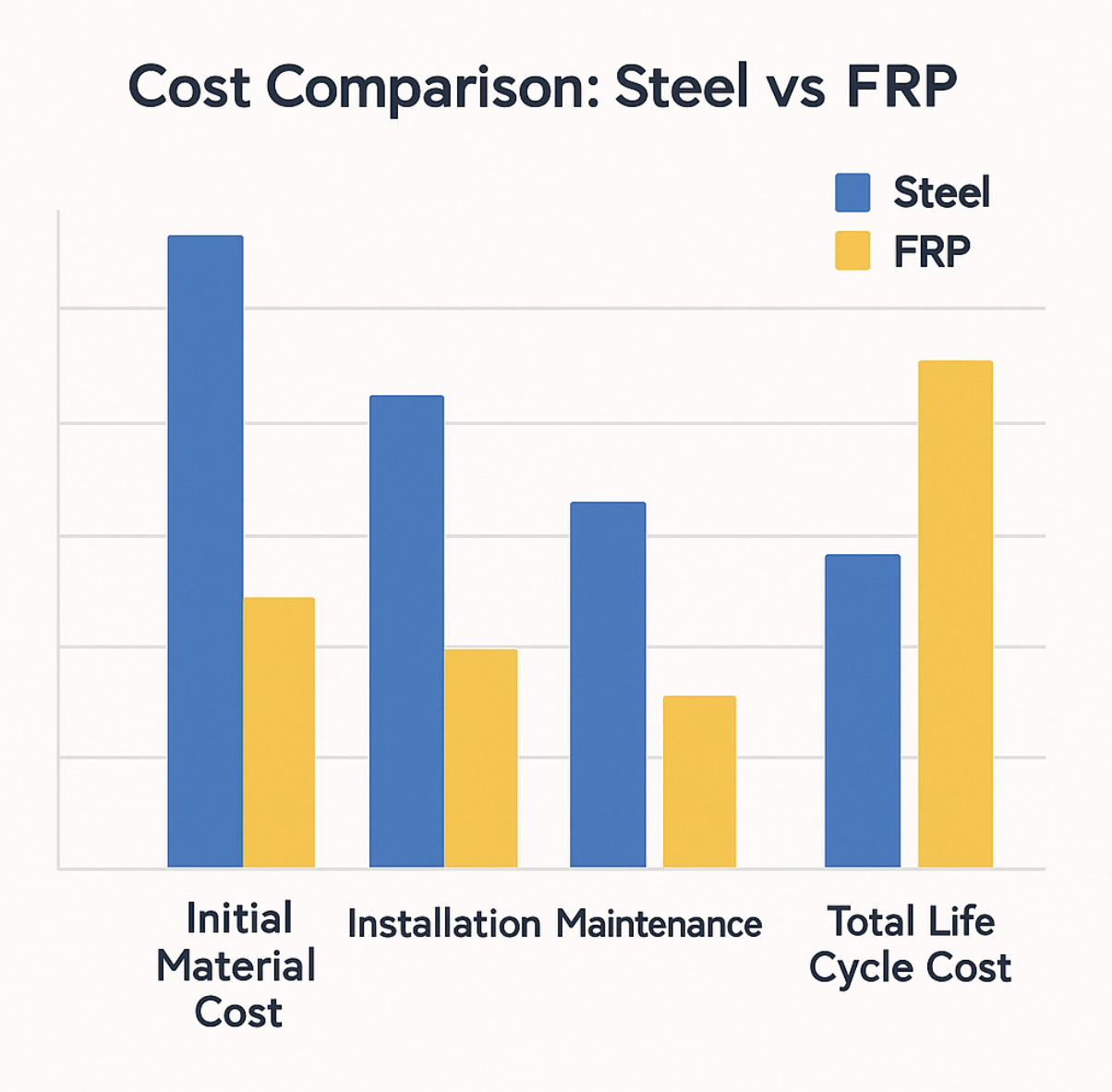
| Categoría de Costo | Acero | FRP |
| Costo inicial de materiales | Más bajo | Ligeramente más alto |
| Instalación | Requiere maquinaria pesada | Ligero = más rápido y más barato |
| Mantenimiento | Alto (reparación de corrosión) | Casi cero |
| Vida útil | 20–50 años | 80–100+ años |
| Costo total del ciclo de vida | Alto | más bajo |
Conclusión: FRP se impone en la economía del ciclo de vida, la métrica que más importa a los proyectos gubernamentales y a los grandes promotores de infraestructuras.
¿Por qué los fabricantes eligen Composite-Tech?
La adopción moderna de FRP en Estados Unidos no solo está impulsada por la demanda, sino que... impulsado por la tecnología.
Los equipos Composite-Tech garantizan:
- Calidad conforme a las normas ACI/ASTM
- Fabricación automatizada (funcionamiento 24/7)
- Alineación precisa de fibras
- impregnación uniforme de resina
- Control de curado perfecto
- Calibración de diámetro estable
¿Y lo más importante?
Parámetros de producción garantizados y probados para cumplir con los estándares estadounidenses.
Historias de éxito en el mundo real
Florida, EE. UU. — Fábrica costera de FRP
- región de exposición extrema a la sal
- Se ha seleccionado el FRP para reemplazar el acero en la infraestructura marina.
- Las líneas Composite-Tech producen Suministro de barras de refuerzo de alto volumen las 24 horas del día, los 7 días de la semana
India — Expansión a gran escala de FRP
- El gobierno impulsa la creación de infraestructura a prueba de corrosión.
- Sistemas Composite-Tech elegidos por su escalabilidad y precisión.
- Presta servicios a autopistas, túneles de metro y proyectos industriales.
Ingenieros Elíjanos no solo para el rendimiento, sino también para la colaboración, la formación y el apoyo a los estándares.
Perspectivas de futuro: FRP mejorado con grafeno
Composite-Tech está impulsando el GFRP hacia la próxima generación:
Barra de refuerzo compuesta reforzada con grafeno.
Beneficios:
- Mayor resistencia a la tracción
- Capacidad de puenteo de grietas
- Mayor durabilidad
- Aplicaciones emergentes para el control de la conductividad
Esta innovación posiciona al FRP como el tecnología de refuerzo definitiva para el próximo siglo de la infraestructura estadounidense.
Conclusión
El acero ha sido fundamental para el mundo durante un siglo. Los plásticos reforzados con fibra de vidrio (FRP) impulsarán el próximo.
Estados Unidos está entrando en una nueva era de infraestructuras: más inteligentes, más duraderas y ambientalmente responsables.
El FRP no es solo un material mejor, es el nuevo estándar.
Composite-Tech ofrece soluciones de producción llave en mano. Soporte para instalación, capacitación y certificación.
Solicite su plan de retorno de inversión para fábricas de FRP
Programe una consulta técnica
Más información:
- Por qué las empresas estadounidenses eligen Composite-Tech para la producción de varillas y mallas de refuerzo de fibra de vidrio y basalto
- Cómo instalar varillas de refuerzo de fibra de vidrio (PRFV) en losas de hormigón
- Varillas de fibra de vidrio para entradas de vehículos: espaciado, cobertura, costo y consejos prácticos.
- De Florida a la India: Cómo las máquinas de tecnología compuesta empoderan a los líderes mundiales de FRP
- Por qué Composite-Tech y FRP Institute están definiendo los estándares globales para los materiales compuestos
- Explicación de ACI 440.11-22: Cómo diseñar hormigón con varillas de refuerzo de PRFV en EE. UU.
- Comprensión de la norma ACI 440.11-22 para fabricantes de barras de refuerzo de GFRP
- Grafeno en la producción de varillas de refuerzo de PRFV: una revolución en el refuerzo del hormigón
- Varilla de refuerzo de fibra de vidrio #3 (3/8 pulg.): Precios, peso y casos de uso reales en EE. UU.
- Por qué Composite-Tech es el líder mundial en equipos de producción de PRFV
- Varillas de refuerzo de PRFV vs. acero: costo, resistencia y beneficios a largo plazo en la construcción moderna
- Barras de refuerzo de PRFV frente a barras de refuerzo de acero: una comparación técnica completa
- Barras de refuerzo de PRFV frente a barras de refuerzo de acero: coste, resistencia, durabilidad y aplicaciones reales
- Barras de refuerzo de GFRP frente a barras de refuerzo de acero: comparación numérica por peso, resistencia y propiedades de ingeniería.
- ¿Pueden las barras de refuerzo de fibra de vidrio reemplazar al acero en cimientos y caminos de acceso?
- Barras de refuerzo de basalto vs. barras de refuerzo de GFRP: ¿Cuál elegir?
- ¿Cuándo es mejor la barra de refuerzo de PRFV que la barra de refuerzo de acero? Aplicaciones, limitaciones y evidencia.