
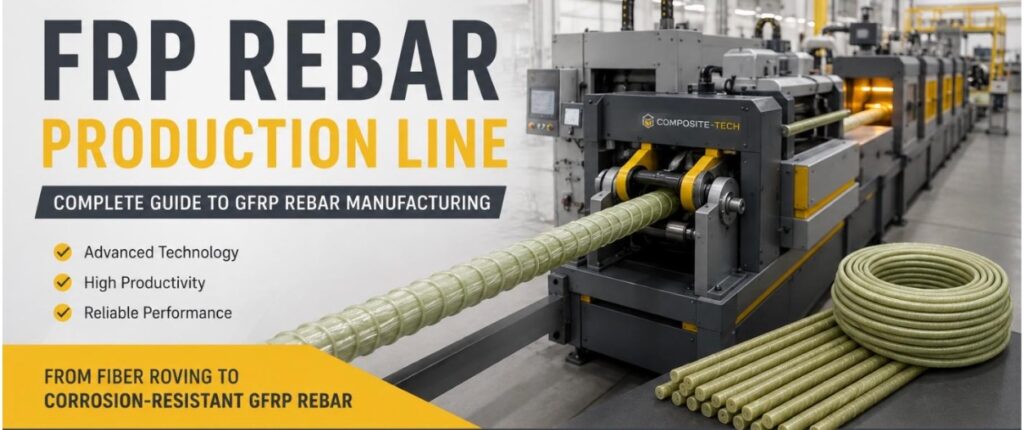
संक्षिप्त उत्तर: एफआरपी रीबार उत्पादन लाइन क्या है?
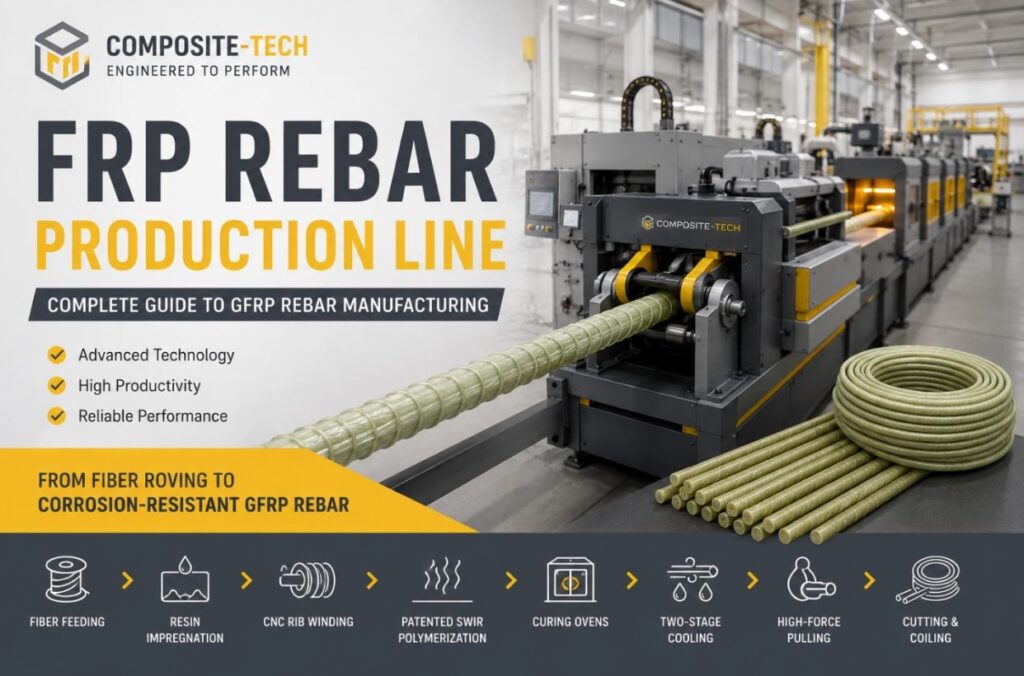
एक एफआरपी रीबार उत्पादन लाइन यह एक औद्योगिक उपकरण है जिसे निरंतर फाइबर रोविंग को पॉलिमर राल मैट्रिक्स के साथ मिलाकर फाइबरग्लास या बेसाल्ट कंपोजिट सुदृढीकरण बार बनाने के लिए डिज़ाइन किया गया है। पेशेवर स्तर पर जीएफआरपी रीबार निर्माण प्रक्रिया, रेशों को टोकरी से निकाला जाता है, गर्म करके सुखाया जाता है, राल से संसेचित किया जाता है, छड़ का आकार दिया जाता है, रिब प्रोफाइल से लपेटा जाता है, भट्टियों में पकाया जाता है, ठंडा किया जाता है, लगातार खींचा जाता है, लंबाई में काटा जाता है या कुंडलियों में लपेटा जाता है।.
कंपोजिट-टेक पेशेवर उत्पादों का निर्माण करती है। एफआरपी रीबर उत्पादन लाइनें जीएफआरपी और बीएफआरपी सुदृढीकरण के औद्योगिक उत्पादन के लिए, जिसमें विभिन्न व्यास, उत्पादन स्तर और व्यावसायिक लक्ष्यों के लिए कॉम्पैक्ट और उच्च क्षमता वाले मॉडल शामिल हैं।.
बारे में और सीखो कम्पोजिट-टेक के उपकरण
चाबी छीनना
- एक पेशेवर एफआरपी रीबार उत्पादन लाइन ग्लास फाइबर रोविंग और पॉलिमर राल को जंग प्रतिरोधी मिश्रित सुदृढीकरण में परिवर्तित करती है।.
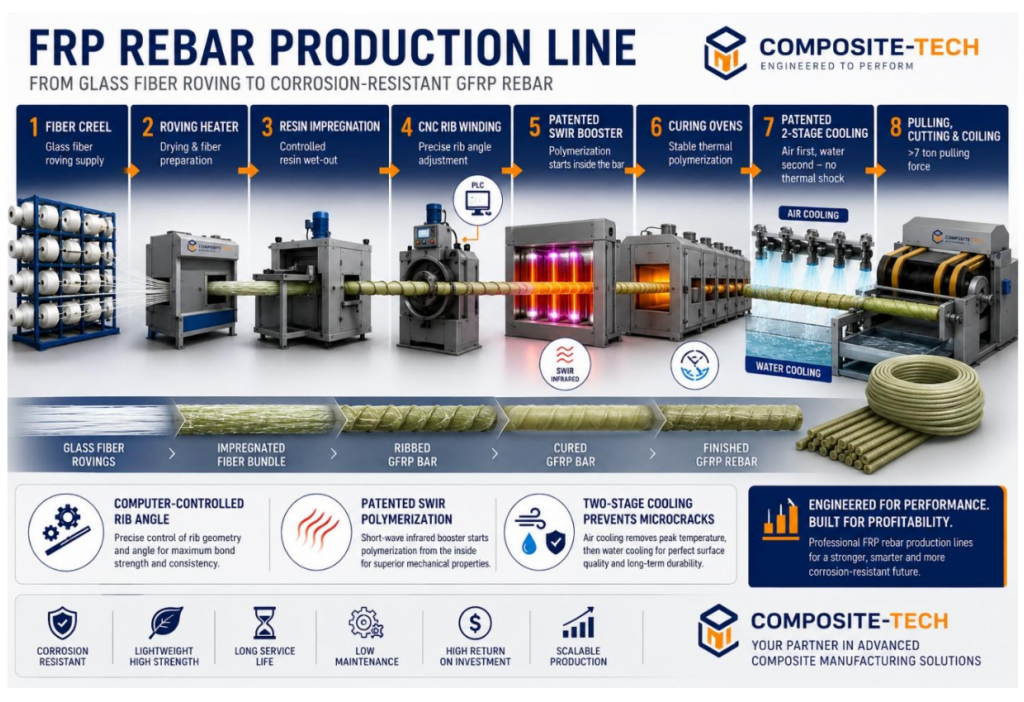
- मुख्य चरण हैं फाइबर क्रीलिंग, रोविंग हीटिंग, रेजिन इम्प्रग्नेशन, रिब वाइंडिंग, क्यूरिंग, कूलिंग, पुलिंग, कटिंग और कॉइलिंग।.
- कंपोजिट-टेक एक कंप्यूटर-नियंत्रित रिब वाइंडिंग सिस्टम का उपयोग करता है जो विभिन्न व्यास और उत्पाद आवश्यकताओं के लिए रिब कोण के सटीक समायोजन की अनुमति देता है।.
- कंपोजिट-टेक पेटेंटकृत क्यूरिंग तकनीक का उपयोग करती है जिसमें शॉर्ट-वेव इन्फ्रारेड बूस्टर के बाद स्टेनलेस-स्टील हीटिंग तत्वों वाले क्यूरिंग ओवन का उपयोग किया जाता है।.
- कंपोजिट-टेक की पेटेंटेड दो-चरण वाली शीतलन प्रणाली पहले हवा के माध्यम से अधिकतम तापमान को हटाती है और फिर छड़ों को पानी में ठंडा करती है, जिससे थर्मल शॉक और सतह पर सूक्ष्म दरारों को रोकने में मदद मिलती है।.
- यह खींचने वाली इकाई रासायनिक रूप से प्रतिरोधी रबर बेल्ट का उपयोग करती है और स्थिर औद्योगिक उत्पादन के लिए 7 टन से अधिक खींचने की शक्ति प्रदान करती है।.
- जीएफआरपी रीबार का उपयोग मुख्य रूप से उन स्थानों पर किया जाता है जहां संक्षारण प्रतिरोध, कम वजन, विद्युत चुम्बकीय पारदर्शिता और लंबी सेवा आयु महत्वपूर्ण हैं।.
- अंतिम रीबार की गुणवत्ता फाइबर तनाव, रेजिन संसेचन, क्योरिंग नियंत्रण, रिब ज्यामिति, शीतलन विधि और खींचने की स्थिरता पर निर्भर करती है।.
- निवेशकों के लिए, एक पेशेवर एफआरपी रीबार उत्पादन लाइन बढ़ते कंपोजिट रीइन्फोर्समेंट बाजार में एक लाभदायक विनिर्माण व्यवसाय का आधार बन सकती है।.
जीएफआरपी रीबार क्या है?
जीएफआरपी रीबार, ग्लास फाइबर प्रबलित पॉलिमर रीबार (GFRP) एक गैर-धातु प्रबलित छड़ है जो पॉलिमर राल मैट्रिक्स में अंतर्निहित निरंतर ग्लास फाइबर से बनी होती है। स्टील के विपरीत, GFRP रीबार में जंग नहीं लगता, यह हल्का, गैर-चुंबकीय और कई प्रतिकूल वातावरणों के प्रति प्रतिरोधी होता है।.
इस सामग्री का व्यापक रूप से कंक्रीट संरचनाओं में उपयोग किया जाता है जहां पारंपरिक स्टील सुदृढीकरण में जंग लगने की संभावना होती है, जिनमें शामिल हैं:
- पुल और पुल के डेक;
- समुद्री और तटीय संरचनाएं;
- सुरंगें;
- औद्योगिक फर्श;
- नींव;
- अपशिष्ट जल उपचार संयंत्रों;
- रासायनिक सुविधाएं;
- गाड़ी खड़ी करने के गैरेज;
- सड़क अवसंरचना;
- बर्फ पिघलाने वाले लवणों के संपर्क में आने वाली कंक्रीट की पटियाँ;
- ऐसी संरचनाएं जिन्हें विद्युत चुम्बकीय तटस्थता की आवश्यकता होती है।.
निर्माण उद्योग में, जीएफपी रीबार केवल एक सामग्री का चलन नहीं है। यह टिकाऊ, जंग-प्रतिरोधी और कम रखरखाव वाले बुनियादी ढांचे की ओर व्यापक बदलाव का एक हिस्सा है।.
एफआरपी रीबार उत्पादन लाइन कैसे काम करती है?
एक पेशेवर एफआरपी रीबार उत्पादन लाइन एक सतत विनिर्माण प्रणाली है। इसमें एक-एक करके मैन्युअल रूप से बार बनाने के बजाय, एक समन्वित प्रक्रिया के रूप में काम किया जाता है, जहां कच्चा माल एक छोर से प्रवेश करता है और तैयार कंपोजिट रीबार दूसरे छोर से बाहर निकलता है।.
सामान्य प्रक्रिया में निम्नलिखित शामिल हैं:
- फाइबर रोविंग आपूर्ति
- चलती-फिरती हीटिंग और सुखाने
- राल संसेचन
- अतिरिक्त रेजिन नियंत्रण
- बार निर्माण
- कंप्यूटर-नियंत्रित रिब वाइंडिंग
- लघु-तरंग अवरक्त बूस्टर बहुलकीकरण
- ओवन में तापीय उपचार
- दो-चरणीय वायु और जल शीतलन
- उच्च बल से खींचना
- काटना या कुंडलित करना
प्रत्येक चरण रीबार की अंतिम गुणवत्ता को प्रभावित करता है। खराब संसेचन, अस्थिर खींचने की गति, कमजोर उपचार नियंत्रण, गलत रिब वाइंडिंग या आक्रामक शीतलन से तन्यता शक्ति, बंधन व्यवहार, सतह की गुणवत्ता और उत्पादन लाभप्रदता कम हो सकती है।.
इसीलिए उत्पादन लाइन की गुणवत्ता उतनी ही महत्वपूर्ण है जितनी कि उत्पाद की गुणवत्ता। कच्चा माल.
एक पेशेवर एफआरपी रीबार उत्पादन लाइन के मुख्य घटक
एक संपूर्ण जीएफआरपी रीबार उत्पादन लाइन में कई मॉड्यूल शामिल होते हैं जो एक एकीकृत औद्योगिक प्रणाली के रूप में एक साथ काम करते हैं।.
1. क्रील प्रणाली
इस क्रील में कांच के रेशे या बेसाल्ट रेशे की कई बॉबिन रखी जाती हैं। इसका कार्य रेशे की आपूर्ति को व्यवस्थित करना और लाइन में रेशे की स्थिर आपूर्ति बनाए रखना है।.
एक अच्छी मछली पकड़ने की प्रणाली निम्नलिखित सुनिश्चित करने में मदद करती है:
- स्थिर परिवर्तनशील तनाव;
- स्वच्छ फाइबर वितरण;
- कम फाइबर टूटना;
- सुसंगत बार संरचना;
- अधिक गति पर सुचारू उत्पादन।.
फाइबर तनाव महत्वपूर्ण है क्योंकि कंपोजिट सुदृढ़ीकरण विषमदैशिक होता है: इसकी अधिकांश तन्यता शक्ति छड़ के अनुदिश संरेखित फाइबर से आती है। यदि फाइबर की आपूर्ति अस्थिर है, तो अंतिम छड़ की गुणवत्ता भी अस्थिर हो जाती है।.
2. रोविंग हीटर
रेज़िन को सोखने से पहले, रोविंग हीटर रेशों को गर्म और सुखा देता है। यह चरण रेज़िन सोखने की प्रक्रिया की स्थिरता को बढ़ाता है और रेशों के गुच्छे से नमी हटाने में मदद करता है।.
नमी कंपोजिट की गुणवत्ता की दुश्मन है। यदि रेशे अत्यधिक नमी के साथ रेज़िन बाथ में प्रवेश करते हैं, तो रेशे और पॉलिमर मैट्रिक्स के बीच का बंधन कमजोर हो सकता है। नियंत्रित तापन चरण एक स्वच्छ और अधिक स्थिर उत्पादन प्रक्रिया बनाने में सहायक होता है।.
रोविंग हीटर, इम्प्रग्नेशन मॉड्यूल के अंदर फाइबर को पूरी तरह से गीला करने के लिए तैयार करने में भी मदद करता है। यह विशेष रूप से तब महत्वपूर्ण होता है जब निर्माता लंबे उत्पादन चक्रों में स्थिर यांत्रिक गुण प्राप्त करना चाहता है।.
3. रेजिन इम्प्रग्नेशन मॉड्यूल
इम्प्रग्नेशन मॉड्यूल पूरी लाइन का सबसे महत्वपूर्ण हिस्सा है। यहाँ, फाइबर बंडल रेज़िन सिस्टम से होकर गुजरता है। इसका उद्देश्य फाइबर को सही मात्रा में पॉलीमर बाइंडर से पूरी तरह से गीला करना है।.
पेशेवर गर्भाधान से तीन चीजें हासिल होनी चाहिए:
- फाइबर का पूर्ण रूप से गीला होना;
- स्थिर रेजिन सामग्री;
- अतिरिक्त रेजिन को नियंत्रित तरीके से हटाना।.
रेज़िन की कम मात्रा से बॉन्डिंग और टिकाऊपन कम हो सकता है। रेज़िन की अधिक मात्रा से लागत बढ़ जाती है और यांत्रिक प्रदर्शन में सुधार किए बिना छड़ का वजन बढ़ सकता है। चूंकि रेज़िन आमतौर पर सबसे महंगे कच्चे माल घटकों में से एक है, इसलिए सटीक संसेचन कारखाने की लाभप्रदता को सीधे प्रभावित करता है।.
एक पेशेवर संसेचन प्रणाली को पॉलिमर बाइंडर के महत्वपूर्ण गुणों को बनाए रखना चाहिए, जिसमें तरलता, उपचार व्यवहार और तापमान स्थिरता शामिल हैं। साथ ही, इससे तैयार रीबार की यांत्रिक गुणवत्ता से समझौता किए बिना अनावश्यक पॉलिमर की खपत को कम करने में मदद मिलनी चाहिए।.
4. कंप्यूटर-नियंत्रित रिब वाइंडिंग सिस्टम
रिब वाइंडिंग सिस्टम रीबार का बाहरी आवधिक प्रोफाइल बनाता है। यह प्रोफाइल महत्वपूर्ण है क्योंकि कंक्रीट को बॉन्ड के माध्यम से लोड को रीइन्फोर्समेंट में स्थानांतरित करना होता है।.
कंपोजिट-टेक रिब वाइंडिंग सिस्टम को सुसज्जित करता है सटीक कंप्यूटर-नियंत्रित समायोजन, इससे ऑपरेटर को उच्च सटीकता के साथ लगभग किसी भी आवश्यक रिब वाइंडिंग कोण को सेट और बनाए रखने की सुविधा मिलती है। यह महत्वपूर्ण है क्योंकि रिब कोण, वाइंडिंग पिच और वाइंडिंग बल सीधे बार की ज्यामिति, बाहरी प्रोफाइल की स्थिरता और जीएफआरपी रीबार और कंक्रीट के बीच बॉन्ड व्यवहार को प्रभावित करते हैं।.
एक पेशेवर रिब वाइंडिंग सिस्टम को न केवल दृश्यमान रिब बनाना चाहिए, बल्कि बार की पूरी लंबाई में एक समान और नियंत्रित प्रोफाइल भी बनाना चाहिए। यदि उत्पादन के दौरान रिब का कोण बदल जाता है, तो अंतिम उत्पाद में अस्थिर बॉन्ड गुण और असंगत ज्यामिति हो सकती है।.
कंपोजिट-टेक की कंप्यूटर-नियंत्रित रिब वाइंडिंग तकनीक निर्माताओं को निम्नलिखित लाभ प्रदान करती है:
- रिब वाइंडिंग कोण को सटीक रूप से समायोजित करें;
- निरंतर उत्पादन के दौरान स्थिर रिब ज्यामिति बनाए रखना;
- अलग-अलग व्यास की छड़ों के लिए प्रोफाइल को अनुकूलित करें;
- प्रत्येक बैच में दोहराव की क्षमता में सुधार करना;
- ऑपरेटर की त्रुटि को कम करना;
- अधिक स्थिर सुदृढ़ीकरण सतह का उत्पादन करना;
- कंक्रीट के बंधन प्रदर्शन में सुधार करें।.
जीएफपी रिबार स्टील रिबार की तरह व्यवहार नहीं करता है। इसकी बॉन्ड क्षमता सतह की ज्यामिति, रिब संरचना, रेत की परत, घुमाव प्रोफ़ाइल, बार के व्यास और कंक्रीट कवर पर बहुत अधिक निर्भर करती है। एक अच्छी तरह से डिज़ाइन की गई रिब प्रोफ़ाइल कंक्रीट के साथ यांत्रिक इंटरलॉक को बेहतर बनाती है और बार को केवल एक चिकनी छड़ के बजाय सुदृढ़ीकरण के रूप में कार्य करने में मदद करती है।.
कंपोजिट-टेक उत्पादन लाइनें एक स्थिर, नियंत्रित आवधिक प्रोफ़ाइल बनाने के लिए डिज़ाइन की गई हैं जो पेशेवर कंपोजिट सुदृढ़ीकरण अनुप्रयोगों के लिए उपयुक्त है।.
5. पेटेंटकृत शॉर्ट-वेव इन्फ्रारेड बूस्टर और क्योरिंग ओवन
इम्प्रग्नेशन और रिब वाइंडिंग के बाद, बार को क्योरिंग करना आवश्यक है। क्योरिंग से रेजिन तरल या अर्ध-तरल अवस्था से ठोस पॉलीमर मैट्रिक्स में परिवर्तित हो जाता है जो फाइबर को अपनी जगह पर स्थिर कर देता है।.
कंपोजिट-टेक इसका उपयोग करता है पेटेंटकृत बहुलकीकरण प्रौद्योगिकी, जहां मुख्य क्यूरिंग ओवन में बार के प्रवेश करने से पहले शॉर्ट-वेव इन्फ्रारेड बूस्टर के साथ क्यूरिंग प्रक्रिया शुरू होती है।.
पहला चरण एक है लघु-तरंग अवरक्त बूस्टर इसमें शॉर्ट-वेव इन्फ्रारेड लैंप लगे हैं। पारंपरिक सतही ताप के विपरीत, शॉर्ट-वेव इन्फ्रारेड ऊर्जा बार के भीतरी भाग से पॉलीमराइजेशन प्रक्रिया को अधिक प्रभावी ढंग से शुरू करने में मदद करती है, जिससे कंपोजिट संरचना के भीतर से ही उपचार प्रक्रिया को समर्थन मिलता है, न कि केवल बाहरी सतह से।.
इन्फ्रारेड बूस्टर के बाद, बार को मानक स्टेनलेस-स्टील हीटिंग तत्वों से सुसज्जित क्यूरिंग ओवन से गुजारा जाता है। यह संयोजन कंपोजिट-टेक लाइनों को अधिक नियंत्रित और स्थिर पॉलीमराइजेशन प्रक्रिया प्राप्त करने में सक्षम बनाता है।.
यह चरणबद्ध उपचार पद्धति निम्नलिखित में सुधार करने में सहायक है:
- रेजिन पॉलीमराइजेशन नियंत्रण;
- उपचार स्थिरता;
- उत्पादन गति;
- गुणवत्ता में निरंतरता;
- मिश्रित छड़ की आंतरिक संरचना;
- उपचार संबंधी दोषों में कमी;
- उत्पादन बैचों के बीच दोहराव की क्षमता।.
पेशेवर तरीके से रेज़िन को सुखाना केवल "बार को गर्म करना" नहीं है। इसके लिए ओवन के तापमान, खींचने की गति, रेज़िन की प्रतिक्रिया का समय, बार का व्यास, ऊर्जा दक्षता और अंतिम स्तर की सुखाने की प्रक्रिया पर नियंत्रण आवश्यक है।.
यदि क्योरिंग प्रक्रिया पूरी तरह से न हो, तो बार अपेक्षित यांत्रिक प्रदर्शन प्राप्त नहीं कर सकता है। यदि क्योरिंग प्रक्रिया बहुत अधिक आक्रामक हो, तो इससे आंतरिक तनाव, सतही दोष या प्रक्रिया में अस्थिरता उत्पन्न हो सकती है।.
कंपोजिट-टेक की पेटेंटकृत क्यूरिंग कॉन्फ़िगरेशन को शॉर्ट-वेव इन्फ्रारेड ऊर्जा के साथ कुशलतापूर्वक पॉलीमराइजेशन शुरू करने और फिर मुख्य ओवन में नियंत्रित थर्मल क्यूरिंग के माध्यम से प्रक्रिया को पूरा करने के लिए डिज़ाइन किया गया है।.
6. पेटेंटेड दो-चरणीय वायु और जल शीतलन मॉड्यूल
उपचार के बाद, सरिया बहुत उच्च तापमान पर भट्टियों से बाहर निकलता है। कई उत्पादन प्रक्रियाओं में, कंपोजिट बार लगभग इतने तापमान पर उपचार क्षेत्र से बाहर निकल सकते हैं। 200° सेल्सियस. यदि ऐसी गर्म छड़ को तुरंत पानी में डुबो दिया जाए, तो सतह को थर्मल शॉक का अनुभव हो सकता है।.
ऊष्मीय झटके के कारण छड़ की सतह पर सूक्ष्म दरारें पड़ सकती हैं। भले ही ये सूक्ष्म दरारें पहली नज़र में दिखाई न दें, लेकिन ये उत्पाद की गुणवत्ता को कम कर सकती हैं, टिकाऊपन को प्रभावित कर सकती हैं और दीर्घकालिक प्रदर्शन संबंधी जोखिम पैदा कर सकती हैं।.
कंपोजिट-टेक इसका उपयोग करता है पेटेंटकृत दो-चरणीय शीतलन तकनीक इस समस्या को हल करने के लिए।.
शीतलन प्रक्रिया को दो चरणों में विभाजित किया गया है:
- वायु शीतलन चरण — हवा के कारण सबसे पहले अधिकतम तापमान कम हो जाता है।.
- जल शीतलन चरण — अधिकतम तापीय भार हटा दिए जाने के बाद, प्रभावी अंतिम शीतलन के लिए छड़ों को पानी में डुबो दिया जाता है।.
इस दो-चरणीय विधि से तापमान में अचानक गिरावट से बचा जा सकता है, जो तब हो सकती है जब एक बहुत गर्म मिश्रित छड़ को सीधे पानी में रखा जाता है।.
इसका परिणाम यह होता है कि शीतलन प्रक्रिया अधिक सुरक्षित और नियंत्रित हो जाती है, जिससे सरिये की सतह की गुणवत्ता को सुरक्षित रखने में मदद मिलती है।.
कंपोजिट-टेक की दो-चरण वाली वायु और जल शीतलन प्रणाली निम्नलिखित में सहायक है:
- थर्मल शॉक को कम करना;
- सतह पर सूक्ष्म दरारों को रोकना;
- बार की सतह की गुणवत्ता में सुधार करना;
- उत्पाद की ज्यामिति को स्थिर करना;
- ठीक हो चुके पॉलिमर मैट्रिक्स की रक्षा करना;
- स्थिर यांत्रिक प्रदर्शन को समर्थन देना;
- दीर्घकालिक स्थायित्व में विश्वास बढ़ाना।.
उत्पादन प्रक्रिया में शीतलन एक सरल प्रक्रिया प्रतीत हो सकती है, लेकिन पेशेवर जीएफआरपी रीबार निर्माण में यह गुणवत्ता नियंत्रण का एक महत्वपूर्ण चरण है। कई सरलीकृत प्रणालियाँ रीबार को सीधे पानी में ठंडा करती हैं, जिससे मशीन की जटिलता कम हो सकती है, लेकिन अनावश्यक तापीय तनाव उत्पन्न हो सकता है। कंपोजिट-टेक ने उत्पाद की गुणवत्ता में सुधार करने और गर्म कंपोजिट रीबार को अत्यधिक तेज़ी से ठंडा करने पर उत्पन्न होने वाले दोषों से बचने के लिए अपनी दो-चरण शीतलन विधि विकसित और पेटेंट कराई है।.
7. उच्च बल खींचने वाला उपकरण
खींचने वाला उपकरण उत्पादन लाइन के माध्यम से छड़ को लगातार आगे बढ़ाता है। खींचने की गति को संसेचन, रिब वाइंडिंग, क्योरिंग और शीतलन के साथ सिंक्रनाइज़ किया जाना चाहिए।.
कंपोजिट-टेक का पुलिंग सिस्टम औद्योगिक संचालन के लिए डिज़ाइन किया गया है और इसमें बेल्ट का उपयोग किया जाता है जो इससे बने होते हैं। रासायनिक रूप से प्रतिरोधी रबर. यह महत्वपूर्ण है क्योंकि खींचने वाली इकाई एक उत्पादन वातावरण में काम करती है जहां यह राल के अवशेषों, गर्मी, धूल, प्रक्रिया रसायनों और निरंतर यांत्रिक भार के संपर्क में आ सकती है।.
ऐसी परिस्थितियों में सामान्य बेल्ट जल्दी घिस सकती हैं। रासायनिक प्रतिरोधी रबर बेल्ट उनकी सेवा अवधि बढ़ाने, रखरखाव की आवृत्ति कम करने और खींचने की प्रक्रिया को लंबे समय तक स्थिर रखने में मदद करती हैं।.
कंपोजिट-टेक का पुलिंग डिवाइस भी खींचने की शक्ति प्रदान करता है। 7 टन से अधिक, जिससे लाइन को पेशेवर निरंतर उत्पादन के लिए पर्याप्त शक्ति और स्थिरता मिलती है।.
एक शक्तिशाली और स्थिर खींचने वाली प्रणाली निम्नलिखित में सहायक होती है:
- उत्पादन की गति को स्थिर बनाए रखना;
- फिसलन को कम करना;
- उच्च लाइन लोड को संभालना;
- आयामी स्थिरता में सुधार करना;
- बड़े व्यास और मल्टी-बार उत्पादन का समर्थन करता है;
- डाउनटाइम कम करें;
- बेल्ट की सेवा अवधि बढ़ाएं;
- समग्र उत्पादन विश्वसनीयता में सुधार करना।.
निवेशकों के लिए, उत्पादन में स्थिरता अत्यंत महत्वपूर्ण है। यह उत्पादन, गुणवत्ता और अपव्यय दर को प्रभावित करती है। एक पेशेवर उत्पादन इकाई उत्पादन में होने वाली रुकावटों को कम करती है और अनुमानित उत्पादकता बनाए रखने में मदद करती है।.
जीएफआरपी रीबार निर्माण में, कमजोर पुलिंग सिस्टम एक बाधा बन सकता है। यदि पुलिंग डिवाइस स्थिर कर्षण बनाए रखने में असमर्थ है, तो पूरी लाइन अस्थिर हो जाती है। कंपोजिट-टेक की रासायनिक रूप से प्रतिरोधी रबर बेल्ट वाली उच्च-बल पुलिंग यूनिट को अल्पकालिक प्रदर्शन के बजाय दीर्घकालिक औद्योगिक उत्पादन के लिए डिज़ाइन किया गया है।.
8. कटिंग डिवाइस या कॉइलर
अंत में, तैयार एफआरपी रीबार निम्न प्रकार का हो सकता है:
- सीधी पट्टियों में काटें;
- कुंडलियों में लिपटा हुआ;
- पैकेजिंग के लिए तैयार;
- आगे की प्रक्रिया के लिए स्थानांतरित कर दिया गया।.
कुंडलित सरिया परिवहन और बड़े पैमाने के निर्माण परियोजनाओं के लिए सुविधाजनक होता है। सीधी छड़ें अक्सर विशिष्ट लंबाई, मानकों या इंजीनियरिंग आवश्यकताओं वाली परियोजनाओं के लिए आवश्यक होती हैं।.
अंतिम हैंडलिंग सिस्टम को उत्पादन लाइन की गति के साथ सिंक्रनाइज़ किया जाना चाहिए। एक अच्छा कटिंग या कॉइलिंग समाधान बर्बादी को कम करता है, पैकेजिंग दक्षता में सुधार करता है और निर्माता को ग्राहकों को अधिक पेशेवर उत्पाद प्रदान करने में मदद करता है।.
कंपोजिट-टेक एफआरपी रीबार उत्पादन लाइन मॉडल
कंपोजिट-टेक विभिन्न उत्पादन क्षमताओं और व्यावसायिक मॉडलों के लिए कई एफआरपी रीबार उत्पादन लाइन कॉन्फ़िगरेशन का निर्माण करती है।.
CT2 FRP रीबार उत्पादन लाइन
The CT2 FRP रीबार उत्पादन लाइन यह उन कंपनियों के लिए एक कॉम्पैक्ट समाधान है जो कम निवेश और छोटी उत्पादन क्षमता के साथ जीएफआरपी रीबार विनिर्माण बाजार में प्रवेश करना चाहती हैं।.
यह इसके लिए उपयुक्त है:
- स्टार्टअप;
- क्षेत्रीय उत्पादक;
- पायलट उत्पादन;
- छोटे व्यास वाली सरिया;
- कंपनियां स्थानीय बाजार की मांग का परीक्षण कर रही हैं;
- ऐसे निर्माता जो एक कॉम्पैक्ट और कुशल उत्पादन लाइन चाहते हैं।.
CT4 FRP रीबार उत्पादन लाइन
The सीटी4 यह मॉडल उच्च औद्योगिक उत्पादकता के लिए डिज़ाइन किया गया है। यह एक साथ कई छड़ें बना सकता है और उन कंपनियों के लिए उपयुक्त है जो बाजार की मांग को समझती हैं और अधिक उत्पादन क्षमता चाहती हैं।.
यह निम्नलिखित के लिए एक मजबूत विकल्प है:
- क्षेत्रीय निर्माता;
- निर्माण सामग्री आपूर्तिकर्ता;
- इस्पात वितरक मिश्रित सुदृढीकरण के क्षेत्र में प्रवेश कर रहे हैं;
- बुनियादी ढांचे और कंक्रीट सुदृढ़ीकरण बाजारों को लक्षित करने वाली कंपनियां।.
CT6 FRP रीबार उत्पादन लाइन
The सीटी6 यह मॉडल औद्योगिक स्तर पर उत्पादन के लिए डिज़ाइन की गई एक उच्च क्षमता वाली पेशेवर उत्पादन लाइन है। यह उन निर्माताओं के लिए उपयुक्त है जो बड़ी मात्रा में जीएफआरपी रीबार का उत्पादन करना चाहते हैं और ठेकेदारों, वितरकों, अवसंरचना परियोजनाओं और निर्यात बाजारों को आपूर्ति करना चाहते हैं।.
CT6 उन बाजारों के लिए विशेष रूप से प्रासंगिक है जहां GFRP रीबार की मांग तेजी से बढ़ रही है, जिनमें संयुक्त राज्य अमेरिका, कनाडा, भारत, मध्य पूर्व, यूरोप और गंभीर संक्षारण समस्याओं वाले तटीय क्षेत्र शामिल हैं।.
CT2 बनाम CT4 बनाम CT6: आपको कौन सी FRP रीबार लाइन चुननी चाहिए?
| प्रोडक्शन लाइन | के लिए सर्वश्रेष्ठ | विशिष्ट व्यावसायिक लक्ष्य |
| सीटी2 | प्रवेश स्तर या कॉम्पैक्ट उत्पादन | कम निवेश के साथ जीएफआरपी रीबार का व्यवसाय शुरू करें |
| सीटी4 | मध्यम औद्योगिक उत्पादन | एक मजबूत क्षेत्रीय उत्पादन सुविधा का निर्माण करें |
| सीटी6 | उच्च क्षमता वाले औद्योगिक उत्पादन | बड़े प्रोजेक्टों, वितरकों और निर्यात बाजारों को आपूर्ति करना |
सबसे अच्छा विकल्प इन बातों पर निर्भर करता है:
- लक्षित बाजार का आकार;
- उपलब्ध निवेश;
- आवश्यक बार व्यास सीमा;
- अपेक्षित मासिक उत्पादन;
- उपलब्ध कारखाने का स्थान;
- श्रम लागत;
- कच्चे माल की आपूर्ति;
- बिक्री रणनीति;
- स्थानीय मानक और प्रमाणन आवश्यकताएँ।.
कई कंपनियों के लिए, सबसे अच्छी रणनीति यह है कि वे एक पेशेवर उत्पाद श्रृंखला से शुरुआत करें जो वर्तमान बाजार की मांग से मेल खाती हो, लेकिन भविष्य में एफआरपी मेश, बेंट एलिमेंट्स और अन्य कंपोजिट सुदृढ़ीकरण उत्पादों में विस्तार की अनुमति देती हो।.
कंपोजिट-टेक के अन्य उपकरणों के बारे में और जानें: अमेरिका में एफआरपी उत्पादन लाइनें
एफआरपी रीबार निर्माण प्रक्रिया चरण दर चरण
चरण 1: कच्चे माल की तैयारी
जीएफआरपी रीबार उत्पादन के लिए मुख्य कच्चे माल निम्नलिखित हैं:
- ग्लास फाइबर रोविंग;
- पॉलिमर राल;
- कठोर बनाने वाला पदार्थ या उपचारक एजेंट;
- योजक पदार्थ;
- रिब वाइंडिंग सामग्री;
- वैकल्पिक रेत कोटिंग सामग्री;
- पैकेजिंग सामग्री।.
लागत को प्रभावित करने वाले दो सबसे महत्वपूर्ण कारक फाइबर और रेजिन हैं। इनकी गुणवत्ता सीधे तौर पर तन्यता शक्ति, सतह की गुणवत्ता, उत्पादन स्थिरता और लाभप्रदता को प्रभावित करती है।.
चरण 2: फाइबर युक्त आहार
ग्लास फाइबर रोविंग को क्रील पर रखा जाता है और उत्पादन लाइन में निर्देशित किया जाता है। फाइबर को इस तरह से व्यवस्थित किया जाना चाहिए ताकि उनमें मरोड़, टूटन या असमान वितरण न हो।.
चरण 3: गर्म करना और सुखाना
रोविंग हीटर अतिरिक्त नमी को हटाता है और रेशों को संसेचन के लिए तैयार करता है। यह चरण रेशे और राल के बीच इंटरफ़ेस को बेहतर बनाता है।.
चरण 4: रेज़िन संसेचन
फाइबर रेज़िन बाथ या इम्प्रग्नेशन सिस्टम से गुजरते हैं। रेज़िन को फाइबर बंडल में जितना संभव हो उतना पूरी तरह से प्रवेश करना चाहिए। पेशेवर लाइनें रेज़िन की खपत को नियंत्रित करती हैं और अतिरिक्त बाइंडर को हटा देती हैं।.
चरण 5: बार बनाना
संतृप्त रेशों के बंडल को आवश्यक व्यास वाली एक गोल छड़ का आकार दिया जाता है।.
चरण 6: कंप्यूटर-नियंत्रित रिब वाइंडिंग
बाहरी रिब प्रोफाइल को कंप्यूटर-नियंत्रित वाइंडिंग सिस्टम द्वारा आकार दिया जाता है। ऑपरेटर बार के व्यास और आवश्यक उत्पाद ज्यामिति के अनुसार रिब कोण और वाइंडिंग मापदंडों को सटीक रूप से समायोजित कर सकता है।.
चरण 7: लघु-तरंग अवरक्त बूस्टर बहुलकीकरण
बार को शॉर्ट-वेव इन्फ्रारेड बूस्टर में प्रवेश कराया जाता है, जहां इन्फ्रारेड ऊर्जा के माध्यम से पॉलीमराइजेशन कुशलतापूर्वक शुरू हो जाता है। इससे बार संरचना के भीतर से क्यूरिंग शुरू करने में मदद मिलती है और उत्पाद मुख्य थर्मल क्यूरिंग चरण के लिए तैयार हो जाता है।.
चरण 8: ओवन में तापीय उपचार
यह छड़ स्टेनलेस स्टील के हीटिंग तत्वों से सुसज्जित क्यूरिंग ओवन से गुजरती है। इससे राल का बहुलकीकरण पूरा होता है और एक स्थिर मिश्रित मैट्रिक्स बनता है।.
चरण 9: दो-चरण शीतलन
सबसे पहले, छड़ को वायु शीतलन प्रक्रिया से गुजारकर उसका अधिकतम तापमान कम किया जाता है। इसके बाद, इसे पानी में ठंडा किया जाता है। यह नियंत्रित दो-चरणीय प्रक्रिया ऊष्मीय आघात और सतह पर सूक्ष्म दरारों से बचाव में सहायक होती है।.
चरण 10: खींचना
उच्च बल वाली यह खींचने वाली इकाई लाइन के माध्यम से निरंतर गति बनाए रखती है। कंपोजिट-टेक की खींचने वाली प्रणाली रासायनिक रूप से प्रतिरोधी रबर बेल्ट का उपयोग करती है और 7 टन से अधिक खींचने का बल प्रदान करती है।.
चरण 11: काटना या कुंडलित करना
ग्राहक की आवश्यकताओं के अनुसार अंतिम उत्पाद को लंबाई में काटा जाता है या कुंडलियों में लपेटा जाता है।.
उत्पादन लाइन की गुणवत्ता क्यों मायने रखती है?
सभी एफआरपी रीबार मशीनें एक जैसी गुणवत्ता का उत्पादन नहीं करतीं। कम लागत वाली मशीन पहली नज़र में आकर्षक लग सकती है, लेकिन अस्थिर व्यास, रेज़िन पर खराब नियंत्रण, कमज़ोर रिब ज्यामिति, ठंडा होने के दौरान थर्मल शॉक, उच्च अपशिष्ट दर, असंगत तन्यता शक्ति, बार-बार बंद होने और प्रमाणन समस्याओं के कारण इसमें छिपी हुई लागतें हो सकती हैं।.
जीएफआरपी रीबार के कारोबार में गुणवत्ता कोई विकल्प नहीं है। निर्माण कंपनियों, इंजीनियरों और वितरकों को ऐसे सुसंगत सुदृढ़ीकरण की आवश्यकता होती है जो परियोजना की आवश्यकताओं को पूरा कर सके।.
एक पेशेवर एफआरपी रीबार उत्पादन लाइन को निम्नलिखित सुविधाएं प्रदान करनी चाहिए:
- स्थिर फाइबर युक्त आहार;
- नियंत्रित रेजिन संसेचन;
- कंप्यूटर-नियंत्रित रिब वाइंडिंग कोण;
- सटीक और दोहराने योग्य पसली प्रोफ़ाइल;
- इन्फ्रारेड बूस्टर और क्यूरिंग ओवन का उपयोग करके चरणबद्ध बहुलकीकरण;
- थर्मल शॉक से बचने के लिए नियंत्रित दो-चरणीय शीतलन;
- प्रबल खिंचाव बल;
- रासायनिक रूप से प्रतिरोधी खींचने वाली बेल्ट;
- पुनरावर्ती व्यास;
- निम्न अपशिष्ट;
- आसान कामकाज;
- दीर्घकालिक स्थायित्व;
- तकनीकी दस्तावेज;
- ऑपरेटर प्रशिक्षण और सहायता।.
कंपोजिट-टेक अपने उपकरणों को निरंतर औद्योगिक उत्पादन के लिए डिज़ाइन करती है, न कि प्रयोगशाला प्रदर्शन के लिए। कंपनी की पेटेंटकृत क्योरिंग और कूलिंग तकनीकें, सटीक रिब वाइंडिंग और एक शक्तिशाली पुलिंग सिस्टम के साथ मिलकर, निर्माताओं को अधिक स्थिर उत्पादन मापदंडों के साथ उच्च गुणवत्ता वाले कंपोजिट रीइन्फोर्समेंट का उत्पादन करने में मदद करती हैं।.
तकनीकी सामग्री देखें: कंपोजिट-टेक तकनीकी दस्तावेज़ीकरण
जीएफआरपी रीबार पर कौन से मानक लागू होते हैं?
जीएफआरपी रीबार का उत्पादन तेजी से अंतरराष्ट्रीय मानकों और इंजीनियरिंग कोडों से जुड़ रहा है। दो महत्वपूर्ण संदर्भ इस प्रकार हैं:
एसीआई 440.11-22
ACI कोड-440.11-22 जीएफआरपी बार से प्रबलित संरचनात्मक कंक्रीट के लिए भवन निर्माण संहिता संबंधी आवश्यकताओं को प्रदान करता है। यह उन बाजारों में इंजीनियरों और नियामकों के लिए सबसे महत्वपूर्ण दस्तावेजों में से एक है जो ACI-आधारित डिजाइन का पालन करते हैं।.
बारे में और सीखो एसीआई 440.11-22
एएसटीएम डी7957/डी7957एम
ASTM D7957/D7957M कंक्रीट सुदृढीकरण के लिए ठोस गोल GFRP बार को कवर करता है, जिसमें बाहरी सतह संवर्धन के साथ कटी हुई लंबाई और मुड़े हुए आकार में आपूर्ति किए गए बार शामिल हैं।.
बारे में और सीखो एएसटीएम डी7957
विनिर्माताओं के लिए, मानक केवल इंजीनियरिंग दस्तावेज़ नहीं होते। वे निम्नलिखित को प्रभावित करते हैं:
- उत्पाद का परीक्षण करना;
- बाजार में स्वीकृति;
- वितरक ट्रस्ट;
- सरकारी परियोजना पात्रता;
- इंजीनियरिंग विनिर्देश;
- निर्यात क्षमता;
- गुणवत्ता नियंत्रण प्रणाली।.
एक गंभीर जीएफआरपी रीबार निर्माता को उत्पादन योजना के पहले दिन से ही मानकों के बारे में सोचना चाहिए।.
एक अच्छे जीएफआरपी रीबार में क्या खूबियां होनी चाहिए?
उच्च गुणवत्ता वाले जीएफआरपी रीबार में निम्नलिखित विशेषताएं होनी चाहिए:
- स्थिर व्यास;
- उच्च तन्यता शक्ति;
- नियंत्रित फाइबर सामग्री;
- मजबूत फाइबर-रेजिन बंधन;
- उचित उपचार;
- पसलियों का आकार एकसमान;
- कंक्रीट के साथ अच्छा बंधन व्यवहार;
- कम रिक्ति सामग्री;
- साफ सतह;
- नियंत्रित शीतलन इतिहास;
- सतह ऊष्मीय आघात से उत्पन्न सूक्ष्म दरारों से मुक्त है;
- पूर्वानुमान योग्य यांत्रिक गुण।.
क्योंकि एफआरपी रीबार एक मिश्रित सामग्री है, इसलिए इसका प्रदर्शन सामग्री की रासायनिक संरचना और उत्पादन प्रक्रिया दोनों पर निर्भर करता है। अच्छी कच्ची सामग्री होने पर भी, खराब उपकरण खराब रीबार का उत्पादन कर सकते हैं।.
उत्पादन लाइन को ऐसी स्थिर परिस्थितियाँ बनानी होंगी जहाँ सरिया के प्रत्येक मीटर का निर्माण नियंत्रित मापदंडों के तहत किया जाए।.
एफआरपी रीबार बनाम स्टील रीबार: बाजार में हो रही वृद्धि के कारण
एक सदी से भी अधिक समय से स्टील रिबार कंक्रीट को मजबूत करने वाली प्रमुख सामग्री रही है। हालांकि, स्टील की एक बड़ी कमजोरी है: जंग लगना।.
कंक्रीट के अंदर स्टील में जंग लगने से वह फैल सकता है, कंक्रीट की परत में दरार डाल सकता है और संरचनात्मक मजबूती को कम कर सकता है। इससे पुलों, समुद्री संरचनाओं, पार्किंग स्थलों और नमक, नमी और रसायनों के संपर्क में आने वाले बुनियादी ढांचे के रखरखाव की लागत बहुत बढ़ जाती है।.
जीएफआरपी रीबार इनमें से कई समस्याओं का समाधान करता है क्योंकि यह:
- जंग रोधी;
- हल्का;
- गैर-चुंबकीय;
- विद्युत रूप से अचालक;
- परिवहन में आसान;
- आक्रामक वातावरण के लिए उपयुक्त;
- लंबी सेवा अवधि की आवश्यकता वाली संरचनाओं में उपयोगी।.
इसका मतलब यह नहीं है कि जीएफपी हर जगह स्टील की जगह ले सकता है। जीएफपी का यांत्रिक व्यवहार अलग होता है और इसे सही ढंग से डिजाइन किया जाना चाहिए। लेकिन सही अनुप्रयोगों में, यह टिकाऊपन और जीवनकाल के मामले में महत्वपूर्ण लाभ प्रदान करता है।.
अनुशंसित संबंधित लेख: अमेरिका में जीएफआरपी रीबार की कीमत प्रति फुट और प्रति किलोग्राम
क्या जीएफआरपी रीबार को मोड़ा जा सकता है?
जीएफपी रीबार को स्टील की तरह जमने के बाद साइट पर मोड़ा नहीं जा सकता। एक बार पॉलिमर मैट्रिक्स के जम जाने के बाद, बार एक ठोस मिश्रित सामग्री बन जाता है। इसे मोड़ने का काम उत्पादन के दौरान विशेष उपकरणों और नियंत्रित उत्पादन विधियों का उपयोग करके ही किया जाना चाहिए।.
इसीलिए गंभीर कंपोजिट रीइन्फोर्समेंट उत्पादकों को अक्सर न केवल स्ट्रेट रीबार उत्पादन लाइनों की आवश्यकता होती है, बल्कि निम्नलिखित उपकरणों की भी आवश्यकता होती है:
- मुड़े हुए तत्व;
- रकाब;
- यू-आकार;
- एल-आकार;
- अनुकूलित सुदृढ़ीकरण आकार;
- घुमावदार मिश्रित तत्व।.
कंपोजिट-टेक सीधे एफआरपी रीबार और मुड़े हुए कंपोजिट सुदृढीकरण तत्वों दोनों के लिए उपकरण बनाती है।.
और अधिक जानें: जीएफआरपी बेंट रीबार उत्पादन लाइन
एफआरपी रीबार उत्पादन लाइन के लिए कितनी जगह की आवश्यकता होती है?
कारखाने का स्थान लाइन मॉडल, विन्यास, कच्चे माल के भंडारण, पैकेजिंग क्षेत्र और उत्पादन प्रवाह पर निर्भर करता है।.
एक पेशेवर उत्पादन सुविधा में निम्नलिखित शामिल होने चाहिए:
- उत्पादन लाइन क्षेत्र;
- कच्चे माल का भंडारण;
- रेजिन तैयार करने का क्षेत्र;
- तैयार माल का भंडारण;
- कटाई और पैकेजिंग क्षेत्र;
- वेंटिलेशन प्रणाली;
- संपीड़ित वायु प्रणाली;
- विद्युत आपूर्ति;
- गुणवत्ता नियंत्रण क्षेत्र;
- ऑपरेटर कार्यक्षेत्र;
- लोडिंग और शिपिंग क्षेत्र।.
यहां तक कि एक कॉम्पैक्ट प्रोडक्शन लाइन को भी उचित विद्युत ग्राउंडिंग, वेंटिलेशन और उपकरण के आसपास सुरक्षित पहुंच के साथ एक समतल औद्योगिक फर्श पर स्थापित किया जाना चाहिए।.
किन सुविधाओं की आवश्यकता है?
एक सामान्य एफआरपी रीबार उत्पादन लाइन में निम्नलिखित की आवश्यकता हो सकती है:
- तीन-चरण विद्युत आपूर्ति;
- संपीड़ित हवा;
- वेंटिलेशन;
- स्थिर तापमान की स्थिति;
- रेजिन हैंडलिंग क्षेत्र;
- रसायनों के लिए सुरक्षित भंडारण;
- पैकेजिंग उपकरण;
- औजारों को उठाना या संभालना।.
सटीक आवश्यकताएं लाइन कॉन्फ़िगरेशन, बार की संख्या, ओवन सिस्टम, स्वचालन स्तर और लक्षित उत्पादकता पर निर्भर करती हैं।.
क्या एफआरपी रीबार का उत्पादन लाभदायक है?
एफआरपी रीबार का उत्पादन तभी लाभदायक हो सकता है जब तीन शर्तें पूरी हों:
- उत्पादन लाइन कुशल और स्थिर है।.
- कच्चे माल की खपत को नियंत्रित किया जाता है।.
- कंपनी के पास एक स्पष्ट बिक्री रणनीति है।.
लाभप्रदता इन बातों पर निर्भर करती है:
- स्थानीय इस्पात की कीमतें;
- स्थानीय जीएफआरपी रीबार का बाजार मूल्य;
- कच्चे माल की लागत;
- बिजली की लागत;
- श्रम लागत;
- उत्पादन क्षमता;
- अपशिष्ट दर;
- प्रमाणन आवश्यकताएँ;
- बिक्री की मात्रा;
- परियोजना की मांग।.
सर्वोत्तम बाजार आमतौर पर वे क्षेत्र होते हैं जहां जंग लगना एक गंभीर समस्या है या जहां बुनियादी ढांचे के मालिक जीवनचक्र लागत बचत को समझते हैं।.
प्रमुख लक्षित बाजारों में शामिल हैं:
- तटीय क्षेत्र;
- पुल निर्माण बाजार;
- समुद्री अवसंरचना;
- सड़क अवसंरचना;
- औद्योगिक कंक्रीट के फर्श;
- अपशिष्ट जल उपचार संयंत्रों;
- रासायनिक संयंत्र;
- जिन देशों में इस्पात आयात की लागत अधिक है;
- टिकाऊ अवसंरचना को बढ़ावा देने वाले क्षेत्र।.
अनुशंसित संबंधित लेख: जीएफआरपी रीबार फैक्ट्री का बिजनेस प्लान 2026: निवेश पर लाभ और लागत
सही एफआरपी रीबार मशीन का चुनाव कैसे करें
एफआरपी रीबार मशीन खरीदने से पहले, निवेशकों को ये प्रश्न पूछने चाहिए:
1. मुझे किस व्यास के उत्पाद बनाने होंगे?
विभिन्न बाजारों में अलग-अलग व्यास की आवश्यकता होती है। सामान्य आकारों में 4 मिमी, 6 मिमी, 8 मिमी, 10 मिमी, 12 मिमी, 14 मिमी, 16 मिमी और इससे अधिक शामिल हैं।.
2. क्या मुझे कॉइल, स्ट्रेट बार या दोनों की आवश्यकता है?
रसद और कुछ निर्माण कार्यों के लिए कॉइल सुविधाजनक होते हैं। मानक सुदृढ़ीकरण आपूर्ति के लिए अक्सर सीधी छड़ों की आवश्यकता होती है।.
3. मुझे कितनी उत्पादन क्षमता की आवश्यकता है?
एक छोटा उत्पादक एक कॉम्पैक्ट लाइन से शुरुआत कर सकता है। एक बड़े निर्माता को मल्टी-बार औद्योगिक लाइन की आवश्यकता हो सकती है।.
4. मेरे बाजार को किन मानकों की आवश्यकता होगी?
यदि आप अमेरिका, कनाडा, यूरोप या सरकारी परियोजनाओं को लक्षित करते हैं, तो मानक और परीक्षण बहुत महत्वपूर्ण हो जाते हैं।.
5. क्या मैं केवल सरिया ही बनाऊंगा या जाली और मुड़े हुए तत्व भी बनाऊंगा?
सबसे लाभदायक व्यावसायिक मॉडल में कई उत्पाद श्रेणियां शामिल हो सकती हैं:
- सीधी जीएफआरपी रीबार;
- जीएफआरपी जाल;
- मुड़े हुए तत्व और रकाब;
- अनुकूलित मिश्रित सुदृढीकरण।.
6. क्या मशीन उन्नत उपचार और शीतलन तकनीक का उपयोग करती है?
यह सबसे महत्वपूर्ण तकनीकी प्रश्नों में से एक है। एक सरलीकृत मशीन से सरिया तो बन सकता है, लेकिन हो सकता है कि वह नियंत्रित बहुलकीकरण या उचित शीतलन प्रदान न कर पाए। कंपोजिट-टेक की पेटेंटकृत शॉर्ट-वेव इन्फ्रारेड बूस्टर और दो-चरणीय शीतलन तकनीक उत्पादन स्थिरता और अंतिम उत्पाद की गुणवत्ता में सुधार के लिए डिज़ाइन की गई हैं।.
कंपोजिट-टेक सिर्फ एक मशीन ही नहीं, बल्कि एक संपूर्ण कंपोजिट रीइन्फोर्समेंट उत्पादन प्रणाली बनाने में मदद कर सकती है।.
कम्पोजिट-टेक क्यों चुनें?
कंपोजिट-टेक कंपोजिट सुदृढ़ीकरण उत्पादन के लिए उपकरणों का एक विशेष निर्माता है। कंपनी निम्नलिखित के लिए मशीनरी विकसित और आपूर्ति करती है:
- एफआरपी रीबार उत्पादन;
- जीएफआरपी मेश का उत्पादन;
- एफआरपी बेंट एलिमेंट्स;
- मिश्रित प्रोफाइल;
- अन्य एफआरपी उत्पादन प्रौद्योगिकियां।.
कंपोजिट-टेक की खासियत इसका व्यावहारिक औद्योगिक अनुभव है। इसके उपकरण वास्तविक उत्पादन वातावरण के लिए डिज़ाइन किए गए हैं, जहां ग्राहकों को उच्च उत्पादन, विश्वसनीयता, स्थिर गुणवत्ता और दीर्घकालिक व्यावसायिक प्रदर्शन की आवश्यकता होती है।.
कंपोजिट-टेक एफआरपी रीबार उत्पादन लाइनों के प्रमुख लाभों में निम्नलिखित शामिल हैं:
- पेशेवर बहु-स्तरीय उत्पादन प्रक्रिया;
- कंप्यूटर नियंत्रित रिब वाइंडिंग सिस्टम;
- पेटेंटकृत शॉर्ट-वेव इन्फ्रारेड बूस्टर पॉलीमराइजेशन;
- स्टेनलेस स्टील हीटिंग तत्वों वाले क्योरिंग ओवन;
- पेटेंटकृत दो-चरणीय वायु और जल शीतलन प्रणाली;
- थर्मल शॉक और सतह पर सूक्ष्म दरारों का खतरा कम हो जाता है;
- 7 टन से अधिक खींचने की शक्ति वाली खींचने वाली इकाई;
- रासायनिक रूप से प्रतिरोधी रबर की खींचने वाली बेल्ट;
- सतत उत्पादन के लिए औद्योगिक डिजाइन;
- तकनीकी दस्तावेज और ऑपरेटर प्रशिक्षण।.
कंपोजिट-टेक के साथ, ग्राहक निम्नलिखित लाभ प्राप्त कर सकते हैं:
- उत्पादन लाइन इंजीनियरिंग;
- उपकरण निर्माण;
- तकनीकी दस्तावेज;
- स्थापना सहायता;
- ऑपरेटर प्रशिक्षण;
- प्रक्रिया संबंधी सिफारिशें;
- एफआरपी उत्पादन के लिए व्यावसायिक मार्गदर्शन;
- मेश और बेंट एलिमेंट्स में विस्तार के विकल्प।.
अक्सर पूछे जाने वाले प्रश्न: एफआरपी रीबार उत्पादन लाइन
एफआरपी रीबार उत्पादन लाइन क्या है?
एफआरपी रीबार उत्पादन लाइन एक औद्योगिक उपकरण है जो निरंतर फाइबर रोविंग को पॉलिमर राल से संतृप्त करके, बार को आकार देकर, रिब प्रोफाइल बनाकर, उसे सुखाकर, ठंडा करके और तैयार रीबार को काटकर या कुंडलित करके फाइबरग्लास या बेसाल्ट मिश्रित सुदृढीकरण बार का निर्माण करता है।.
जीएफआरपी रीबार के उत्पादन में किन कच्चे माल का उपयोग किया जाता है?
मुख्य कच्चे माल में ग्लास फाइबर रोविंग, पॉलीमर रेजिन, हार्डनर या क्यूरिंग एजेंट, एडिटिव्स, रिब वाइंडिंग सामग्री और वैकल्पिक सैंड कोटिंग सामग्री शामिल हैं।.
जीएफआरपी रीबार का निर्माण कैसे होता है?
जीएफआरपी रीबार का निर्माण एक सतत प्रक्रिया के माध्यम से किया जाता है: फाइबर फीडिंग, हीटिंग, रेजिन इम्प्रग्नेशन, फॉर्मिंग, कंप्यूटर-नियंत्रित रिब वाइंडिंग, इन्फ्रारेड बूस्टर पॉलीमराइजेशन, थर्मल क्यूरिंग, दो-चरण कूलिंग, पुलिंग, कटिंग या कॉइलिंग।.
एफआरपी रीबार के उत्पादन के लिए किन उपकरणों की आवश्यकता होती है?
एक संपूर्ण लाइन में सामान्यतः क्रील, रोविंग हीटर, इम्प्रग्नेशन मॉड्यूल, रिब वाइंडिंग सिस्टम, इन्फ्रारेड बूस्टर, क्योरिंग ओवन, कूलिंग मॉड्यूल, पुलिंग डिवाइस और कटिंग या कॉइलिंग उपकरण शामिल होते हैं।.
कंप्यूटर-नियंत्रित रिब वाइंडिंग क्यों महत्वपूर्ण है?
कंप्यूटर-नियंत्रित रिब वाइंडिंग ऑपरेटर को रिब कोण, पिच और प्रोफाइल ज्यामिति को सटीक रूप से सेट और बनाए रखने की अनुमति देती है। इससे दोहराव में सुधार होता है और बेहतर कंक्रीट बॉन्ड व्यवहार के लिए एक स्थिर बाहरी सतह बनाने में मदद मिलती है।.
कंपोजिट-टेक शॉर्ट-वेव इन्फ्रारेड बूस्टर का उपयोग क्यों करता है?
कंपोजिट-टेक एक पेटेंटकृत शॉर्ट-वेव इन्फ्रारेड बूस्टर का उपयोग करके उत्पाद के मुख्य क्योरिंग ओवन में प्रवेश करने से पहले ही बार के भीतरी भाग में पॉलीमराइजेशन प्रक्रिया को अधिक कुशलतापूर्वक शुरू कर देता है। इससे बेहतर क्योरिंग नियंत्रण और उत्पादन स्थिरता सुनिश्चित होती है।.
दो चरणों वाली शीतलन प्रक्रिया क्यों महत्वपूर्ण है?
दो चरणों वाली शीतलन प्रक्रिया से ऊष्मीय आघात से बचाव होता है। सबसे पहले, हवा द्वारा अधिकतम तापमान को कम किया जाता है। फिर छड़ को पानी में ठंडा किया जाता है। इससे सतह पर होने वाली सूक्ष्म दरारों को रोकने में मदद मिलती है, जो तब उत्पन्न हो सकती हैं जब किसी अत्यधिक गर्म मिश्रित छड़ को सीधे पानी में रखा जाता है।.
यदि गर्म जीएफआरपी रीबार को बहुत जल्दी ठंडा किया जाए तो क्या होगा?
यदि गर्म कंपोजिट बार लगभग 200°C तापमान पर ओवन से बाहर निकलता है और तुरंत पानी में डुबो दिया जाता है, तो तापमान में अचानक गिरावट से थर्मल शॉक हो सकता है। इससे सतह पर सूक्ष्म दरारें पड़ सकती हैं और उत्पाद की गुणवत्ता कम हो सकती है।.
कंपोजिट-टेक की पुलिंग यूनिट में क्या खास बात है?
कंपोजिट-टेक की पुलिंग यूनिट रासायनिक रूप से प्रतिरोधी रबर बेल्ट का उपयोग करती है और 7 टन से अधिक की खींचने की शक्ति प्रदान करती है। यह स्थिर औद्योगिक उत्पादन में सहायक है, फिसलन को कम करता है और बेल्ट के सेवाकाल को बढ़ाने में मदद करता है।.
क्या जीएफपी रिबार स्टील रिबार की जगह ले सकता है?
जीएफपी रिबार कई अनुप्रयोगों में स्टील रिबार का स्थान ले सकता है, विशेषकर जहाँ संक्षारण प्रतिरोध, कम वजन और विद्युत चुम्बकीय तटस्थता महत्वपूर्ण हैं। हालांकि, इसका यांत्रिक व्यवहार अलग होता है और इसे संबंधित इंजीनियरिंग मानकों के अनुसार डिजाइन किया जाना चाहिए।.
क्या जीएफआरपी रीबार को साइट पर मोड़ा जा सकता है?
नहीं। GFRP रीबार को सूखने के बाद साइट पर नहीं मोड़ना चाहिए। मुड़े हुए आकार और स्टिरप्स विशेष उपकरणों का उपयोग करके निर्माण के दौरान ही तैयार किए जाने चाहिए।.
क्या जीएफआरपी रीबार का उत्पादन लाभदायक है?
यह तब लाभदायक हो सकता है जब उत्पादक कुशल उपकरणों का उपयोग करता है, कच्चे माल की खपत को नियंत्रित करता है, स्थिर गुणवत्ता बनाए रखता है और उन बाजारों में बेचता है जहां संक्षारण-प्रतिरोधी सुदृढीकरण को महत्व दिया जाता है।.
CT2, CT4 और CT6 में क्या अंतर है?
CT2 कॉम्पैक्ट या एंट्री-लेवल उत्पादन के लिए उपयुक्त है, CT4 मध्यम औद्योगिक क्षमता के लिए डिज़ाइन किया गया है, और CT6 उच्च क्षमता वाले औद्योगिक GFRP रीबार निर्माण के लिए है।.
जीएफआरपी रीबार के लिए कौन से मानक महत्वपूर्ण हैं?
महत्वपूर्ण संदर्भों में ACI 440.11-22 और ASTM D7957/D7957M शामिल हैं, साथ ही लक्षित बाजार के आधार पर अन्य राष्ट्रीय या क्षेत्रीय मानक भी शामिल हैं।.
रेजिन इम्प्रग्नेशन क्यों महत्वपूर्ण है?
रेजिन का संसेचन यह निर्धारित करता है कि बहुलक मैट्रिक्स रेशों को कितनी अच्छी तरह से घेरता है और उन्हें आपस में जोड़ता है। खराब संसेचन से यांत्रिक प्रदर्शन, स्थायित्व और उत्पादन की स्थिरता कम हो सकती है।.
पसलियों की ज्यामिति क्यों महत्वपूर्ण है?
रिब की ज्यामिति जीएफआरपी रीबार और कंक्रीट के बीच बेहतर बंधन बनाती है। एक स्थिर रिब प्रोफाइल कंक्रीट से सुदृढीकरण में भार स्थानांतरित करने में मदद करती है।.
मैं प्रोफेशनल एफआरपी रीबार प्रोडक्शन लाइन कहां से खरीद सकता हूं?
कंपोजिट-टेक पेशेवर एफआरपी रीबार उत्पादन लाइनें और जीएफआरपी रीबार, मेश और बेंट एलिमेंट्स के उत्पादन के लिए संपूर्ण उपकरण प्रणालियाँ बनाती है। विजिट करें Composite-Tech अधिक जानने के लिए।.
निष्कर्ष
एक पेशेवर एफआरपी रीबार उत्पादन लाइन यह आधुनिक जीएफआरपी सुदृढ़ीकरण विनिर्माण व्यवसाय की नींव है। यह फाइबर रोविंग और पॉलिमर राल को संक्षारण-प्रतिरोधी कंपोजिट रीबार में परिवर्तित करता है, जिसमें संसेचन, निर्माण, रिब वाइंडिंग, पॉलिमरीकरण, उपचार, शीतलन, खींचना और काटना या कुंडलित करना जैसी निरंतर प्रक्रिया शामिल है।.
वैश्विक निर्माण बाजार स्टील सुदृढीकरण के टिकाऊ विकल्पों की तलाश कर रहे हैं, ऐसे में जीएफपी रीबार का उत्पादन एक महत्वपूर्ण व्यावसायिक अवसर बनता जा रहा है। हालांकि, लाभप्रदता उपकरण की गुणवत्ता, कच्चे माल पर नियंत्रण, उत्पादन स्थिरता, मानकों का अनुपालन और बाजार रणनीति पर निर्भर करती है।.
कंपोजिट-टेक उन कंपनियों के लिए पेशेवर एफआरपी रीबार उत्पादन उपकरण उपलब्ध कराती है जो कंपोजिट रीइन्फोर्समेंट बाजार में प्रवेश करना या विस्तार करना चाहती हैं। कंपनी की विश्वसनीय औद्योगिक तकनीक के साथ ये उपकरण उपलब्ध हैं। कंपनी की पेटेंटकृत पॉलीमराइजेशन और कूलिंग तकनीकें, कंप्यूटर-नियंत्रित रिब वाइंडिंग, उच्च-बल पुलिंग सिस्टम और औद्योगिक उत्पादन का अनुभव निर्माताओं को उच्च गुणवत्ता वाले कंपोजिट रीइन्फोर्समेंट के उत्पादन के लिए एक मजबूत आधार प्रदान करते हैं।.