
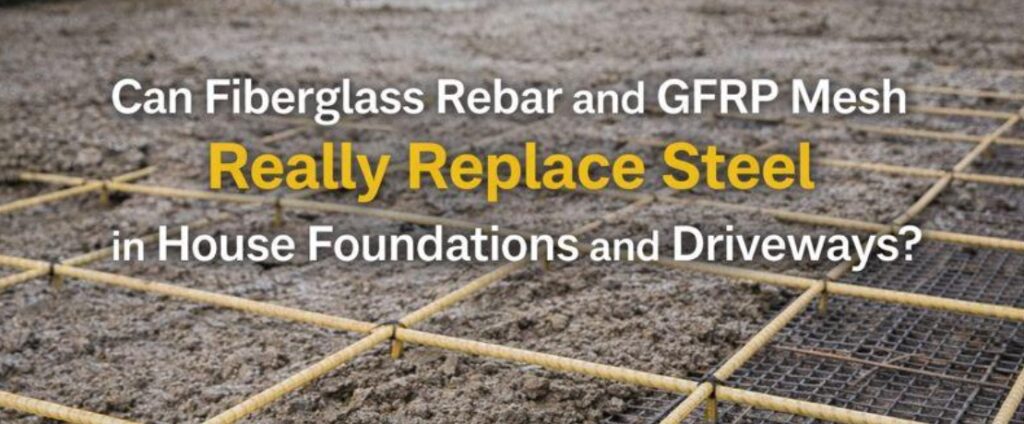
अगर आप गूगल पर खोजेंगे ड्राइववे के लिए फाइबरग्लास रीबार या नींव के लिए फाइबरग्लास रीबारआपको सैकड़ों राय मिलेंगी - उत्साह से लेकर अत्यधिक संशय तक। कुछ ठेकेदार पहले से ही हर काम में जीएफपी बार और मेश का उपयोग करते हैं, जबकि अन्य इस बात को लेकर अनिश्चित हैं कि क्या गैर-धातु सुदृढ़ीकरण नियमों के अनुसार "अनुमत" है या किसी वास्तविक घर के लिए पर्याप्त मजबूत है।
आइए कुछ समय के लिए मार्केटिंग को एक तरफ रख दें और तथ्यों पर गौर करें:
- अमेरिकी संहिताएं और मानक वास्तव में क्या कहते हैं?
- स्टील की तुलना में जीएफआरपी रीबार का व्यवहार कैसा होता है?
- आवासीय और हल्के वाणिज्यिक परियोजनाओं में फाइबरग्लास रीबार और जीएफआरपी मेश का उपयोग करना कहाँ उचित है?
यह लेख निम्नलिखित पर केंद्रित है: ज़मीन पर बनी पटरियाँ, घर की नींव और ड्राइववेक्योंकि ये ठीक वही परियोजनाएं हैं जो मालिकों और छोटे ठेकेदारों से सबसे अधिक खोज क्वेरी और वास्तविक प्रश्न उत्पन्न करती हैं।
अंतर्वस्तु
कोड और मानक वास्तविकता: जीएफआरपी अब "प्रायोगिक" नहीं रह गया है।
लंबे समय तक, एफआरपी सुदृढ़ीकरण एक अस्पष्ट स्थिति में रहा। आज स्थिति बिल्कुल अलग है।
ACI 440.11-22 – GFRP बार के लिए एक संपूर्ण भवन निर्माण संहिता
2022 में अमेरिकन कंक्रीट इंस्टीट्यूट ने प्रकाशित किया एसीआई 440.11-22, “जीएफआरपी बार से प्रबलित संरचनात्मक कंक्रीट के लिए भवन संहिता आवश्यकताएँ” — यह पहला व्यापक भवन संहिता है जो संरचनात्मक कंक्रीट में गैर-धातु जीएफआरपी सुदृढीकरण को कवर करता है।
यह कोड निम्नलिखित सुविधाएँ प्रदान करता है:
- जीएफआरपी बार के लिए सामग्री और निर्माण संबंधी आवश्यकताएं,
- बीम, स्लैब, दीवारों, नींव और अन्य घटकों के लिए डिजाइन नियम,
- जीएफआरपी का उपयोग कहाँ किया जा सकता है और कहाँ नहीं किया जा सकता है, इस पर सीमाएँ।
दूसरे शब्दों में, जीएफआरपी अब एक पूर्णतः संहिताबद्ध विकल्प है।यह कोई जिज्ञासा नहीं है।
ASTM D7957 – GFRP बार के लिए उत्पाद विनिर्देश
उत्पाद स्तर पर, एएसटीएम डी7957/डी7957एम-22 यह कंक्रीट सुदृढीकरण के लिए सतह संवर्धन के साथ ठोस गोल जीएफआरपी बार के लिए ज्यामितीय, यांत्रिक और भौतिक गुणों की आवश्यकताओं को परिभाषित करता है।
मानक में निम्नलिखित निर्दिष्ट है:
- न्यूनतम तन्यता सामर्थ्य और मापांक,
- बांड प्रदर्शन,
- व्यास और फाइबर सामग्री में अनुमेय भिन्नताएं,
- मुड़ी हुई छड़ों के लिए न्यूनतम मोड़ व्यास।
ASTM D7957 के अनुरूप छड़ें डिजाइनरों और भवन निर्माण अधिकारियों को गुणवत्ता के लिए एक स्पष्ट मानदंड प्रदान करती हैं।
बाजार में बढ़ती स्वीकृति
बाजार के आंकड़े इस मानकीकरण को दर्शाते हैं। अमेरिका जीएफआरपी रीबार बाजार अनुमान है कि यह लगभग से बढ़ेगा। 2023 में $30-31 मिलियन से बढ़कर 2033 तक $100 मिलियन से अधिक हो जाएगा।लगभग सीएजीआर के साथ 10–11 1टीपी5टीवैश्विक स्तर पर, एफआरपी रीबार की कीमत लगभग बढ़ने का अनुमान है। 2030 तक 1 अरब डॉलर.
किसी गृहस्वामी या छोटे डेवलपर के लिए इसका सीधा सा मतलब है: जीएफआरपी रीबार अब कोई दुर्लभ वस्तु नहीं रह गई है। यह एक मुख्यधारा की सामग्री है जिसके स्थापित मानक हैं, एक बढ़ती हुई आपूर्ति श्रृंखला है और एक गंभीर स्थापित ट्रैक रिकॉर्ड है।
फाइबरग्लास रीबार बनाम स्टील: डिजाइन में क्या बदलाव आते हैं?
यह समझने के लिए कि क्या नींव और ड्राइववे में स्टील की जगह फाइबरग्लास रीबार का उपयोग किया जा सकता है, प्रमुख सामग्री गुणों की तुलना करना सहायक होता है।
शक्ति और कठोरता
साहित्य और डेटा शीट में उल्लिखित विशिष्ट मान इस प्रकार हैं:
- तन्यता ताकत
- स्टील रीबार (ग्रेड 60): ~420–500 एमपीए (60–72 केएसआई)
- जीएफआरपी रीबार: ~600-1000+ एमपीए (87-145 केएसआई)
- प्रत्यास्थता मापांक
- इस्पात: ~200 जीपीए
- जीएफआरपी: ~40–65 जीपीए (लगभग 4-5 गुना कम)
- घनत्व
- इस्पात: ~7.8 ग्राम/सेमी³
- जीएफआरपी: ~1.9–2.1 ग्राम/सेमी³ → तक 75–80 % लाइटर
तो जीएफआरपी रीबार है तनाव में अधिक मजबूत और बहुत हल्का, लेकिन अधिक लचीला (कम कठोरता)। यह अंतिम बिंदु डिजाइन के लिए महत्वपूर्ण है: स्लैब और बीम के डिजाइन को अक्सर अंतिम शक्ति के बजाय विक्षेपण और दरार की चौड़ाई नियंत्रित करती है।
संक्षारण और स्थायित्व
यहां जीएफआरपी का एक मूलभूत लाभ है: यह गैर संक्षारक और गैर चुंबकीयअध्ययन और दीर्घकालिक परीक्षणों से पता चलता है कि उचित रूप से निर्मित जीएफआरपी बार क्षारीय कंक्रीट में लंबे समय तक रहने के बाद भी अपनी तन्यता शक्ति का एक बहुत उच्च प्रतिशत बरकरार रखते हैं, विशेष रूप से जब कम क्षारीयता वाली प्रणालियों का उपयोग किया जाता है।
घर की नींव और ड्राइववे के लिए इसका मतलब यह है:
- बर्फ पिघलाने वाले नमक से जंग नहीं लगती।
- कोई खरोंच या जंग के धब्बे नहीं हैं।
- इस्पात को जंग से बचाने के लिए आवरण बढ़ाने की कोई आवश्यकता नहीं है।
आवासीय कार्यों में फाइबरग्लास रीबार का उपयोग कहाँ उपयुक्त है?
ड्राइववे और बाहरी स्लैब
ड्राइववे, पार्किंग पैड और फुटपाथ लगातार पानी और बर्फ पिघलाने वाले नमक के संपर्क में रहते हैं। स्टील की छड़ें या तार की जाली में जंग लगने की प्रवृत्ति होती है, खासकर पतली परतों में जहां आवरण सीमित होता है।
का उपयोग करते हुए ड्राइववे के लिए फाइबरग्लास रीबार या कंक्रीट स्लैब के लिए जीएफआरपी जाल एक साथ कई समस्याओं का समाधान करता है:
- संक्षारण-मुक्त सुदृढ़ीकरण → जंग का फैलाव नहीं होता, दीर्घकालिक दरारें और टूटन कम होती हैं।
- कम वजन → छड़ों या जाली के रोल को हाथ से ले जाना आसान होता है, जो क्रेन के बिना छोटे दल के लिए महत्वपूर्ण है।
- गैर-प्रवाहकीय → आवारा धारा से जंग नहीं लगता, बिजली के गेट या ग्राउंड सिस्टम के पास उपयोग करने में फायदेमंद।
घर की नींव और तहखाने की स्लैब
सामान्य एक या दो मंजिला मकानों के लिए, मुख्य आवश्यकताएँ दरार नियंत्रण और उपयोगिता हैं, न कि अंतिम मजबूती। ACI 440.11-22 के अनुसार उचित डिजाइन के साथ, फाइबरग्लास रीबार का उपयोग कई स्ट्रिप फुटिंग, ग्रेड बीम और बेसमेंट स्लैब में स्टील के स्थान पर सुरक्षित रूप से किया जा सकता है।.
सामान्य प्रेरणाएँ:
- आक्रामक मिट्टी या भूजल (क्लोराइड, सल्फेट),
- समुद्र के निकट
- चुंबकीय हस्तक्षेप से बचने की इच्छा (प्रयोगशालाएं, चिकित्सा कक्ष),
- कम रखरखाव के साथ लंबी डिजाइन लाइफ।
कोड में कुछ सीमाएँ निर्धारित की गई हैं — उदाहरण के लिए, कुछ संपीड़न-प्रधान सदस्यों में या जहाँ तन्यता की आवश्यकताएँ महत्वपूर्ण हैं, वहाँ GFRP के उपयोग पर — लेकिन नींव और समतल सतह पर बिछाई गई स्लैब आमतौर पर अनुप्रयोगों की सुविधाजनक सीमा के भीतर होती हैं। जब इसे ACI 440.11-22 से परिचित इंजीनियर द्वारा डिजाइन किया गया हो।
| पैरामीटर | जीएफआरपी (फाइबरग्लास) जाल | स्टील वायर मेश |
| सामग्री प्रकार | ग्लास फाइबर प्रबलित पॉलिमर, गैर-संक्षारक, गैर-चुंबकीय | वेल्डेड कार्बन-स्टील के तार, धात्विक, सुचालक |
| इकाई का वज़न | बहुत हल्का; रोल को हाथ से आसानी से हिलाया जा सकता है | भारी; अक्सर मशीनरी या कई श्रमिकों की आवश्यकता होती है |
| डिलीवरी फ़ॉर्म | लचीले रोल या हल्के फ्लैट पैनल के रूप में उपलब्ध। | कठोर, सपाट चटाइयाँ; वजन और कठोरता के कारण सीमित आकार। |
| स्थापना गति | बड़े क्षेत्रों में तेजी से विस्तार; न्यूनतम कटिंग और जोड़-तोड़ | धीमी गति; चटाइयों को ले जाना, एक दूसरे के ऊपर रखना और संरेखित करना पड़ता है। |
| काटना और छांटना | अपघर्षक/हीरे के औजारों से काटा जाता है; धातु से कोई चिंगारी नहीं निकलती। | बोल्ट कटर या टॉर्च से काटें; भारी टुकड़े |
| बर्फ पिघलाने वाले लवणों और रसायनों में संक्षारण | कोई जंग नहीं, कोई खंड नष्ट नहीं, सतह पर कोई जंग का निशान नहीं। | जंग लगने का उच्च जोखिम; इससे दरारें पड़ सकती हैं और मरम्मत की आवश्यकता हो सकती है। |
| स्लैब में दरार नियंत्रण | उच्च तन्यता शक्ति; दरारों से जंग नहीं लगती; डिज़ाइन दरार की चौड़ाई पर केंद्रित है | दरारों के कारण पानी और नमक स्टील तक पहुँच जाते हैं → जंग लग जाती है और दरारें चौड़ी हो जाती हैं |
| कंक्रीट के साथ बंधन | अनुदैर्ध्य छड़ों पर इंजीनियरकृत पसलियां/विरूपण; उच्च बंधन | तार के विरूपण से यांत्रिक मजबूती; अच्छा बंधन |
| कंक्रीट कवर की आवश्यकता है | बंधन और अग्नि द्वारा परिभाषित; जंग से बचाव के लिए कोई अतिरिक्त सुरक्षा नहीं। | अक्सर जंग लगने से रोकने के लिए आवरण को बढ़ाया जाता है |
| भीड़भाड़ वाले स्थलों पर प्रबंधन | रोल को दरवाजों से, उपकरणों के आसपास से और ऊपरी मंजिलों से आसानी से गुजारा जा सकता है। | तंग जगहों में कठोर चटाइयों को इधर-उधर ले जाना मुश्किल होता है। |
| सुरक्षा और एर्गोनॉमिक्स | कम वजन के कारण पीठ में खिंचाव का खतरा कम होता है। | भारी स्टील की चटाइयों को उठाने से चोट लगने का खतरा अधिक होता है। |
| विद्युत एवं चुंबकीय गुण | गैर-चालक, गैर-चुंबकीय | चालक और चुंबकीय |
| स्लैब के विशिष्ट अनुप्रयोग | औद्योगिक फर्श, पार्किंग स्थल, लॉजिस्टिक्स केंद्र, कोल्ड रूम, आक्रामक माध्यमों वाली सतहें | औद्योगिक फर्श, पार्किंग स्थल, पारंपरिक गोदाम |
| जीवन-चक्र स्थायित्व | क्लोराइड/रासायनिक प्रभावों के लिए उत्कृष्ट; न्यूनतम रखरखाव | जंग लगने के कारण अक्सर इसकी मरम्मत, ओवरले या प्रतिस्थापन की आवश्यकता होती है। |
| पर्यावरण/स्थिरता पहलू | पतले आवरण और लंबी सेवा अवधि को संभव बनाता है; जीवनचक्र में CO₂ उत्सर्जन को कम करने में सहायक होता है। | जंग लगने और उसकी मरम्मत के कारण समय के साथ सामग्री और ऊर्जा की खपत बढ़ जाती है। |
| जीएफआरपी रीबार सिस्टम के साथ अनुकूलता | जीएफआरपी बार के साथ एक पूर्णतः गैर-धातु सुदृढ़ीकरण प्रणाली का निर्माण करता है। | मिश्रित प्रणाली; स्टील अभी भी जंग लगने का खतरा बढ़ाता है |
टिप्पणी: जीएफआरपी मेश के लिए विशिष्ट डिज़ाइन मान (बार व्यास, मेश स्पेसिंग, कंक्रीट कवर, लैप स्प्लिस लंबाई) हमेशा इंजीनियर की गणनाओं के अनुसार होने चाहिए। एसीआई 440.11-22, उपयुक्त एएसटीएम मानक (जैसे ASTM D7957), और स्थानीय भवन निर्माण संहिताएँ। ऊपर दी गई तालिका विशिष्ट विशेषताओं की तुलना करती है, लेकिन यह नहीं परियोजना-विशिष्ट संरचनात्मक डिजाइन का एक विकल्प।
ग्रेड स्लैब के लिए जीएफआरपी मेश बनाम स्टील वायर मेश
परंपरागत स्लैब और औद्योगिक फर्श अक्सर वेल्डेड स्टील वायर मेश से प्रबलित होते हैं। कंपोजिट जीएफआरपी जाल और मिश्रित सुदृढ़ीकरण जाल इस तस्वीर को बदलें।
मुख्य तुलनाएँ
(विभिन्न प्रायोगिक और क्षेत्रीय अध्ययनों का सारांश):
- दरार नियंत्रण
- जीएफआरपी मेश में उच्च तन्यता शक्ति होती है और पसलियों या सतह विरूपणों को सही ढंग से बनाने पर उत्कृष्ट बंधन क्षमता होती है।
- क्योंकि छड़ों में जंग नहीं लगता, इसलिए उनमें पड़ने वाली छोटी-छोटी बारीक दरारें लंबे समय तक नुकसान नहीं पहुंचातीं, जैसा कि स्टील के मामले में हो सकता है।
- संक्षारण प्रतिरोध
- जीएफआरपी मेश स्वाभाविक रूप से जंग-मुक्त होता है - यह उन स्लैबों के लिए एक बड़ा लाभ है जो नमक, उर्वरक या रसायनों के संपर्क में आते हैं।
- स्थापना गति
- मेश को बड़े, हल्के रोल में बनाया जा सकता है। एक व्यक्ति इसे उठाकर एक बड़े क्षेत्र में फैला सकता है।
- इससे श्रम लागत और समय की बचत होती है, खासकर बड़े औद्योगिक परिसरों या लंबी सड़कों पर।
- वजन और लॉजिस्टिक्स
- एक ट्रक समान अनुमेय भार पर स्टील मैट की तुलना में काफी अधिक वर्ग फुट कंपोजिट मेश ले जा सकता है।
व्यापारिक दृष्टिकोण से, कंक्रीट स्लैब के लिए जीएफआरपी जाल यह ठेकेदारों और निर्माताओं दोनों के लिए तकनीकी प्रदर्शन को बहुत मजबूत आर्थिक पहलुओं के साथ जोड़ता है।
व्यावहारिक डिजाइन और स्थापना संबंधी नोट्स
हालांकि यह एक संपूर्ण डिजाइन मैनुअल नहीं है, फिर भी कुछ सिद्धांत यह समझने में मदद करते हैं कि इंजीनियर और इंस्टॉलर जीएफआरपी के साथ कैसे काम करते हैं।
डिजाइन: विक्षेपण और दरार की चौड़ाई
क्योंकि जीएफआरपी का मापांक कम होता है, समान सुदृढ़ीकरण अनुपात पर स्टील की तुलना में विक्षेपण आमतौर पर अधिक होता है।इंजीनियर निम्नलिखित तरीकों से क्षतिपूर्ति करते हैं:
- बार का क्षेत्रफल बढ़ाना (व्यास बढ़ाना या अंतराल कम करना),
- स्लैब की मोटाई में थोड़ी वृद्धि करना, या
- हाइब्रिड सुदृढ़ीकरण रणनीतियों का उपयोग करना।
ACI 440.11-22 फ्लेक्सचर, सर्विसिबिलिटी और क्रैक चौड़ाई के लिए सूत्र प्रदान करता है जिसमें स्पष्ट रूप से GFRP के निचले मापांक को शामिल किया गया है।
कंक्रीट कवर और विवरण
जीएफआरपी के लिए कवर की आवश्यकताएं संक्षारण के बजाय बंधन, अग्नि और स्थायित्व द्वारा निर्धारित होती हैं। कई मामलों में स्टील की तुलना में कवर बराबर या थोड़ा कम हो सकता है।लेकिन अंतिम मान हमेशा डिजाइन और स्थानीय कोड से ही प्राप्त होता है।
आम तौर पर आवासीय स्लैब में अभी भी 1.5-2 इंच की परत का उपयोग किया जाता है - इसलिए नहीं कि जीएफआरपी में जंग लग जाएगी, बल्कि उचित बंधन, अग्नि प्रदर्शन और फिनिश सुनिश्चित करने के लिए।
स्थापना की मूल बातें
- बार और मेश हैं हल्का और संभालने में आसानलेकिन सुरक्षा बनाए रखने के लिए इसकी अध्यक्षता ठीक से की जानी चाहिए।
- जीएफआरपी बार साइट पर इसे मोड़ा नहीं जाना चाहिएसभी हुक और रकाब एएसटीएम डी7957 के अनुसार कारखाने में निर्मित होने चाहिए।
- काटने का काम अपघर्षक या हीरे के ब्लेड से किया जाता है, न कि मानक बोल्ट कटर से।
क्रू के दृष्टिकोण से, थोड़े समय के सीखने के बाद, ड्राइववे या नींव के लिए फाइबरग्लास रीबार लगाना स्टील लगाने जैसा ही लगता है - बस यह काफी हल्का होता है।.
आर्थिक और पर्यावरणीय पहलू
बाजार की वृद्धि और स्थिति
जैसा कि पहले उल्लेख किया गया है, अमेरिकी जीएफआरपी रीबार बाजार लगभग की दर से बढ़ रहा है। प्रति वर्ष 10-12 %संक्षारण-प्रतिरोधी और टिकाऊ सुदृढ़ीकरण की मांग से प्रेरित होकर।
आवासीय और हल्के वाणिज्यिक निर्माणकर्ताओं के लिए, इस प्रवृत्ति के दो व्यावहारिक परिणाम हैं:
- आपूर्ति अधिक स्थिर और विविध हो जाती है।
- भवन निर्माण अधिकारी और इंजीनियर जीएफआरपी के साथ अधिक परियोजनाएं देख रहे हैं और उन्हें मंजूरी देने में अधिक सहज महसूस कर रहे हैं।
जीवनचक्र लागत, न कि केवल प्रति फुट कीमत
कुछ बाजारों में जीएफपी रीबार की प्रति फुट प्रारंभिक कीमत स्टील की तुलना में अधिक हो सकती है। हालांकि:
- कम वजन के कारण लॉजिस्टिक्स और हैंडलिंग लागत कम होती है।
- जंग से होने वाले नुकसान को कम करना या समाप्त करना,
- संरचना के जीवनकाल में कम मरम्मत की आवश्यकता होती है।
ये सभी कारक जीएफपी के पक्ष में आर्थिक परिदृश्य को बदल देते हैं, विशेष रूप से जहां बर्फ पिघलाने वाले लवण या आक्रामक वातावरण मौजूद होते हैं।
विनिर्माण की गुणवत्ता और उपकरण क्यों मायने रखते हैं
ऊपर वर्णित सभी लाभ इस बात पर आधारित हैं कि जीएफआरपी रीबार और मेश का निर्माण सही ढंग से किया गया है।यह वह जगह है जहाँ उत्पादन लाइन प्रौद्योगिकी गंभीर स्थिति उत्पन्न हो जाती है।
उच्च गुणवत्ता वाली छड़ें और जाली जो मानदंडों को पूरा करती हैं ASTM D7957 और ACI 440.11-22 की अपेक्षाएँ ज़रूरत होना:
- फाइबर की मात्रा और संरेखण में निरंतरता,
- बिना रिक्तियों के गहन राल संसेचन,
- विश्वसनीय बंधन के लिए नियंत्रित सतह ज्यामिति,
- ऐसी उपचार विधियाँ जो सतह के जलने और थर्मल दरारों से बचाती हैं,
- उचित गुणवत्ता नियंत्रण और पता लगाने की क्षमता।
आधुनिक उपकरण प्लेटफॉर्म — जैसे कि विशेषीकृत कंपोजिट-टेक द्वारा विकसित जीएफआरपी रीबार और मेश लाइनें - उपयोग:
- रोविंग्स को पहले से गर्म करना नमी और सिलान अवशेषों को हटाने के लिए, जिससे गीलापन बेहतर होता है;
- प्रत्येक फिलामेंट बंडल को पूरी तरह से संतृप्त करने के लिए बहु-चरण संसेचन (जिसमें अल्ट्रासोनिक सक्रियण और यांत्रिक निचोड़ शामिल हैं);
- शॉर्ट-वेव इन्फ्रारेड “बूस्टर” ओवन जो छड़ के अंदर से बहुलकीकरण शुरू करते हैं;
- दो-चरण शीतलन (हवा + पानी) जो साधारण "गर्म से ठंडे पानी" की पाइपलाइनों में होने वाले थर्मल शॉक और माइक्रो-क्रैकिंग से बचाता है।
इन प्रक्रिया विवरणों का अनुवाद इस प्रकार होता है: उच्च तन्यता शक्ति, बेहतर बंधन और अधिक सुसंगत क्षेत्र प्रदर्शन —जिससे बदले में इंजीनियरों के लिए ड्राइववे, नींव और स्लैब के लिए फाइबरग्लास रीबार के साथ डिजाइन करना पूरी तरह से आत्मविश्वास के साथ आसान हो जाता है।
तो क्या फाइबरग्लास रीबार और जीएफआरपी मेश स्टील की जगह ले सकते हैं?
इसका सीधा और सटीक उत्तर, कोड आधारित उत्तर यह है:
जी हां—कई नींवों, समतल सतहों और ड्राइववे में, फाइबरग्लास रीबार और जीएफआरपी मेश स्टील का सुरक्षित रूप से स्थान ले सकते हैं, बशर्ते कि:
- संरचना को इसके अनुसार डिजाइन किया गया है एसीआई 440.11-22 एक योग्य इंजीनियर द्वारा,
- छड़ें और जाली ASTM D7957 और संबंधित विशिष्टताओं के अनुरूप हैं।
- और सुदृढ़ीकरण को खेत में सही ढंग से स्थापित किया गया है।
इन शर्तों के पूरा होने पर, मालिकों और ठेकेदारों को निम्नलिखित लाभ प्राप्त होते हैं:
- जंग-मुक्त सुदृढ़ीकरण,
- कम वजन और आसान संचालन,
- बेहद प्रतिस्पर्धी जीवनचक्र लागत,
- और ऐसी संरचनाएं जो लंबे समय तक साफ और दरार रहित बनी रहती हैं।
घर मालिकों के लिए जो खोज रहे हैं क्या फाइबरग्लास रीबार ड्राइववे के लिए उपयुक्त है? या क्या घरों की नींव में फाइबरग्लास रीबार का उपयोग किया जा सकता है?संदेश सीधा-सादा है: यह न केवल संभव है, बल्कि कई मामलों में तकनीकी रूप से बेहतर विकल्प भी है - बशर्ते आप इसे एक गंभीर संरचनात्मक सामग्री के रूप में मानें, न कि शॉर्टकट के रूप में।
और अधिक जानें: