
CT6 NEW GENERATION
High-Performance GFRP Rebar Production Lin
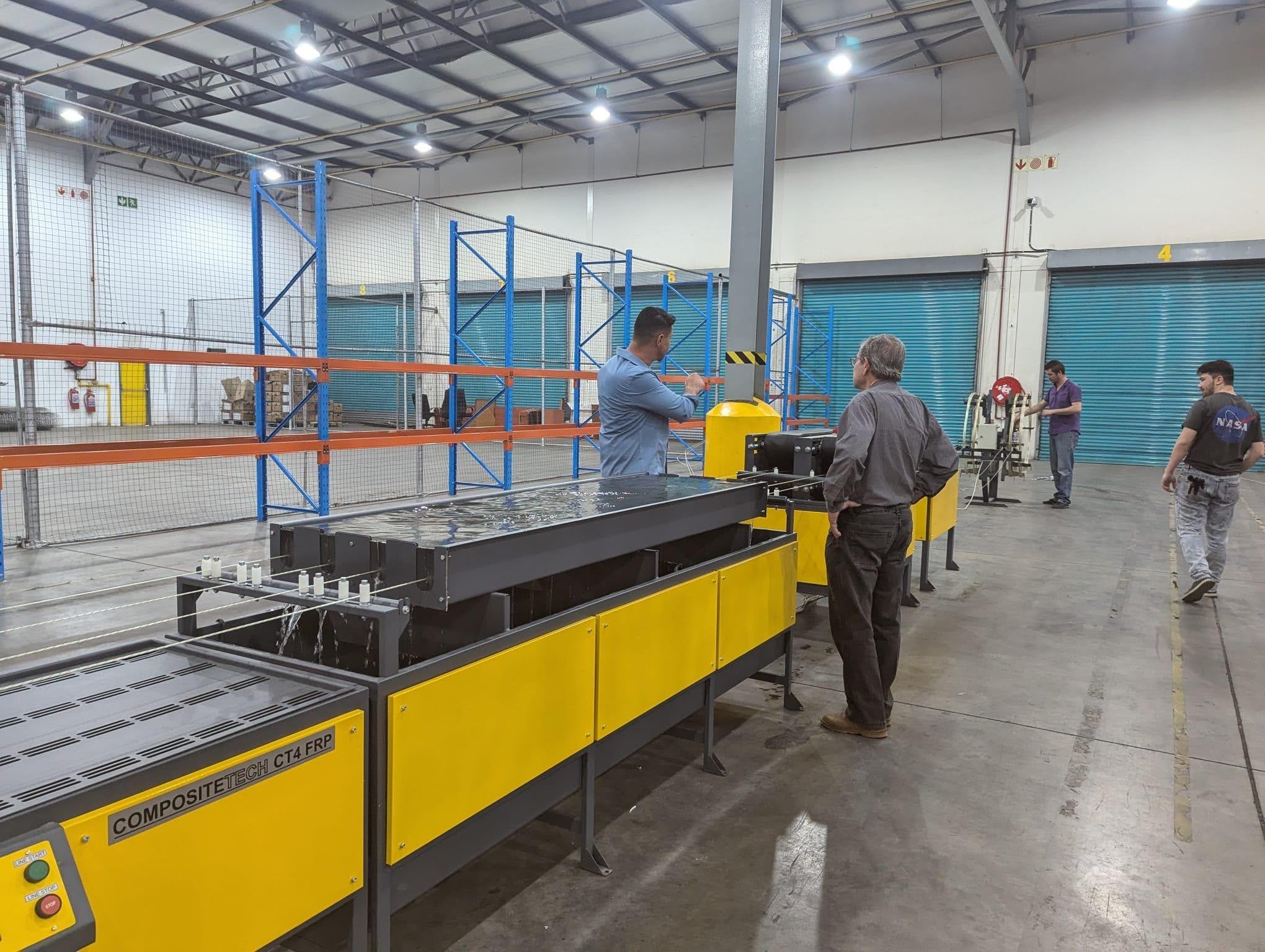
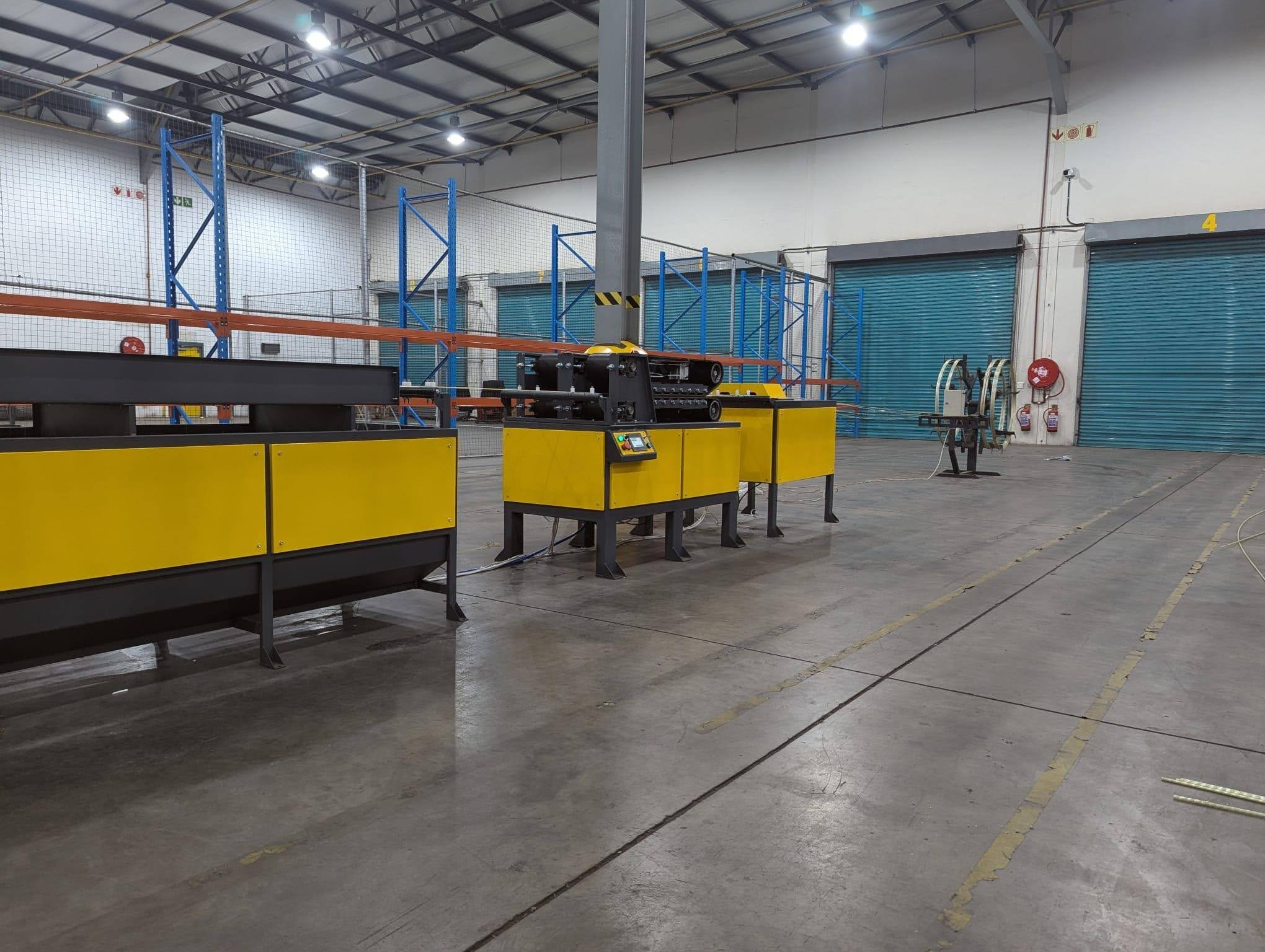
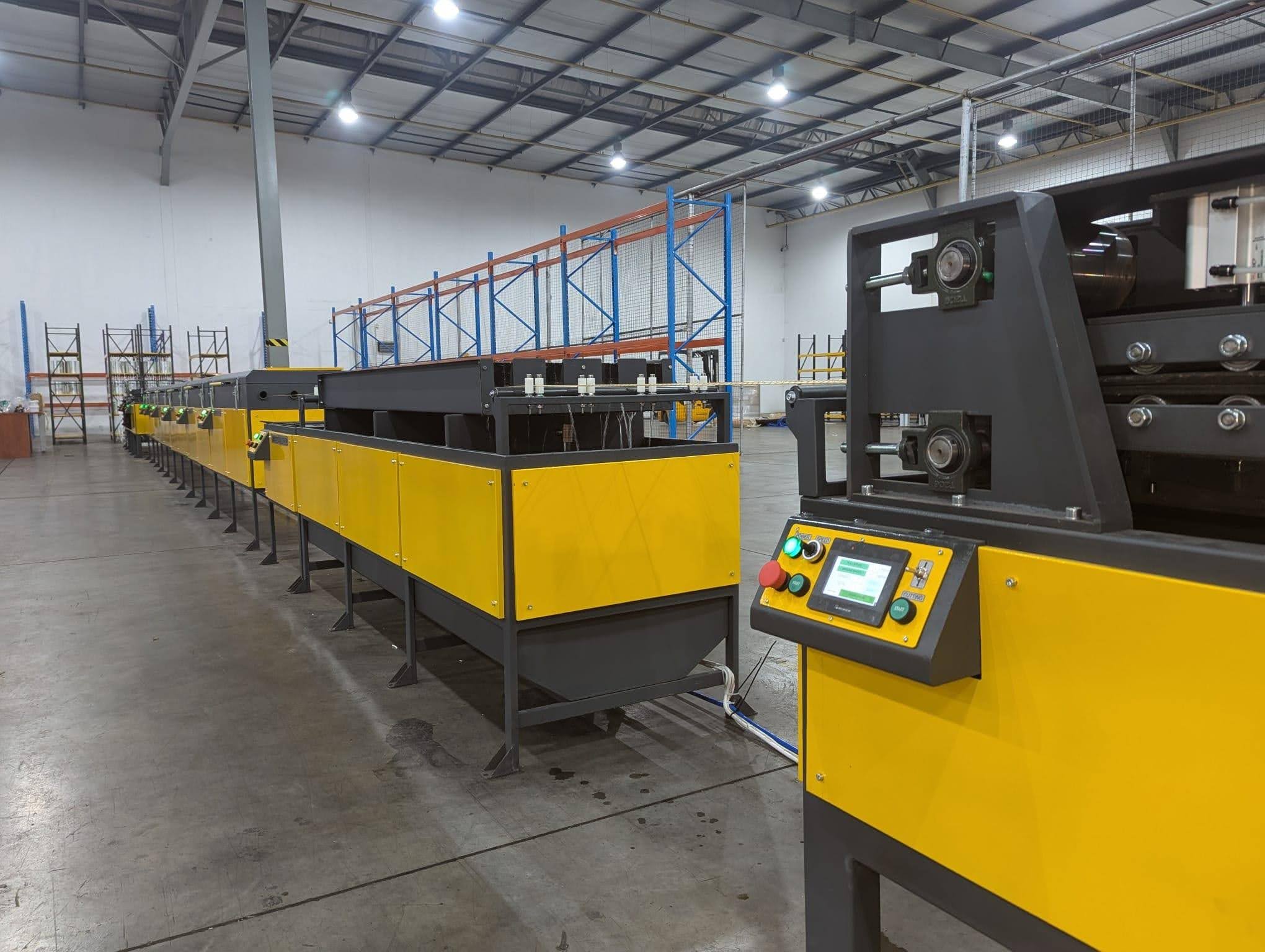
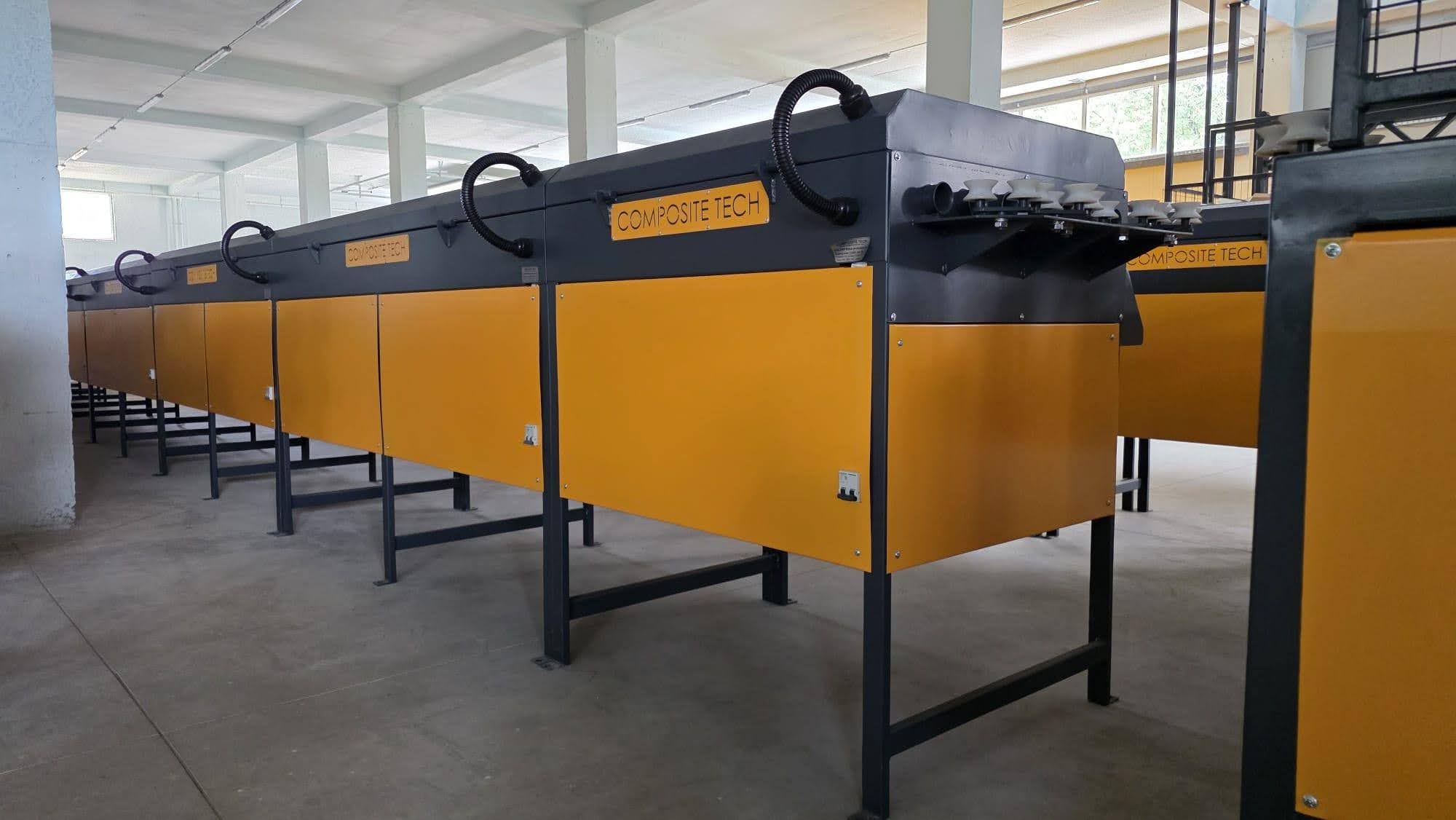
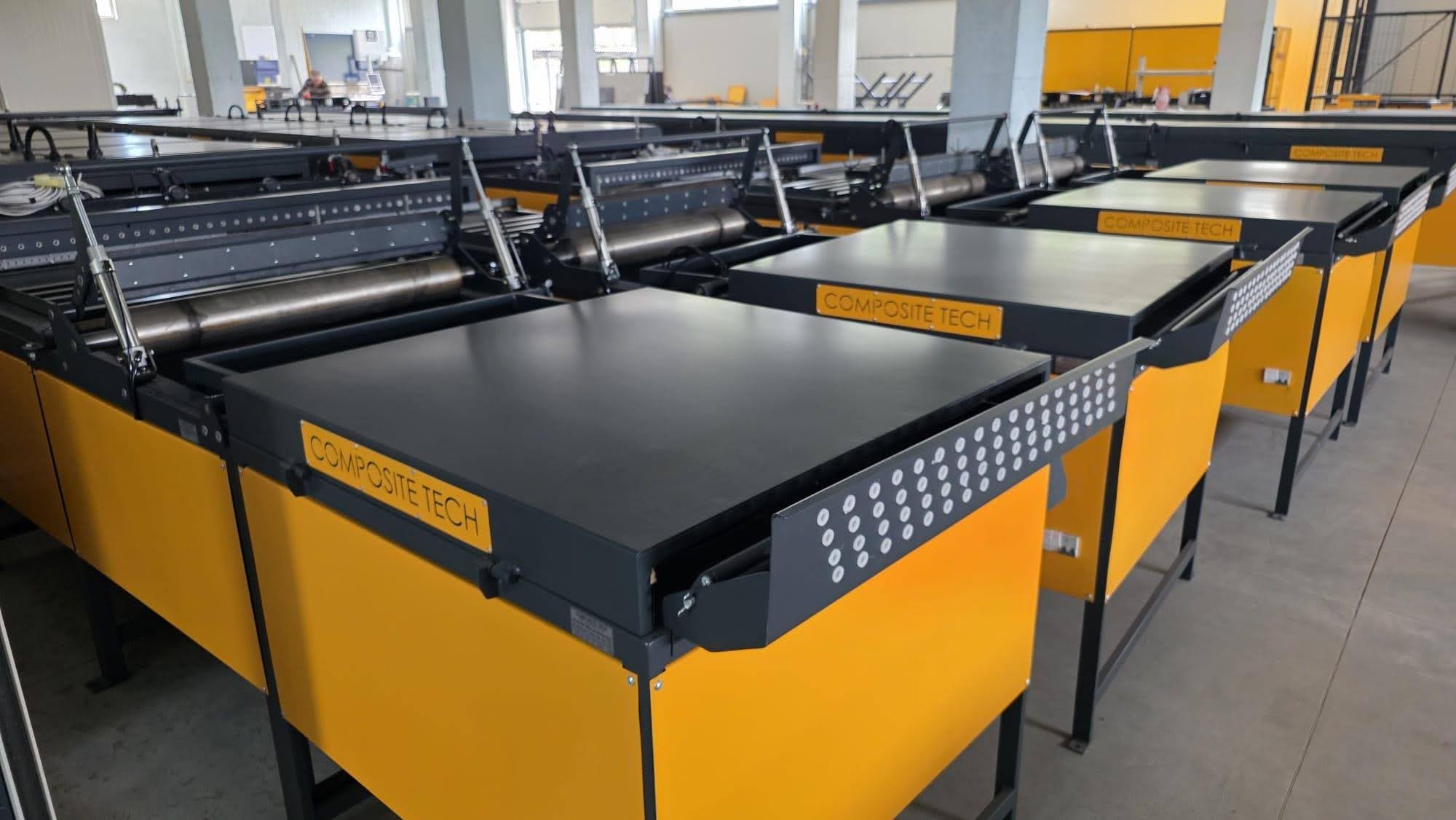
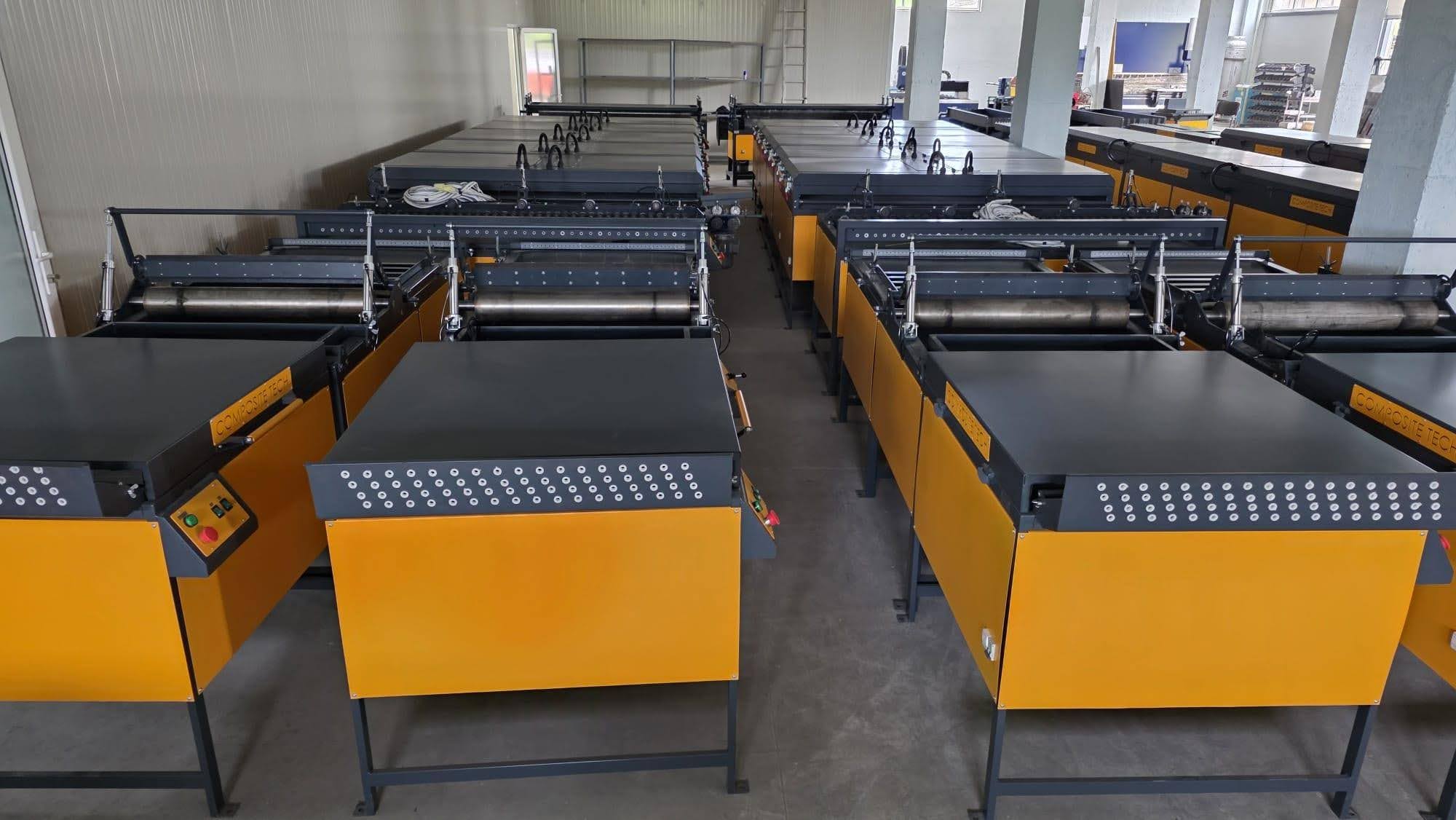
A New Benchmark in GFRP Rebar Manufacturing
Up to 48 meters of reinforcement per minute. One integrated production line. Advanced technology designed for exceptional product consistency.
Meet CT6 Nueva Generación, Composite-Tech’s most advanced high-output production line for manufacturing Glass Fiber Reinforced Polymer (GFRP) rebar. Developed for industrial manufacturers who demand more than conventional pultrusion equipment, CT6 combines exceptional production capacity with proprietary composite-processing technologies and intelligent production monitoring.
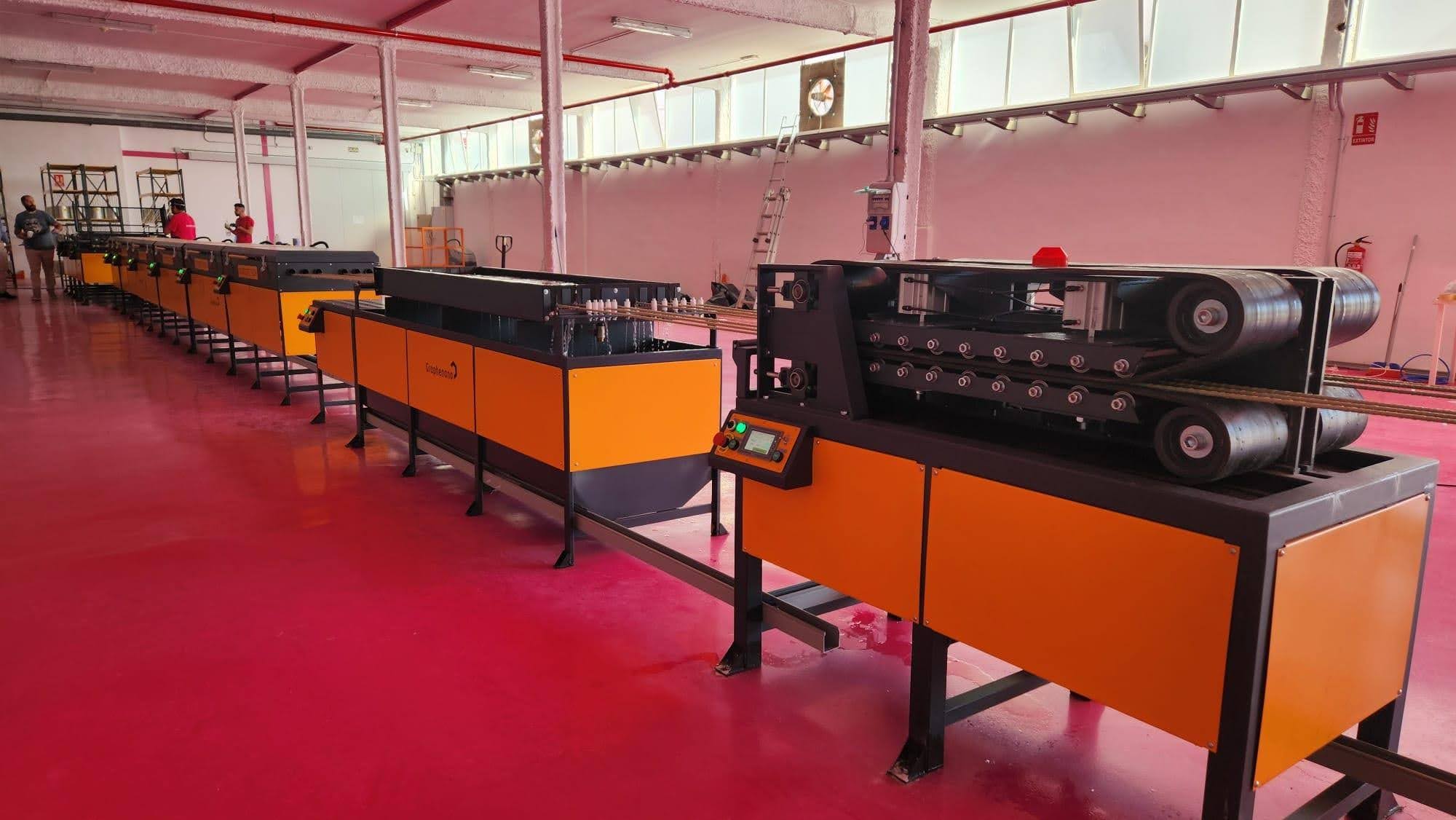
The line manufactures up to six reinforcing bars simultaneously, incorporating patented ultrasonic-assisted resin impregnation, pneumatic resin-content control, short-wave infrared polymerization, five curing ovens, two-stage air-and-water cooling, and AI-al challenges of FRP manufacturing: consistent fiber impregnation, controlled resin consumption, reliable curing, stable surface geometry and prevention of cooling-related defects. The result is a production platform engineered to help manufacturers achieve high throughput while maintaining control over the quality of their finished reinforcement.
CT6 New Generation is not simply a faster rebar machine. It represents a more advanced approach to industrial composite reinforcement manufacturing.
SIX BARS. ONE PRODUCTION LINE. EXCEPTIONAL OUTPUT
6
48 m/min
36 m/min
17.280 metros
Theoretical Ø10 mm (#3) Output per 8-Hour Shift
1–2
18–20 kW
Performance figures are based on the CT6 New Generation technical manual. Production speeds are indicative maximum values and depend on resin characteristics, reinforcement diameter, raw materials and operating conditions. Shift production figures assume uninterrupted operation.
WHY CT6 NEW GENERATION IS DIFFERENT
Advanced Manufacturing Technology That Goes Beyond Conventional Pultrusion
Not every GFRP rebar production line uses the same manufacturing technology. Some systems concentrate primarily on pulling speed and mechanical automation. However, the properties of the finished composite depend on much more than the speed at which the fibers move through the machine. Resin must penetrate the reinforcing fiber bundle. The correct resin content must be maintained. The polymer matrix must be properly cured. The reinforcing bar must maintain a consistent cross-section and surface profile. And the finished composite must be cooled under controlled conditions. When these operations are not properly coordinated, higher production speeds can increase the risk of manufacturing defects.
Composite-Tech developed CT6 New Generation around a different principle: Increase production capacity by improving control over the entire composite manufacturing process. Its integrated technology combines specialized preparation, impregnation, polymerization, cooling and monitoring systems designed to operate together as a continuous industrial production line.
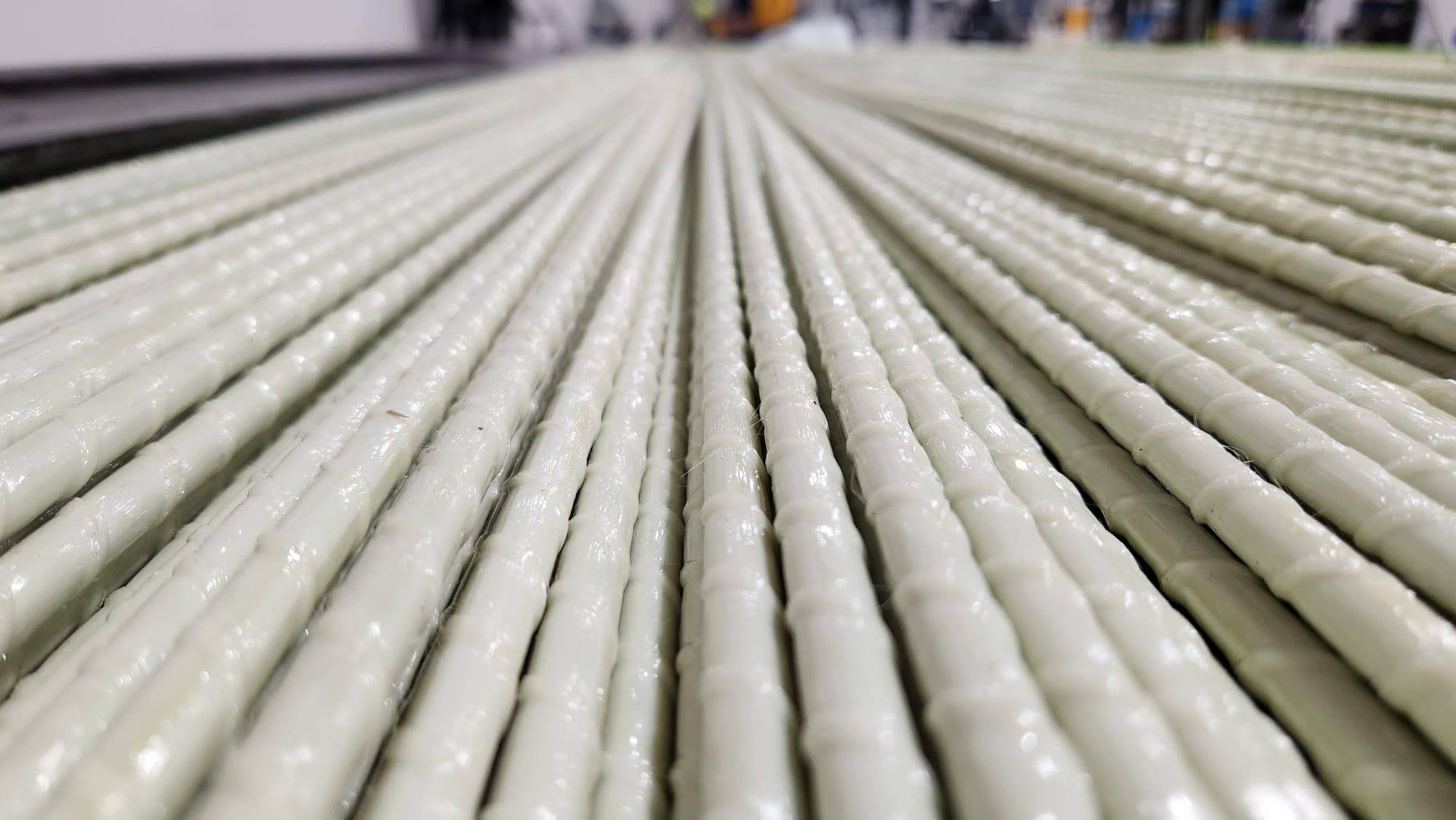
1. PATENTED ULTRASONIC RESIN IMPREGNATION
Better Fiber Wet-Out Begins Inside the Roving
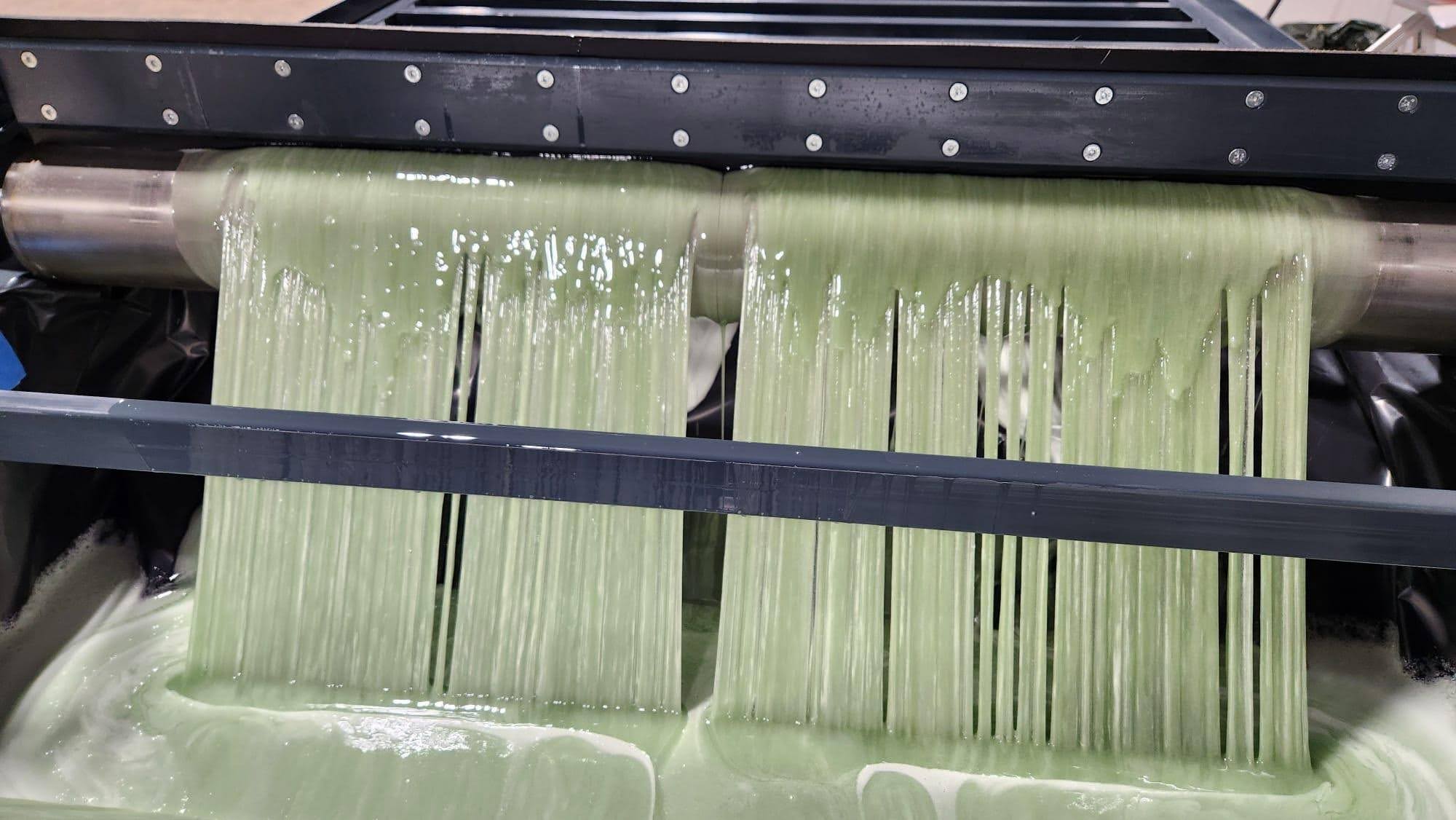
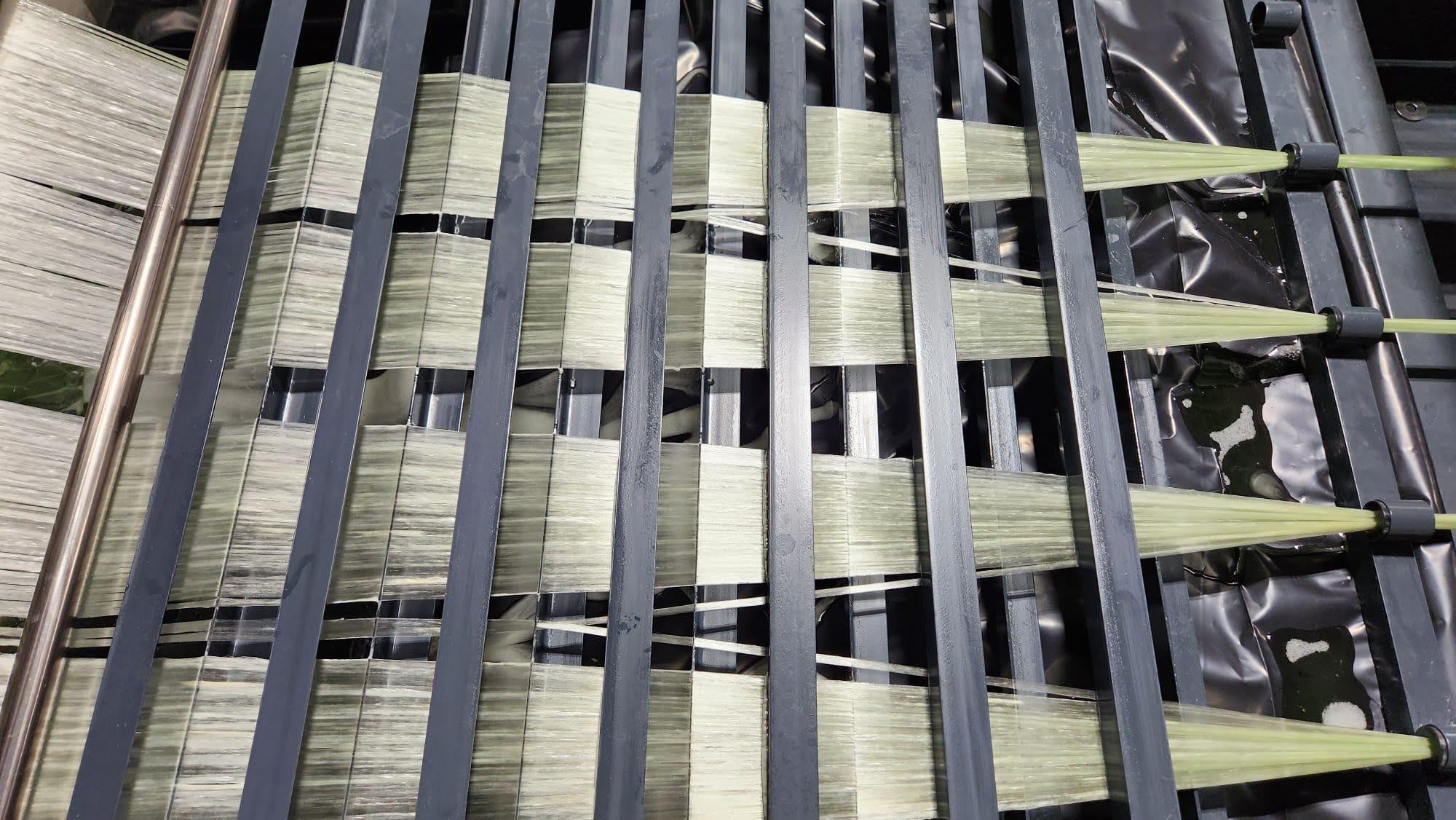
One of the most important stages of GFRP rebar manufacturing occurs before the reinforcing bar enters the curing ovens. Continuous glass fiber roving consists of thousands of individual filaments. During manufacturing, the polymer resin must penetrate the fiber bundle to create a consistent composite structure. Inadequate impregnation can leave dry regions, trapped air and internal voids that may affect the mechanical properties and durability of the finished reinforcement. Conventional resin baths primarily rely on the physical contact between the fibers and liquid resin, together with the mechanical action of the impregnation equipment.
Composite-Tech has developed a patented ultrasonic-assisted impregnation method intended to improve this process.
How Composite-Tech Ultrasonic Impregnation Works
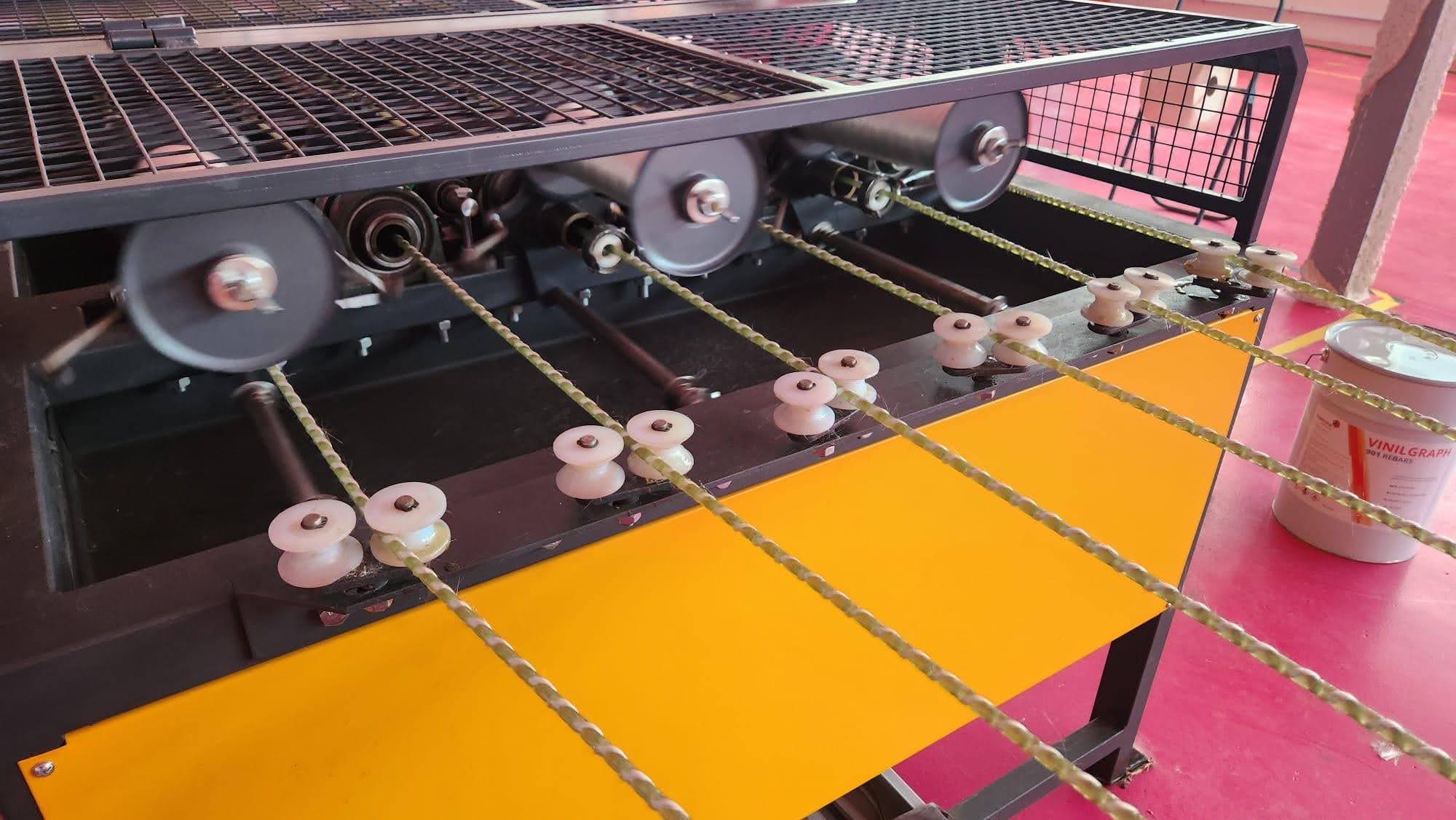
Inside the CT6 impregnation module, ultrasonic energy assists the movement and penetration of polymer resin within the glass fiber bundle. The system is designed to improve contact between the resin and individual filaments, helping achieve more consistent impregnation throughout the reinforcing material. The ultrasonic stage operates as part of a controlled impregnation process that also incorporates pneumatic squeezing.
Why This Technology Matters
Improved control over fiber impregnation can help manufacturers:
- Reduce the risk of dry fiber regions and internal voids;
- Improve consistency of resin distribution;
- Achieve more repeatable composite processing;
- Support stable production at higher pulling speeds;
- Reduce material waste caused by impregnation defects.
The actual effect on mechanical performance depends on the selected fiber, resin system, processing parameters and product qualification results. Composite-Tech’s patented ultrasonic impregnation technology is a central element of the CT6 manufacturing system. It is designed to address a fundamental requirement of high-quality composite reinforcement: ensuring that the polymer matrix adequately penetrates and surrounds the reinforcing fibers.
2. PRECISION RESIN CONTENT CONTROL
High-Quality Reinforcement Without Unnecessary Resin Consumption
Proper impregnation requires sufficient polymer resin. However, excessive resin consumption increases manufacturing costs and can lead to inconsistent composite composition.
CT6 New Generation incorporates a pneumatic squeezing system that helps regulate the amount of resin retained in the impregnated fiber bundle. After the fibers pass through the resin bath, the squeezing mechanism applies controlled pressure to remove excess polymer binder. Additional calibration elements support the formation of the required reinforcement cross-section. This system is designed to maintain a suitable balance between fiber content and polymer matrix content.
Why Resin Control Matters
The performance of GFRP reinforcement depends on the complete composite structure. Increasing resin content does not automatically improve tensile strength. Likewise, reducing resin consumption too aggressively can compromise impregnation quality. A professional manufacturing process must control both requirements.
CT6 combines ultrasonic-assisted impregnation with pneumatic resin squeezing to support consistent composite quality and efficient raw material use. For industrial manufacturers, this is important because resin consumption and rejected production directly influence the manufacturing cost of each saleable meter of reinforcement.
3. SHORT-WAVE INFRARED POLYMERIZATION
Advanced Thermal Processing for High-Output Manufacturing
Increasing production speed creates a significant challenge in continuous composite manufacturing. The faster a reinforcing bar moves through the production line, the less time it spends inside the heating equipment. Yet the polymer matrix must still achieve an appropriate degree of cure. Simply increasing the temperature of conventional ovens is not always an effective solution. Excessive surface heating can create undesirable thermal gradients, while insufficient curing can compromise the properties of the finished reinforcement.
Composite-Tech addresses this challenge through a specialized Short-Wave Infrared Booster.
How the System Works
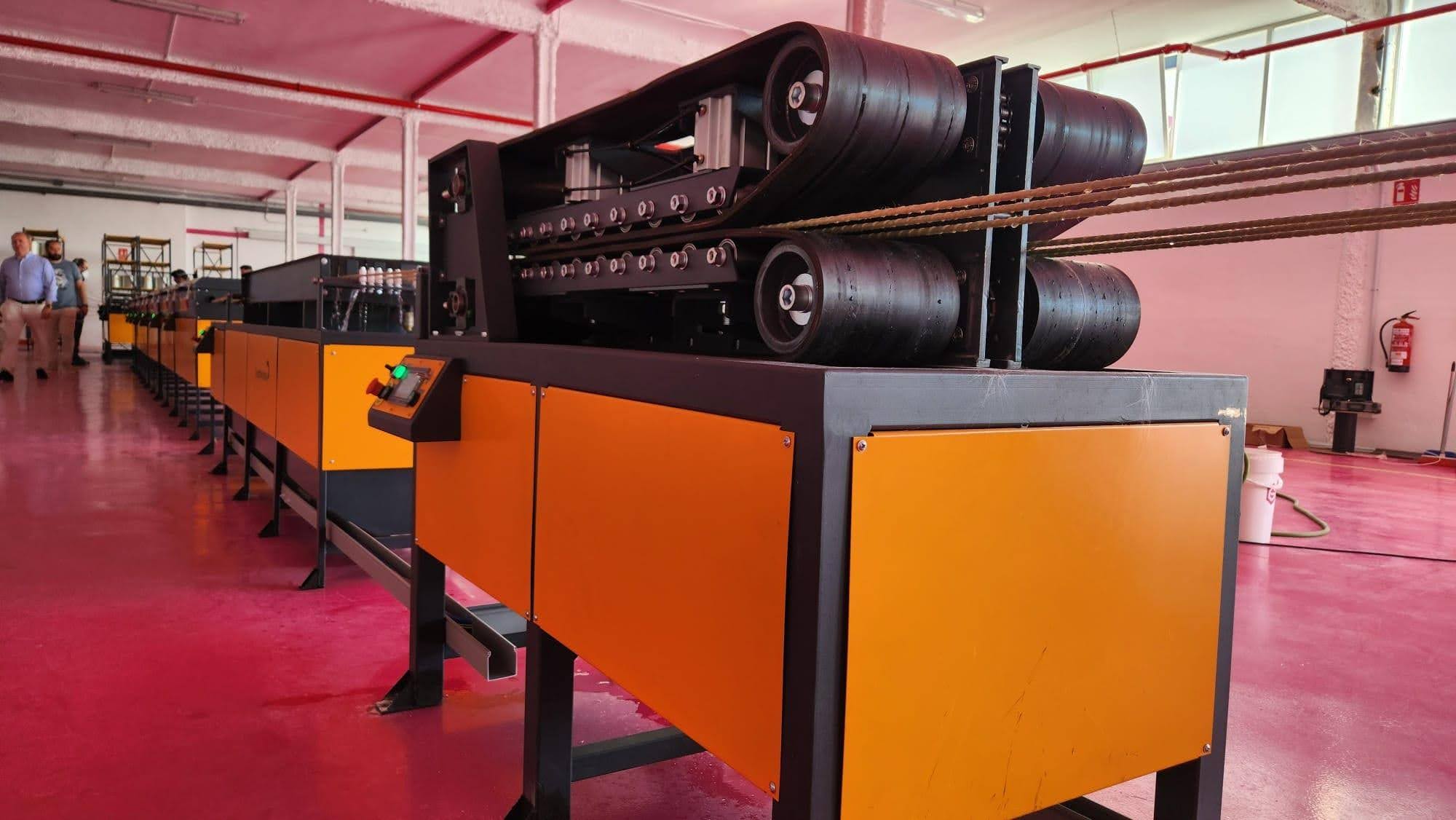
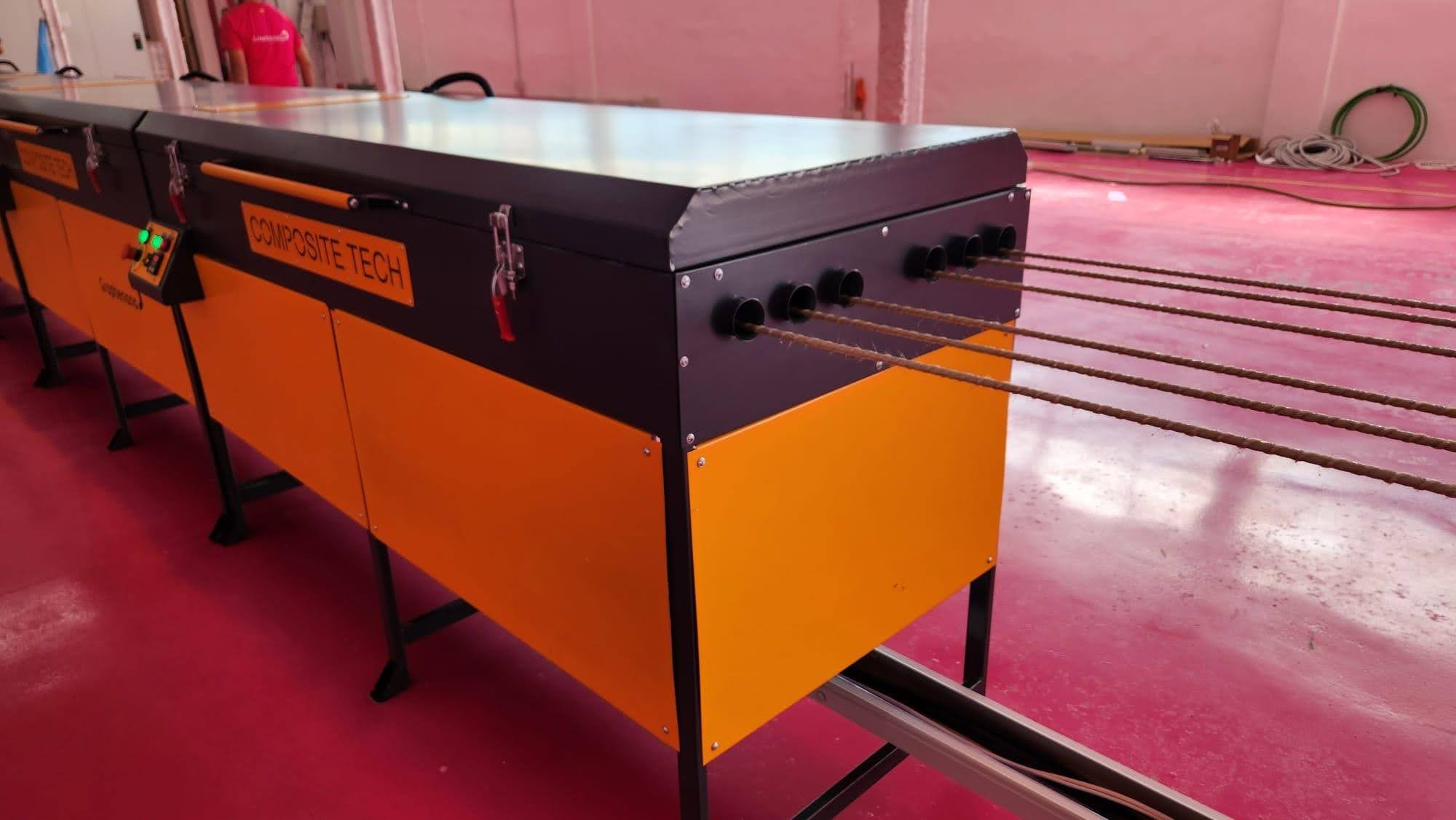
Following impregnation and rib formation, the reinforcing bars pass through the infrared heating module. The system is designed to accelerate initial heating and support the beginning of resin polymerization. The material then continues through five controlled curing ovens. This arrangement allows the heating process to be managed in successive stages.
The Manufacturing Advantage
The combination of short-wave infrared heating and controlled curing ovens is designed to support:
- More effective initial heating;
- Controlled polymerization;
- Stable processing at industrial production speeds;
- Reduced risk of undesirable surface overheating;
- More consistent curing conditions.
Curing parameters must be validated for the resin formulation, reinforcement diameter and intended product properties. The objective is not simply faster heating. It is achieving the necessary polymerization conditions while maintaining commercially useful production speeds.
4. PROPRIETARY TWO-STAGE COOLING TECHNOLOGY
Air First. Water Second. Controlled Cooling from Start to Finish.
Cooling is one of the most underestimated stages of GFRP rebar manufacturing. When composite reinforcement exits the curing section, it remains at an elevated temperature. Introducing the hot material directly into a cold-water environment can create rapid temperature changes. These thermal gradients may contribute to internal stresses, surface defects and microcracking under unfavorable processing conditions.
Composite-Tech developed a two-stage cooling configuration specifically to address this manufacturing challenge.
Stage One: Controlled Air Cooling. The reinforcing bars first pass through a forced-air cooling section. This stage begins reducing the temperature after the curing process and moderates the initial temperature transition.
Stage Two: Water Cooling. After air cooling, the reinforcement enters a water-cooling module. This stage completes the required temperature reduction before pulling, cutting or coiling.
Why Two-Stage Cooling Is Important
The process is designed to:
- Reduce the risk of abrupt thermal shock;
- Limit undesirable temperature gradients;
- Reduce the risk of surface damage and cracking;
- Improve control over the cooling process;
- Support consistent handling and finishing of cured reinforcement.
The appropriate cooling conditions depend on the composite material, resin formulation and operating speed. This proprietary air-and-water cooling architecture is an important part of Composite-Tech’s approach to manufacturing reliable GFRP reinforcement. Unlike production systems that rely on a single cooling stage, CT6 deliberately separates the initial temperature reduction from the final cooling process.
5. AI-ASSISTED OPTICAL QUALITY MONITORING
Intelligent Production Monitoring for Modern GFRP Factories
Industrial production is moving toward greater automation, real-time monitoring and intelligent process supervision. Composite-Tech has integrated AI-assisted optical monitoring into CT6 New Generation. The system uses optical sensors associated with the pulling section to monitor the condition of reinforcing bars during production. Sensor information is processed through an AI-assisted monitoring system designed to identify visible deviations and notify the operator when intervention may be required.
How AI Monitoring Supports Production
The system provides an additional layer of supervision during continuous manufacturing. Instead of relying exclusively on periodic visual checks, operators receive assistance from automated optical monitoring. This helps production personnel react to visible irregularities during operation.
Why It Matters for Manufacturers
AI-assisted monitoring is designed to support:
Earlier detection of visible deviations
Continuous observation helps identify issues that may otherwise remain unnoticed between manual checks.
More consistent production supervision
Automated monitoring provides additional information during long production runs.
Operator decision-making
The system can alert personnel when the condition of the produced reinforcement requires attention.
Reduced risk of unnecessary production losses
Earlier detection creates an opportunity to investigate and correct visible problems before additional material is manufactured.
AI Monitoring and Laboratory Testing
Optical monitoring does not replace laboratory testing. Internal voids, tensile strength, degree of cure and other mechanical or physical characteristics require appropriate verification. CT6’s AI-assisted monitoring is intended to complement established quality control procedures, not substitute for them.
CT6 combines intelligent production monitoring with advanced material-processing technology to help manufacturers maintain greater control over continuous GFRP production.
CT6 NEW GENERATION: PRODUCTION CAPACITY BY DIAMETER
High Output Across the Most Common GFRP Rebar Diameters
CT6 New Generation is designed to manufacture GFRP reinforcing bars with nominal diameters from 4 to 24 mm. The number of simultaneously produced bars and their pulling speed depend on the diameter.
Technical Production Capacity
| Diámetro nominal | Barras simultáneas | Speed per Bar | Velocidad de producción combinada | Theoretical Output per 8 Hours |
| 4 mm | 6 | 8 m/min | 48 m/min | 23.040 metros |
| 6 mm | 6 | 7 m/min | 42 m/min | 20.160 metros |
| 8 mm | 6 | 6,6 m/min | 39,6 m/min | 19.008 m |
| 10 milímetros | 6 | 6 m/min | 36 m/min | 17.280 metros |
| 12 mm | 4 | 4 m/min | 16 m/min | 7.680 metros |
| 14 mm | 3 | 3,5 m/min | 10,5 m/min | 5.040 metros |
| 16 mm | 2 | 3 m/min | 6 m/min | 2.880 metros |
| 18 mm | 1 | 2,5 m/min | 2,5 m/min | 1.200 m |
| 20 mm | 1 | 2 m/min | 2 m/min | 960 metros |
Fuente: Manual de instalación y funcionamiento de la nueva generación de Composite-Tech CT6, IME.005, 17 de julio de 2026.
These are indicative maximum production speeds. Actual performance depends on the selected raw materials, resin curing characteristics, environmental conditions and machine settings. Eight-hour output figures assume continuous operation without downtime.
What Does 36 Meters per Minute Actually Mean?
Consider a manufacturer producing 10 mm GFRP rebar. CT6 New Generation can manufacture six reinforcing bars simultaneously at a pulling speed of up to 6 meters per minute per bar.
That provides a combined output of: 6 bars × 6 m/min = 36 meters per minute.
During one hour of uninterrupted production: 2,160 linear meters.
During an eight-hour shift: 17,280 linear meters.
The machine therefore offers substantial production capacity from one integrated manufacturing line. For factory owners, this is commercially important. Greater output from a single line can improve the utilization of labor, floor space and production infrastructure when sufficient market demand exists. However, the amount of saleable reinforcement depends on actual utilization, quality control and production conditions.
80% HIGHER Ø10 MM (#3) OUTPUT THAN CT4
More Production Capacity from One Integrated Line
Composite-Tech’s CT4 production line manufactures up to four 10 mm reinforcing bars simultaneously at 5 meters per minute per bar. Its combined maximum output is 20 meters per minute.
CT6 New Generation increases that capacity to six bars at up to 6 meters per minute per bar. The result is a combined maximum output of 36 meters per minute.
| Parámetro | CT4 | CT6 Nueva Generación |
| Simultaneous Ø10 mm bars | 4 | 6 |
| Speed per bar | 5 m/min | 6 m/min |
| Combined production speed | 20 m/min | 36 m/min |
| Theoretical 8-hour output | 9,600 m | 17.280 metros |
| Increase in combined output | — | +80% |
These are manufacturer-declared indicative production capacities for the specified diameter. CT6 New Generation delivers up to 80% more theoretical Ø10 mm output than CT4 during the same production time. For manufacturers seeking to expand capacity, this demonstrates the commercial significance of the new six-bar platform.
HOW CT6 NEW GENERATION WORKS
One Continuous Process. Eleven Coordinated Equipment Modules.
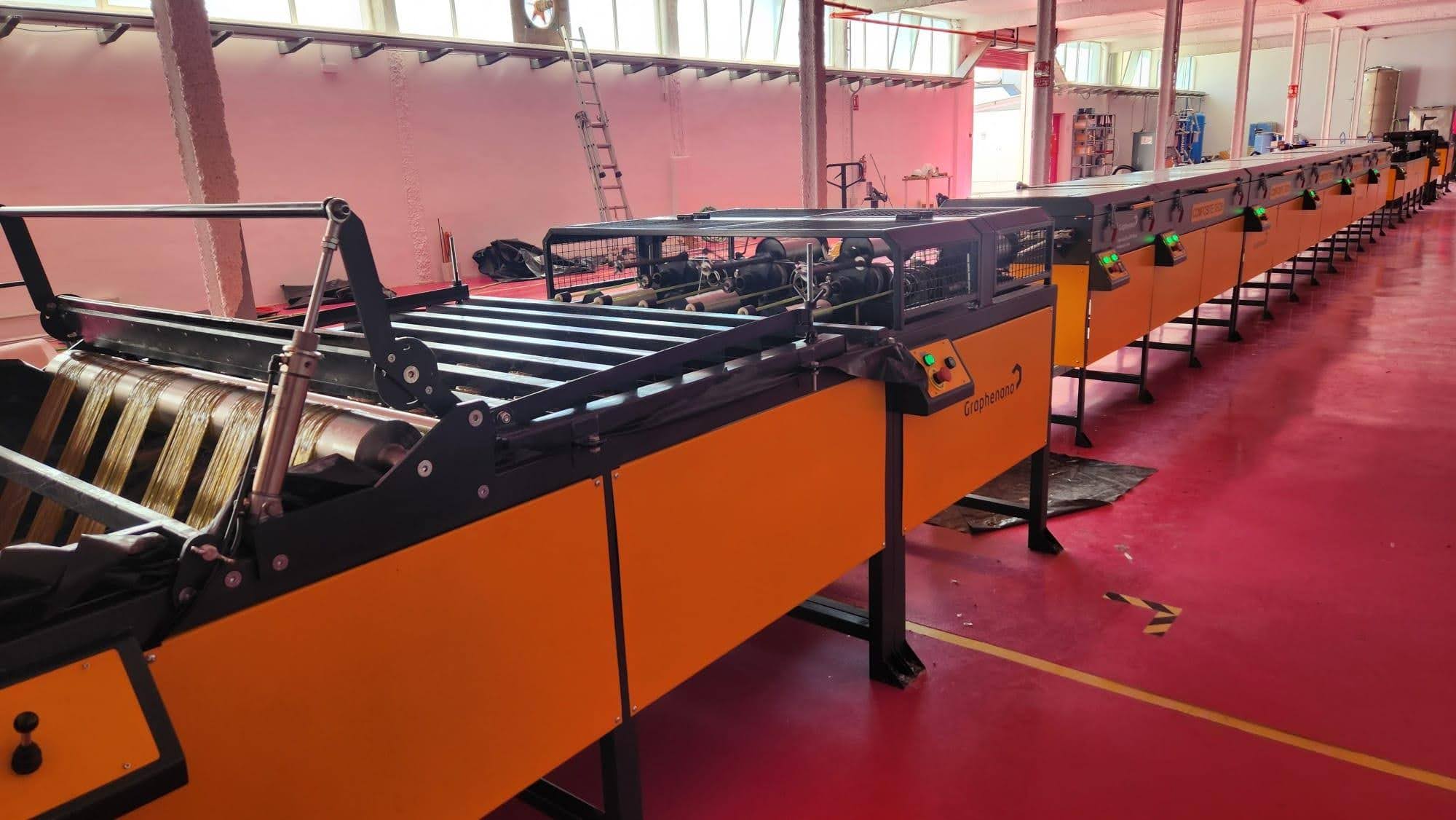
CT6 integrates the essential operations of industrial GFRP rebar manufacturing into one production system.
01 — Fiber Feeding
02 — Roving Preparation
03 — Ultrasonic Impregnation
04 — Rib Formation
05 — Infrared Booster
06 — Controlled Curing
07 — Two-Stage Cooling
08 — Continuous Pulling
09 — Intelligent Monitoring
10 — Automatic Cutting
11 — Automatic Coiling
Two automatic coilers support the collection of suitable reinforcement products in coil form. The line also includes equipment for preparing the twisted reinforcement used in rib formation.
Every module performs a specific function. Together, they form a coordinated system designed for high-output GFRP manufacturing.
DESIGNED FOR MANUFACTURING EFFICIENCY
High Output Is Only Valuable When the Product Meets Requirements
For an industrial manufacturer, production capacity is not simply a number of meters per minute. A factory must consider the quantity of saleable reinforcement it can manufacture during each operating shift. That depends on production speed, material consumption, labor, energy use and finished-product quality. CT6 New Generation addresses several of these factors through its integrated design.
Efficient Labor Requirements
Controlled Energy Consumption
Controlled Resin Consumption
Reduced Risk of Production Defects
Automated Finishing
The commercial objective is straightforward: manufacture more qualified reinforcement while maintaining control over material use, energy, labor and process stability.
TECHNICAL SPECIFICATIONS
CT6 New Generation — Equipment Data
| Technical Parameter | Especificación |
| Fabricante | Composite-Tech |
| Modelo | CT6 Nueva Generación |
| Equipment category | Industrial GFRP rebar production line |
| proceso de fabricación | Continuous composite reinforcement production |
| Reinforcement diameter range | 4–20 mm |
| Maximum simultaneous bars | 6 |
| Potencia combinada máxima | Up to 48 m/min at Ø4 mm |
| Combined output at Ø10 mm | Hasta 36 m/min |
| Typical operating power demand | Aproximadamente tely 18–20 kW después del calentamiento |
| Warm-up power demand | Approximately 35–40 kW |
| Operators for line control | 1–2 |
| Impregnation technology | Patented ultrasonic-assisted impregnation |
| Resin-content control | Pneumatic squeezing system |
| Rib formation | Programmable rib winding |
| Initial heating | Amplificador de infrarrojos de onda corta |
| Main curing system | Five curing ovens |
| Enfriamiento | Two-stage air and water cooling |
| Control de calidad | Optical sensors with AI-assisted monitoring |
| Sistema de tracción | Automated continuous traction |
| Corte | Automatic cutting module |
| Enrollado | Two automatic coilers |
| Factory layout | Project-specific installation drawing |
| Equipment pricing | Available upon request |
Specifications refer to the CT6 New Generation configuration documented in July 2026. Final equipment configuration and utilities are confirmed in the commercial and technical proposal.
GFRP, BFRP AND ADVANCED COMPOSITE REINFORCEMENT
A Manufacturing Platform Designed for Different Reinforcing Fibers
PRODUCT QUALITY AND INTERNATIONAL STANDARDS
Designed to Support Manufacturers Targeting Professional Construction Markets
High-quality reinforcement begins with manufacturing technology. Product qualification confirms whether the finished reinforcement meets the required specification.
COMPOSITE-TECH: INDUSTRIAL EXPERIENCE AND CONTINUOUS INNOVATION
Composite-Tech develops and manufactures equipment for the global fiber-reinforced polymer industry. Our production technology is used by manufacturers across international markets, including North America, Europe, Asia, Africa and other regions.
The company’s industrial portfolio includes equipment for manufacturing:
- GFRP and BFRP reinforcing bars;
- Composite reinforcement mesh;
- Factory-made bent reinforcement elements;
- FRP profiles and other composite products.
This broad specialization gives Composite-Tech practical experience across different continuous composite manufacturing processes. CT6 New Generation reflects that engineering development. Rather than increasing pulling speed alone, Composite-Tech has integrated specialized processing technologies intended to address the principal factors influencing reinforcement quality and production efficiency. Our goal is to help manufacturers build competitive composite reinforcement factories with equipment designed for industrial productivity, repeatable processes and long-term development.
COMPLETE FACTORY SUPPORT
From Equipment Selection to Production Startup
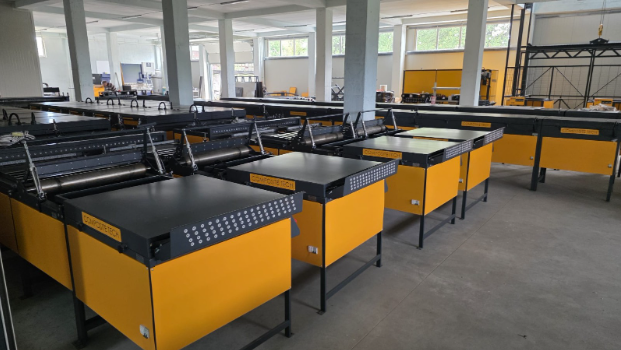
Purchasing a production line is only one step in establishing a GFRP manufacturing business. The factory also requires suitable premises, utilities, raw materials, trained operators and appropriate quality control procedures. Composite-Tech supports customers through the principal stages of equipment implementation.
- Factory planning: Preliminary layout and guidance on equipment placement and supporting infrastructure.
- Equipment configuration: Selection of the appropriate setup for the required reinforcement diameters and product range.
- Installation and commissioning: Technical support for installing and starting the production line.
- Operator training: Practical instruction on machine operation, maintenance and production procedures.
- Technical assistance: Support with equipment operation and process-related questions.
- Warranty: Standard 12-month equipment warranty, subject to contractual conditions.
Our experience with international manufacturing projects helps customers plan the practical requirements of establishing an FRP reinforcement factory.
FREQUENTLY ASKED QUESTIONS
How many reinforcing bars can CT6 New Generation manufacture simultaneously?
What is the maximum production speed of CT6?
The documented maximum combined production speed is 48 meters per minute when producing six 4 mm bars. At 10 mm diameter, the line produces up to six bars at 6 meters per minute each, giving a combined output of 36 meters per minute.
How much GFRP rebar can CT6 produce in one shift?
Does CT6 use artificial intelligence for quality monitoring?
What is special about Composite-Tech's impregnation technology?
Why does CT6 use two-stage cooling?
How many workers are required to operate CT6?
Can CT6 manufacture basalt fiber rebar?
What resin systems can be used?
What is the price of CT6 New Generation?
BUILD YOUR NEXT GFRP FACTORY WITH CT6 NEW GENERATION
High Output. Advanced Technology. Intelligent Production Monitoring.
The future of GFRP reinforcement manufacturing belongs to companies that can combine industrial productivity with consistent product quality. CT6 New Generation brings together Composite-Tech’s specialized manufacturing technologies in one high-performance production system.
- Six simultaneous reinforcing bars.
- Patented ultrasonic-assisted impregnation.
- Controlled resin consumption.
- Short-wave infrared polymerization.
- Proprietary two-stage cooling.
- AI-assisted optical monitoring.
- Up to 48 meters of combined output per minute.
Whether you are establishing a new GFRP manufacturing factory or expanding existing production capacity, CT6 New Generation offers an advanced platform for industrial composite reinforcement manufacturing.
Request Your CT6 New Generation Proposal
Contact Composite-Tech to receive detailed equipment specifications, a preliminary factory layout, production-capacity information and a commercial quotation.
Composite-Tech — Advanced Manufacturing Technology for the Global FRP Industry.